Founded in 1909, Brettos is an Athens distillery, tucked in the Plaka neighborhood and known for its wall of backlit, multi-hued liqueur bottles. The family-run shop distills and sells its own ouzo, tsipouro, and fruit liqueurs alongside Greek olive oil, honey, and deli goods, both in person and through its online liquor store.
Founded by goldsmith Ilias Lalaounis near the Acropolis, this Greek house draws its collections from ancient and Byzantine motifs. Its archaeological-style jewelry earned an international following.
Founded in 1895, this Greek gold house is known for museum-inspired ancient-Greek goldwork and haute joaillerie. Its craft draws directly on antiquity.
Lito’s Kolonaki basement presents fine jewellery by Lito Karakostanoglou alongside selected objects and curiosities. The cabinet-like setting supports discovery, while appointments suit higher-value gemstone and one-off pieces.
Best for Lito Karakostanoglou's fine jewelry and curiosities in a basement shop
Anamnesia reworks Greek visual culture into illustrated souvenirs, stationery, clothing and small home objects. Its Plaka shop offers a design-led alternative to generic tourist merchandise without claiming traditional craft provenance.
Best for Illustrated Greek souvenirs, stationery, and home objects
Korres began in 1996 as a homeopathic pharmacy in central Athens before growing into a Greek natural skincare brand. The original pharmacy still trades as its heritage flagship.
Best for Greek natural skincare and herbal remedies
Food hall and hotel — Greek artisan producers under one roof: cheese, charcuterie, wine, olive oil. Eat at the restaurant or buy to take home. The future of Greek food retail.
Best for Greek artisan cheese, charcuterie, wine, and olive oil under one roof — eat in or take home.
This multi-floor concept store is devoted to Greek gastronomy, bringing artisanal producers together under one roof. Olive oil, cheese, honey, wine and deli goods fill its floors.
Established in 1928, this Athenian chocolatier hand-makes chocolates, marzipan and candied fruit. Traditional Greek confections round out the counter.
Best for Handmade Greek chocolates and confections
Panagiotis Karras came to Athens from Vasiliko Pogoniou, in Epirus, and in 1928 opened his own shop at Voukourestiou 2, next to the Zacharatos cafe. Regional custom sent Epirot men into bread; he went into sugar instead, and during the first decade narrowed the work to chocolate specifically. The business has stayed in the family for four generations — his great-grandson runs it now — and the workshop still operates at the foot of Lycabettus. The counter is hand-made throughout: chocolates, marzipan, candied fruit and loukoumia. By the house's own account its customers included Jackie Kennedy, who bought vanilla and rose loukoumia, Grace Kelly, who bought caramelised pistachios, and Maria Callas. Why the name stops at the city limits is legible in a near-exact comparison. Ion, the Greek chocolate company founded two years later in 1930, industrialised: it now turns over well above 100 million euros and sits among the fifty largest companies in Greece, its Amygdalou bar a national staple. Aristokratikon took the other road and never left it, remaining a counter with a workshop behind it, selling by weight to people who come in. Scale was available in the same market at the same moment. It was not taken.
Historic loukoumades shop since 1923 — the honey doughnuts are crispy outside, fluffy inside, and drenched in local thyme honey. An Athens institution.
Best for Loukoumades honey doughnuts drenched in local thyme honey since 1923
Billed as the first museum shop in Greece, Benaki Museum Shop sells Greek-designed homewares, stationery, and jewelry, from letter openers to notebooks inspired by artists like Yannis Gaitis and the photographer Nelly's. Every purchase supports the Benaki Museum, and the full catalogue is browsable and purchasable through its online store.
A Future Perfect sells home accessories, stationery, prints, lighting and gifts by Greek and international designers. Its cross-category edit suits compact design purchases rather than substantial furniture projects.
Best for Home accessories, stationery, prints, and lighting by Greek and international designers
Located at Dionysiou Areopagitou 15 in Athens, the Acropolis Museum runs a ground-floor gift store and a second-floor bookstore stocked with exhibit-inspired jewelry, ceramics, and titles on Athenian history. Its standout offering is a line of precise hand-cast exhibit replicas produced in the museum's own workshops by the conservators who care for the originals.
Athens fashion concept store launched online in 2013, showcasing Greek designer labels — Zeus+Dione, Ancient Greek Sandals, Ilias Lalaounis — alongside independent Greek designers without their own ateliers; opened a Mykonos boutique in 2017 and its Athens flagship in 2019.
Best for Contemporary Greek designer fashion
Aesthet started in 2013 as an online shopping platform built specifically around Greek fashion, at a time when many Greek designers had no dedicated retail outlet of their own — working out of small ateliers or selling only through a handful of scattered stockists. The premise was to gather those labels in one place: established Greek names such as jeweler Ilias Lalaounis, contemporary label Zeus+Dione and Ancient Greek Sandals sit alongside smaller, independent Greek designers who lack their own storefronts. Aesthet expanded into physical retail gradually — its first bricks-and-mortar boutique opened in 2017 in Nammos Village on Mykonos, tapping into the island's high-season shopping crowd, before the brand opened a flagship store in central Athens in 2019, giving the label a year-round retail base in the capital alongside its seasonal Mykonos presence. The assortment spans clothing, footwear, handbags and swimwear, refreshed seasonally, with periodic clearance sales run through the online store. By curating exclusively Greek names rather than mixing in international labels, Aesthet positions itself as a single reference point for the country's contemporary design scene — a way for both Greek shoppers and visitors to find domestic designers without tracking down each individual atelier separately across the city.
Greek resortwear label founded in Thessaloniki by sisters Labrini and Stella Stavrou, rebranding a decades-old family clothing business around 2014. Designs draw on Greek mythology and traditional embroidery, in natural cotton and linen fabrics made in Greece.
Best for Ancient Greek fashion
Ancient Kallos is a Greek fashion label built on a family clothing business that sisters Labrini and Stella Stavrou took over and rebranded, reworking a family operation the company's own site describes as running since 1982. The idea crystallized during a summer trip to Santorini and Ithaca around 2014. Designs draw on Greek mythology and traditional embroidery, using cotton and linen, with production kept entirely in Greece. The brand is headquartered in Thessaloniki, not Athens.
An independent cabinet-like shop of jewelry, textiles and collectible objects selected by Andria Mitsakos.
Best for Jewelry, textiles, and collectible objects curated by Andria Mitsakos
Anthologist is an Athens retail and design platform founded and directed by Andria Mitsakos, built around what the brand calls "narrating authenticity, preserving craft." Its Athens flagship occupies a carefully restored 1912 Neoclassical building in the city's Plateia Anexartisias, a space Mitsakos has shaped to read more like a gallery or private museum than a conventional shop: a light-filled first floor holds hyper-curated collections of jewelry, handbags, belts, brass objets d'art and ceramics, largely designed or sourced by Mitsakos herself and produced by artisans working across Greece. The pieces frequently combine classical Greek motifs with original contemporary design, and the flagship also functions as a working studio and occasional exhibition space; visits are by appointment. Anthologist has since expanded its model beyond the flagship, including a 325-square-metre concept, The Store at The Ilisian, inside the newly reopened Conrad Athens The Ilisian hotel -- described as Anthologist's fourth retail concept in Greece and built around an editorial, department-store-inspired format with more than 90 percent of its assortment exclusive to the space, alongside the world's first Monocle shop-in-shop. Together the two locations position Anthologist as both a boutique and a curatorial project spanning Athens' craft and design economy.
Birdman's record store on Skoufou is a wood-panelled shrine to vinyl, inspired by Tokyo listening bars, where visitors browse new and rare releases, collector's items and art books while DJs play day and night. Open every day from early afternoon to midnight, it sits on the same downtown Athens alley as the group's Birdman and Ekiben kitchens.
Reached through the Stathatos Mansion entrance while the museum's main doorway is under construction, the Cycladic Shop sells jewelry, ceramics, and gift items inspired by the Museum of Cycladic Art's collection, from figurine-shaped earrings to reproduction ceramic bowls. Every purchase supports the Athens museum's educational and scientific programs.
Best for Jewelry, ceramics and gifts inspired by the Museum of Cycladic Art collection
A Kolonaki concept shop that curates Greek artisan-made objects alongside emerging international labels — tableware, textiles, jewelry, candles, skincare and magazines — organized around craft and material rather than one house look.
Best for Restrained, sculptural Greek jewelry and objects.
ERE Athens was founded by Dora Kalogirou, formerly in corporate work, and Georgia Romanou, a pastry chef by training, who met after each had spent years living and traveling abroad and built the shop as a space to 'share experiences and get inspired.' The concept pairs curated retail with a working food program: a hand-picked assortment of local Greek products and artisan design work alongside emerging international labels, spanning tableware, textiles, jewelry, candles, apothecary items, and magazines, organized by material and craft rather than around a single house aesthetic. Alongside the retail floor, ERE runs a kitchen producing sweet and savory pastries made to order, positioning coffee and conversation as part of the same visit rather than an add-on café. The founders describe the space explicitly as being 'for the community of those daring to travel where their minds take them' — treating the shop-café hybrid as a meeting point rather than a pure point of sale. The result is a concept store where a Greek ceramic bowl, a small-batch skincare line, and a savory pastry can plausibly be part of the same half-hour visit, aimed at browsers who want the shop itself to be an experience rather than a transaction.
Independent concept shop in Plaka, Athens (Flessa 1 & Adrianou 110), founded by Katerina and Yannis Chytiroglou. Sells travel-themed accessories, illustrated posters, handcrafted soaps and small Greek-made objects.
Best for Greek-designed gifts, paper goods, and small home objects in Plaka.
Flâneur Souvenirs & Supplies is a concept shop in Plaka, the historic district beneath the Acropolis, founded by Katerina and Yannis Chytiroglou. The name references the French idea of the 'flâneur' -- someone who wanders a city aimlessly, absorbing its atmosphere rather than following an itinerary -- which the founders describe as the mood they wanted the shop itself to capture rather than selling generic tourist merchandise. The shop sits at the intersection of Flessa 1 and Adrianou 110, in the pedestrianized core of Plaka among the neighborhood's other small independent retailers. Rather than mass-produced souvenirs, the stock leans toward small-batch and locally made goods: travel accessories, illustrated notebooks and posters, backpacks, and handcrafted soaps, alongside other objects from Greek makers and designers. The shop markets itself with the tagline 'souvenirs for the curious mind and supplies for the urban explorer,' positioning its merchandise as functional travel gear as much as keepsakes. It has been featured by Athens's official tourism guide (This Is Athens) and by local lifestyle press as an example of Plaka's independent retail scene distinct from the district's more generic souvenir strip.
Athens-founded jewelry, watch and accessories brand established in 1982; after a major 2018 accounting-fraud scandal and its founders' 2020 conviction, the label continues trading in Greece through a restructured entity, FF OPSCO.
Best for Fashion jewellery
Folli Follie was established in Athens in 1982, starting as a jewelry manufacturer before launching a watch line in 1994 and opening its first overseas store in Japan in 1995. The company grew into an international accessories retailer before a hedge fund's 2018 investigation found that Folli Follie had overstated its store count and misrepresented its finances; Greek prosecutors found that chairman Dimitris Koutsolioutsos and his son and then-CEO George Koutsolioutsos had forged bank statements between 2009 and early 2018. Greek courts convicted the pair, handing down sentences of 10 to 17 years in 2020, with investigators estimating total losses to investors and creditors at roughly 413 million euros. The Folli Follie brand itself continued trading afterward: its current retail site identifies the operating company as 'FF OPSCO' and lists four active Athens stores alongside an online shop.
The Herakleidon Museum in Athens's Thissio district houses a shop just off its exhibition halls dedicated to ancient Greek technology and art, open the same hours as the museum, Wednesday through Sunday from 10am to 6pm. Located at 16 Herakleidon Street, the museum lists the shop directly among its visitor information alongside admission and contact details.
Best for Museum-shop, ancient-greek-technology, books, gifts
On the ground floor of the Ilias Lalaounis Jewelry Museum near the Acropolis, the ILJMuseum Shop sells fine and artistic jewelry, decorative objects, and souvenirs alongside scholarly and general-interest art publications. The shop also takes custom orders for jewelry and objects in production, plus postcards and posters available in person or by mail order.
Beneath the Acropolis — artisan coffee, vintage shops and tavernas. Airbnb has listed it among the world's most interesting neighbourhoods.
Best for Coffee bars and vintage stores below Philopappos Hill, near the EMST museum.
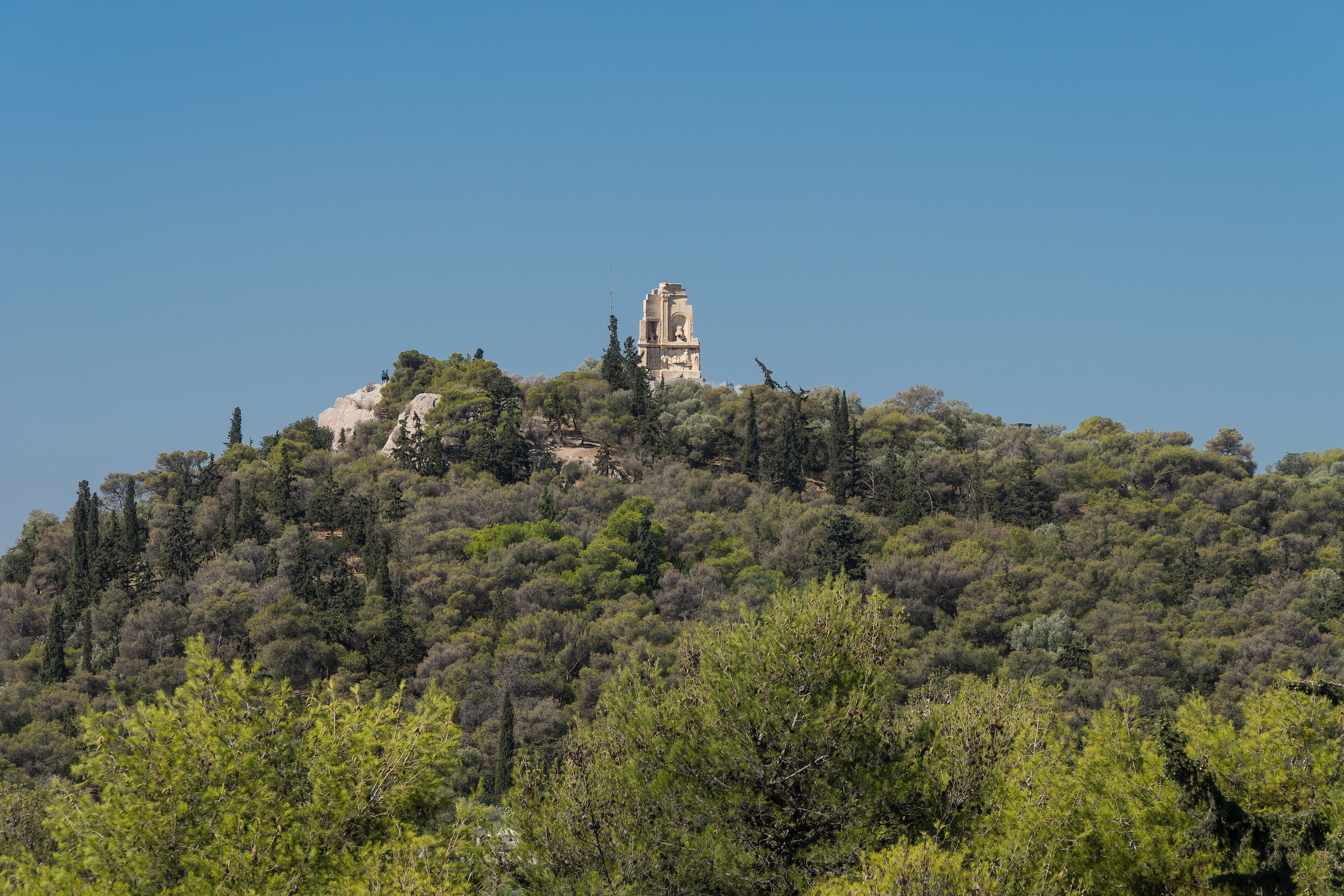
Koukaki sits in the shadow of Philopappos Hill, a pine-covered rise about 150 meters above the city that gives the neighbourhood its quiet, green edge just south of the Acropolis. What used to be an overlooked residential pocket has turned into one of central Athens' most walked stretches: Georgaki Olympiou, closed to cars and lined with cafés and tavernas, is often singled out as the area's most charming street. The bigger draw arrived in 2016, when the National Museum of Contemporary Art (EMST) moved into the shell of the old Fix brewery — Greece's only national museum dedicated to contemporary Greek and international art, and a genuine adaptive-reuse landmark rather than a purpose-built gallery. The neighbourhood's rise shows up in the numbers too: local data logged an 801% jump in Koukaki's popularity over a short span, a trajectory that got it named among the world's most interesting neighbourhoods to visit. Pair the pedestrian streets with the neoclassical mansions tucked between them — including the former home of Margarita Theodorakis, daughter of composer Mikis Theodorakis — and Koukaki reads less like Acropolis overflow and more like Athens' own gallery neighbourhood that came together almost by accident.
LoFi Concept is both an independent record shop and working ArtLab in Athens’ Koukaki neighborhood. The lab makes jewelry, pots, lamps and paintings from scratch, while the record section ranges across jazz, Afro-Latin, reggae, hip-hop, ambient, techno and other exploratory music.
Best for Vinyl records, handmade art objects and ArtLab goods
Medley sells ceramics, prints, textiles, stationery and small objects by Greek makers in Koukaki. Its scale makes it useful for design-led gifts that travel easily without resorting to generic souvenirs.
Best for Ceramics, prints, textiles, and stationery by Greek makers.
All-day bakery-cafe — artisan bread, pastries, sandwiches, and coffee. The sourdough and olive bread are exceptional.
Best for Sourdough and olive bread from a four-in-one bakery, coffee house, dairy bar
Meliartos occupies the corner of Ermou and Aiolou streets in central Athens, near Monastiraki, and is built around four distinct sections operating under one roof rather than a single bakery counter: a Pitopoleio (pie shop) for savory and sweet pastries, a Kafeneio (coffee house), a Galaktopoleio (dairy bar) for ice cream and yogurt, and a Kouzinaki (small kitchen) for prepared food. The format is explicitly framed as marrying traditional Greek bakery and dairy-bar formats -- the kind of separate specialist shops long found on Greek high streets -- into one modern all-day space, rather than presenting as a single generic cafe. The bread program is the strongest of the four: the sourdough and olive loaves are made in-house and stand out even among the pastries and pies that share the counter. Its central Athens location, a short walk from Monastiraki, puts it on one of the city's busiest commercial streets, and the all-day format -- coffee and breakfast through pastries, savory pies, and dairy desserts -- means it functions as a bakery, a coffee stop, and a dessert shop depending on the hour, without needing to specialize in just one of those roles.
Curated designer vintage boutique on Veikou Street near the Acropoli metro, opened in 2020 by an owner known as Mo, who built the collection from years of personal collecting and travel before opening the shop.
Best for Designer vintage clothing and accessories
Mo Vintage Athens opened in 2020 on Veikou Street, close to the Acropoli metro station in the Koukaki area of central Athens. The shop is the work of its owner, who goes by Mo and had previously worked within the fashion industry before turning years of personal collecting into a retail business. On the shop's own About page, the owner describes the decision this way: after years of collecting clothes and items while traveling and drawing inspiration from different places, the choice was made to share that personal collection with others rather than keep it private. The boutique specializes in authentic designer vintage clothing, shoes, and accessories dating primarily from the 1970s through the 1990s, selecting pieces for their design and rarity rather than stocking broadly across eras or price points. It is positioned within Athens's small circuit of dedicated vintage and secondhand shops as one that leans toward higher-end, designer-label finds rather than general secondhand clothing, and it has been included in city guides to vintage shopping in Athens alongside a handful of other specialist stores. The shop functions as a single, owner-curated boutique rather than a chain, with each piece selected individually by Mo based on the same collecting instinct that built the original personal wardrobe the business grew out of.
Modernon in Athens sells vintage furniture and lighting, with decorative objects and older appliances forming part of its range. The business works with objects from different decades of the twentieth century, caring for pieces by hand. Items are offered for rental as well as sale, serving temporary settings alongside buyers furnishing their own spaces.
Best for Vintage furniture and lighting for sale or rental
Modernon is an Athens concept store created from the design research and collecting practice of Joe Petropoulos, an industrial designer and design-history researcher. Its official story describes a long search for emblematic objects carrying original Mid-Century Modern elements. The store translates that research into a broad vintage catalogue shaped by Mid-Century Modern and Bauhaus design. Furniture categories include seating and storage alongside tables. Lighting ranges from ceiling and floor lamps to illuminated signs, while electronics cover audio equipment and clocks as well as televisions. Telephones and cameras appear beside them. Smaller objects add tableware and office pieces as well as toys. Sporting equipment and decorative props widen the assortment. This mixture is important because it places canonical furniture forms beside the ordinary technologies and domestic objects that carried modern design into daily life. Modernon's Projects and Stories sections extend the shop beyond transactions by showing how objects are interpreted and placed. The business is therefore both a dealer and an editorial design project. Petropoulos's training provides the intellectual frame, while the catalogue supplies the material evidence: a changing archive of twentieth-century forms across furniture and lighting. Sound, communication devices and household use broaden the archive into everyday domestic life.
Mokka has roasted coffee from the same building in central Athens since 1923, now run by a fourth generation, sourcing green beans from farms in Kenya, Ethiopia, Guatemala, and Panama that it lists on its site with roast dates. Visitors can buy bags of single-origin coffee and Greek-style blends directly from the Athinas Street headquarters or order online for courier delivery.
Best for Single-origin coffee roasted on Athinas Street
Contemporary Greek ceramic-art gallery and shop at Thiseiou 7 in Monastiraki, Athens, founded 2017 by ceramist Eleonore Trenado-Finetis, showing handmade, collectible work by Greek makers across generations.
Best for Ceramics by independent Greek makers
Mon Coin Studio is a ceramic-art gallery and retail space on Thiseiou Street in Monastiraki, a short walk from the Acropolis, founded in 2017 by ceramist Eleonore Trenado-Finetis. The space presents original, handmade ceramics, pottery and sculpture from established and emerging Greek makers, with an emphasis on showing the range of contemporary Greek ceramic practice rather than a single house style or generation. Beyond standing retail, Mon Coin Studio stages themed group exhibitions of contemporary Greek ceramics, positioning it as both a commercial gallery and a curatorial platform for the medium in Athens. Every piece sold is described as an original, one-off work rather than a production run. It keeps standard gallery hours, Monday through Saturday.
Jewelry studio (est. around 2019) with a showroom at Praxitelous 33 in Athens and a second base in Naousa, Paros. Makes sculpted necklaces, earrings, bracelets and rings set with stones including quartz, citrine, kyanite and aquamarine.
Best for Handcrafted sculptural jewelry in silver and gold.
Neso Studio is a jewelry atelier founded around 2019, with its main showroom on the fourth floor of Praxitelous 33 in central Athens and a second base in Naousa, on the island of Paros. Each piece is made using the traditional technique of wax sculpting -- carving or modeling a design in wax before it is cast -- and every finished piece is cast in sterling silver (925) and hand-finished with a signature 18-karat gold plating. The studio incorporates precious and semi-precious gemstones, including quartz, citrine, kyanite and aquamarine, set into sculptural necklaces, earrings, bracelets and rings. According to the studio's own account of its process, a single piece takes at least five days to complete from wax model to finished object, reflecting a small-batch, hand-executed production process rather than mass manufacturing. The dual Athens/Paros footprint mirrors a common pattern among contemporary Greek jewelry ateliers, which often split time between a year-round city studio and a base in the Cyclades tied to the summer season and to island-based material and craft traditions.
Number 3 is an Athens multi-brand store for independent fashion, footwear, accessories and art publications. Its cross-category edit makes it useful for discovering smaller labels rather than shopping one house collection.
Best for Independent clothing, footwear, accessories, and art publications at a multi-brand store
Located on the first floor of the Iliou Melathron, the Numismatic Museum's shop sells reproduction ancient Greek coins and jewelry alongside cards, notebooks, toys, and numismatics publications. It keeps the museum's own opening hours and is reachable directly through its store manager for inquiries.
In the ground-floor foyer of Onassis Stegi at 107-109 Syngrou Avenue, the Onassis Shop sells numbered art prints, limited-edition vinyl and CDs, and publications tied to the venue's own productions.
Best for Art prints, vinyl records, books, design objects
A design shop selling furniture, lighting, tabletop objects, books, and accessories selected from independent makers. George Karras and Angela Koutroulaki opened the shop in 2014.
Best for Furniture, lighting, and tabletop objects from independent makers
Athens' hipster quarter — street art, live music venues, tavernas, and vintage shops. Transformed from a working-class neighbourhood to the city's coolest district. Best at night.
Best for Street art, live-music tavernas, and vintage shops in Athens' after-dark hipster quarter
Housed on Leonidou Street in Athens' Metaxourgeio district, Rebecca Camhi Gallery has represented artists including Nan Goldin, Rita Ackermann, Sylvie Fleury, and Takis since its founding, alongside a rotating program of exhibitions and a gallery boutique. It is currently showing photography and paintings by Alexandros Georgiou through July 25, 2026, and is open to the public Tuesday through Saturday.
Best for Contemporary gallery artists in Athens’ Metaxourgeio
Savapile is a family hat workshop in Psirri, near Monastiraki, run by Lisa Sarigiannidou, who learned the trade from her father. In business since 1960, it makes handmade Greek fisherman's caps and straw hats, including custom pieces for adults and children.
Best for Handmade Greek fisherman's caps and straw hats from a Psirri family workshop running since 1960
Savapile is a hat-making workshop tucked down an alleyway in Psirri, close to Monastiraki in central Athens. The business has been operating since 1960 and is now run by Lisa Sarigiannidou, who inherited both the workshop and the craft from her father. Its core product is the Greek fisherman's cap, a flat wool or cotton cap long associated with Aegean sailors and fishing communities, made by hand on the premises rather than sourced from a factory. Alongside the fisherman's caps, the workshop produces straw hats — Panama-style and boater shapes among them — made to order for both adults and children, letting customers choose brim width, band color and sizing rather than buying off a fixed rack. The shop's own Instagram account cites coverage in Vogue, Madame Figaro and Harper's Bazaar, situating the small workshop within a wider fashion-press narrative about Athens' surviving hand-craft trades. Because the business runs at appointment- and walk-in scale, with no large retail footprint, it has stayed dependent on word of mouth and repeat local customers rather than tourist foot traffic, despite sitting close to one of the city's busiest tourist crossroads at Monastiraki.
Chemical engineer Vassilis Seitanidis and his wife, Athens-trained oenologist Haroula Tyriakidou, planted certified-organic vines on Mount Pangaion above Kavala in 1995, at roughly 300 meters elevation. Their 80-hectare estate now bottles Assyrtiko and Moschomavro alongside Cabernet Sauvignon and Viognier, including a natural orange wine.
Best for Organic Pangaion mountain wines and natural orange wine
SHOP AT EMST is the official online store of the National Museum of Contemporary Art Athens, selling exhibition-linked prints, jewellery, and fashion pieces such as the 3Quarters x EMST collaboration. Current offerings include hand fans and prints tied to the museum's Earth to Earth and Voices exhibitions, with every purchase supporting the museum.
Founded in Athens in 2002 by Stathis Panagoulis and George Vamvakidis, The Breeder gallery operates out of a converted 1970s ice-cream factory at 45 Iasonos Street, open Tuesday through Saturday. Its online shop sells original works, drawings, and limited editions by gallery artists like Aristeidis Lappas and Olga Migliaressi Phoca alongside catalogues, artist books, and tote bags.
The Leather Sandals is a workshop run by sandalmaker Argiris Vlachos, who hand-crafts sandals, bags, wallets and belts at his shop near the Acropolis in Thisio, Athens, with a second location in Fira, Santorini. Visitors can watch him make the pieces on site.
Trabala Studio is a ceramic workshop in Athens' Koukaki neighborhood, founded by Jenny and Iraklis in 2017. They hand-throw stoneware pieces like ceramic donkeys and coffee cups, fired at up to 1280°C.
Best for Handmade stoneware ceramics, including a signature ceramic donkey and small coffee cups.
Tucked into a quiet corner of Koukaki, just south of the Acropolis, Trabala Studio has been shaping stoneware since 2017, when Jenny and Iraklis opened the workshop together. The pair work almost entirely in high-temperature stoneware clay, firing pieces between 1260°C and 1280°C — a range that gives their tableware and decorative objects a density closer to traditional Greek pottery than to delicate studio ceramics.
The shop doubles as a working studio, so visitors can see pieces take shape before they're glazed. Among the recurring forms are a small ceramic donkey and a pair of miniature cups built for the short, strong shot of Greek coffee. Nothing here is mass-produced: each piece carries the particular imperfections of hand-thrown clay, glazed by two people rather than a production line.
Trabala keeps modest, published hours — open Tuesday through Saturday, with specific windows on weekdays and a single Wednesday block — and sits on Odissea Androutsou, a residential street a short walk from Koukaki's main shopping strip. For visitors after a souvenir made where they bought it, it's a specific, traceable stop rather than a generic gift shop.
Two Is Company brings Greek handwork to jewelry and leather accessories in Athens. The collection is strongest when read as an accessories workshop rather than a general fashion store, with handmade production in Greece at its centre.
This contemporary Greek fashion house works with domestic artisans and traditional weaving and embroidery techniques. The result is ready-to-wear and accessories rooted in Greek craft.
Zuccherino sells cakes, macarons, gelato and individual pastries from its Kolonaki counter. The range suits takeaway gifts and celebration orders as well as a quick dessert, with availability changing by day.
Best for Cakes, macarons, and gelato at Kolonaki's sweet tooth destination
Area names come from each shop’s published address record; ORBIS does not invent neighbourhoods.
ORBIS city intelligence
Athens offers recognition almost too easily: an eye, a coin, a column, a Cycladic profile. The serious pleasure begins after that first flash of familiarity, when material, maker, function and contemporary authorship are allowed to challenge the motif.
The strongest Athenian purchase does not reject the past. It identifies what has been inherited, what has been altered and who performed the alteration. A sandal, jewel, skincare formula, print or pantry product becomes interesting when ancient reference, modern authorship and present use remain visible at the same time.
Melissinos Art, LALAoUNIS, Zolotas, Lito Cabinet de Curiosités, Forget Me Not and Anamnesia offer very different relationships to Greek form: workshop fitting, historic goldsmithing, house design, contemporary fine jewellery, curated design and branded memorabilia. Athens becomes clearer when those roles are not collapsed into “Greek jewellery” or “Greek souvenirs.”
What is Athens genuinely good for buying?
Buy fitted leather sandals, contemporary jewellery, museum and design editions, skincare whose formula and ingredients can be read, small objects by named Greek designers, ordinary vintage with honest condition, and sealed pantry goods whose producer and region are clear.
The city is not a safe place to improvise an antiquity purchase. Old-looking, archaeological, ancient and museum-style are not legal categories. Undocumented antiquities and protected cultural material should be left alone.
How should I buy sandals?
Melissinos Art has relocated to 16 Tzireon Street near the Acropolis, and its current official information lists Tuesday-to-Saturday opening with Monday and Sunday closure. The workshop custom-fits its handmade sandals; allow time for adjustment and walking rather than treating the stop as a photograph.
Ask leather type, sole, fastening, adjustment, break-in, water exposure and repair. Walk on level ground before paying. A sandal that looks elegantly minimal can still rub, gape or place pressure badly. Keep the model and size because handmade adjustment makes future replacement more complex than ordinary retail.
Where does jewellery become more than a classical motif?
The Ilias Lalaounis Jewelry Museum near the Acropolis is the best first stop for technique and historical translation. Its official hours are longer on Wednesday and Saturday and closed Sunday. The museum shop is not the same thing as a LALAoUNIS boutique; one provides curatorial context and editions, the other sells the house’s jewellery.
LALAoUNIS and Zolotas both maintain current central Athens boutiques with split or extended weekday schedules. At either house, ask metal fineness, weight, stones, treatments, construction, edition or collection, warranty and repair. Inspiration from antiquity does not determine manufacturing method or future service.
Lito Cabinet de Curiosités offers a contemporary authorial position. Compare the role of designer, workshop and retailer rather than assuming every piece is made by one hand in one room.
What can a museum shop establish?
The Ilias Lalaounis Jewelry Museum can teach technique, authorship and the historical sources a modern goldsmith may study. Its shop may offer publications or editions connected to that institution. Neither role should be confused with a commercial house boutique, and neither turns every classically inspired object elsewhere in Athens into a museum-quality reproduction.
At any museum or cultural shop, read the relationship precisely. Is the object a replica of a collection work, a licensed reproduction, an artist edition, a contemporary commission or general merchandise using an institutional identity? The answer affects authorship, scarcity, price and what documentation should travel with it.
How should I buy Greek skincare?
Korres and Apivita are useful when the visit moves beyond the general claim of Greek natural beauty. Read the ingredient list, active concentration where disclosed, fragrance, allergens, usage, shelf life and sun sensitivity. Botanical origin can be culturally meaningful without proving that a formula suits every skin.
Apivita’s Experience Store at 6 Solonos in Kolonaki is a specific current door; Korres has a central Athens presence and airport stores. Choose the location for range and advice, not for the assumption that a city flagship changes the formula.
Which contemporary design shops are worth the Plaka pressure?
Forget Me Not at 100 Adrianou Street presents contemporary Greek design and currently lists long daily opening, with seasonal variation. Anamnesia at 99 Adrianou offers its own Greek-made souvenir programme. Their proximity makes comparison easy: identify the designer, manufacturing place, material and whether the object is an original design, licensed image or branded house product.
A clever reference to mythology is not automatically shallow. The question is what the current designer changed—and whether the object works after the joke is understood.
How should I approach Monastiraki?
Monastiraki Flea Market is a district of shops and sellers, not one authenticated market inventory. Buy ordinary vintage, records and household objects by condition. For anything represented as antique, archaeological or culturally protected, require lawful documentation and specialist advice; otherwise walk away.
What food can come home?
Ergon House and Yoleni’s can be useful for labelled pantry comparison. Aristokratikon and Krinos belong more to the city’s eating life than to a duty to fill luggage. Oil, honey, herbs, sweets and spirits require sealed packaging, producer, region, date, weight and destination compliance.
How Athens neighbourhoods change the purchase
Makrygianni is the material and museum starting point: sandals, jewellery history and the Acropolis context. Plaka is the high-pressure comparison zone for contemporary design and souvenir shorthand. Monastiraki and Psirri add vintage and trade texture. Kolonaki is the consultation district for fine jewellery and skincare. These areas can be linked by metro and walking, but heat and hills make a divided day more intelligent.
How does a contemporary object earn its place in Athens?
The strongest new work does not need to look ancient, but it should be able to explain its decisions. A designer may translate the geometry of a building into a fastening, use a familiar symbol with irony, work with a Greek workshop, choose a local material or simply address the way people live in the city now. None of those routes is automatically more authentic than another.
Judge the contribution rather than the costume. Clarify what the present designer authored, what another workshop supplied, whether the object is part of an edition or continuing line and how it will age in use. Athens becomes a contemporary design city when the past is treated as material for thought—not as a label that relieves the new object of having to be good.
What should I keep after the purchase?
Retain sandal model and adjustments, jewellery specifications and repair contact, skincare ingredients and batch information, design attribution and production notes, and food labels that identify producer and region. For museum or limited editions, keep the receipt, edition statement and packaging that protects the work.
These records do more than establish value. They preserve the exact relationship between an Athenian idea and the object that travelled home, long after the immediate recognition of eye, key or column has faded.
How can I read modern Greek design beyond the motif?
Begin with structure. A contemporary object may use local marble, metalwork, leather or print traditions, but it may also express Athens through scale, humour, density, light or the friction between domestic life and monumental history. The absence of an eye, column or meander does not make the work less Greek; the presence of one does not make it more so.
The central question is what the designer actually decided: proportion, fastening, material, production partner, edition, function or the transformation of a historical source. This shifts attention from recognition to authorship and gives quieter objects a fairer chance.
What is the difference between museum authority and retail authority?
A museum can establish historical context, technique and the relationship between an edition and a collection. A boutique can establish current stock, specification, service and the terms of sale. A museum shop may also be a retailer, but its institutional setting should not be used to imply that every object is rare, scholarly or made by the institution.
Use the museum to learn the vocabulary, then use that vocabulary at the counter. The sequence is especially valuable in jewellery, where historical reference can otherwise arrive before metal, stone and construction have been discussed.
How do heat and brightness alter judgment?
Athens can make polished metal, white packaging, saturated print and pale leather appear especially persuasive. Revisit consequential objects in shade or neutral interior light. Warm skin changes fragrance and skincare response; heat softens the body and can make a sandal feel more forgiving than it will at home; perspiration affects how metal and leather sit.
Carry less, pause more and review photographs away from the display. The city’s light is part of the pleasure, but it should not become an unacknowledged sales technique.
The Athens buying rule
Ask two questions of every historically inflected object: what did it inherit, and what did the current maker change? Then add the practical third: how will it be worn, cleaned, repaired, documented or carried home? Athens deserves a present-tense purchase, not another object that borrows authority from the ruins.
The most convincing Athenian object does more than quote antiquity. It shows how an inherited form has been rethought, made useful and claimed by a living author.
A book can give an Athens visit an afterlife without looking like a conventional souvenir. An object from a museum shop asks a different question about what you want to remember. Begin with that choice, then add a clothing purchase only if you have something particular in mind.
Hyper Hypo and Anavasi offer two quite different reasons to spend time with printed matter. The Benaki Museum Shop provides a route into objects connected with a museum, while Forget Me Not gives contemporary design more room. Ancient Greek Sandals belongs on the list when a fitting is the purpose, rather than as an automatic addition to a day of browsing 12345.
Hyper Hypo: browse beyond a book about Athens
Hyper Hypo describes itself as an art and design bookshop focused on contemporary visual culture. Its selection includes locally and internationally published books, with photography and architecture among the subjects. It also publishes books and zines in collaboration with artists, which makes the distinction between books it sells and books it produces worth noticing 1.
If you want something connected with the city, ask about a local artist or publisher rather than only looking for Athens in a title. Look through the sequence of images before deciding whether a book works for you. A cover can introduce a subject, but it cannot show how the whole publication has been put together.
For a gift, think about how much text the recipient will want to read and in which language. A visual subject does not make the accompanying writing irrelevant. Check the edition and format of the copy in front of you, particularly when a work is available in more than one version.
Leave room to follow a subject away from the original search. An architectural book may lead to a photographer, or a small publication may make more sense than a large monograph. You do not have to choose something with an immediately recognisable Greek motif for it to recall the visit.
Anavasi: buy the map for the journey you intend
Anavasi Books & Maps lists hiking maps for regions of Greece alongside travel books. Its catalogue distinguishes the areas covered and the scales of individual maps, including separate coverage for Parnitha and Olympus. The official site gives its Athens address as 32 Voulis Street 2.
If Athens is the beginning of a longer trip, bring the destination names you are considering rather than asking for a map of everything. Check that the sheet includes the particular area you need before choosing by its title alone. A regional overview and a detailed walking map answer different questions even when their covers name the same place.
Look for the edition information and ask about the symbols used on the map. If you intend to use a paper copy alongside a device, decide what each will be doing. A map purchase is not confirmation of present trail conditions, so keep route preparation separate from choosing the printed sheet.
You can also approach this as a book purchase instead of an outdoor plan. Examine the language and scope of a travel title before assuming it covers your next destination in detail. The useful distinction is between something that helps you navigate and something that helps you understand where you have been.
Benaki Museum Shop: keep the object's reference with it
Benaki Museum Shop presents museum replicas separately from its exhibition ranges. Its catalogue also includes photo prints and limited-edition prints by Greek artists, with notebooks and other desk objects among the smaller purchases. Those categories provide several ways to connect an object with a museum visit without assuming that everything is a replica 3.
Start with a work or material that interested you, then ask how the shop object relates to it. Establish whether it is a reproduction, a contemporary design or an edition by a named artist. The distinction matters more than an approximate resemblance to something you remember seeing in a gallery.
For a print, check the dimensions and what is included before planning how it will be displayed at home. For a small object, keep its maker or collection information with the receipt. That information can explain a purchase long after the visit, when its connection with the museum is less obvious.
The online catalogue is useful for making a shortlist, but it does not establish stock at every museum location. Confirm the relevant shop if one particular object is the reason for travelling there. There is no need to turn the end of an exhibition visit into a search through the entire catalogue.
Forget Me Not: compare an object with something to wear
Forget Me Not identifies its shop at Adrianou 100. Its catalogue spans stoneware and tableware, with stationery and art prints also represented. Clothing includes T-shirts, giving you a choice between a household object and something that will be worn 4.
Use that range to compare how a present would fit into the recipient's life. A vessel needs a purpose and a place; a T-shirt needs the right size and a design they would choose. Neither becomes a better gift simply because it carries an image you associate with the trip.
For ceramics, ask about the intended use of the exact piece and how it should be cared for. For printed clothing, check the composition and the sizing of that design rather than another nearby garment. If you are drawn to a maker's name, keep it with the purchase so you can find their work again.
Forget Me Not and the Benaki shop make an interesting comparison around small objects, although the reasons to choose them differ. At the museum shop, begin with the collection or artist connection; here, begin with the object you would use. Browse both only if comparing those approaches adds something to the decision.
Ancient Greek Sandals: find the current shop, then consider fit
Ancient Greek Sandals lists flat sandals alongside other footwear styles, and describes its production as handmade in Greece. Its own store directory identifies an Athens space on the first floor of The Naxos Apothecary. The listed address is 3–5 Kolokotroni and Voulis Street, a detail worth confirming before relying on an older shop recommendation 56.
Treat the fitting as a separate purpose rather than a quick addition to a souvenir search. Compare how the straps hold your foot and ask about the material of the specific pair. The brand's overall production description does not tell you whether every style has the same construction or care requirements.
Think about where you expect to wear the sandals once you return home. Try both shoes and allow time to decide whether the shape suits you, rather than choosing by the photographed outline. A style that interests you online still needs to work as footwear on your own feet.
If one particular model matters, confirm the intended shop has it before making the journey. Keep the model name and the size with your receipt for any later enquiry. Neither the online collection nor a stockist listing should be treated as a promise about a particular pair on a shelf.
Choose a subject rather than completing a list
For a book-led visit, start with Hyper Hypo for visual culture or Anavasi for a planned onward journey. For objects, compare the museum connection with the contemporary-design selection according to your interests. Leave the sandal fitting for a day when you want to give it attention; these are choices to combine selectively, not a prescribed walking circuit.
Sources
1 Hyper Hypo, contemporary visual-culture bookshop and publishing description, accessed September 10, 2026: https://hyperhypo.gr/about-us/
2 Anavasi, map catalogue and Athens address, accessed September 10, 2026: https://www.anavasi.gr/
3 Benaki Museum Shop, replicas, exhibition ranges, prints and desk objects, accessed September 10, 2026: https://www.benakishop.gr/en/
4 Forget Me Not, product categories and Adrianou shop address, accessed September 10, 2026: https://www.forgetmenotathens.gr/
5 Ancient Greek Sandals, footwear categories and attributed production statement, accessed September 10, 2026: https://www.ancient-greek-sandals.com/
6 Ancient Greek Sandals, Athens location at The Naxos Apothecary, accessed September 10, 2026: https://www.ancient-greek-sandals.com/pages/stores-stockists
 Visit official site ↗
 Visit official site ↗
 Visit official site ↗
 Visit official site ↗
 Visit official site ↗
 Visit official site ↗
 Visit Instagram ↗
 Visit official site ↗
 Visit official site ↗
 Visit official site ↗
 Visit official site ↗
 Visit official site ↗
 Visit official site ↗
 Visit official site ↗
 Visit official site ↗
 Visit official site ↗
 Visit official site ↗
 Visit official site ↗
 Visit official site ↗
 Visit official site ↗
 Visit official site ↗
 Visit official site ↗
 Visit official site ↗
 Visit official site ↗
 Visit official site ↗
 Visit official site ↗
 Visit official site ↗
 Visit official site ↗
 Visit official site ↗
 Visit official site ↗
 Visit official site ↗
 Visit official site ↗
 Visit official site ↗
 Visit official site ↗
 Visit official site ↗
 Visit official site ↗
 Visit official site ↗
 Visit official site ↗
 Visit official site ↗
 Visit official site ↗
 Visit official site ↗
 Visit official site ↗
 Visit official site ↗
 Visit official site ↗
 Visit official site ↗
 Visit official site ↗
 Visit official site ↗
 Visit official site ↗
 Open city/visitor reference ↗
 Visit official site ↗
 Visit official site ↗
 Visit official site ↗
 Visit official site ↗
 Visit official site ↗
 Visit official site ↗
 Visit official site ↗
 Visit official site ↗
 Visit official site ↗
 Visit official site ↗