Filling Pieces designs sneakers in Amsterdam and has them handcrafted in Portugal, connecting streetwear shapes with its footwear collection. At Stavros Melissinos Poet Sandals, handmade leather sandals are fitted to the customer's feet in the Athens workshop. The family behind that Psyrri workshop has made sandals since the 1920s, giving fitted footwear a long local history.
What makes great shoemakers & bootmakers?
This plate lists 522 shops in 64 countries. Paris has the most with 60, followed by London with 12. Among these shops, 42 describe made-to-order work and 14 sell online, going by their own descriptions.
Decide which purchase this is: bespoke, made-to-order and ready-to-wear are three separate purchases with different timescales and prices.
Ask how the shoe is constructed: ask whether the sole is stitched or glued, because that decides what repair is possible later.
Ask who resoles it: a shop that repairs its own shoes can tell you what a resole costs and how long it takes.
Explore shoemakers & bootmakers
Use the city plates when they appear below, or open any store for its official door and related ORBIS city and craft links.
Shoemakers & Bootmakers · 522 shops, the best first
The Gothic Quarter workshop that invented the fashion espadrille in 1940 — wedge heels thirty years before Saint Laurent sent them down a runway. Jute soles hand-stitched to canvas in Barcelona; the Tasies family still guards Emilia's craft, and queues still form before the doors open.
Best for Authentic hand-made espadrilles from the source.
Bologna shoemaker since 1929 — Amedeo Testoni's Bolognese construction method defines lightweight Italian footwear craftsmanship.
Best for Bologna-construction comfort.
A.Testoni was established in Bologna in 1929 by Amedeo Testoni (born 1905), who trained through apprenticeship in Bologna's major shoe workshops before founding his own workshop. The brand became synonymous with the "Bolognese method"—a distinctive soling technique developed and perfected by Testoni. Amedeo's background as a third-generation shoemaker (his family worked in the trade for generations) provided both technical mastery and deep knowledge of materials and construction. The brand's reputation became significant enough that founders of other now-prominent Italian shoemakers (Stefano Branchini and Enzo Bonafe) both trained under Testoni, underscoring the technical excellence of his methods. Today, A.Testoni manufactures exclusively in Italy using premium leathers and fabrics, maintaining production close to Bologna where the founder first established his atelier nearly a century ago. The brand represents continuity of craft tradition—every shoe embodies the Bolognese construction principles refined from Amedeo's original specifications. The company remains relatively specialized, producing for clientele seeking Italian heritage footwear rather than volume or fashion-trend focus.
Casa Fagliano is a five-generation family bootmaker founded in 1892 in Hurlingham, making handcrafted polo boots. Loafers, cordovan shoes, belts and boots ship worldwide with free standard delivery.
Best for Bootmaker, leather goods, polo boots, artisanal shoes
Ferragamo began as Salvatore Ferragamo's Florence footwear company in 1927. Its range expanded into leather goods and ready-to-wear, followed by silk and accessories. Palazzo Spini Feroni houses the company's historic Florence presence, while the museum in its basement is a separate visitor attraction.
Best for Ferragamo footwear and leather goods with Florence design history
Salvatore Ferragamo established his Florence company in 1927, concentrating on women's footwear. The business subsequently expanded into leather goods and ready-to-wear before silk and accessories followed as distinct parts of the range. Shoes remain an entry point into a house whose offer now extends well beyond its original speciality.
Palazzo Spini Feroni connects that history with a specific Florentine building. Ferragamo opened a footwear workshop there in 1938, and the palace became the company's headquarters and the setting of its first Florence store. The museum occupies the medieval basement, providing a separate way to encounter the founder's work and the company's archive.
A shop visit and a museum visit serve different purposes. One is for comparing the current collections; the other depends on the museum's exhibition programme and admission arrangements. The group's timeline dates the museum's inauguration to 1995, long after the workshop arrived in the palace. Planning for both can give more context to a footwear purchase, but a museum ticket should not be confused with access to a working production workshop.
Maruya Shoes has sold and repaired shoes from the same block of Kobe's Motomachi shopping street since founder Okitsugu Katayama opened it in September 1919. The shop has also collaborated on leather sneakers made from Hyogo cattle hide.
Japanese sportswear brand founded 1949 in Kobe by Kihachiro Onitsuka; its Mexico 66 sneaker, worn by the Japanese Olympic team in 1968 and later by Bruce Lee, remains its signature design.
Best for Retro Running
Onitsuka Tiger was founded in 1949 by Kihachiro Onitsuka in postwar Japan, initially making basketball shoes -- the brand's early suction-cup outsole grip design was reportedly inspired by an octopus tentacle Onitsuka noticed stuck to a bowl. The company expanded into running footwear from 1953, working with Japanese marathoner Toru Terasawa, and gained international attention when Ethiopian runner Abebe Bikila wore Onitsuka shoes to consecutive Olympic marathon gold medals in 1960 and 1964, having previously run barefoot. The Mexico 66 model, worn by the Japanese national team at the 1968 Mexico City Olympics, became the brand's best-known design and later a pop-culture icon after Bruce Lee wore its yellow-and-black colourway in his films, including Game of Death. Onitsuka later merged with two other companies in 1977 to form ASICS, but the Onitsuka Tiger name was revived as a standalone lifestyle and fashion-sneaker line, continuing to produce the Mexico 66 and related retro models alongside contemporary designs, sold through its own stores and e-commerce internationally as well as in Japan.
Founded 1840 in St James's, moved to 83 Jermyn Street in 1966; known in the trade as 'the shoemaker's shoemaker', it also crafts Ministerial Despatch Boxes for UK and foreign governments.
Best for Bespoke boots, heritage
Foster & Son was founded in 1840 in St James's, London, close to the Royal Household and the gentlemen's clubs whose clientele the bespoke boot- and shoemaking workshop was built to serve. The firm moved premises twice before settling at 83 Jermyn Street in 1966, where its workshop still operates. During the Second World War, in 1941, the firm's proprietor, Mr. Foster, was killed by a bomb at Waterloo station; the same period saw another bootmaker, Charles Chester, lose his own premises to a direct hit, and a shared leather merchant introduced the two firms, which combined operations and moved in with Mrs. Foster at a workshop on Eagle Place. Foster & Son is known in the trade as 'the shoemaker's shoemaker,' and alongside bespoke footwear it has made Ministerial Despatch Boxes for UK and foreign governments and dignitaries. The company remains in private English ownership, one of a small number of London bespoke shoemaking houses with a continuous history back to the 19th century.
Spanish designer of women's luxury footwear. Known for the Hangisi pump. Born in the Canary Islands and based in London.
Best for Hangisi pumps and hand-lasted women's footwear.
Manolo Blahnik was born in the Canary Islands to a Spanish mother and Czech father, and it was Diana Vreeland who aimed him: reviewing his 1971 portfolio, she declared he should do "shoes, just shoes." London got the result — the Old Church Street shop opened in 1973 and remains the mothership of the most famous name in women's footwear.
He still draws every shoe by hand and carves his own lasts, and the results carry his signatures: the Hangisi's jeweled buckle on satin (Carrie Bradshaw's proposal shoe — Sex and the City made "Manolos" a common noun), the BB pump's perfect plainness, mules descending from his early Ossie Clark collaborations. Production is Italian, standards are his alone, and the CFDA, British Fashion Council and a CBE have all said their piece.
Family-owned still — his niece Kristina runs the company — the house sells what Blahnik has drawn for five decades: the shoe as small architecture, frivolity executed with total seriousness.
Madrid espadrille maker — family atelier producing and selling traditional Spanish alpargatas in handcrafted styles. Same Divino Pastor shop since 1863; in the 1970s Martín Garbayo expanded colours and models, after which Queen Sofía became a reported client.
Best for Handmade Madrid espadrilles in classic canvas styles
Antigua Casa Crespo is a family-operated espadrille shop located in Madrid that both manufactures and retails traditional Spanish alpargatas (espadrille shoes). The business operates as an established specialist in this particular footwear craft, maintaining production methods aligned with Spanish espadrille-making tradition. The family business serves both local and online customers, offering handcrafted espadrilles in various styles and finishes. The shop carries the weight of being both a production workshop and retail venue, positioning itself within Spain's heritage of espadrille manufacture.
Founded in Melbourne in 1924 by orphaned teenager Thomas Cook, this Australian bootmaker is now run by the fourth generation of the Cook family, supplying country clothing and boots to over 1,200 accounts across Australia and New Zealand.
Marche's master of hand-painted patinas — double-monks and goodyear artistry from Corridonia. Andrea (then a shoe-factory production head) and Rosa (a seamstress) began with machines in their garage in Corridonia; Giuseppe Santoni, who took over as CEO in 1990, told Vogue Santoni shoes are made in Corridonia, not Italy.
Best for Hand-antiqued double monks and dress shoes.
Andrea Santoni began making shoes in Corridonia, in the Marche shoemaking district, in 1975, and the house his son Giuseppe expanded remains family-run and rooted there. Santoni's signature is visible before the shoe is handled: hand-painted patina finishes, built up in translucent layers so that each pair's color has depth and slight individuality — a technique the house made central rather than occasional. The construction underneath is classical Marche craft: Goodyear and Blake welting, hand-stitched details, a double-buckle monk strap that became the house's best-known model and helped return that style to fashion. The range runs from sneakers to bespoke, but the dress shoes carry the argument. Look at the patina in natural light when buying — the layered browns and burgundies are the house's actual signature, applied by brush in Corridonia, and no two pairs read identically.
Ask whether a model can be ordered in a custom patina; the Corridonia workshop takes color commissions, and the service turns a purchase into a small commission.
Bespoke and ready-to-wear shoemaker founded in 1935 by André and Renée Aubercy at 34 rue Vivienne in Paris. Still family-run four generations later, it developed English-influenced construction methods from 1950 and added a dedicated bespoke bootmaking workshop around 2000.
Best for Bespoke shoes, Parisian
Aubercy was founded in 1935 by André and Renée Aubercy at 34 rue Vivienne, in the Paris stock-exchange quarter near the Bourse. The house initially made high-end ready-to-wear men's shoes rather than bespoke pairs, with its first collections produced in a small workshop in the Buttes-Chaumont neighbourhood. In 1950, with help from family friend Arturo Lopez, the Aubercys built connections with established London shoemakers and studied the artisanal construction methods behind English shoemaking's reputation, incorporating those techniques into the house's own production. In 1956 the family decided to develop a dedicated bespoke offering, aiming to give clients shoes made to the same rigour as master shoemakers, and the company opened a bespoke bootmaking workshop in central Paris around the early 2000s. As of the late 2010s the house remained independently owned and run by the founders' family, administered by Philippe and Odette Aubercy and their son, Xavier, continuing the business into a fourth generation. Aubercy today produces both ready-to-wear and made-to-measure or bespoke shoes from its rue Vivienne address, positioning itself among a small number of Paris houses that still offer full bespoke shoemaking.
Parisian shoemaker since 1895 — the Alessandro wholecut, Venezia leather, and patina worked like watercolor. LVMH-owned, and still the summit of French men's shoes.
Best for Patinated Venezia-leather shoes, from Alessandro wholecuts to bespoke.
Alessandro Berluti, an Italian craftsman, established his Paris bootmaking house in 1895; four generations of the family shaped it, none more visibly than Olga Berluti, who developed the house's defining art — the patina. Berluti shoes are colored not by dyed leather but by hand-applied translucent washes built into cognacs, plums, and blues of unusual depth, often over Venezia leather, the house's supple calfskin. The result made shoes into objects closer to polished furniture or old paint. The Andy loafer, named for Warhol, is the emblematic model. Under LVMH ownership the house expanded into a full menswear wardrobe and leather goods carrying the same patinated surfaces and its scritto motif — eighteenth-century calligraphy engraved into leather. Bespoke remains at the summit in Paris. The classic models in a hand-finished patina are the essential Berluti: color as craft.
Existing pairs can be sent for re-patination as colors evolve with wear; the service, like the original finish, is done by hand and worth using.
The Hermès-owned John Lobb house — its first Paris boutique opened in 1899, with bespoke made in Paris and ready-to-wear made in Northampton. The City II oxford, Lopez loafer and William double-monk carry its Paris-bespoke and English-making lineage.
Best for Paris bespoke and Northampton-made City II, Lopez and William models.
The John Lobb name now belongs to two distinct houses that share one founding lineage. The independent family firm remains at 9 St James's Street in London; this page covers the Hermès-owned John Lobb Paris house, whose first Paris boutique opened in 1899 and which has been part of Hermès since 1976. It combines a Paris bespoke workshop with a ready-to-wear line made in Northampton.
The City II oxford, Lopez loafer and William double-monk are modern benchmarks, Goodyear-welted in fine leathers. Paris bespoke works from an individual last; the Northampton line translates that shoemaking standard into ready-to-wear. Fit carefully, register the pair with the house, and use its refurbishment service when the soles finally ask.
Roger Vivier opened his own maison in Paris in 1937 and went on to patent the buckle-throated pump in 1942, design the coronation shoes for Queen Elizabeth II in 1953, and create the first stiletto heel in 1954; the house's boutique stands at 20 rue du Faubourg Saint-Honoré.
Best for Comma heels and Parisian shoe jewelry since 1937
Roger Vivier opened his Paris maison in 1937 and became footwear's great inventor: he patented the buckle-throated pump, designed Queen Elizabeth II's gold-kidskin coronation shoes in 1953, and in 1954 — working with Dior, whose shoes he signed jointly, an unheard-of credit — created the stiletto heel itself, steel-cored and epochal. The Comma heel, the Choc, the Virgule: he sculpted heels the way Brancusi sculpted birds.
The second immortal object came in 1965: the Belle Vivier buckle pump for Yves Saint Laurent's Mondrian collection, sealed forever when Catherine Deneuve wore it in Belle de Jour. That square buckle remains the house's monogram in metal.
Tod's Group revived the maison in the 2000s; Gherardo Felloni directs it today from the 20 rue du Faubourg Saint-Honoré boutique, mining the archive with jeweler's wit — crystal buckles, embellished slingbacks, the Viv' Run sneaker translating the buckle for pavement. Paris shoe-making's aristocratic line, unbroken: the heel as signature, the buckle as crown.
French footwear house founded in 1936 in Paris's Belleville district by Georges Grimmeisen, who combined tennis experience with rubber-industry know-how to create the first canvas tennis shoe with a four-hole ventilated vulcanized rubber sole; still family-run.
Best for Original tennis shoe, ventilated
Spring Court was launched in 1936 in the Belleville district of Paris by Georges Grimmeisen, a tennis enthusiast with a background in the rubber industry. His innovation was a breathable cotton-canvas tennis shoe fitted with a vulcanized rubber sole punctured by four ventilation holes, later adopted widely after 1960s counterculture embraced it. The company remains headquartered at Passage Piver in Paris and is today led by three sisters descended from the founder. In 2026 the brand marked its 90th anniversary with the campaign 'It's Good to Be Old.'
Australian-made work-boot brand tracing to a 1930 Surry Hills, Sydney bootmaking business; still family-run by the Cloros family and manufactured at its own factory in Auburn, New South Wales, not Victoria.
Best for Tough work boots
Mongrel is an Australian work-boot brand whose roots go back to 1930, when bootmaker Stanley Cloros established a shoe-repair and handmade-footwear business in Surry Hills, Sydney, selling boots at local markets. During the Depression his son William Basil Cloros bought machinery from liquidation auctions to launch a full-scale operation, Victor Boot Company, which produced military boots through the Second World War and later grew into Victor Footwear Pty Ltd, expanding into work and casual footwear at a larger St Leonards facility by the 1960s. The Mongrel name was introduced in 2000 as a new boot style built on the company's Australian manufacturing heritage; it grew to become the company's primary brand. A signature innovation, the side-zip 'ZipSider' work boot, launched in 2006. Between 2006 and 2008 the company built a dedicated manufacturing facility in Auburn, in Sydney's western suburbs, deliberately keeping production in Australia while many competitors moved manufacturing offshore. As of 2020 the business marked 90 years of operation with three generations of the Cloros family still involved, and continues to manufacture boots -- including its K9 range and ZipSider lines -- at the Auburn factory today.
Spain’s sneaker of the people since 1915 — Gregorio named them for his wife in a Rioja village; vulcanized canvas that shod every Spanish summer since the seventies.
Best for Canvas inglesitas & espadrille-soled sneakers
Italian sneaker since 1911, Turin-made — the 2750 cotton canvas plimsoll with vulcanized rubber sole, lightweight and breathable, the people's casual shoe of Italian summers.
Best for The 2750 classic in every color.
Superga was established in 1911 when Walter Martiny began producing shoes with vulcanized rubber soles at the Superga factory in Turin, Italy. In 1925, Martiny created one of the world's first sports shoes with a vulcanized rubber sole to meet the needs of his tennis player wife. The 2750 Cotu Classic is a canvas sneaker with a vulcanised rubber sole that has since become a timeless staple of casual footwear. The shoe features an extra-strong, fully breathable, pure cotton canvas upper and is lightweight with a rubber sole for anti-skid capacity and stability. The 2750 became established as the people's shoe of Italy, serving generations of Italians for everyday wear and summer casual occasions. The shoe has been a familiar sight since its beginning and has inspired flat-form and mid-top variations, been transformed for all weather conditions, and has collaborated with designers to bring fresh interpretations. Over a century of continuous production demonstrates the enduring design and universal appeal of this Italian classic.
A family-owned Austrian footwear maker founded in Vienna in 1872 by Bernhard Strakosch, now headquartered in Graz; produces adult and children's shoes under the Legero, Superfit, Think! and VIOS lines.
Best for Lightweight comfort shoes
Legero traces its roots to 1872 Vienna, where Bernhard Strakosch, the son of a Jewish clothier family, founded a workshop producing men's and women's shoes using nailed, sewn and goat-stitched construction. The business grew under his son Otto Strakosch, whose finely embroidered silk women's shoes were exported as far as the United States, Australia, South Africa and South America by around 1900. The company later relocated its operations to Graz, Austria, where its present-day parent, Legero United, is headquartered with roughly 2,300 employees across 26 nationalities. Today Legero United operates as an umbrella for four footwear brands — Legero (adult comfort shoes), Superfit and VIOS (children's footwear) and Think! (a sustainability-focused line based in Kopfing, Upper Austria) — continuing the firm's original specialization in constructed, comfort-engineered shoes rather than moving into unrelated categories. The company markets its longevity — more than 150 years of continuous family and corporate lineage — as central to its identity, distinguishing it from newer entrants in the European comfort-footwear market.
Bespoke shoemakers since 1816, seventh generation — imperial-royal cobblers whose lasts of the Habsburgs rest in the workshop museum.
Best for Bespoke shoes of dynastic patience
In the workshop museum at Bräunerstraße 4 rest the lasts of the Habsburgs — the carved wooden forms of imperial feet, kept by the house that measured them. Scheer has been making shoes since 1816, and became imperial-royal cobblers to a court that demanded perfection as a condition of employment. The emperors are gone; their lasts remain, archived beside the lasts of seven generations of ordinary distinguished customers, because at Scheer every client receives the same treatment the crown did: measured once, carved in wood, kept forever.
The house is now in its seventh generation of the same family — a succession longer than most nations' constitutions — and it works at a pace it calls, without apology, dynastic patience. A first pair of Scheer shoes is not an errand but an undertaking: measurements, the carving of your personal last, fittings, and the slow hand-sewing that cannot be hurried without becoming something else. The customers who come to Bräunerstraße understand they are commissioning, not shopping.
What the museum of lasts really displays is the house's theory of time. A last outlives fashions, outlives the shoes made on it, often outlives its owner — and while it exists, the house can make you again. Emperors accepted these timescales; moderns must relearn them, and the relearning is part of what Scheer sells. Seven generations at one Vienna address, still carving feet in wood, still keeping every record — bespoke shoemaking as an act of institutional memory, with the Habsburg archive as proof of concept.
Family-run bespoke shoemaking workshop on Chmielna Street in Warsaw's Śródmieście district, founded in 1883 by Jan Kielman; past clients included President Ignacy Mościcki and General Władysław Sikorski, and the house still hand-sews made-to-measure shoes.
Best for Hand-sewn bespoke shoes, family-made in central Warsaw since 1883
Jan Kielman left his family home at 18 to move to Warsaw in 1880, initially training in the confectionery trade before switching to shoemaking. After three years he earned the title of master shoemaker and opened his own workshop in 1883, which quickly built a devoted following for its neat, precise construction. The business has always operated from Chmielna Street in central Warsaw, and during the interwar years it took on some of the most prestigious commissions in the city, with clients reported to include President Ignacy Mościcki, General Władysław Sikorski, and performers such as tenor Jan Kiepura and actress Mieczysława Ćwiklińska. Sources associated with the house also mention Charles de Gaulle among its clientele, though this is less independently documented than the Polish figures. Today the workshop continues as a luxury bespoke operation, hand-sewing shoes made entirely to individual measure — one of Warsaw's longest-running shoemaking houses, now well past its 140th year in continuous operation on the same street.
Po-valley moccasin family (six generations) — vegetable-tanned desert boots at honest prices. After WWI the small Fratelli Travenzoli firm began making several footwear types with the Ideal method, which official history says is still the base of most shoes.
Swiss luxury heritage since 1851 — leather goods, shoes, and ready-to-wear with a distinctly Swiss precision. A Swiss luxury brand.
Best for Swiss leather goods and heritage footwear.
Carl Franz Bally began making shoes in 1851 in Schönenwerd, and industrialized Swiss precision into footwear the way his compatriots did into watches — by 1900 Bally was among the was among the largest shoe companies in the world circa 1900, with its own model villages, museums and a legend growing at altitude: Bally's reindeer-fur boots walked on Everest's summit ridge with the 1953 expedition's high-altitude porters and, most famously, on Tenzing Norgay's feet.
The house matured into Switzerland's oldest luxury brand entire — shoes first, then leather goods and ready-to-wear, the red-and-white Stripe as its quiet flag and the Scribe welted shoe as its benchmark, still bench-made in Switzerland. The B-Chain hardware and curling-B monogram carry the modern accessories.
Ownership has traveled — Regent acquired the house in 2024 after years under JAB — but headquarters, archive and the shoemaking's soul remain Swiss. Bally sells the national virtues in walkable form: durability, discretion, and a century and three-quarters of Alpine self-assurance.
Barbour began in 1894 when John Barbour started supplying oilskins from the Market Place in South Shields. The family firm, now in its fifth generation, still makes the Bedale and Beaufort wax jackets by hand at its Simonside factory in the same town. It holds Royal Warrants and re-waxes and repairs jackets through its Wax for Life service. The wardrobe now extends from outerwear to knitwear and footwear, with a line for dogs.
Best for Bedale, Beaufort and waxed cotton jackets
John Barbour, a Scot, set up in the Market Place in South Shields in 1894. He supplied oilskins to sailors and fishermen in the North East of England. His son Malcolm produced the first mail order catalogue in 1908. By 1917 it accounted for almost three quarters of the business, with orders from Chile and Hong Kong. Duncan Barbour, a motorcyclist of the third generation, introduced the one-piece International suit in 1936, named for the International Six Day Trials. A two-piece version called the Ursula became standard issue in the submarine service from 1940. Margaret Barbour became Chairman in 1973 after her husband's death. She designed the Bedale, a lightweight thornproof jacket for riding, and followed it with the Beaufort in 1983. The company holds Royal Warrants, the first from the Duke of Edinburgh. It moved into its Simonside factory in South Shields, where the Bedale and Beaufort are still made by hand. The same building houses the Wax for Life service, where jackets are re-waxed and repaired. That practice was first listed in the 1921 catalogue. Barbour International became a stand-alone brand in 2013. The family firm is now in its fifth generation and sells in over 55 countries around the world.
Shoe company founded 21 September 1894 in Zlín by siblings Anna, Antonín and Tomáš Baťa. Tomáš's switch to canvas footwear during an 1895 cash crisis, plus American-style factory management he studied firsthand, built it into a global manufacturer.
Best for Heritage footwear; Shoes, Boots, Footwear
Bata's history began on 21 September 1894, when siblings Anna Baťová, Antonín Baťa and Tomáš Baťa opened a shoemaking workshop in Zlín, then part of Austria-Hungary and now in the Czech Republic, with ten full-time employees on a fixed schedule and regular weekly wages. By the following summer the young company faced serious debt; Tomáš responded by switching part of production to canvas shoes rather than leather, a cheaper line that sold well enough to clear the company's debts by 1897.
Tomáš later traveled to the United States to study contemporary factory management and wage systems, and brought those methods back to Zlín, restructuring the company so employees shared in profit and loss and could earn bonuses tied to output, an approach that became central to the company's identity as it grew into a mass manufacturer. He also served as mayor of Zlín from 1923 to 1932, shaping the town itself around the factory.
Guinness World Records has recognized Bata as the largest shoe manufacturer and seller in history, crediting the company with more than 14 billion pairs of shoes sold since its founding. Zlín remains the historical seat of the business, home to Bata-built factory architecture, workers' housing and a company museum from the Baťa era.
Australian bootmaker founded 1850 in Goulburn, NSW, by William Teece and bought by Henry Baxter in 1885; known for elastic-sided riding boots used by the horse-riding community. As of 2015 reporting, about 90% of production had moved offshore to China, with a remaining factory in Goulburn.
Best for Australian leather boots
Baxter Boots was founded in Goulburn, New South Wales, in 1850 by William Teece, in a town then thriving on agriculture and wool. Henry Baxter bought the business in 1885 and built it into a major regional employer through the early-to-mid 1900s, supplying hardwearing footwear to farmers, station hands and riders; the brand's elastic-sided riding boots remain its best-known style and today it sells roughly 90,000 pairs a year. The company has stayed in the Baxter family and still runs flagship stores in Goulburn, Tamworth and Dubbo alongside a wider stockist network and wholesale division, but its manufacturing footprint has shifted substantially: as of a 2015 industry report, around 90 percent of Baxter's boots and shoes were made in China, with the remainder produced at its Goulburn factory.
Bootmaker founded in 1870 by John Blundstone in Hobart, Tasmania, originally an importer of English boots before diversifying into manufacturing in the late 1870s. The 500-series elastic-sided Chelsea boot remains its best-known style, now made in Australia and Thailand.
Best for 500 series Chelsea boots
Blundstone traces to 1870, when John Blundstone set up J. Blundstone's Boot Warehouse in Hobart, Tasmania, initially importing English boots. In the late 1870s the company diversified into its own manufacturing. In 1890 his son Sylvanus joined, and by 1891 the business had split into John Blundstone & Son (manufacturer) and W.H. Blundstone & Co. (importer). Its best-known product today is the 500 series, an elastic-sided Chelsea-style boot.
Spanish espadrille house founded in 1927, whose collaboration with Yves Saint Laurent helped bring the wedge heel to the traditional espadrille and establish it as a modern Mediterranean summer shoe.
Best for Wedge espadrilles and Mediterranean summer shoes; Espadrilles, Wedges
Poland's largest footwear retail chain, founded by Dariusz Milek and headquartered in Polkowice; operates 1,000+ CCC stores across roughly 23 markets. Its parent corporate entity renamed itself Modivo S.A. in February 2026, but CCC stores keep the CCC name.
Best for Footwear and accessories
CCC traces back to Dariusz Milek selling shoes from a folding bed at a market in Lubin in the late 1980s. From 1996 the business developed franchise stores and then registered as CCC Sp. z o.o. It has been listed on the Warsaw Stock Exchange since 2004 and, as of January 2025, operated roughly 1,038 physical stores across 23 markets, with manufacturing facilities in China, Bangladesh and India, making it Central Europe's largest footwear retail network. As of February 13, 2026, the parent company formally renamed itself from CCC S.A. to Modivo S.A., an umbrella brand unifying the group's portfolio; individual CCC storefronts keep operating under the CCC name.
American work-boot maker founded in 1901 in Chippewa Falls, Wisconsin, as the Chippewa Shoe Manufacturing Company. Supplied Allied forces in World War I and was the first US bootmaker to use Italian-made Vibram soles.
Best for Heritage work boots
Chippewa Boots was founded in 1901 in Chippewa Falls, Wisconsin, originally as the Chippewa Shoe Manufacturing Company, taking its name from the Ojibwe (Chippewa) people native to the region where the company began. The company's earliest factory, on River Street, employed around 175 workers, most of them women, producing about 1,200 pairs of boots a day; by 1910 daily output had grown to more than 2,500 pairs. Wisconsin and Minnesota's economies at the time were heavily built on logging, paper and pulp industries, all of which demanded footwear able to withstand wet, cold and physically punishing working conditions, and Chippewa built its early business supplying that market. During the First World War, Chippewa supplied boots to Allied forces in Europe before the US formally entered the war on April 6, 1917, and continued supplying US military footwear after that. The company was also the first American bootmaker to produce boots using Vibram soles imported from Italy, adopting a sole technology that would go on to become standard across much of the outdoor and work-boot industry. More than a century after its founding, Chippewa remains a recognized name in American logger and engineer-style work boots, still associated with the Wisconsin industrial and logging heritage the brand was originally built to serve.
Northampton shoemaker since 1873 — part of Prada Group. Consul, Dubai and Shannon lasts. The gold standard for British bench-made shoes.
Best for Custom Grade bench-made Northampton shoes.
Thomas Church and his sons founded their firm in Northampton in 1873, in the town that has been England's shoemaking capital for centuries, and Church's remains one of its defining names. The shoes are Goodyear-welted in Northampton through the traditional eight-week, two-hundred-plus-operation process — construction that allows repeated resoling and gives English shoes their famous longevity. Church's codified the polished English wardrobe: the Consul captoe oxford, the Chetwynd brogue, the Shanghai and custom-grade lines, all on lasts that have dressed the City, the professions, and at least one cinematic James Bond. Under Prada-group ownership the house has kept production at home. Buy the classics — a black Consul is as close to a permanent shoe as menswear offers — and use the factory care services; a welted Church's pair, resoled on schedule, is measured in decades.
Buy on the last that fits rather than the model you came for — Northampton lasts vary meaningfully, and a well-fitted Consul outlasts a fashionable compromise.
Brothers-in-law James Crockett and Charles Jones founded the firm in Northampton in 1879, and its Goodyear-welted shoes have been made at the same Perry Street factory since 1897. The firm supplied James Bond's footwear in Skyfall and Spectre and builds its Shell Cordovan collection at its own Northampton factory.
Best for James Bond's Northampton shoemaker
Brothers-in-law James Crockett and Charles Jones founded their Northampton firm in 1879 with a Goodyear-welted conviction the family has never revised: five generations later, Crockett & Jones remains family-run, and every shoe still leaves the same Perry Street factory the firm has occupied since 1897. Around two hundred operations per pair, eight weeks of making, calf from the best European tanneries and shell cordovan built in-house.
The range is the connoisseur's map of English shoemaking — the Audley oxford, Pembroke brogues, Chelsea boots, and the handgrade line's fiddle-back waists — sold through the firm's own shops on Jermyn Street and beyond, a retail estate few Northampton rivals match.
James Bond made the quiet firm famous: Daniel Craig's 007 wore Crockett & Jones through Skyfall, Spectre and No Time to Die, the sort of product placement money can't script — chosen by the costume department on merit. The family's formula is unchanged since Victoria's reign: proper shoes, properly made, repairable for decades.
Founded in 1913 in Essen-Borbeck by cobbler Heinrich Deichmann and his wife Julie, repairing shoes for local Ruhr-area miners before producing its own stock. Julie ran the firm after Heinrich's 1940 death; son Heinz-Horst grew it into Europe's largest shoe retailer.
Best for Affordable footwear
Deichmann traces back to 1913, when Heinrich Deichmann, born in 1888, opened a cobbler's shop in the working-class Essen district of Borbeck, running it together with his wife Julie. Their early customers were largely coal miners from the surrounding Ruhr industrial area, who needed inexpensive shoe repairs rather than new footwear. After the First World War, the workshop began producing its own shoes in addition to repair work, and Heinrich later started buying inexpensive stock directly from shoe factories to resell alongside the shop's own output. The business opened its first large-format store at Borbeck Market in 1936. Heinrich Deichmann died in 1940, and Julie Deichmann took over running the company through the difficult years that followed. Their son, Heinz-Horst Deichmann, had trained and qualified as a medical doctor but gave up his practice in 1956 to run the family shoe business full-time; under him the company expanded rapidly through West Germany, opening its 100th store in Würzburg in 1974. Two generations after Heinrich's original cobbler's shop, Deichmann had grown into Europe's largest shoe retailer by store count, still privately held by the founding family, with roughly 4,700 shops across 36 countries today.
The iconic British boot since 1960 — air-cushioned sole, yellow stitching, and a symbol of rebellion worn by everyone from punks to priests. Made in England line available.
Northampton's most refined shoemaker — 82 last, Chelsea boot, and shoes for the Duke of Windsor. The pinnacle of English bench-making.
Best for The 82 last and Chelsea boots.
Edward Green founded his Northampton workshop in 1890 promising "excellence without compromise," and the firm has spent 135 years treating the phrase as a production instruction. Output stays deliberately tiny — a few hundred pairs a week — because the making is slow on purpose: hand-cut clicking from the finest calf, Goodyear welting, antiquing built up in translucent layers until the leather glows from inside.
The lasts are the legend, above all the 82 — a soft square toe of almost architectural elegance — and the models on it read as the canon of English refinement: the Chelsea's understated oxford, the Dover's hand-sewn split toe, the Galway derby boot beloved of collectors. The Duke of Windsor wore Edward Greens; so, quietly, do the men who consider even the grandest rivals slightly loud.
John Hlustik rescued and re-founded the firm in 1982, and his successors kept the scale artisanal. Edward Green remains Northampton's summit: the shoemaker other shoemakers name when asked who's finest.
German women's footwear brand founded in 1919 by Pius Gabor in Gross-Strehlitz (then Germany, now Poland); rebuilt post-war by sons Bernhard and Joachim Gabor from 1949, adopting the American 'California' shoe-construction method. Headquartered in Rosenheim, Bavaria, since 1966.
Best for Women's comfort shoes and boots
Gabor's history began in 1919, when Pius Gabor opened a shoe and leather-goods shop in Gross-Strehlitz, then Upper Silesia, Germany (now Strzelce Opolskie, Poland). Pius and his wife did not survive the Second World War; their sons Bernhard and Joachim Gabor restarted the business afterward, founding 'B. and J. Gabor Damenschuhfabrik' in Barmstedt near Hamburg in 1949. Bernhard had studied the 'California' shoe-construction method used in the United States, and the brothers built their comfort-shoe business around it, opening their own factory in 1952. The company relocated its base to Rosenheim, Bavaria, in 1966, which remains its headquarters today.
J.M. Weston has made men's and women's shoes since Édouard Blanchard opened his manufacture in Limoges in 1891, and the brand still produces its footwear at that Limousin factory today. Alongside its shoes, the house makes leather goods, belts, scarves and gloves, sold through its own boutiques and website.
Best for Limoges-made shoes, the Model 180 loafer and house leather goods.
JM Weston was founded in 1891 in Limoges, France, by Édouard Blanchard, initially trading as E. Blanchard & Cie before later renaming first to The Ultra Shoes and eventually to J.M. Weston. The company has always been based in Limoges, a region with a long tanning and leatherworking tradition, and continues to operate a single factory there where all of its leather-soled shoes are made. In 1981, JM Weston acquired the Tannerie Bastin, a tannery founded in 1806 that uses traditional vegetable-tanning methods; since then it has been the exclusive supplier of sole leather for JM Weston's shoes, making JM Weston the only shoemaker to own its own sole-leather tannery outright. Each pair of shoes reportedly spends around eight weeks moving through roughly 200 separate manufacturing steps in the Limoges workshops, following traditional bespoke shoemaking methods. The house's best-known model is the 180, a penny loafer first introduced in the 1940s-50s era that became closely associated with the wardrobe of the French professional and political establishment, sometimes nicknamed the shoe of French power for its adoption by civil servants, bankers and politicians. JM Weston remains part of the Groupe EPI portfolio of French luxury houses.
German comfort-shoe maker founded in 1886 by Carl August Seibel in Hauenstein and named for his son Josef; still family-run in its fifth generation, producing more than 2.5 million pairs a year for over 40 countries.
Best for Hand-stitched leather
Josef Seibel was founded in 1886 in Hauenstein, in Germany's Rhineland-Palatinate region, when Carl August Seibel opened one of the area's first shoe factories — a district that developed into one of Germany's principal shoemaking centers. The company took the name of Carl August's son, Josef, and stayed under family control through repeated generational transitions: after Carl August's death, his sons Karl August and Josef ran the business together; Josef Seibel later led the company alone through both world wars; and a third-generation Josef Seibel subsequently took charge. Today the company is run by the fifth generation, Franziska Seibel and her husband Michael Fischer, alongside Franziska's father Carl August Seibel. Josef Seibel now produces more than 2.5 million pairs of shoes a year across factories in Germany and elsewhere in Europe, distributed through specialist retailers, marketplaces and its own online stores in more than 40 countries. The company markets its shoes around comfort-focused construction rather than fashion-forward design, building on a manufacturing base that dates back more than 135 years and has stayed in continuous family ownership across five generations.
Dolomites bootmaker founded in 1928 in Ziano di Fiemme by Narciso Delladio, who made leather boots for local lumberjacks and farmers; still Delladio family-owned, known since the 1980s for its purple-and-yellow climbing shoes.
Best for Climbing shoes and alpine boots.
La Sportiva began in 1928 in Ziano di Fiemme, a village in the Dolomites' Val di Fiemme, when Narciso Delladio started making customized leather boots and clogs for local lumberjacks and farmers. During the Second World War he built custom mountaineering boots for soldiers, and post-war demand grew enough that he hired staff and founded Calzoleria Sportiva. His son Francesco expanded the business through the 1950s, presenting the La Sportiva collection at the Milan Fair before it spread across Europe. The brand's defining commercial moment came in the 1980s with its purple-and-yellow climbing shoe. As demand kept outgrowing its facilities, the company moved into a new, modern factory in Ziano in 1996. La Sportiva remains 100% owned by the Delladio family and now distributes in more than 80 countries, having marked its 90th anniversary in 2018.
Goodyear-welted shoemaker founded 1877 in Inca, Mallorca by Antoni Fluxa; grew to eleven workshops and five tanneries by 1891, and remains family-linked after nearly 150 years.
Best for Luxury GYW, Mallorcan
Lottusse traces to 1877, when Antoni Fluxa Figuerola founded a shoemaking workshop in Inca, Mallorca, after returning from military service with ideas that diverged from local shoemaking practice at the time. The workshop grew quickly: within men's shoes initially, adding women's shoes from the start of the 20th century, and by 1891 the business had expanded into eleven workshops and five leather tanneries in Inca. The company describes its identity as built on tradition, quality and craftsmanship carried across roughly four generations, still centered on the same Mallorcan town where it began, and known for Goodyear-welted construction. It has since expanded internationally, including a Madrid store on Calle Serrano.
Family bootmaker tracing to Petrus Meindl, recorded as a shoemaker in Kirchanschöring, Bavaria in 1683; the modern company was founded in 1928 by Lukas Meindl. Now run by the 11th generation, it still makes boots in Germany.
Best for Hiking boots, heritage
Meindl's roots go back to 1683, when Petrus Meindl was first recorded as a shoemaker in the Bavarian village of Kirchanschöring, in southern Germany near the Austrian border. Family tradition holds that a Meindl has worked as a registered shoemaker in every generation since. The modern company, however, dates to 1928, when Lukas Meindl formalized the family trade into a manufacturing business. Meindl built its reputation on mountain and hunting boots suited to the alpine terrain around its home region, developing construction methods -- including its own last shapes and Gore-Tex-lined designs -- aimed at durability over multi-day wear rather than fashion turnover. The company remains headquartered and manufacturing in Kirchanschöring, one of a shrinking number of boot factories still producing at scale inside Germany rather than shifting production to lower-cost countries. Today the business is led by Lukas and Lars Meindl, who represent the 11th generation of the family in the shoemaking trade, continuing a lineage of hands-on ownership rather than a licensed or corporate brand structure. Annual output is now more than a million pairs of boots and shoes, sold through mountaineering, hunting and outdoor specialty retailers across Europe and increasingly in the US and UK.
Australian safety-boot maker founded 1887 in Ballarat by bootmaker James Oliver for goldfield miners; still headquartered in Ballarat, now owned by Protective Industrial Products.
Best for Industrial safety boots
Oliver Footwear traces to 1887 in Ballarat, Victoria, where James Oliver, a British-trained bootmaker who had come to the goldfields, returned to his trade after prospecting was unsuccessful. Established as Oliver & Stevens, the business made tough boots for miners and farmers. It remained a family business for generations, most recently led by Andrew Oliver, a fourth-generation descendant of the founder. The company, still headquartered in Ballarat, became part of the KSW Group, and in November 2024 was sold from Honeywell to Protective Industrial Products, part of an Odyssey Investment Partners portfolio. Today it makes safety and work boots for mining, agriculture and industrial use across Australia and New Zealand.
Spanish footwear brand from Elche, Alicante, founded by Juan Peran - originally a 1978 workshop rebuilt as Pikolinos after a 1984 factory fire - known for handcrafted, vegetable-tanned leather shoes and a store-museum retail format.
Best for Comfort shoes, leather
Pikolinos traces to 1978, when Juan Peran founded a small shoemaking operation in Elche, a city in Alicante province with a shoemaking tradition dating back to the 18th century. After the original factory burned down in 1984, Peran rebuilt the business under the Pikolinos name, which grew into one of Spain's largest branded footwear manufacturers, eventually selling more than 23 million pairs of shoes across 60 countries. Peran's first retail outlet in the Elche region was designed as a store-museum format, a format the company still highlights via the Museo del Calzado Pikolinos in Elche today. Pikolinos marked its 40th anniversary in 2024.
Montegranaro, Marche shoe factory founded 1885 by Luigi Mazza; the Premiata sneaker brand launched 1991 under fourth-generation Mazza family leadership (CEO Graziano Mazza). Evolved from the 'Endless' line (1960s) into a contemporary luxury sneaker house.
Best for Heritage-factory sneakers.
Premiata was founded in 1885 by Luigi Mazza in Montegranaro, a town in Italy's Marche region long known as a center of Italian shoe manufacturing. The Mazza family has run the business across generations: in the 1960s Vincenzo Mazza created a line called 'Endless,' and in 1981 his son Graziano Mazza took over and industrialized production. The Premiata brand itself launched in 1991, introducing innovations such as rubber-soled comfort construction, and has since developed into a contemporary luxury sneaker house known for named collections. Premiata is now run by the fourth generation of the Mazza family.
Spanish ballet-flat brand from the Mascaro family footwear company, founded in 1918 in Ferreries, Menorca; shoes are still ethically hand-made on the island across four generations of the same family.
Best for Ballet flats, colourful
Pretty Ballerinas is a line of the Mascaro family footwear company, founded in 1918 in Ferreries, Menorca, originally as a small workshop producing handcrafted ballet slippers. In the 1950s, second-generation Jaime Mascaro turned the workshop into a factory, and the family opened its own retail shops in the 1980s. Sisters Ursula and Lina Mascaro, representing the third generation, took over in the 1990s and expanded the brand internationally. Production remains based in Menorca.
Founded in 1874 in Tuttlingen, Germany by Heinrich Rieker and Carl Seitz as Rieker & Seitz; renamed Rieker after Seitz's 1901 departure. Now sixth-generation family-owned, with roughly 23,000 employees worldwide.
Best for Antistress shoes
Rieker was founded in 1874 in Tuttlingen, in Germany's Black Forest region, by Heinrich Rieker and Carl Seitz, originally trading as Rieker & Seitz. The company took its current name after Seitz left the business in 1901. Heinrich Rieker died in 1905, and his three sons, Ernst, Heinrich Jr., and Karl, took over, renaming the firm Rieker & Co. in 1907 and expanding its export business into foreign markets through the early 20th century. By the mid-1960s the company employed more than 2,000 workers. Rieker remains family-owned today, now in its sixth generation, and has grown into one of Europe's larger shoe manufacturers, employing around 23,000 people worldwide including its remonte brand. The company's signature is what it markets as Antistress technology: lightweight, cushioned construction intended to reduce foot fatigue over the course of a working day, rather than shoes built primarily around fashion silhouettes.
Family-run maker of charentaise slippers in La Rochefoucauld, Charente, founded 1907 by Theophile Rondinaud; still hand-sews traditional cousu-retourne felt slippers using vintage machinery.
Best for Authentic charentaises and warm French slippers.
Rondinaud has made charentaise slippers in La Rochefoucauld, in France's Charente region, since 1907, when shoemaker Theophile Rondinaud began producing woollen felt slippers using the cousu-retourne (sewn-inside-out) technique traditional to the area. The design traces back further, to the 17th century, when Charente shoemakers reused offcuts of wool felt left over from producing French naval uniforms to make indoor footwear - the origin of the charentaise. In the 1950s, Theophile's son James Rondinaud updated the slipper with a tartan wool top, creating the now-recognizable version of the charentaise and, for the first time, establishing it purely as an indoor slipper rather than outdoor footwear. Four generations later, Rondinaud remains a family business and describes itself as the last manufacturer still producing charentaises in Charente using the original techniques: slippers are sewn inside-out on machines no longer manufactured since the 1950s, joining the upper to the sole with heavy cotton thread before a finishing stage called detournage. The company today employs 16 artisans and offers three lines - the classic Rondinaud collection, L'Atelier Charentaises, and a children's line called Ron Dino. Charentaises received official geographical-indication protection in 2019, recognizing them as a traditional product of the Charente-Perigord region.
Northamptonshire since 1873 — military-grade brogues and the mudguard chukka Japan adores. During WWI the factory produced almost 6,000 pairs of army boots per week; a 1924 fire destroyed the American-principle single-floor works, which was then rebuilt as a model factory on the same Spencer Road site.
Scarpa has made mountain boots in Asolo, Italy since 1938, building a range spanning alpinism, ski touring, and racing footwear. Its boots include the Phantom for alpinism, the Maestrale for touring, and F1 models for racing.
German women's shoe manufacturer founded in 1863 by 23-year-old Carl Semler in Pirmasens, Rhineland-Palatinate. Now family-run in its fifth generation; shoes feature removable footbeds and shock-absorbing soles for comfort fit.
Best for Comfort shoes, orthopaedic
Semler was founded in 1863 by Carl Semler, then 23 years old, in Pirmasens - a Rhineland-Palatinate town with a long shoemaking-industry history - and remains a family business, now in its fifth generation. The company specializes in women's footwear designed with comfort and fit as a stated priority: features cited in brand and retailer descriptions include removable footbeds sized for orthotic inserts and shock-absorbing soles, alongside varied width fittings. Design and craftsmanship are handled in-house, with each shoe hand-finished before shipping. Semler shoes are carried by specialist comfort- and orthopedic-footwear retailers internationally.
American brand since 1935, inventor of the original boat shoe — nautical lifestyle essential. In 1939 the US War Department specified Sperry Top-Sider as official Navy footwear and negotiated the right to manufacture the shoes for sailors; it became official casual-uniform footwear at the US Naval Academy. Sperry sold the business to United States Rubber Company in 1940.
The Gommino driving shoe from the Della Valle family's Marche factories — Italian casual-luxury leather. Diego Della Valle named the company J.P. Tod's in 1978, taking the name from a Boston, Massachusetts telephone book; the 'J.P.' prefix was dropped in 1999.
Best for Gommino drivers and weekend leather luxury.
The Della Valle family made shoes in the Marche from the 1920s; Diego Della Valle's stroke of clarity in the late 1970s created Tod's around a single object — the Gommino, a driving moccasin soled with 133 rubber pebbles, designed for the pedal and adopted for everything else. The Gommino became Italian sprezzatura in footwear form: aristocrats, industrialists, and Agnelli himself wore them as the uniform of dressed-down authority. The house, still family-controlled and headquartered in the Marche where production remains, extended into loafers, bags — the D bag among them — and a broader leather goods wardrobe, and has underwritten major Italian heritage restorations including the Colosseum. The Gommino in suede is the essential purchase, worn sockless in the canonical manner. Few houses are so completely explained by one shoe; fewer still made the explanation this durable.
Size the Gommino snug — suede relaxes with wear — and expect to resole eventually; the pebbled sole is consumable by design and the house offers replacement.
Founded in Torrebelvicino, Vicenza, in 1929 by cobbler Giuseppe Zamberlan, who worked with mountaineer Vitale Bramani on the rubber sole that became Vibram; still family-run under third-generation siblings Marco and Maria Zamberlan.
Best for Hiking boots, leather
Calzaturificio Zamberlan was founded in 1929 in Torrebelvicino, at the foot of the Piccole Dolomiti in the Vicenza province, by Giuseppe Zamberlan, a cobbler who set out to improve mountain footwear. He worked with mountaineer Vitale Bramani — who would go on to found Vibram — on developing the rubber lug sole that gave hikers better grip on rough terrain, a collaboration that shaped the sole technology Zamberlan still builds around today. Giuseppe's son Emilio expanded the brand into international markets starting in the 1970s, and the company remains family-run under the third generation, siblings Marco and Maria Zamberlan. Production still uses Norwegian-welted construction, a technique in which the upper, welt, and midsole are stitched together in a way that keeps the sole resoleable, on boots such as the Tofane GTX RR. The current range spans hunting boots (the Adak series), fast hiking shoes (Exotrail GTX), lightweight trekking boots (Devero Low GTX), and Vibram-soled lifestyle boots, most built with Gore-Tex waterproofing. Ninety years after the company's founding, in 2019, Zamberlan marked the anniversary while continuing to make boots at the original Vicenza-area facility.
Founder Kelvin Darko apprenticed with a bespoke shoemaking leader before founding AJ Vanush from a garage in 2015. The company received early funding from the UK-DFID ENGINE Project and makes bespoke leather shoes and accessories.
The Addis Ababa retail shop of an Ethiopian footwear maker using handwoven cloth, leather, and recycled-tire soles. Bethlehem Tilahun Alemu founded soleRebels in Addis Ababa in 2005.
Best for Handwoven-cloth footwear with recycled-tire soles, founded by Bethlehem Tilahun Alemu in 2005
ETQ Amsterdam makes minimalist sneakers and leather footwear with clean shapes and subdued branding. Material, last and sole construction carry the difference across models that otherwise look deliberately similar.
HIDE.Selected is an Ari-based Bangkok selected shop with a broad multi-label wardrobe across men’s and women’s clothing, shoes and accessories. The mix includes its own H. by HIDE line alongside a long rotating roster of independent labels.
Best for Local Thai clothing, jewellery, accessories
Footwear brand founded in 2015 in Honolulu by CEO Alejandro Porras, inspired by reactions to Menorcan avarca sandals; design is now based in Barcelona with production by artisans in Spain and Portugal. Uses a pre-order, on-demand model to limit overproduction.
Best for On-demand trend sandals and boots made to order to cut waste
Alohas was founded in 2015 in Honolulu, Hawaii, by Alejandro Porras, who remains the brand's CEO. According to the brand's own account, the idea began after Porras saw how people in Hawaii responded to his avarcas - a simple sandal style from Menorca, Spain - leading him to build a footwear label around reinterpreting Spanish avarca and espadrille designs. The brand's creative and design work is now based in Barcelona, with production carried out by artisan manufacturers in Spain and Portugal. Alohas markets itself chiefly on its on-demand production model: rather than manufacturing full runs in advance, it waits for confirmed customer demand before producing a style.
Founded in 2014 by Argentine-born Daniel Porcelli after three years running a bespoke shoemaking studio in Barcelona; sells direct-to-consumer, Goodyear-welted shoes made by artisans in Almansa, Spain, through roughly 200 production steps.
Best for Hand-finished, French-inspired
Cobbler Union was founded in 2014 by Daniel Porcelli, who grew up in Argentina and spent three years helping lead the expansion of a bespoke shoemaking studio in Barcelona before starting his own label. The brand sells exclusively direct-to-consumer, with no wholesale accounts, and every pair is made by artisans in a workshop in Almansa, Spain, a shoemaking region with roots in Cordoba's cordwainer tradition. Construction is Goodyear-welted throughout: according to the company, a single pair passes through roughly 200 to 220 separate operations and around 70 components, with 20 to 40 pairs of hands touching each shoe before it ships. Design details include a beveled waist borrowed from bespoke shoemaking, closed-channel stitching, a slim 5-6mm sole profile, and quilted heel cups. The welted construction means the shoes can be resoled rather than replaced. By selling direct to the customer instead of through retail markup, Cobbler Union positions its Goodyear-welted dress shoes near $400, a price bracket usually reserved for far simpler construction methods.
Barcelona bespoke shoemaker — learned the craft in Italy, now makes Goodyear-welted shoes with premium materials. From monk straps to loafers, handmade in Spain.
Barcelona-based eco-friendly sneakers — vegan materials, sustainable production in Portugal, and a throwback aesthetic. The conscious alternative to mass-produced kicks.
Best for Eco-friendly vegan sneakers with vintage aesthetics
Aften Whitener opened Happily Ever Aften in Baytown Village in 2023. The suite on Garth carries on-trend women's clothing, shoes and accessories, with new racks arriving often enough that the chamber called the drop daily.
Best for Women’s apparel, shoes, accessories and home gifts
On Garth Road the Good Feet Store fits arch supports in a three-step set — Strengtheners, Maintainers and Relaxers — and will try them in the shoes you walked in wearing.
Best for Footwear supports and fitting at a verified Baytown door
Founded in 1853, a Beijing maker of multi-layer cloth shoes that once shod Qing officials. Its 'qianceng di' craft is recognised as National Intangible Cultural Heritage.
A family shoemaker and luxury footwear retailer with more than 60 years of trade, Robinson's has been dubbed 'shoemaker to the stars'. It sells from Queen's Arcade in Belfast and from Carrickfergus.
Gaia Bellagio has fitted out its Via Garibaldi shop with Italian-made shoes and accessories since 2008, from women's sandals and boots to men's loafers in Italian leather. It pairs artisan-made footwear with bags and belts, keeping the old resort rhythm of a midday close and an afternoon reopening.
Aeyde is a Berlin footwear and accessories house founded in 2015 by Luisa Dames, who leads the company as CEO and designs every product. The range runs from ankle boots and loafers to ballerinas and pumps. Jewelry and silk scarves sit alongside the shoes. Each pair is designed in Berlin and handmade in Italy. Born as a direct-to-consumer label, Aeyde now sells through select retailers and ships to 30 countries.
Best for Berlin footwear and accessories from a house founded in 2015
Aeyde was founded in Berlin in 2015 by Luisa Dames and Constantin Langholz-Baikousis, who named the label after Langholz-Baikousis's grandmother, Edith -- a private reference folded into a brand built on understatement rather than logos. Dames, who leads design and brand identity, describes the goal as building 'a strong character within a simple design': Chelsea boots, loafers and ankle boots rendered in clean, uncomplicated silhouettes rather than the maximalism common to contemporary luxury footwear. Every pair is made in a family-run factory in Italy's Marche region, a shoemaking district long relied on by larger houses, with hand-sewn construction and leather sourced from the EU -- predominantly Italy -- using hides that are a byproduct of the food industry and finished without the toxic tanning agents common to cheaper production. The founders describe their approach as prioritizing 'sustainable satisfaction over quick turnover,' keeping production runs deliberately small rather than chasing volume. Langholz-Baikousis runs operations, logistics and finance, a split that let the brand grow from footwear into a full accessories house, adding its first jewelry collection in 2018. Aeyde marked its tenth anniversary by opening Aeyde Haus, a Berlin headquarters combining offices, a showroom, an atelier housing the brand's design archive, a café and a research library for staff and collaborators.
BOSA hand-cuts and stitches the classic Bodrum leather sandal, the flat T-strap and thong styles that the town has made for generations. Each pair is built from full-grain leather in the workshop and sold in men's and women's sizes directly from Bodrum.
Italian luxury footwear house founded in 1950, headquartered in a workshop in Fermo, Marche, specializing in handcrafted equestrian riding boots and leather footwear using exotic leathers, calfskin and Cordovan.
Best for Boots, shoes, equestrian
Alberto Fasciani was founded in 1950 in Italy's Marche region. The company's production is based in its own workshop in Fermo, with an additional showroom in Milan. The house built its name on technical equestrian riding boots before broadening into fashion footwear for men and women. Alberto Fasciani is known for using premium and exotic leathers, including shell cordovan, calfskin and buffalo hide, combining traditional Italian bootmaking craft with contemporary silhouettes.
Siblings Bruno, Marino and Maria Magli began handmaking women's shoes in their Bologna family home's basement in 1936; a 1947 factory and 1967 first retail store followed, and the brand later expanded into men's footwear and international retail.
Best for Luxury shoes, accessories
Bruno Magli traces to 1936, when the Bologna-born Magli siblings - Bruno, Marino and Maria - began handmaking women's shoes in the basement of the family home, drawing on skills passed down from a cobbler father and grandfather. In 1947 the family opened a dedicated factory under the name 'Magli,' and during the same decade added men's shoes to the range, which later became the company's best-selling category. As Bruno took the lead on design, the business name evolved from 'Magli' to 'Bruno Magli.' The first standalone retail store opened in 1967, followed two years later by a move to a larger, modernized Bologna factory. From the mid-1970s, businessman Rolf Grueterich helped the company expand into the American market; by the 1980s and into the 1990s the brand had grown to more than forty stores across Europe, China, the Americas and Australia.
Founded in 2001 by English-born designer Deborah Baker and made by family-run artisanal footwear makers in Bologna, Fiorentini + Baker is best known for its Eternity line — supple leather and suede biker boots finished with tiered metal buckles.
Boston sneaker and streetwear boutique entered through a faux convenience-store frontage, carrying footwear, apparel and accessories alongside frequent collaborative releases.
Boston-rooted sneaker and streetwear retailer known for collaborative footwear releases, including its Lobster series, alongside contemporary apparel and accessories.
Helen's Leather on Charles Street in Beacon Hill carries one of New England's largest selections of Western boots, alongside leather jackets, bags, belts and sandals. The family shop has fitted cowboy boots from established American bootmakers for decades.
An independent Bozeman women's clothing boutique carrying curated apparel, shoes and accessories. The shop focuses on wearable contemporary style for Montana life across the seasons.
Founded in Bozeman in 1946, Schnee's is a heritage bootmaker and outfitter known for its own hunting and pac boots and technical outdoor apparel. Its flagship occupies a 1903 building on Main Street, blending in-house footwear with mountain hunting and fishing gear.
Best for Handmade hunting boots and outdoor apparel
IUTTA showroom offering bags, footwear and accessories. The official contact page lists the Hotel Sheraton address; the older FORME label is not retained in the proposed name.
Budapest shoemaker founded in 1980 by shoe technical engineer Sándor Rozsnyai, initially producing fashion, custom and orthopedic footwear. Launched a handmade premium collection in 2002 blending Italian styling with traditional construction; opened its Budapest showroom in 2011.
Best for Handmade premium footwear
Rozsnyai was founded in 1980 by Sándor Rozsnyai, who had studied leather chemistry, completing that training in 1970, before earning a degree as a shoe technical engineer from Budapest's Technical College in 1975. The company began by producing fashion footwear, made-to-fit shoes and theatrical costume shoes, and orthopedic footwear later became one of its main product lines, a specialty the company still maintains. In 2002 Rozsnyai launched a separate premium, handmade shoe collection under his own name, combining stylistic references to Italian shoemaking with traditional Hungarian construction techniques, aimed at offering highly customizable, made-to-order footwear at prices below typical luxury handmade-shoe pricing. After years of refining that line, the company opened a dedicated Budapest retail store in 2011, then moved to a larger, more exclusive showroom in 2016 as demand grew. An online shop followed in 2018, expanding the customization options available to customers ordering remotely rather than in person. Rozsnyai is now run as a second-generation family business, continuing under its founder's direction into a category — handmade, hand-sewn dress and casual shoes built with traditional shoemaking technology — that connects Budapest's shoemaking history with a contemporary, made-to-order retail model.
Mario Bravo 750, C1175ABN Ciudad Autónoma de Buenos Aires, Argentina / Buenos Aires / Argentina
Calzados Correa has made shoes by hand in Buenos Aires since 1955. The owners still serve customers themselves. The workshop turns out about eight pairs a day, in ready-to-wear and made-to-measure, including wingtips.
Best for Handmade shoes and accountable leatherwork.
Emeli, founded in 1959 and inspired by the founder's aunt Emeli, manufactures leather bags, footwear and accessories including totes, backpacks, boots, belts and wallets in Egypt. It offers free delivery on orders above 2,999 EGP.
Diomande Shoes was established in Cape Town in 1998 by Diomande Memdou, who discovered his passion for shoemaking at age 12, and the shop is located at 71 Roeland Street. It makes handmade custom shoes and accessories from calf leather, buffalo leather, cowhide, crocodile and ostrich skins, including sneakers, boots and dress shoes.
Moooshoes is a Cape Town brand making premium handcrafted leather goods including men's shoes, kids' hiking boots and bags, with product lines such as the Linnie, SNUGG Boot and Tekkie Vellie priced between R550 and R1,500. The page states all products are hand crafted from beginning to end.
The store at Shop 2, the new Alfred Mall, Victoria & Alfred Hotel, Dock Road, V&A Waterfront, Cape Town is open 10am-7pm seven days a week and sells dresses, tops, bottoms, jumpsuits and jackets/knitwear along with bags, jewelry, hair accessories, sunglasses and footwear.
Purr is an online boutique at Ground Floor, Lifestyle on Kloof, 50 Kloof Street, Gardens, Cape Town, described as showcasing a curated selection of local and international fashion brands including A Bird Named Frank, Beach Cult and Pichulik. It sells clothing, footwear and accessories such as scarves, jewelry and bags.
Originally a Long Street, Cape Town shop and now an online business, Second Time Around has operated for approximately 45 years selling vintage and vintage-inspired dresses, blouses, skirts, bags, shoes and scarves.
The ethical womenswear brand sells dresses, tops, bottoms, jumpsuits, outerwear, knitwear, leather accessories and footwear from stores at Gardens Centre and the Watershed in Cape Town and a store in Stellenbosch, emphasizing natural fabrics and contributing "1% for good."
Sweet Peas Handmade is a small South African family business, founded by Stacy, making handcrafted leather footwear such as sandals, mules and loafers along with 100% linen apparel, from a concept store on Main Road, Ballito, KZN. Items are made to order, with sandals taking about a week and clothing about three weeks to produce.
Best for Handmade leather sandals and linen clothing
Zyne is a Moroccan brand that conceives, designs and produces its own handmade footwear, using materials chosen for being eco-friendly, including vegetable scraps and spices for dyeing. Its pieces, such as flats, heels and sandals in velvet, denim, metallics and raffia, are made by a cooperative that employs women from underserved communities in Morocco.
Chicago bootmaker founded 2010 by George Vlagos, operating out of the Independence menswear store he also owns, and known for boots and shoes built with Horween Chromexcel leather from the Chicago tannery.
Best for Trench boots, Horween leather
Oak Street Bootmakers was founded in 2010 in Chicago by George Vlagos, whose father immigrated from Greece and ran his own shoe-repair business. The company operates out of Independence, a Chicago menswear store also owned by Vlagos. Its signature material is Horween Chromexcel leather, sourced from the Horween Leather Company, a Chicago tannery founded in 1905 by Isadore Horween; Oak Street's finishing process is reported to run 89 separate steps over 28 days across all five floors of the Horween facility. The brand is built around classic American work- and dress-boot silhouettes made domestically rather than overseas.
Copenhagen sneaker and streetwear boutique founded in 2004, focused exclusively on women's footwear from Nike, adidas Originals, New Balance and other major sportswear labels; two stores in Copenhagen plus one in Aarhus.
Best for Danish women's sneaker boutique.
NAKED Copenhagen opened in 2004 as a sneaker retailer built specifically around women's footwear, at a time when sneaker culture and limited releases were marketed almost entirely to men. The company grew from a single Copenhagen shop into two stores in the city's central shopping district plus a third location in Aarhus, alongside an online store shipping internationally. Its stock centers on women's-specific sneaker lines and exclusive colorways from Nike, adidas Originals, ASICS SportStyle, New Balance and Salomon, supplemented by streetwear apparel and accessories. NAKED runs its own raffles and early-access drops for limited releases, a mechanism that has made it a recurring stop for sneaker release trackers and city guides covering Copenhagen's footwear scene. The stores are minimalist white interiors that put the product on display against a plain backdrop.
Korean vulcanized-sneaker house tracing its line to 1951 — 1950s military court shoes remade in one of Korea's last vulcanizing factories, Kurashiki canvas bonded to calendered rubber.
A Dakar leather house in the Mariste district producing bags, shoes and wallets from full-grain hide with high-end finishing. Everything is made in Senegal under the tagline 'made in Senegal, designed for the world,' with worldwide shipping.
Dubai Mall’s 96,000-square-foot footwear destination — more than 250 designer names, restoration, styling and specialist services under one roof.
Best for Comparing 250+ designer footwear labels in one Dubai Mall destination
Level opened in Dubai Mall in 2012 as a new kind of footwear department store: roughly 96,000 square feet devoted to shoes, bags and accessories rather than a single house. Its current first-party account describes more than 250 designers across women’s, men’s and children’s edits, with personal-shopping suites, restoration by The Cobbler and other specialist services built into the flagship. The useful distinction is breadth: this is where a shopper can compare established luxury names, emerging designers and sneaker releases in one destination rather than moving between separate boutiques.
Edgardo Osorio’s Aquazzura makes glamorous shoes in Florence with wearability built into the construction. Palazzo Corsini, the pineapple emblem and celebration-ready heels give the house its identity, while production remains associated with Italy.
Best for Celebration heels.
<p>Edgardo Osorio founded Aquazzura in Florence in 2011, at twenty-five, with a footwear education already behind him — the Colombian-born designer had passed through Salvatore Ferragamo and Sigerson Morrison before deciding the market was missing an obvious thing: a shoe as glamorous as a red-carpet sandal that a woman could actually walk in. The pineapple stamped on the sole became the emblem of that promise.</p><p>The house headquarters occupy Palazzo Corsini on the Arno — a sixteenth-century address for a twenty-first-century atelier — and production stays in Italian workshops. The signatures are now canon: the Wild Thing's fringed ankle, the Sexy Thing's sculpted cage, strappy silhouettes engineered so the arch is supported where it photographs bare. Royals and red carpets adopted them at speed.</p><p>Aquazzura's real achievement is positional: it broke into footwear's most crowded tier — the Florentine-made luxury sandal — against houses with a century's head start, on comfort engineering alone. The lesson is very Florentine: seduction is a construction problem, and construction is solvable.</p>
Florence sneaker label founded in 2005 by four friends - Damiano Innocenti, Alessandro Zanobini, Tommaso Santoni and Emiliano Paci - whose initials form the name; shoes are handmade in Italy, with monobrand stores in Florence, Rome and Milan.
Best for Italian sneakers
D.A.T.E. was founded in Florence in 2005 by four friends - Damiano Innocenti, Alessandro Zanobini, Tommaso Santoni and Emiliano Paci - whose first initials spell out the brand's name. The group met in London while dissatisfied with their existing careers and decided to design their own sneaker line, drawing on early-1970s British style for their debut collection. That first season sold fewer than 700 pairs, which pushed the founders to take manufacturing in-house rather than abandon the project, using leather and fabric from established Italian tanneries and weavers. Every pair is handmade in Italy, and the brand has since introduced recurring models such as the Hill Low, Fuga, Court and Sonica lines. D.A.T.E. now operates monobrand stores in Florence, Rome and Milan and is distributed through more than 900 points of sale worldwide, with a particularly strong presence in Japan.
Luxury-sneaker label launched by the Della Valle family's Marche footwear business in the 1980s, part of what became Tod's Group; its early-1990s 'Interactive' sneaker, combining dress-shoe detailing with a sport-shoe sole, remains its signature design.
Best for Interactive luxury sneakers.
Hogan grew out of the Della Valle family's shoemaking business in Italy's Marche region, whose founder Filippo Della Valle started making shoes from a basement workshop in the 1920s. Hogan was launched in the 1980s alongside the Fay outerwear brand as the family diversified beyond its original footwear operation, and both later became part of Tod's Group, now also home to the Tod's and Roger Vivier labels. Hogan's defining product is the 'Interactive' sneaker, introduced in the early 1990s, which combined sport-shoe construction — a flexible rubber sole and sneaker silhouette — with the detailing and materials of dress footwear, including its raised 'H' side logo. That hybrid approach to what the group calls the 'luxury sneaker' became one of the more imitated design templates in upmarket casual footwear through the 1990s and 2000s.
Florence bespoke shoemaking atelier of Japanese master Hidetaka Fukaya, combining hand-made Italian construction with precise last-making and custom fitting.
Best for Hidetaka Fukaya's bespoke Florence shoemaking
Florence bespoke shoemaker founded in late 2013 by Mario Bemer, brother and longtime right-hand man of the late Stefano Bemer, after Mario left the reconstituted Stefano Bemer company following Stefano's 2012 death.
Best for Bespoke shoes, Florentine
Mario Bemer is the younger brother of Stefano Bemer, who began the family's shoemaking work in 1983 in Greve in Chianti, starting from shoe repair before building a reputation as one of his generation's most respected bespoke makers. Mario worked at his brother's side for years, including on the brand's ready-to-wear division, effectively serving as Stefano's right-hand man. Stefano Bemer died on July 27, 2012, at age 48. Several months later, the Stefano Bemer company was bought by the Florentine family behind the leather goods house Scuola del Cuoio, and Mario initially stayed on with the reorganized business. By late 2013, however, he had left to start his own company under his own name, setting up a traditional bespoke workshop in central Florence. There he works alongside bootmaker Seiji Miyagawa, a craftsman with his own long-standing connection to Stefano's circle. Mario has described his work as an attempt to honor his brother's exacting standards for quality and creativity rather than simply continuing the earlier brand under a new name.
New Kid specialises in children’s footwear, including first shoes and school styles from European makers. Proper fitting and growth allowance are central, giving the Florence shop a clear service advantage.
Roberto Ugolini opened his bespoke shoemaking workshop on Via dei Michelozzi in Florence's Oltrarno district, opposite the Basilica di Santo Spirito, in 1995 at age 28, continuing a family shoemaking tradition spanning four generations.
Best for Bespoke patina, Florentine
Roberto Ugolini is a bespoke shoemaker whose ground-level workshop sits on Via dei Michelozzi in Florence's Oltrarno district, directly facing the Basilica di Santo Spirito. He opened the business in 1995 at age 28, but the craft runs deeper in his family: his great-grandfather, grandfather and father were all shoemakers before him, and he learned the trade within that Florentine artisan lineage rather than through a formal design school. Each pair is entirely handmade, with roughly thirty hours of work going into construction once a bespoke last has been developed for a client — a process that, including the customer's first pair, takes around half a year, with a documented discount on subsequent pairs made from the same last. The workshop has built an international clientele over three decades, with press coverage specifically noting a strong following among Japanese customers, alongside general recognition as one of Florence's most established bespoke shoemakers. Ugolini's business is representative of the broader Oltrarno artisan quarter, a concentration of small ateliers south of the Arno historically associated with leatherwork, shoemaking and other hand crafts, distinct from Florence's larger fashion-house retail presence on the north bank.
Gaziantep workshop making traditional yemeni leather shoes by hand, with buffalo-hide soles and goat or calf uppers over sheepskin linings. The family operation sells slippers, boots, and bags directly online across Turkey.
Atelier Content designs shoes and handbags in Belgium and has them handmade by small family workshops in Italy's Le Marche region, selling the finished pieces through its online shop with in-store pickup available at its Antwerp and Ghent locations. The current lineup spans sandals, moccasins and the leather Fox and Reno bag styles.
Best for Belgian-designed shoes, sandals and leather handbags handmade in Italy
Botas El Tio manufactures leather boots at its Calzada Independencia workshop in Guadalajara, from cowboy and charro styles to work and motorcycle boots. The maker sells its Hecho en Mexico footwear directly online with shipping to Mexico and the United States.
PandaPrank is a running-focused footwear studio founded in Guangzhou in 2020. It designs all-terrain trail shoes and organizes Salt Running Tribe races for its community.
Best for All-terrain gravel running shoes from PandaPrank
Asuna, founded in 2003 by sisters Marianne and Sari at Fredrikinkatu 24 in Helsinki, sells designer fashion from Comme des Garçons, Sofie D'Hoore, Rundholz Black Label, Christian Wijnants, Extreme Cashmere and Fausto Santini. The boutique carries tops, knitwear, dresses, outerwear, shoes and jewellery.
Suutari Haukanvuori, at Bulevardi 24 in Helsinki and Finland's only official Saphir Médaille d'Or reseller, sells shoe-care products, Italian leather bags, belts and wallets from Tuscany Leather, and handmade Finnish Roselli knives and axes. It also provides shoemaking services including sole and heel repair and won a European Enterprise Awards 2022 distinction.
Terhi Pölkki accepts customers’ worn shoes for resoling, extending the life of pairs after purchase. The Helsinki studio also explains leather sourcing and packaging choices, giving the Vironkatu visit more context than the seasonal shelf alone.
Best for Elegant simplicity, high-quality craftsmanship, footwear perfectly suited to Finnish conditions
Komorebi Koubou turns and finishes Hita geta from locally grown Hita cedar, including the white-scorched sugi clogs that featured on NHK's Bura Tamori. The workshop sells its wooden footwear directly and accepts online orders around the clock from its Hita base.
Founded in 1982 by Vưu Khải Thành as a 20-worker rubber-sandal workshop, Biti's merged with Bình Tiên Group in 1986 and adopted its current name in 1992; now Vietnam's leading footwear brand, with four factories and exports to more than 40 countries.
Best for Vietnamese sneakers, sandals and everyday footwear
Biti's began in 1982 as a small workshop of about 20 workers, started by Vưu Khải Thành and his wife under the name Vạn Thành Group, producing rubber sandals. In 1986 the operation merged with Bình Tiên Group to form Bình Tiên Rubber Works, and by the late 1980s and through the 1990s the company came to dominate Vietnam's domestic footwear market. The 'Biti's' brand name was adopted in 1992 — a shortened form of 'Bình Tiên Imex Corp., Pte., Ltd.' — during Vietnam's broader economic renovation (Đổi Mới) period. Over subsequent decades the company grew into one of Vietnam's largest footwear manufacturers, employing roughly 8,500 people across four factories, six business branches and more than 200 retail outlets nationwide, with products exported to over 40 countries including the United States, Russia, Japan and Italy. In the 2010s the brand's 'Biti's Hunter' sneaker line and an associated low-budget marketing campaign drew significant attention for revitalizing the company's image among younger Vietnamese consumers. Biti's is widely cited in Vietnamese business press as a longstanding domestic manufacturing success story rather than an importer or reseller of foreign footwear.
Friendly Shoe Shop runs its own on-site workshop with more than 40 artisans cutting and stitching leather shoes and bags to measure, rather than sending orders out to third-party makers. The shop has worked in Hoi An for over fifteen years, building a line of named signature styles alongside its custom commissions.
Patricia Monjo hand-stitches espardenyes, Ibiza's traditional jute-soled sandal, under the Espardenyes Torres name and is registered with the Consell d'Eivissa's official artisan craft roster. She shows her work at the island's Adlib fashion events and the Viu l'Artesania craft fair alongside other recognized Ibizan makers.
Punto is a Turkish footwear chain spanning casual trainers, formal leather shoes, boots and sandals. Its broad range favours accessible choice, while fit and material are best assessed in a specific branch.
Best for Hundreds of styles from casual sneakers to formal leather shoes
Krafto stitches mojaris and juttis by hand from sheep, camel and goat leather, following the pointed-toe silhouettes long associated with Rajasthan's cobbler communities. Its range runs from plain wedding-sherwani styles to embroidered Punjabi juttis, made rather than mass-imported.
Satyabrata Dey started this leather goods business from a small shop on Lindsay Street in the early 1960s, aiming to make quality leather footwear affordable rather than a luxury good. The family-run brand, now led by the founder's descendants, remains a Bengal household name for shoes, bags, and belts.
Best for Leather footwear and bags at accessible prices
ShoesShoesShoes is a Malaysian-born online retailer selling shoes, clothing and accessories for women. It carries labels including C/meo Collective, Finders Keepers, For Love & Lemons and Quay through its Shopify storefront.
Best for Women's shoes and clothing from labels like C/meo Collective, Finders Keepers
Ilisabawn has made bespoke leather shoes in Lagos since 2018, cutting each pair to a customer's own measurements. The brand works full-grain leather using traditional shoemaking techniques paired with modern design.
Best for Bespoke handmade leather shoes to measure
Calzado Jaguar turns out men's dress shoes, Chelsea boots and oxfords from its León workshop, including crocodile- and lizard-skin versions alongside everyday leather lines. The catalogue runs to more than ten silhouettes, all made in León and shipped nationally from its Boulevard Adolfo López Mateos storefront.
Best for Men's formal and exotic-skin leather dress shoes
Calzado Zully has spent 27 years making genuine-leather footwear in its own León, Guanajuato workshop, where pairs are cut, stitched, lasted and finished by hand. The catalog spans men’s leather sneakers, handwoven huaraches, Chelsea boots and women’s shoes, including the Toronto sneaker, with the brand selling directly from its workshop and online store.
Best for Direct-from-workshop leather sneakers and huaraches
Cuadra is a maker in León known for prestige artisan leather footwear using exotic skins (deer, ostrich, python, stingray) with expert handcrafted details.
Best for Artisan leather footwear in deer, ostrich, python and stingray
Lobo Solo is a maker in León known for artisan footwear using traditional OPANKA hand-weaving technique where upper, insole and sole are woven together in one process.
Best for Artisan footwear using traditional OPANKA hand-weaving technique where upper, insole and sole
Trasso has built industrial work boots and cowboy boots in León for more than 30 years, offering hand-stamped personalization with initials or names during a three-to-four-week production run. The company frames its approach as a rejection of mass production, building each pair to endure daily work rather than a single season.
Cooperative Handmade, at 28 de Julio 206 A in Barranco, Lima, hand-makes leather shoes, boots and accessories to measure, with an average delivery of 8 to 10 days after purchase. It operates as a cooperative with equal benefits and no rank or salary differences among its members.
Fortress Shoes are handmade in small quantities in Peru by ateliers including Pedro and Marta, a husband-and-wife team, Adriana's family-owned factory run by a third-generation Peruvian-Italian designer, and a small workshop on the edge of Lima run by Carlos. The brand is working toward a traceable leather supply chain starting with LWG-certified leathers.
Lisbon vegan footwear brand founded 2008 (the name stands for 'No Animal Exploitation'); shoes are made in Portugal from materials including cork, Pinatex pineapple-leaf fiber, recycled PET, and apple leather.
Best for Vegan Shoes, Sneakers, Accessories
NAE was founded in Lisbon in 2008, with a name that stands for 'No Animal Exploitation.' The brand builds vegan footwear and accessories around Portugal's shoemaking craft base, manufacturing all its shoes domestically rather than outsourcing production. Its materials include locally grown cork, Pinatex (a leather alternative made from pineapple leaf fibers), recycled PET from plastic bottles, organic cotton, and apple-based leather substitutes, used across sneakers, sandals, boots, and heels. NAE positions the brand within the broader sustainable/ethical fashion movement, marketed through outlets such as Good On You and Immaculate Vegan alongside its own direct retail. The company has remained Lisbon-based since founding and sells primarily online alongside physical retail.
Browns brings designer clothing and fine jewellery together at its Brook Street boutique in London's Mayfair, within a listed townhouse. Its rooms also display shoes and accessories alongside selected homeware, with personal-shopping appointments available in dedicated styling suites. The business launched on South Molton Street in 1970, a separate chapter from its present Brook Street setting.
Best for Multi-brand designer fashion and personal shopping in Mayfair
Browns has played a documented role in London fashion retail across five decades. Its official history records a 2016 rebrand after roughly forty years under the earlier identity, followed by the opening of Browns East in Shoreditch in 2017. That experimental boutique mixed established designers with newer talent in a gender-neutral space. In 2018 Browns partnered with the British Fashion Council's NEWGEN initiative, continuing its support for emerging designers. A year later, the retailer launched Conscious, an edit focused on brands and products framed around their future environmental impact. The history also describes temporary Nomad projects, including a Berlin presentation in an abandoned supermarket. In 2020 the company marked fifty years in business. These milestones explain the current shop's structure. Designer womenswear and menswear remain central, but homeware, fine jewellery, made-to-order services and personal shopping extend the offer. Browns Brook Street and the 123V restaurant represent the present physical expression of a retailer that has repeatedly used new formats. The merchant's defining story is not category breadth alone; it is the repeated pairing of major houses with new design talent and experimental retail settings.
Bespoke shoemaker trading from the Royal Arcade off Old Bond Street, Mayfair, since 1958; hand-carved wooden lasts and the Churchill-associated 'Churchill II' oxford, with its elasticated side gusset, remain signatures alongside a ready-to-wear line.
Best for Bespoke Shoes
G.J. Cleverley has operated from 13 The Royal Arcade, 28 Old Bond Street in Mayfair since 1958. Its best-known historical client is Winston Churchill, for whom the house developed a shoe with an elasticated side gusset and imitation laces - a design still sold today as the 'Churchill II.' Every bespoke commission starts with a personal fitting and a wooden last carved specifically for the customer's foot, kept on file for future orders; the firm's ready-to-wear collection is drawn from the same bespoke lasts and made using comparable leathers and hand-finishing techniques. Construction methods are described by the firm as largely unchanged for over sixty years.
Mayfair bespoke shoemaker founded 1958 by George Cleverley after 38 years shoemaking for Tuczek on Clifford Street; creator of the chisel-toed 'Cleverley shape.' Business continues under George Glasgow Jr. at The Royal Arcade near Savile Row.
Best for Bespoke shoes, Cleverley shape
George Cleverley was born in 1898 into a shoemaking family and apprenticed in the trade from age 15. From 1920 he spent 38 years working for the Austro-Hungarian shoemaker Nikolaus Tuczek on Clifford Street in Mayfair, a firm whose clients included Winston Churchill. In 1958, Cleverley left to found his own business on Cork Street in Mayfair, where he developed the graceful, chisel-toed 'Cleverley shape' that became his signature. He continued working into his early 90s and died in 1991. The business survives him and today operates under George Glasgow Jr. from premises in The Royal Arcade, near Savile Row.
The red-carpet shoemaker — Romy pumps, crystal straps and London evening glamour under Sandra Choi’s long creative reign. Past-season pumps and evening styles land at The Mall outlet, Leccio Reggello, outside Florence.
Best for Occasion shoes with red-carpet pedigree.
Jimmy Choo the company was born in 1996 when Vogue accessories editor Tamara Mellon partnered with Jimmy Choo, the Malaysian-born East London couture shoemaker whose bespoke pumps already dressed Princess Diana. The insight was editorial: red-carpet culture was about to become the world's runway, and it would need a shoe brand native to it. The Oscars proved her right within seasons.
Sandra Choi — Choo's niece, in the atelier from the start — became creative director and has run the design language for the entire modern era: the Romy pump's clean line, crystal-strapped sandals, the Bing mule, bridal that owns the aisle. Mr. Choo sold his stake early; Mellon exited in 2011; the brand passed through private equity to Capri Holdings in 2017 for £896 million.
Choi's quarter-century reign is the industry's quiet record — few signatures have been guarded so long by one hand. London glamour, engineered for flashbulbs, still the name a limousine door expects.
John Lobb Ltd at 9 St James's Street is the family-run London bespoke shoemaker, separate from the Hermès-owned Paris-derived business. Its process begins with measured feet and a carved personal last before specialist makers construct the shoes. The last is retained for later pairs, and customers discuss the fitting process and timing as part of the commission.
Best for Bespoke footwear fitted to individual measurements at John Lobb in London
John Lobb Ltd at 9 St James's Street is the family-run London bespoke shoemaker. It is separate from the Hermès-owned business that grew from the Paris branch. The London shop's history records a Regent Street opening in 1866 and a later move into St James's, rather than making the current address the starting point of every chapter.
Bespoke work begins with a fitter recording the customer's feet. A last-maker then carves a wooden model from those measurements and observations. The pattern cutter works from that last and the chosen style, after which leather selection and the construction of the upper involve other specialist craftspeople.
The maker joins the upper with the sole and heel, and fitted wooden shoe trees help retain the finished shape. The personal last is kept for future pairs. This is a commissioned process, so an enquiry should begin with fitting and timing rather than an assumption of immediate stock. The house's craft account describes work taking months; confirm the schedule for the actual order directly with the workshop.
London footwear label founded in 2015 by Tommy Mallet and Evren Ozkarakasli, making leather trainers with elevated materials at accessible prices; styles are named after London streets and stocked by Selfridges, Harrods and Saks Fifth Avenue.
Best for London leather trainers and engineered soles
Mallet London was founded in 2015 by Tommy Mallet, a reality-TV personality who wanted a shoe he loved but couldn't afford and decided to make an affordable alternative himself, and Evren Ozkarakasli, who grew up inside his family's London textile manufacturing business. The brand's trainers use leather and premium materials at a lower price point than traditional luxury sneaker houses, and its silhouettes are named after London streets and neighbourhoods. Mallet has built distribution through major department stores and multi-brand retailers, with product carried by Selfridges, Harrods, Nordstrom and Saks Fifth Avenue, and coverage has noted early recognition including a Forbes 30 Under 30 listing for Tommy Mallet. The company operates primarily as a direct-to-consumer and wholesale footwear label rather than a single physical storefront.
Men’s luxury fashion platform with curated designer menswear, footwear, watches, grooming and lifestyle, now operating as one of the luxury segments within LuxExperience.
Best for Curated luxury polos; Curated luxury menswear
Founded in London in 2009, THE OUTNET is an active online retailer specializing in discounted past-season designer fashion, including clothing, dresses, shoes, bags and accessories from international labels. The platform continues to trade under new ownership after its assets moved from LuxExperience to The O Group in April 2026.
Best for Discounted past-season designer clothing, shoes, bags, and accessories
THE OUTNET launched in London in 2009 as a sister site to NET-A-PORTER, created by the same team to sell past-season womenswear and menswear from established designers at a discount. It originally drew its stock from NET-A-PORTER's own unsold inventory, though in more recent years the majority of merchandise has been sourced directly from brands rather than passed down from its sister site. THE OUTNET operated for over a decade as part of what became the YOOX NET-A-PORTER Group, later restructured under the holding company LuxExperience. In October 2025, LuxExperience agreed to sell the assets powering THE OUTNET - including its brand rights, customer data, inventory and US distribution center - to The O Group, an investment group backed by Joseph Edery and Ritesh Punjabi; the sale, valued at roughly $30 million, closed in April 2026.
Boot Star has made handmade cowboy boots on the Sunset Strip in West Hollywood since 2002, blending Western tradition with rock-and-roll style. Its shop on Sunset Boulevard carries men's and women's western and ankle-zip boots plus vintage pairs, with an online store for shipping nationwide.
Golf Wang’s seasonal drops move between graphic apparel, footwear, accessories and music editions. The online archive is useful for tracking collaborations and capsules, while permanent flagships carry the current collection.
Since 1895, The Stronghold has sold selvedge denim, western hats, wax canvas jackets, Freenote Cloth, Alden shoes and heritage menswear from its Venice workshop, cutting and stitching garments in-house on vintage Union Special machines with copper rivets. Henry Fonda wore Stronghold bib-overalls as Tom Joad in The Grapes of Wrath.
Racine Fashion Boutique, at Shop #02 Crystal Mall, Lusaka, sells dresses, gowns, jumpsuits, skirts, pants and denim along with shoes, sandals, belts, bags and fascinators. It also runs a companion jewelry line under the handle @racinejewelry.
MUSE by... at 60 Grand-Rue in Luxembourg curates ready-to-wear clothing, shoes, leather goods and jewelry alongside cosmetics from brands like Aesop and Dr. Barbara Sturm. The shop also stocks home décor and tableware.
French B-Corp-certified sneaker and casualwear brand founded in 2009, which plants one tree for every item sold; headquartered in Nantes with a Paris retail presence.
Lyon 1947 — military canvas boots born from aviation heritage, Pampa paratroop design, quick-drying rubber construction.
Best for Lyon's Pampa canvas boots, born of 1947 tire-making expertise
Palladium is a footwear brand established in Lyon, France in 1947, with company roots tracing to 1920 when the original operation supplied aviation equipment including tires. After World War II, the brand shifted to shoemaking and introduced the Pallabrouse combat boot in 1947 as a lightweight, quick-drying military boot designed for the French Foreign Legion. In 1949, Palladium released the Pampa boot specifically engineered for French paratroopers, emphasizing durability, comfort and rapid drying in harsh conditions. Both boots feature canvas and rubber-sole construction reflecting military utility design. Palladium boots remain marketed with this military heritage and technical performance narrative. The brand emphasizes 75+ years of footwear history grounded in military specification and practical durability requirements.
Manila bespoke shoemaking house established 2013, crafting hand-welted men's leather dress shoes through made-to-order and fully custom services.
Best for Hand-welted, made-to-order footwear
Sapatero Manila is a bespoke shoemaking house founded in 2013, dedicated to reviving Philippine craftsmanship in fine footwear. The brand operates from Makati at LG07 Alfaro Place, San Agustin Street, Salcedo Village, with hours Tuesday-Saturday 11 AM–8 PM and Sunday 11 AM–7 PM (closed Mondays). The founder studied traditional shoemaking techniques in Florence, Italy, and brings this training to merging time-honored craftsmanship with modern sensibilities. Sapatero offers three business models: Ready-to-Wear collections, Made-to-Order custom fitting, and fully Bespoke services for comprehensive personalization. The brand specializes in classic men's leather dress shoes, producing hand-welted construction emphasizing comfort and longevity. Sapatero positions itself as representing 'Manila's finest in shoemaking,' earning recognition both locally and internationally for quality footwear adapted to the modern gentleman.
34 Rue de la Liberté, Guéliz, Marrakech 40000, Morocco / Marrakech / Morocco
Atika Marrakech is adjudicated at house level separately from every physical city door. Production is associated with Morocco, while the range centers on handmade shoes and accountable leatherwork.
Best for Handmade shoes and accountable leatherwork.
French espadrille brand founded in 2010 by Damien Calamuso in Saint-Laurent-du-Var on the Cote d'Azur; the shoes are produced in the Basque Country town of Mauleon and sold through multibrand stockists including several in Marseille.
Best for Graphic espadrilles and summer slip-ons.
1789 Cala was founded in 2010 by Damien Calamuso in Saint-Laurent-du-Var, on France's Cote d'Azur; the name combines his surname with the year of the French Revolution, reflecting an ambition to modernize a traditional shoe rather than replicate it. The brand's espadrilles are manufactured in Mauleon, the historic espadrille-making town in the French Basque Country, using bio cotton uppers with rope-and-rubber soles. Beyond footwear, the label has expanded into a wider range of clothing and accessories carrying the Cote d'Azur France license. 1789 Cala does not appear to operate its own dedicated boutique in Marseille; it is instead sold there through multibrand retailers, including Snatch x Equateur.
Australian dress-shoe brand founded in 1928 at the Phoenix Hotel in Collingwood, Melbourne; the Julius Marlow name was adopted in 1933. Made boots for the US Marine Corps in WWII and introduced its Crystal Sole in 1946.
Best for Australian dress shoes
Julius Marlow's story begins in 1928 at the Phoenix Hotel on Wellington Street in Collingwood, Melbourne, where founder Ivor Trescowthick started the business, choosing the invented name Julius Marlow, formally adopted in 1933. During the Second World War the company manufactured boots for the US Marine Corps, and in 1945 moved production to a larger factory on Hoddle Street. In 1946 the brand introduced the Crystal Sole, a more durable rubber sole that became a signature technical feature. The label has continued as a men's footwear and accessories brand, and in 2012 launched its O2 Motion comfort-technology collection.
Melbourne footwear house founded in 1972 by Italian-born shoemaker Tony Bianco, now run by his sons Anthony and Adam; family-owned, factory-partnered, known for heel-forward, leather-driven fashion shoes and boots.
Best for Australian trendy footwear
Tony Bianco was founded in 1972 in the Melbourne suburb of Hawthorn by Tony Bianco, who was born in Catanzaro, Italy in 1947 and emigrated to Australia with his family in 1958. He began shoemaking at 18 and started the company with his wife Michela and five employees. More than five decades on, it remains family-led, now under the direction of his sons Anthony and Adam Bianco. The label has built its identity around dynamic heel heights, considered leather detailing, and a long-standing partnership with a single trusted manufacturing factory. Tony Bianco operates nine boutiques across Australia and opened its first international flagship in New York's SoHo in 2026.
Melbourne footwear since 1946—Windsor Smith builds fashion shoes and boots with bold, contemporary styling and timeless construction for men and women.
Best for Australian platforms, boots and fashion-forward footwear
Windsor Smith is an Australian footwear brand established in 1946, originally as a men's leather shoe manufacturer and later expanding into women's collections. Based in Melbourne, the company has maintained family ownership and production oversight across nearly eight decades. The label emphasizes bold, fashion-forward aesthetics—described internally as merging "timeless style with modern flair" in menswear while positioning the women's collection as "bold, stylish and irresistibly fashionable." Product lines span shoes, boots, sandals, and complementary accessories including shoe-care products. The brand combines design ambition with practical quality standards, building a customer base that values distinctive styling without sacrificing construction durability. Windsor Smith operates an e-commerce platform with free Australian shipping on orders exceeding $120, reflecting its primary market while maintaining international reach. The longevity of the brand—now spanning multiple generations—indicates a sustained alignment with Australian fashion sensibility and middle-market retail positioning rather than haute-couture or budget segmentation.
Marsell is a Milan-founded (2001) footwear and leather-goods brand made by siblings Roberto, Marco and Elisa Cima, manufactured by hand in ateliers in the Riviera del Brenta, Veneto's traditional shoemaking district.
Best for Sculptural minimalist shoes.
Marsell was founded in Milan in 2001 by siblings Roberto, Marco and Elisa Cima. While the brand is based in Milan, its shoes are made by hand in the family's ateliers in the Riviera del Brenta area of Veneto, a district long associated with Italian shoe manufacturing.
Marsell's aesthetic runs toward organic, sometimes intentionally distressed leather forms and deconstructed shapes rather than polished, conventional dress shoes. Between 2009 and 2018 the company also ran Marselleria, a multidisciplinary cultural space in Milan (with a period presence in New York) hosting exhibitions and performances, extending the brand's identity into broader design and art programming before it was discontinued.
Milan-based footwear label founded 2015 by Annamaria Brivio, known for Western-influenced boots and croc-embossed heels blending Parisian styling with American-frontier motifs.
Best for Italian-made croc-print western boots
Paris Texas is a shoe brand founded in Milan in 2015 by designer Annamaria Brivio. The concept is built on a deliberate contrast named in the brand itself: Parisian polish paired with the bolder, frontier-inspired energy of the American West, expressed through cowboy-boot silhouettes, croc-embossed leather, and stiletto heels. Italian-made, the line is stocked internationally by luxury multi-brand retailers and department stores, including Printemps in New York, alongside its own direct-to-consumer site.
Milan direct-to-consumer footwear brand founded in 2013 by Enrico Casati and Jacopo Sebastio, manufacturing in Montegranaro in the Marche shoemaking district and sold only through the brand's own site.
Best for Honest-priced Marche-made shoes.
Velasca was founded in Milan in 2013 by Enrico Casati and Jacopo Sebastio, two friends who quit their jobs after struggling to find well-made leather shoes at a reasonable price. Their search for a manufacturing base led them to Montegranaro, part of the Marche shoemaking district. Velasca's core model is direct-to-consumer, selling only through its own website and later its own retail stores, cutting out markups typical of traditional shoe retail. The company has since expanded from men's dress and casual shoes into apparel and women's footwear, opening physical stores including a New York location.
Montevideo visual artist Carolina De Cunto applies hand-painted art to leather footwear, bags, clothing and accessories. Her pieces are designed and made in Uruguay, combining wearable leatherwork with original painted surfaces.
Uruguayan leather brand founded in 1994 by Rosario Bordes. Made in Uruguay from natural leather, its range spans jackets, coats, shoes, handbags, bags and accessories, with wool, cotton and linen also incorporated into its collections over time.
This Montevideo shop sells clothing, shoes, denim and accessories from its location at Dr Gabriel Otero 6590. It is open Monday to Friday from 10am to 4pm and can be reached by phone or email for questions.
Uruguayan family studio founded in 2013, making natural-leather bags, shoes and accessories in its own workshop from local materials. Its five-person team comprises three workshop makers and two people handling sales and administration, with each piece produced individually by hand.
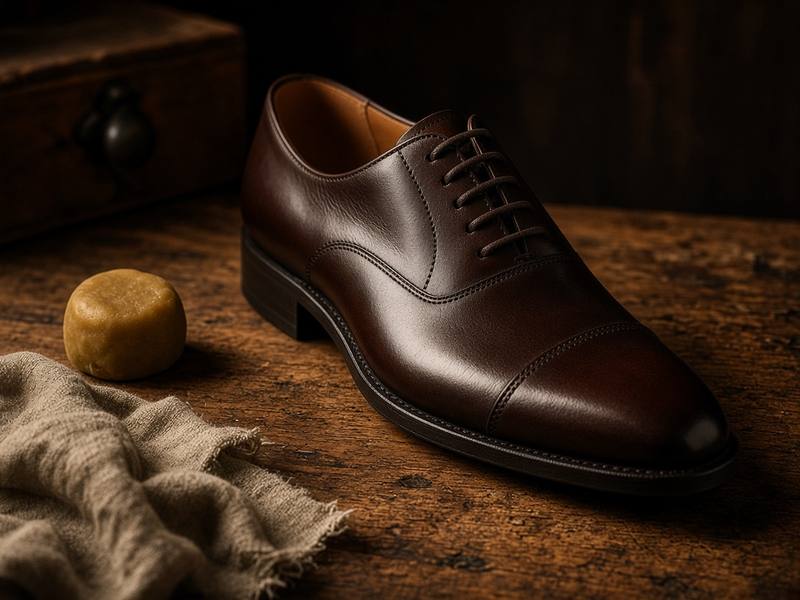
 Visit official site ↗
 Visit official site ↗
 Visit official site ↗
 Visit official site ↗
 Visit official site ↗
 Visit official site ↗
 Visit official site ↗
 Visit official site ↗
 Visit official site ↗
 Visit official site ↗
 Visit official site ↗
 Visit official site ↗
 Visit official site ↗
 Visit official site ↗
 Visit official site ↗
 Visit official site ↗
 Visit official site ↗
 Visit official site ↗
 Visit official site ↗
 Visit official site ↗
 Visit official site ↗
 Visit official site ↗
 Visit official site ↗
 Visit official site ↗
 Visit official site ↗
 Visit official site ↗
 Visit official site ↗
 Visit official site ↗
 Visit official site ↗
 Visit official site ↗
 Visit official site ↗
 Visit official site ↗
 Visit official site ↗
 Visit official site ↗
 Visit official site ↗
 Visit official site ↗
 Visit official site ↗
 Visit official site ↗
 Visit official site ↗
 Visit official site ↗
 Visit official site ↗
 Visit official site ↗
 Visit official site ↗
 Visit official site ↗
 Visit official site ↗
 Visit official site ↗
 Visit official site ↗
 Visit official site ↗
 Visit official site ↗
 Visit official site ↗
 Visit official site ↗
 Visit official site ↗
 Visit official site ↗
 Visit official site ↗
 Visit official site ↗
 Visit official site ↗
 Visit official site ↗
 Visit official site ↗
 Visit official site ↗
 Visit official site ↗
 Visit official site ↗
 Visit official site ↗
 Visit official site ↗
 Visit official site ↗
 Visit official site ↗
 Visit official site ↗
 Visit official site ↗
 Visit official site ↗
 Visit official site ↗
 Visit official site ↗
 Visit official site ↗
 Visit official site ↗
 Visit official site ↗
 Visit official site ↗
 Visit official site ↗
 Visit official site ↗
 Visit official site ↗
 Visit official site ↗
 Visit official site ↗
 Visit official site ↗
 Visit official site ↗
 Visit official site ↗
 Visit official site ↗
 Visit official site ↗
 Visit Instagram ↗
 Visit official site ↗
 Visit official site ↗
 Visit official site ↗
 Visit official site ↗
 Visit official site ↗
 Visit official site ↗
 Visit official site ↗
 Visit official site ↗
 Visit official site ↗
 Visit official site ↗
 Visit official site ↗
 Visit official site ↗
 Visit official site ↗
 Visit official site ↗
 Visit official site ↗
 Visit official site ↗
 Visit official site ↗
 Visit official site ↗
 Visit official site ↗
 Visit official site ↗
 Visit official site ↗
 Visit official site ↗
 Visit official site ↗
 Visit official site ↗
 Visit official site ↗
 Visit official site ↗
 Visit official site ↗
 Visit official site ↗
 Visit official site ↗
 Visit official site ↗
 Visit official site ↗
 Visit official site ↗
 Visit official site ↗
 Visit official site ↗
 Visit official site ↗
 Visit official site ↗
 Visit official site ↗
 Visit official site ↗
 Visit official site ↗
 Visit official site ↗
 Visit official site ↗
 Visit official site ↗
 Visit official site ↗
 Visit official site ↗
 Visit official site ↗
 Visit official site ↗
 Visit official site ↗
 Visit official site ↗
 Visit official site ↗
 Visit official site ↗
 Visit official site ↗
 Visit official site ↗
 Visit official site ↗
 Visit official site ↗
 Visit official site ↗
 Visit official site ↗
 Visit official site ↗
 Visit official site ↗
 Visit official site ↗
 Visit official site ↗
 Visit official site ↗
 Visit official site ↗
 Visit official site ↗
 Visit official site ↗
 Visit official site ↗
 Visit official site ↗
 Visit official site ↗
 Visit official site ↗
 Visit official site ↗
 Visit official site ↗
 Visit official site ↗
 Visit official site ↗
 Visit official site ↗
 Visit official site ↗
 Visit official site ↗
 Visit official site ↗
 Visit official site ↗
 Visit official site ↗
 Visit official site ↗
 Visit official site ↗
 Visit official site ↗
 Visit official site ↗
 Visit official site ↗
 Visit official site ↗
 Visit official site ↗
 Visit official site ↗
 Visit official site ↗
 Visit official site ↗
 Visit official site ↗
 Visit official site ↗
 Visit official site ↗
 Visit official site ↗
 Visit official site ↗
 Visit official site ↗
 Visit official site ↗
 Visit official site ↗
 Visit official site ↗
 Visit official site ↗
 Visit official site ↗
 Visit official site ↗
 Visit official site ↗
 Visit official site ↗
 Visit Facebook ↗
 Visit official site ↗