A Rome wine shop, founded in 1821. Trimani has been selling wine to Romans for over 200 years — the shop stocks over 5,000 labels from Italy and beyond.
Best for 5,000-plus wine labels and Rome enoteca pours
The Pope's tailor since 1798. Gammarelli has dressed every Pope for over two centuries — white cassocks, red mozzettas, and the scarlet robes of cardinals.
Best for White cassocks, red mozzettas, and the scarlet robes of cardinals
Ditta G. Poggi has supplied Rome's painters since 1825, a history the shop marks with its own "belle arti dal 1825" branding. It now trades from four Roman addresses near the city's studios, selling watercolours, oils, and brushes.
Best for Nearly two centuries of supplying Rome's painters
Ditta G. Poggi dates its trade to 1825, a founding the shop itself marks in its name — "belle arti dal 1825" — and in a "200 anni" anniversary marked on its own site. Over two centuries it has served Rome's working artists, with sources naming Giorgio de Chirico, Mario Schifano and Piero Dorazio among the painters who bought materials there — a client list spanning Metaphysical painting through Rome's postwar avant-garde.
The business now runs from four Roman addresses rather than one — Via del Gesù near the Pantheon, Via Cardinale Merry del Val in Trastevere, Via di Ripetta near Piazza del Popolo, and Via Po — a spread that reads less like retail expansion and more like a shop that never left the neighborhoods where artists actually work. Its catalogue covers the full working range of a fine-art retailer: watercolours, acrylics, oils, tempera and gouache paints; pencils, pastels and graphite; brushes; paper and sketchbooks; canvas and painting supports; easels; gilding materials; and printmaking supplies.
What distinguishes Poggi from a newer multi-branch retailer is the two-century line behind it: a single family trade whose four current shopfronts sit within walking distance of the city's own art academies and studios, still selling to the same kind of working painter its earliest ledgers would have served.
Italy's largest bookstore chain, and the Via del Corso flagship is the biggest in Rome. Three floors of Italian and international books, music, and gifts.
Best for Three floors of Italian and international books, music, and gifts
Babington's Tea Rooms opened on December 4, 1893, at Via Due Macelli 66 near Piazza di Spagna in Rome, founded by two young women, Anna Maria Babington and Isabel Cargill — granddaughter of Captain William Cargill, founder of Dunedin, New Zealand — who invested 100 pounds of their own savings into a tea and reading room for Rome's Anglo-Saxon community.
Best for Hand-blended tea served in a Piazza di Spagna tea room
Babington's Tea Rooms opened on December 4, 1893, at Via Due Macelli 66 near Piazza di Spagna in Rome, founded by two young women, Anna Maria Babington and Isabel Cargill — granddaughter of Captain William Cargill, founder of Dunedin, New Zealand — who invested 100 pounds of their own savings into a tea and reading room for Rome's Anglo-Saxon community. It was a genuine risk at the time: in 1890s Italy, tea was sold mainly in pharmacies, not in shops built to serve and drink it.
The business survived where the risk might have suggested otherwise, staying open through Mussolini's anti-English climate and the Second World War with its English-language sign intact in solid bronze on a Roman travertine plaque. It is now run by a fourth generation of the founding families, still hand-blending teas with no artificial flavoring, and in 2018 launched the Babingtons Foundation, funding education in Darjeeling — tying the shop's supply chain back to the region much of its tea still comes from.
For a Roman institution founded by an Englishwoman and a New Zealander, Babington's own description still holds: not entirely British, not precisely Italian, but Babingtons.
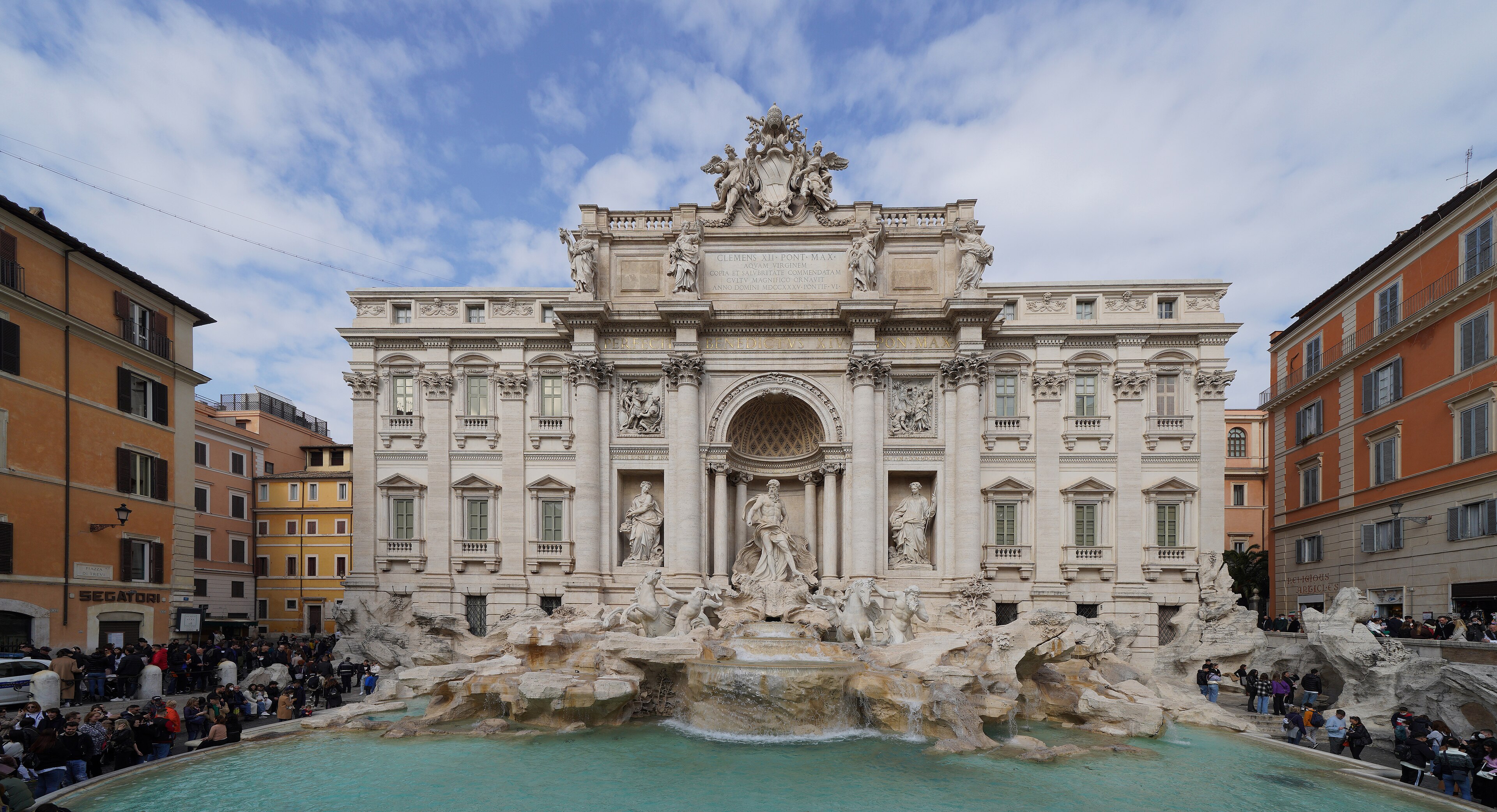
Among Rome's oldest pharmacies, founded 1552 by Andrea and Vincenzo Pesci; since 1911 housed at Piazza di Trevi 89 in the Palazzo Castellani, with original 16th-century apothecary cabinetry and a 1552 mortar still on display.
Best for Five-century apothecary remedies.
Antica Farmacia Pesci opened in 1552 as a spezieria (apothecary), founded at the pope's behest to distribute medicines to the poor of the neighborhood, and is credited as the oldest pharmacy in Rome. It was established by Andrea and Vincenzo Pesci before management passed to the Del Monaco family. Its location has moved twice: originally sited opposite the Acqua Vergine fountain in 1552, it relocated to Piazza Trevi in 1609, and moved into its current premises in 1911 - the ground floor of the nineteenth-century Palazzo Castellani at Piazza di Trevi 89, a few steps from the Trevi Fountain. The pharmacy has preserved its historic interior: dark wood cabinetry lined with antique boxes and jars, and a mortar dated to the shop's founding year of 1552.
The Rome outpost of Florence's apothecary, founded by Dominican monks in 1612. Santa Maria Novella produces exquisite perfumes, colognes, skincare, and home fragrances using traditional form.
Best for Florence's apothecary (1612) — Dominican formulas in dark wood and marble splendor.
Tolentino leather-goods heritage since 1907 — Marche craftsmanship spanning fashion, bags, accessories, and luxury goods.
Best for Heritage leather goods.
Nazareno Gabrielli is one of Italy's oldest and most respected leather goods companies, founded in 1907 in Tolentino (Marche region). The company began as an artisan workshop for sophisticated decoration using advanced techniques such as photoengraving and xylographs. By 1922, the business expanded into clothing and leather goods, bags, and gloves. In 1928, Fiat commissioned Nazareno Gabrielli to create leather padding for Italy's first royal train. From the post-war period onward, the brand became one of the most prestigious names in Italian fashion, reaching peak expansion in the 1980s across leather goods, clothing, accessories, diaries, and licensed manufacturing for brands including Cartier. The company is headquartered at Contrada Cisterna 63, Tolentino (Macerata).
Rome’s oldest hat workshop — the Cirri family’s 1936 laboratorio, revived by Patrizia Fabri; the only hatter honored as a Historical Shop of Rome, blocking on original wooden forms in Via degli Scipioni.
Roman power tailoring since 1945, hand-made in its Penne school-factory — Bond's suits from Abruzzo hands. 1959: Fonticoli opened production in his hometown Penne. 1985: Scuola di Alta Sartoria opened there. it closed 2020 and later reopened (16 students, average age 19; 800 of 1,300 course hours are sewing).
Best for The world's most polished suits.
Brioni solved the problem every luxury craft house eventually faces — where will the next hands come from? — by building a school. In Penne, a hill town in Abruzzo, the house founded in Rome in 1945 runs its own tailoring academy alongside its workshops: young cutters trained for years in the Brioni method before their work ever touches a client, the town and the house grown into one continuous apprenticeship. Roman power tailoring is not just made in Penne; it is taught there, generation after generation, by design.
The result on the hanger is the suit at its most cinematic. Brioni dressed James Bond — the character whose tailoring is a plot point — and the fit that made 007 look invincible is the house signature: strong shoulders, a clean sweep, hand work throughout, the Roman conviction that a suit is armor that should photograph well. Where Naples softened the jacket, Rome polished it; Brioni is that polish at its highest grade.
Every suit is hand-made in the house's own facilities — no license, no outsourcing of the thing itself — which is what the Penne academy protects: a supply chain of skill. Luxury houses can buy fabric, buildings, and campaigns; they cannot buy a town that has been training tailors for them since the postwar years. The world's most polished tailoring, taught, made, and guarded in one place — and measured, fitted, and worn wherever power dresses for the camera.
Rome shirting-and-hosiery shop opened on Via del Corso in December 1870 by Viennese founders; passed to the Bloch family in the early 1900s and now run by fourth-generation owner Andrew Bloch Fiorelli, selling nightwear, shirts and knitwear.
Best for Old-Rome shirts and hosiery.
Schostal opened on Rome's Via del Corso in December 1870, founded by Viennese proprietors as an undergarments, hosiery and shirting shop - its first sign read 'To the City of Vienna' in tribute to its origins. The shop passed to the Bloch family in the early 1900s and survived both the upheaval of the First World War, when its Austrian founders had to leave Italy, and later Mussolini's racial laws. It is now run by fourth-generation owner Andrew Bloch Fiorelli from a location near Campo Marzio, still selling handmade nightwear, dress shirts, knitwear, ties and hosiery in the old-world style that built its reputation.
Roman fur-and-leather dynasty since 1925 — Baguettes, Peekaboos, and the Palazzo della Civiltà headquarters. house launched 1925 as a fur and leather shop on Via del Plebiscito; Karl Lagerfeld joined 1965; Silvia Venturini Fendi designed the Baguette in 1997 and the Peekaboo in 2009. HQ in Palazzo della Civiltà Italiana (EUR).
Best for Baguette bags and Roman-made leather craft.
Adele and Edoardo Fendi opened their Roman fur and leather workshop in 1925, and the house that grew from it remained a family matriarchy for decades — five Fendi sisters ran it together, hiring a young Karl Lagerfeld in 1965 for what became the longest designer-house relationship in fashion history. Lagerfeld drew the double-F logo and transformed fur from stiff status symbol into supple, experimental material; the Roman ateliers' leather mastery produced the Baguette in 1997, the small shoulder bag that became the first 'it bag' and remains the house signature, joined by the Peekaboo. Fendi's headquarters occupy the Palazzo della Civiltà Italiana, the colonnaded icon of EUR, binding the house permanently to Roman architecture. The Baguette and Peekaboo are the collectors' constants; the Selleria line shows the saddle-stitched leather craft at its most traditional.
Ask to see the Selleria pieces stitched with the visible saddle stitch — the Roman leather craft that predates the fashion house survives most plainly there.
Roman couture house founded in 1960 by Valentino Garavani on Via Condotti — home of the signature rosso red; since 1967 its creative studios and couture ateliers have worked from Palazzo Mignanelli, adjoining the Piazza di Spagna flagship.
Best for Rockstud accessories and red-carpet romance.
Valentino Garavani opened his Roman couture house in 1960 on Via dei Condotti and dressed the dolce vita at its height — Elizabeth Taylor, Jacqueline Kennedy (who wore Valentino for her wedding to Onassis), and decades of red carpets in the saturated shade the industry simply calls Valentino red. His all-white 1968 collection remains a couture landmark. The founder retired in 2008 after a nearly fifty-year reign unusual for its consistency of vision: unapologetic beauty, Roman grandeur, extraordinary atelier handwork. Successors — most influentially Pierpaolo Piccioli — carried the couture spirit forward, keeping the Roman ateliers central and the red renewed. Rockstud accessories brought the house a modern signature in studs and leather. In Rome the house is at home: the couture salons remain in Palazzo Mignanelli, and a red dress or Rockstud purchase carries the city's DNA directly.
In Rome, walk past Palazzo Mignanelli near the Spanish Steps to see the couture house itself; the Rockstud pieces in the signature red are the portable version.
Rome jewelry house founded in 1884 by Greek silversmith Sotirio Bulgari, who opened his first boutique on Via Sistina; the flagship moved to Via dei Condotti in 1905, where it became a fixture of Rome's 'Dolce Vita' era. Known for the Serpenti coil motif and bold cabochon-set high jewelry.
Best for Serpenti jewels and Roman high jewelry.
Jewelry houses borrow from antiquity; Bulgari behaves like its heir. Founded in Rome in 1884, the house works as if the classical world were not a museum but a supplier — coins set into gold, cabochons cut bold and domed where Paris whispers in facets, colored stones combined with an appetite the Romans would have recognized as their own. The result reads instantly: this is jewelry from the city of emperors, made by a house that never saw a reason for restraint to be the only form of taste.
The Serpenti is the thesis worn on the wrist: a snake of gold and enamel coiling as if excavated from a villa and improved by modern hinges — antiquity, engineered. It slithers through the house's history from watches to high jewelry, the emblem of a maison that treats glamour as a Roman birthright. Via Condotti, at the foot of the Spanish Steps, is the ancestral address: the boutique where the dolce vita bought its jewels and the twentieth century's most photographed women stopped between films.
Everything is handcrafted in Rome from precious stones and metals, and the Roman-ness is not a marketing note but a working method — the boldness of scale, the saturation of color, the conviction that a jewel should be seen across a piazza. Paris made jewelry an etiquette. Rome, through Bulgari, kept it an appetite.
Frette has made luxury linens in Monza, Italy since 1860, supplying sheets to grand hotels and royal trousseaux. Its linens are still woven in Italy, and the house is also known today for cashmere throws.
Quinto quarto specialists — offal, oxtail, the fifth quarter of the cow, and the Testaccio restaurant that turned butcher's cuts into Roman haute cuisine.
Best for Offal, oxtail, fifth quarter, butcher's cuts.
Rome's historic literary café since 1760 at Via Condotti 85-86, hosting artists and writers with velvet rooms and an extensive art collection.
Best for Espresso with two centuries of ghosts.
Antico Caffè Greco stands as one of Rome's most storied establishments, operating for over two and a half centuries at Via dei Condotti 85-86 in the heart of the city. Founded in 1760, the café has served as a legendary gathering place for artists, writers, and cultural figures throughout its long history. The café is notable for its impressive collection of artworks, including paintings, sculptures, portraits, and historical artifacts (dipinti, statue, ritratti, medaglioni) alongside letters, manuscripts, and memorabilia documenting its extensive heritage. The interior features distinctive velvet rooms that evoke its historical grandeur. Antico Caffè Greco's reputation as a center of Roman intellectual and artistic life is reinforced by documented anecdotes and the famous patrons who have gathered there over generations, making it a cultural institution as much as a café.
The Parisian macaron maison since 1862 — pastel towers, double-decker macarons and salon-de-thé romance. Pierre Desfontaines, Louis-Ernest Ladurée's second cousin, joined two macaron shells with a filling; Jeanne Souchard (Ernest's wife) is credited with creating one of the first Paris tea rooms at Rue Royale.
Best for Pastel macaron boxes.
Ladurée began as a Parisian bakery in 1862, and its tea salon on Rue Royale — with ceiling cherubs painted by Jules Chéret — helped establish the salon de thé as an institution where women could meet unaccompanied. The house's claim on posterity is the double-decker macaron: two almond-meringue shells joined with ganache, an assembly Ladurée popularized in the twentieth century and turned into the pastel-boxed emblem of Parisian sweetness worldwide. The Rome address on Via Borgognona delivers the full ritual — the mint-green livery, the pyramid of shells in rotating seasonal flavors, the pastries beyond macarons that reward attention: the Ispahan's rose-lychee-raspberry combination has entered the pastry canon. Buy macarons to carry, but sit if there is time; the salon experience, unhurried and slightly theatrical, is the original product.
Macarons travel poorly beyond a day; buy the last morning, and choose the seasonal flavors over the permanent ones — the pastry kitchen's invention shows there.
Antica Cartotecnica on Piazza dei Caprettari in Rome dates its history to 1930, when Elisa Berti began working for the wholesale stationer then in the building; within a few years she took the business over. Alongside fountain pens, ink and fine paper, it still offers pen repair and custom printing of stationery and letterhead.
Best for Vintage and contemporary fountain pens with in-house pen repair
Antica Cartotecnica's history starts in 1930, when Elisa Berti took a job at a wholesale stationery business with a retail shop attached, at Piazza dei Caprettari 61 in Rome's historic center. Within a few years its owner moved abroad and she took the business over, later running it with her children. Her grandson Alessandro runs it today, and the wholesale side has long since moved out of the center. The business describes itself as having watched Rome change around it while keeping its own character and atmosphere intact.
The shop's stock spans both new and vintage writing instruments: fountain pens, inks and refills sit alongside writing paper, stationery, leather goods and a collection of vintage pens and inkwells sold as collectibles. That mix of contemporary retail and chosen vintage stock is central to how the shop presents itself, as a destination for both everyday writing supplies and pieces aimed at collectors.
Beyond selling pens, Antica Cartotecnica also services them: the shop offers pen repair and maintenance, custom leather work, and printing services for business cards, letterhead and personal writing paper. It also handles personalized gifts and decorative objects alongside its core stock of pens, inkwells and vintage collectibles. Notebooks and leather pieces under the shop's own name are made for it by Italian artisans. Its pen work is repair and servicing rather than manufacture, and that service counter is what distinguishes it from a stationer that only sells.
Rome's other great coffee institution, roasting near the Pantheon since 1938. The Ricci brothers, running it since 1999, still whip the Gran Caffè Speciale to order.
Best for The Gran Caffè Speciale, whipped since 1938, Ricci brothers since 1999.
Caffè Sant'Eustachio has stood at Piazza Sant'Eustachio 82, a few steps from the Pantheon, since 1938, when it opened as a wood-fired roastery on a site that had housed a café called Caffè e Latte back in the 1800s. The Ricci brothers have run it since 1999, continuing a sourcing policy that leans on organic, fair-trade coffee bought through Slow Food presidiums, with beans imported directly from South America into a blend the shop calls 100% superior Arabica.
The signature is the Gran Caffè Speciale: a shot whipped by hand into a dense, almost mousse-like foam that holds together longer than a standard crema. The exact technique — how the baristas whip it, and how they keep the foam from collapsing — is not something the shop publishes or explains to customers, and regulars treat that reticence as part of the ritual. It has made Sant'Eustachio the rival camp to Rome's other storied roaster, argued over by locals the way football clubs are.
Buccone is a Rome enoteca selling wine by the bottle and serving pours in a former coach house. Bottle retail is genuine, though hospitality and tasting are equally central to the visit.
A wine shop and tasting room on Monterosso's Via Roma, family-run since 1996, specializing in Cinque Terre wine and typical products. Its shelves carry salted anchovies, pesto, Monterosso lemons, olive oil and cured meats alongside local and Italian bottles.
Rome antiquarian bookshop specializing in rare books, maps, and engravings, family-run by the D'Aniello family since 1991. Currently at Piazza Sallustio 14. Founded 1974, not 1931 as sometimes stated.
Best for Antiquarian books and prints.
Ex Libris is a Rome antiquarian bookshop specializing in rare and antique books, maps, and engravings, with particular emphasis on first editions. According to the shop's own 'Chi siamo' page and its listing with A.L.A.I. (the Italian antiquarian booksellers' association), the business was founded in 1974, not 1931. The D'Aniello family took over management in 1991; the shop was more recently run by Emidio and Leone D'Aniello, alongside Maria Pia Lanzoni until her death in 2022. It is a member of the International League of Antiquarian Booksellers. The shop is currently located at Piazza Sallustio 14 in Rome's Ludovisi-Sallustiano district, open Tuesday through Saturday.
Pergamena is a workshop specializing in handmade paper and bookbinding. Production is associated with Handcrafted in their Roman workshop using traditional techniques, while the range centers on handmade paper, bookbinding and stationery.
Best for Handmade paper, bookbinding and stationery
Near the Pantheon — granita di caffè con panna (coffee granita with cream), the summer ritual, and the Rome caffè that invented the coffee slushie.
Best for Granita di caffè con panna (coffee granita with cream), the summer ritual
Tazza d'Oro's own site dates the business to 1944, when it opened as an artisanal coffee roastery in Rome, and the company describes itself as the only original-era artisanal coffee business still operating in the city's historic center. Four generations of the same family have run it since. The house's signature blend, La Regina dei Caffè ("the queen of coffees"), anchors a lineup that also includes an organic line and single-origin options, and the roastery bottles its own coffee liqueur, Aroma di Roma.
The café trades as "La Casa del Caffè al Pantheon," a name that points to its best-known address, steps from the Pantheon in Rome's centro storico, where the house specialty is granita di caffè con panna — coffee granita layered with cream, sold by the cupful through the Roman summer. It's less a single café than a small roasting company that happens to run a famous coffee bar: the family sells whole beans, capsules, and moka pots alongside the granita, and treats the organic and ecological side of its production, per its own site, as seriously as the historic blend that built the name. Eighty years and four generations in, it's still the same family pouring the same queen-named blend a few steps from the Pantheon.
A family leather workshop creating hand-stitched bags, belts, and accessories from vegetable-tanned Tuscan leather. Three generations of craftsmanship at prices far below designer equivalents.
Best for Family leather workshop creating hand-stitched bags, belts
A Rome footwear and leather-goods house opened in 1971 by Fausto Santini, son of a shoemaker, on Via Frattina near the Spanish Steps; known for sculptural, architecturally influenced shoe design developed with figures including Aldo Rossi.
Best for Sculptural Italian shoes and geometric leather bags
Fausto Santini opened his first atelier on Via Frattina in Rome in 1971. He came from a shoemaking family — his father Giacomo Santini ran a shoe shop in Rome where Fausto apprenticed — though Fausto himself had trained as a lawyer before turning to footwear. The Via Frattina boutique, still operating today, established the house's identity early: rather than following seasonal fashion cues, Santini treated each shoe and bag as a formal design exercise, working with pared-back, geometric silhouettes that read closer to small sculpture than conventional footwear. That architectural approach was reinforced through direct collaborations with architects and designers, including Aldo Rossi, Andrea Branzi and Antonio Citterio, who worked with Santini on object and packaging design over the years. The house also operates an outlet location on Via Cavour, named for Fausto's father, selling past-season stock from the Via Frattina and Paris boutiques. Production remains based in Italy. Santini's minimalist, sculptural shoe designs have been referenced repeatedly in fashion and design press as a case of architectural thinking applied directly to footwear construction rather than surface decoration.
Florentine handbag house founded in 1954 by Carla and Roberto Braccialini as a small straw-bag workshop; after Roberto's death in 1976, Carla took over and introduced the whimsical animal- and object-shaped bags - cars, fish, birds - that became the brand's signature.
Best for Playful sculptural handbags.
Braccialini was founded in Florence in 1954 by Carla Braccialini and her husband Roberto, starting as a small workshop producing straw handbags decorated with leather appliques. After Roberto's death in 1976, Carla took control and steered the brand toward the whimsical, sculptural bag shapes - cars, fish, birds, shoes - that became its trademark. Through the 1960s-1980s the brand expanded into the US, Germany and Japan, and in 1987 began a collaboration with Vivienne Westwood. Today Braccialini is headquartered at Via di Casellina in Scandicci, near Florence.
Carpisa supports luggage after purchase with free repairs or spare parts, including some items outside the standard warranty. Selected suitcases also use a scannable code that can help a finder contact the owner.
Best for Well-designed, affordable Italian luggage — practical and stylish for a weekend bag.
Opened in 1946 at 61A Via Condotti by Guglielmo Battistoni, a former Academy of Fine Arts student turned shirtmaker, this Rome atelier became an artists' gathering place from the 1950s — works by Picasso, Modigliani, Guttuso and Cocteau still hang on its walls — and dressed Marlon Brando and Andy Warhol.
Best for Roman dress shirts and tailoring.
Battistoni was founded in 1946 by Guglielmo Battistoni at 61A Via Condotti in Rome, in a courtyard just off the street. Battistoni had studied at the Academy of Fine Arts and came to shirtmaking, by his own account, out of both necessity and vocation rather than family trade. He became known for modernizing the men's shirt collar, cutting the points slightly longer and wider than the classical standard of the time. From the 1950s the atelier's courtyard location became a gathering point for artists and writers passing through Rome, and works by Pablo Picasso, Amedeo Modigliani, Renato Guttuso, Roberto Matta and Jean Cocteau still hang on its walls today, left by clients and friends of the house. The client list that built the brand's reputation for discreet luxury included Marlon Brando, Clark Gable, Gianni Agnelli, the Duke of Windsor, Charlie Chaplin, Marc Chagall, John Cassavetes and Andy Warhol. Guglielmo's son, Gianni Battistoni, later led the house; Gianni Battistoni died in 2024, marking a generational close covered in the Italian fashion trade press.
The Brioni Bespoke experience — fully custom suiting from measurement to final stitch, with fittings in Rome and the Penne atelier producing one suit at a time.
Best for Fully custom, Rome fittings, and the expression of Roman tailoring.
Bespoke menswear atelier opened in 2000 on Via di Ripetta near Piazza del Popolo in Rome by tailor Andrea Luparelli, following his grandfather's trade. Bespoke only, no made-to-measure line; also produces raincoats, suede jackets, ties and leather travel bags.
Best for Roman bespoke, modern
Sartoria Ripense is a bespoke menswear atelier on Via di Ripetta in Rome, close to Piazza del Popolo, opened in 2000 by tailor Andrea Luparelli. Luparelli has said his interest in tailoring began in childhood, watching his grandfather - also a tailor - work. The atelier offers bespoke suits and made-to-order clothing built from scratch for each client, deliberately without a made-to-measure line. Beyond suits, Sartoria Ripense also makes raincoats, suede jackets, ties, pocket squares, shirts and leather travel bags, often working with vintage or archival fabrics.
Rome outpost of United Colors of Benetton, the Italian knitwear brand founded in 1965 by the Benetton siblings near Treviso; this large store sits on Piazza di Spagna at the foot of the Spanish Steps.
Best for Color-block knits.
This Piazza di Spagna location is a retail store of United Colors of Benetton, the Italian fashion group founded in 1965 by siblings Luciano, Giuliana, Carlo and Gilberto Benetton. Luciano had begun selling sweaters knitted at home by Giuliana to shops around Treviso as early as 1955; when Carlo and Gilberto joined in 1965, the family opened its first factory in Ponzano Veneto, where the group's headquarters remains today. The 'United Colors of Benetton' name was adopted in 1989. This shop occupies a large storefront at Piazza di Spagna 67-69, at the foot of the Spanish Steps in central Rome.
Italian knitwear label founded by Carlo Stefanel, who built a Treviso-region spinning/knitting business from 1947 into the Stefanel brand launched in the 1970s, with franchise retail from 1979.
Best for Easy Italian knits.
Stefanel is an Italian fashion label rooted in the Veneto region's textile industry. Carlo Stefanel, born in 1925 in Ponte di Piave, began working in his aunt's spinning mill in nearby Oderzo and started selling wool and fabric at local markets from 1947. In 1959 he bought four knitting machines and founded Maglifico Piave, initially supplying wholesalers across Italy and Europe from the Treviso area - the same region that later produced Benetton and Diesel. His son Giuseppe, born in 1952, joined at the end of the 1960s, taking charge of yarn and textile production. Through the 1970s the company began designing and selling clothing directly under the Stefanel name, and in 1979 developed its own retail-store concept and began franchising.
A small artisan clothing business at Via Gaetano Luporini in Rome, run by Ulyana Yavorska, producing handmade leather jackets and knitwear for men alongside a women's line, with private-label wholesale for other boutiques.
Best for Fashion clothing, leather; Fashion
Yavorska is a small Rome-based clothing operation registered at Via Gaetano Luporini 37a, run by Ulyana Yavorska and described in an Italian B2B wholesale directory as producing handmade apparel. Its men's line centers on leather jackets, sport jackets, and knitwear made with premium yarns, alongside a women's line of dresses, blouses, and outerwear. The business positions itself as an atelier offering private-label and white-label manufacturing services for other boutiques and emerging labels, in addition to its own small-batch pieces.
Rome's gourmet institution since 1932 — roastery, pantry, and the shelves every Roman raids for gifts.
Best for Roastery, pantry, and the shelves every Roman raids for gifts
Castroni traces its own history to 1932 in Rome, and the company still frames its identity around the city specifically — the site's language is 'l'amore per Roma,' love for Rome, rather than a generic import-shop pitch. It now operates thirteen stores across the capital, each stocking a mix of house-roasted coffee (roasted at its own Torrefazione Augusta facility in Pomezia, just outside the city) alongside imported goods: wines, oils, tea, liqueurs, confectionery, and ethnic grocery items sourced internationally. The coffee itself draws on beans from Central America, Indonesia, and Africa, positioning Castroni less as a single-origin specialist and more as a general-purpose Roman pantry with a roastery attached — the kind of shop locals use for both an espresso fix and a gift hamper before a holiday. Online ordering and compatible capsule formats extend that same catalog beyond the physical stores. What distinguishes Castroni from Rome's other historic coffee names is this range: it isn't only a café or only a roaster, but a working grocery institution that happens to roast its own coffee, built on ninety-plus years of continuous operation in one city.
Panella is a bakery and gourmet shop that blends Roman tradition with modern innovation.
Best for Roman bread, pizza and pastries on Via Merulana
Panella traces its bakery to 1929, when Augusto Panella founded the business. The company later came under the direction of Maria Grazia Panella, whose work with bread began in 1970 and included study with bakers across Europe. Its Rome premises stand between San Giovanni in Laterano and Santa Maria Maggiore, close to the Auditorium of Maecenas. Bread remains the organising idea rather than one department among many. The bakery says it produces more than seventy kinds of bread. Roman and regional Italian recipes share the range with preparations adapted from ancient Rome, and Panella records more than thirty years of work on gluten-free products. The oven programme includes pizza and breadsticks. Biscuits and friselle appear as well, alongside wine biscuits and bruschetta. Panella describes its pizza as receiving a day-long rise before baking on the stone floor of a Matador oven. These details place the business within a family bakery tradition and show the scale of its bread research. They also explain the breadth of its production and the techniques behind a central part of the menu.
Gabriele Bonci's bakery — if Pizzarium is his temple, this is his laboratory, with exceptional bread, focaccia, pizza, and pastries made from heritage grains and long fermentation.
Best for Heritage-grain bread, focaccia and pastries
Operating in Recco since 1885, Manuelina is regarded as a home of focaccia col formaggio, the region's cheese-filled focaccia. Alongside the focacceria it serves Ligurian specialties and offers a 'Home Edition' product line.
A street food stall inside Mercato di Testaccio serving Roman-style sandwiches filled with traditional stewed meats — trippa alla romana (tripe), coratella (lamb offal), and picchiapò (boiled beef with tomato).
Best for The allesso panino.
Mordi e Vai is Box 15 in the Mercato di Testaccio. Its soft ciabatta rolls are dipped lightly in broth before they are filled, so eat the sandwich at the stall rather than carrying it far.
Founded in 1900. Giolitti has been serving exceptional gelato to Romans and visitors for over 120 years. The hazelnut, pistachio, and stracciatella are the classics, but the seasonal fruit flavors are equally good. The whipped cream (panna) on top is always free.
Rome's most outdoor market, operating on this square since 1869. Fresh produce, flowers, spices, and local specialties fill the stalls from dawn until early afternoon. The atmosphere is quintes.
Best for Produce, flowers and market shopping in Campo de’ Fiori
Mercato Testaccio is Rome's modern market in the old slaughterhouse quarter, combining produce counters with street food.
Best for Roman market grazing.
The market can be entered from four streets: Via Beniamino Franklin, Via Alessandro Volta, Via Aldo Manuzio and Via Lorenzo Ghiberti. Use whichever entrance is nearest your approach through Testaccio.
Mercato di Testaccio, the covered rione market of Rome's Testaccio quarter - "100 banchi, 100 storie" - mixing produce stalls, food counters and shopping under one roof. First-party door live with market pages and stall directory.
Best for Produce stalls, food counters and neighborhood shopping
A culinary school and food shop offering English-language classes in pasta, pizza, gelato, and Roman classics, plus high-quality Italian ingredients to take home.
Best for Culinary school and food shop offering English-language classes in pasta, pizza, gelato
Gianni and Alina Dasso opened this fresh-pasta shop on Via Roma in February 1986, hand-filling ravioli and pansotti with recipes drawn from family pasta makers already working the Ligurian coast. The lab still turns out egg pasta by hand alongside pesto and walnut sauce, and now supplies Eataly branches in Genoa, Turin, and Munich.
Best for Handmade ravioli, pansotti, and Ligurian sauces
Piera and Bartolomeo Costanza run this family operation putting up tuna fillets, mackerel, swordfish and bottarga preserved in olive oil alone, with no added dyes or preservatives, out of their own licensed canning facility on the island. Their shop on Via Roma sells the jarred conserve alongside fresh catch, the same fish worked from harbor to jar without leaving Lampedusa.
Best for Tuna, swordfish and bottarga preserved in olive oil
This Via Roma storefront sells ceramic sea-turtle bracelets, hand-painted fish figurines and natural sea sponges pulled from the island's own sponge-diving tradition, alongside Lampedusa-branded t-shirts and nautical accessories. It runs a street counter and an online shop side by side, both stocked from the same local-craft inventory.
Best for Ceramic turtle bracelets, natural sea sponges and marine souvenirs
Retail arm of Humana People to People Italia, running roughly a dozen secondhand shops across Italian cities; proceeds fund the charity's education, agriculture and health projects in Africa, Asia, Latin America and Italy itself.
Best for Conscience-clean vintage.
Humana Vintage is the retail brand of Humana People to People Italia, the Italian affiliate of an international federation of secondhand-clothing charities operating across Europe, Africa, Asia and Latin America. It is not a single independent boutique but a chain: the organization runs roughly a dozen shops across Italian cities, including Rome, Milan and Florence, selling donated clothing and accessories spanning from the 1960s through recent seasons. Donated garments are sorted at a central selection facility outside Milan, where a team evaluates each piece for quality, age and brand before it is distributed to shops or exported for resale abroad, including into African markets - Humana controls this chain from donation bin to final sale rather than working through third-party sorters. Proceeds fund Humana People to People's development projects, which the organization describes as covering education, sustainable agriculture, community development and health programs in the Global South as well as in Italy. Its Florence branch, one of the newer additions to the network, opened in November 2022; a Rome location has operated on Via Cavour, near the city's Monti district.
Pifebo stocks carefully curated vintage — 1970s Italian leather jackets, 1950s silk scarves, denim and accessories. Fair prices, staff who know their fashion history, and a Monti institution.
Rome vintage-jewelry house that grew out of an 1894 cafe near Piazza di Spagna; Pietro Eleuteri turned it into an antiques shop in 1963, and his son Carlo built it into Italy's leading dealer in antique and vintage jewelry, headquartered on Via Condotti.
Best for Collector estate jewels.
Eleuteri's Rome address at Via Condotti 79 has a history that predates jewelry: in 1894 an elegant cafe opened at nearby Via del Gambero 7. The shift to jewelry came in 1963, when Pietro Eleuteri, a collector with a passion for ancient art, opened an antiques shop on the site. His son Carlo went on to specialize in vintage and antique jewelry, building what is now widely regarded as Italy's foremost destination for the category. Eleuteri has since expanded with boutiques in Milan, Venice, Cortina, Porto Cervo, St. Moritz and New York, and has lent pieces to institutional exhibitions including the Royal Academy of Arts in London and the Musee d'Orsay in Paris.
This Ravello workshop makes its ceramics entirely by hand in both form and decoration, so each piece varies slightly. The range runs from coasters priced from about 12.50 EUR up to premium lava-stone tables, plus tableware, decorative plates and home decor.
Best for Hand-painted Amalfi Coast ceramics and lava-stone tables
Anna and Andrea opened this Via Roma workshop in Capoliveri in 2010, casting jewelry by the lost-wax method around natural gemstones and minerals. Andrea, a trained gemmologist, sources and cuts the stones himself, so each piece is made and sold on the island.
KnIndustrie is a contemporary Italian kitchen brand that reimagines cookware as design objects. Production is designed and manufactured in Italy, while the range centers on cookware as design objects — matte finishes, clean lines, beautiful enough to display.
Best for Cookware as design objects — matte finishes, clean lines, beautiful enough to display.
Family-run pizza al taglio stand (Box 22) inside Rome's Nuovo Mercato di Testaccio, run by Paola and Andrea; dough ferments up to 100 hours, topped with seasonal, market-sourced ingredients.
Best for Hand-printed southern table linens.
CasaManco is a pizza-by-the-slice stand run by husband-and-wife team Paola and Andrea from Box 22 inside Rome's Nuovo Mercato di Testaccio, open mornings into early afternoon, Monday through Saturday. The couple came to pizza-making as a second career and built a following around dough given close to 100 hours to rise, using organic and part-whole-grain flours, producing a crust that stays light and crisp at the edges. Toppings change with the seasons and draw on ingredients from neighboring market stalls - zucchini blossoms, anchovies, 'nduja with soft cheese, roasted vegetables, and less conventional pairings like pear and gorgonzola. The stand also sells suppli, craft beer, wine and soft drinks.
Rome-based luxury leather designer Maurizio Amadei (since 2006), pioneering one-piece garments from single leather or fabric, folded and hand-stitched to preserve material essence.
Best for Hand-cut leather, draped
Maurizio Amadei is a self-taught fashion designer trained in London who founded M.A+ in 2006 following the dissolution of the legendary brand Carpe Diem, where he served as designer. Born in Rome, Amadei established his brand on a singular design philosophy: minimizing seams to allow the raw material itself to emerge as the dominant aesthetic element. M.A+ is celebrated for pioneering innovative one-piece garment construction, often crafted by folding and hand-stitching a single piece of leather or fabric rather than assembling multiple components. This approach preserves structural integrity and the soul of the material while creating distinctive silhouettes. The label is recognized for original cutting techniques, unique fabric treatments, and extraordinary leather pieces. Each creation carries an authenticating mark—either metal or fabric cross—certifying its handmade origin and construction integrity. The brand has developed a strong following among luxury fashion enthusiasts and museum curators, with work represented in contemporary design collections internationally.
Rome's most elegant shopping street, running from the Spanish Steps to Via del Corso, with flagship boutiques from Valentino, Gucci, Prada, Bulgari, and Hermès.
Best for Valentino, Gucci, Prada and Bulgari flagships by the Spanish Steps
The ancient Roman gateway that marks the entrance to the Jewish Ghetto. The Portico d'Ottavia was built by Augustus and later incorporated into a fish market.
Best for Augustus's columns, bustling trattorias, scent of fried artichoke
Rome luxury multi-brand house on Via Frattina, trading as La Cicogna Firme, with baby and children’s wardrobes alongside its broader designer assortment.
Run by the Gronchi family since 1927, this pastry shop on Via Roma has been the official maker of the Torta dei Fieschi since 1949, baking the dessert each year for the medieval Fieschi reenactment in Piazza dei Fieschi on August 14th. Its signature Carugetti pair hazelnut meringue with dark chocolate alongside a case of traditional Ligurian sweets and brioche.
Comptoir des Cotonniers makes understated women’s wardrobe staples, including trench coats, knitwear, shirts and easy separates. The Rome door requires confirmation because the current brand has reduced parts of its store network.
Since 1977 Città del Sole has curated the intelligent toy — wooden, scientific, cooperative, screenless — from its Roman flagship to shops across Italy. A children's store parents linger in.
An Italian lifestyle brand conceived in Rome and launched in New York in 2015 by Francilla Ronchi and Michelangelo Brancato, Coreterno makes vegan, cruelty-free candles and fragrances in Italy inspired by 19th-century engravings and rock-and-pop iconography.
Best for Gothic dark-romantic candles and scents in matte-black vessels from Rome
Coreterno — Italian for 'eternal heart' — is a lifestyle brand conceived in Rome and formally launched in New York in 2015 by Francilla Ronchi and Michelangelo Brancato. Its aesthetic draws on a self-described 'mysterious world' of rebellious artists, poets and engravers, reworking nineteenth-century portraits, antique seventeenth-century engravings, and archetypal rock-and-pop symbols into vintage-styled black-and-white product labels. The brand's candle range spans distinct collections: Visionary Candles, made with organic wax and labeled with short phrases about moods and states of mind, and the Aphrodite Scented Candles line, framed around themes of love. Coreterno states that all its fragrances are vegan and cruelty-free, produced in Italy using a mix of vegetable and mineral waxes, and markets its products around a stated intent to carry messages of strength through visual and olfactory design rather than function alone. Beyond candles, the brand also produces fragrances and jewelry sold through its own site and stockists including department stores such as David Jones and specialty perfumeries.
Run by the Bisso family for over a century, this Recco institution serves focaccia col formaggio to the IGP standard along with a full menu of Ligurian dishes. The complex on Via Roma includes the main restaurant, the Osteria del Vastato and a maison dating to 1920.
Curvier-fit womenswear line launched in 1985 by the Miroglio Group (founded 1947 in Alba, Piedmont by Giuseppe Miroglio). Since 2005 the only plus-size label to show at Milano Moda Donna; sells dresses, knitwear and tailoring across European stores.
Best for Italian womenswear in extended sizes and dresses
Elena Miro was launched in 1985 by the Miroglio Group, the Alba, Piedmont-based textile and fashion company founded in 1947 by Giuseppe Miroglio. The brand was created specifically to dress fuller, curvier figures at a time when plus-size womenswear had little presence in mainstream Italian fashion. Since 2005, Elena Miro has been the only plus-size brand to show on the official calendar of Milano Moda Donna, Milan's womenswear fashion week. It remains part of the wider Miroglio Group portfolio, which also includes labels such as Motivi, Oltre and Fiorella Rubino.
Galleria Benucci is a Via del Babuino's grand antiques gallery, offering museum-scale Italian furniture and paintings. Its practical focus is serious Roman antiques, presented through a physical retail setting in Rome.
Milan fashion house founded 1978 by architect-trained designer Gianfranco Ferré (1944-2007), nicknamed 'the architect of fashion' for structured tailoring and sculptural white shirts; Ferré also served as creative director of Christian Dior from 1989 to 1996.
Best for Architectural white shirts.
Gianfranco Ferré trained as an architect at the Politecnico di Milano before entering fashion, first designing accessories in 1970 and raincoats from 1972 to 1974. He launched his own women's collection and founded Gianfranco Ferré S.p.A. in 1978, adding a menswear line in 1982. His architecture background earned him the nickname 'the architect of fashion,' reflected in structured, geometric tailoring; sophisticated white shirts became a recurring signature across his collections. From 1989 to 1996 he served as creative director of Christian Dior in Paris, where he created the Lady Dior handbag in 1994. Ferré died in Milan in 2007 following a brain hemorrhage; designers including Giorgio Armani, Valentino Garavani and Donatella Versace attended his funeral in his hometown of Legnano. The brand continues today as a multi-line fashion house (Ferré, GF, GF Ferré) with an official e-commerce site and store locator.
Rome perfume house founded in 1996 by siblings Giuseppe, Luciana, Maria and Felice Durante, whose grandfather Celestino Durante built a grooming and perfumery trade in postwar Rome after moving from Sant'Elena Sannita. Extraits concentrated near 43% perfume oil, including the amber-forward Ambra Aurea.
Best for Long-lasting Roman extraits.
Profumum Roma's roots go back to Celestino Durante, who returned from WWII to his farming hometown of Sant'Elena Sannita before relocating to Rome with his wife Luisa. He built a trade around a knife-grinding wheel that could also hone razors and scissors, which grew into shaving soaps, hair lotions and colognes as the family's Roman business expanded across generations. In 1996 Celestino's grandchildren - Giuseppe, Luciana, Maria and Felice Durante - broke away from the conventions of commercial perfumery to found Profumum Roma as an independent house. The brand is built around highly concentrated extraits, formulated around 43% perfume oil, well above typical eau de parfum strength, and presented in minimal, unlabelled-feeling bottles. Its catalogue includes Ambra Aurea, a dense amber composition that is among its best-known scents.
Sant'Eustachio Il Caffè is a Rome coffee roastery established in 1938 near the Pantheon. Its Arabica blend uses coffee imported from South America, with roasting distinct from the beans' agricultural origin. Alongside café service, the shop sells beans and ground coffee for several brewing methods.
Best for Roman-roasted coffee and whole beans
Sant'Eustachio Il Caffè dates its wood-fired roastery to 1938, in a Roman square close to the Pantheon. The premises had an earlier life as Caffè e Latte, but that older establishment should not be confused with the founding date of the present coffee business. The Ricci brothers took ownership in 1999, and the house describes its blend as entirely Arabica with coffee imported from South America. That separates where the beans grow from where the roasting takes place. Visitors can drink coffee at the café and buy it for home, with the shop listing whole beans as well as ground formats for different brewing methods. Moka and filter preparations are separate products, so the right choice depends on the equipment waiting at home. The wider selection includes coffee cups and chocolate-covered coffee beans for a smaller gift. If buying ground coffee, specify the intended preparation rather than assuming the espresso format will suit every brewer. The location also makes a short coffee stop possible during a walk around the surrounding historic streets.
⚒ Tea & Coffee Merchants · Coffee roasted in Rome from beans imported from South AmericaORBIS register
Neighbourhood walks
Walk by recorded area.
Area names come from each shop’s published address record; ORBIS does not invent neighbourhoods.
ORBIS city intelligence
Rome’s objects often arrive carrying the authority of the city around them. Leather, tailoring, jewellery, paper and food become more interesting when that borrowed grandeur is replaced by a living intervention: fit, repair, finishing, selection or a maker still accountable for the result.
Rome is most persuasive when it stops trying to look ancient. The city’s strongest shops are not valuable because their walls are old, but because a practice still happens inside them: a pen is repaired, a bottle is selected for a particular table, a bag can be altered, a cassock is cut for a real client, a food merchant can tell you where something came from and how soon it should be eaten. Rome is not simply a city of heritage retail. It is a city where service has survived spectacle.
That distinction changes what is worth buying. A historic façade without expertise is scenery. A modest counter with a working repair bench, retained measurements or a merchant’s memory is commercial culture. Rome rewards the shopper who asks what happens after the sale: who services the mechanism, who replaces the handle, who recalls the fit, who advises on storage, who will still answer the telephone when the object needs attention.
The useful editorial argument is therefore simple: buy the living intervention, not the antique mood. The object matters, but the value often sits in the conversation, adjustment, recommendation or future service that accompanies it.
What is Rome genuinely good for buying?
Rome is strongest in specialist categories whose use is improved by knowledge: wine, writing instruments and paper, small leather goods, ecclesiastical tailoring, apothecary products, coffee and carefully selected food. These are not all “Roman-made” categories, and that is precisely the point. Rome’s best merchants are often editors. They connect a buyer to producers, workshops and regional traditions without pretending that every object was made in the back room.
For wine, Trimani remains the clearest lesson in merchant authority. The house identifies itself as operating in Rome since 1821 and keeps the retail shop on Via Goito distinct from its nearby wine-bar function. Use that separation intelligently. At the shop, ask for a Lazio bottle that suits the meal, budget and drinking date you actually have in mind. At the wine bar, taste before deciding whether a style deserves luggage space. A famous label is not automatically a better Roman purchase than a less familiar bottle explained with precision.
For writing, Antica Cartotecnica connects pens, inks, paper, vintage instruments and repair. That service changes the purchase. A fountain pen should be discussed as a mechanism with nib, filling system, ink compatibility and future maintenance—not as a status object sealed in a box. Ask what can be serviced in Rome, what must return to the manufacturer and whether the shop stocks the consumables the pen will need at home.
For ecclesiastical tailoring, Gammarelli is a specialist business serving a real and unusually specific clientele. Its own history begins in 1798, and its contemporary relevance lies in continued made-to-measure work rather than papal folklore. Visit respectfully. Socks, accessories or small items may be available, but the shop’s significance is not that tourists can buy a token; it is that a highly particular tailoring system remains in use.
Is Rome a serious city for leather?
Yes, but only when “Italian leather” is treated as the beginning of the inquiry rather than the conclusion. Rome has named workshops and retailers that can discuss construction, personalization and repair, but the city also has a large souvenir trade built on vague country-of-origin language. The practical divide is not luxury versus inexpensive. It is traceable versus generic.
Del Giudice Roma identifies both a central retail address and a separate Rome workshop, and offers custom work. Mancini Leather presents limited production associated with Riccardo Mancini and a central address. La Sella Roma operates central shops and offers personalization. These details give the buyer something useful to test: whether the exact piece in hand belongs to the workshop story being told, whether hardware is replaceable, whether edges can be refinished, whether a strap can be shortened, and whether repairs are performed by the same operation or sent elsewhere.
Do not authenticate leather by smell, softness or visible grain alone. Those are sensory clues, not provenance. Ask for the leather type, lining material, reinforcement, hardware finish and care advice. Open and close the bag repeatedly. Load it with the weight you normally carry. Check whether the handles twist, whether the base collapses and whether the opening suits daily use. A beautiful object that becomes awkward after twenty minutes is not improved by a Roman address.
Which parts of Rome matter for shopping?
The most coherent specialist circuit sits around the Pantheon, Piazza Navona and Campo de’ Fiori. Caffè Sant’Eustachio, Antica Cartotecnica, Gammarelli, Del Giudice and Salumeria Roscioli can form an intelligent half-day because each teaches a different kind of judgment: roasting and brewing, maintenance, fit, construction, selection and transportability. The proximity is real, but Rome slows even short distances. Churches, crowds, lunch and the desire to look up at the city all expand the map. Plan fewer doors than the map appears to permit.
Trimani, near Termini, deserves a separate purpose-led visit. Forcing it into the historic-centre walk produces a day that is technically possible and editorially foolish. The same applies to a second leather comparison. Make the additional journey only when you know what the first shop failed to answer.
Campo de’ Fiori is worth seeing as a still-operating morning market, but the square is not a certificate of quality. Ask origin, producer and season. Fresh produce and identifiable merchants deserve attention; generic packaged goods should be compared with specialist food shops before the location’s atmosphere does the selling. Roscioli is useful because it brings cured meat, cheese, pantry goods and wine into one merchant conversation, yet even there the reader should distinguish Roman, Lazian and broader Italian products rather than allowing the city to absorb every origin.
What mistakes do visitors make in Rome?
The first mistake is treating age as proof. A date on a sign does not guarantee that the old service survives, and a younger workshop is not less serious because it lacks sepia photographs. History matters when it changes the purchase: retained records, trained staff, repair capacity, technical stock, supplier relationships or continuity of production.
The second mistake is buying category language. “Italian leather,” “artisan,” “historic recipe” and “family tradition” are invitations to ask another question, not reasons to pay. Who made this exact object? Where? From what? What was done by the shop and what by a supplier? What can be repaired? Which claim will appear on the invoice?
The third is confusing centrality with convenience. Rome’s centre is physically compact and operationally slow. A route that includes too many appointments becomes a sequence of late arrivals. Keep mornings for markets and specialist visits, allow for midday closures or reduced service, and reconfirm hours directly before departure. If a purchase requires thought, leave without it and return. Rome is one of the few cities where the second visit often feels more natural than the first.
How should a serious buyer use Rome’s institutions?
Begin with a small working object. Coffee beans, paper, ink or a modest leather accessory reveals whether the shop can match product to use. At Sant’Eustachio, buy coffee for the equipment you own rather than the ritual you watched in the bar. At Antica Cartotecnica, compare a contemporary pen with a serviceable vintage instrument and ask about ink and maintenance. At Trimani, state the meal, budget, storage conditions and drinking date before asking for a recommendation.
Then notice whether the seller intervenes intelligently. A good Roman merchant narrows the field. A good workshop explains what can and cannot be altered. A good food shop warns when an item will not travel well. A good tailor resists a request that will produce a poor fit. The most valuable answer may be “not this one.”
For durable purchases, ask the invoice to preserve useful facts: maker or brand, model, material, dimensions, customization, price, tax treatment and any service promise. Photograph care instructions and packaging before discarding anything. Keep receipts away from food and liquids. For wine, coffee and food, check destination-country rules and luggage conditions before buying. For leather and pens, record the repair contact while the conversation is still fresh.
Rome’s unique shopping intelligence
How should value be compared in Rome?
Compare the intervention before the price. Two bags may use similar leather, yet one maker offers adjustment, replacement hardware and a named repair contact while the other offers only a country-of-origin phrase. Two pens may share a brand, yet one shop can tune the nib and maintain the filling system. Two bottles may cost the same, yet one arrives with a reasoned drinking window and storage advice. Service is not a decorative extra; it is part of the object’s usable value.
This does not mean every historic specialist is good value or every younger retailer is weak. Determine what the price includes now and later. Customization, fitting, repair, shipping, insurance, tax handling and retained records should be separated rather than bundled into an atmosphere of prestige. The stronger purchase is the one whose total cost and future pathway can be explained without theatre.
Its best shops survive because they continue to perform a function, not because they have become miniature museums. A pen repair may be more Roman than a souvenir of the Colosseum. A careful Lazio wine recommendation may reveal more of the city than a famous bottle bought without context. A leather maker who can replace a handle offers a longer relationship than a shop whose only proof is “Made in Italy.”
Follow Bespoke Tailoring to understand why Gammarelli’s specialization matters. Compare Rome with Vienna, where former court suppliers also remain useful; Madrid, where old specialists belong to the contemporary city; and Naples, where workshop relationships often matter more than institutional age. The longer editorial argument continues in “Rome: Buy the Living Intervention”.
Rome is best carried home through living intervention rather than inherited atmosphere. The living luxury is the hand, service or judgment that remains available after purchase.
Where the city's crafts actually live
Pantheon circuit: wine, paper, coffee, and small interventions
Begin where merchant authority can be tested in a short walk. Trimani on Via Goito remains the clearest wine lesson when you ask for a Lazio bottle that suits the meal and the budget, plus the drinking date 1. Keep the shop brief distinct from a wine-bar tasting stop. Buccone (Enoteca), Enoteca Regionale Palatium, Enoteca Internazionale and L'Antica Enoteca widen the same merchant map when you need a second opinion without collecting famous labels at random.
Coffee institutions near the historic center include Tazza d'Oro for roast and cup questions that still change what you carry home in beans or tins. Tea rooms at Babington's Tea Rooms answer a different ritual brief. Neither replaces a wine merchant conversation; both belong when the object is replenishable and named.
Rome is serious for leather when "Italian leather" starts an inquiry rather than ending it. Del Giudice Roma is a Roman workshop and shop making handmade Italian leather bags and accessories on site 4. Mancini Leather produces handmade Italian leather bags as a Roman maker whose trade is leatherwork 5. La Sella Roma has run as a Roman leather workshop since 1964, making handcrafted bags and accessories 6. Related packet doors such as C.U.C.I. Leather, C.U.C.I. Italian Bags, Saddlers Union, Nazareno Gabrielli, Fausto Santini, Braccialini and Carpisa each need the same tests: leather type, lining, hardware, repair path and whether the piece in hand belongs to the workshop story being told.
Do not authenticate by smell or soft hand alone. Open and close the bag. Load it. Check whether handles twist and whether the base collapses. A beautiful object that becomes awkward after twenty minutes is not improved by a Roman address. Gloves at Di Cori (Guanti) repay fit questions in a narrower category. Hat making at Antica Manifattura Cappelli continues the accessories brief when block and size are discussable.
Ecclesiastical and sartorial rooms
Gammarelli is a specialist business serving a real and unusually specific clientele 3. Its significance is continued made-to-measure work rather than tourist folklore. Visit respectfully. Socks or small accessories may be available; the shop's core is not a token for the suitcase. Wider Roman and Italian cloth presence includes Battistoni, Brioni, Brioni Bespoke, Schostal (dal 1870) and Sartoria Ripense. Pair those doors with Bespoke Tailoring when method matters more than a crest checklist.
Chez Dede works as a concept edit when selection intelligence is visible. Vintage rooms such as Humana Vintage and Pifebo require maker and material honesty rather than only decade theatre. Jewellery and stone conversations at Eleuteri Gioielli Antichi, plus crystal and watch logistics at Swarovski or Swatch, demand invoice clarity. Publishing and paper culture at Franco Maria Ricci (Editore) suits buyers who want a book object with editorial weight.
Ceramic side-doors like Ceramiche d'Arte Ravello (Pascal) or stone-object rooms such as Cuore di Pietra can be useful when the maker claim is testable. Home textile scale at Frette and design objects at KnIndustrie or CasaManco belong when construction and care are named. Knit and soft accessories at M.A+ and Fogal fill practical gaps.
Heat, cobbles and museum crowds are practical constraints. Protect a leather conversation or a pen repair talk by refusing extra districts beforehand. If Testaccio markets are the food thesis, start there rather than arriving depleted from Condotti windows. Rome depth is real. Walking time is also real. The better souvenir is often the smaller one with a service path still attached.
If two merchants disagree about a bottle, a leather repair path or a nib, keep the disagreement as information. Rome depth includes competing answers. Keep the answer that still works after the meal, after the handle fails or after the first refill.
Morning try-ons and merchant talks deserve the clearer hours. Save Condotti-scale windows and long museum lines for later slots when patience is thinner. Close with a replenishable good from Tazza d'Oro, Antica Cartotecnica or Salumeria Roscioli rather than with a rushed leather impulse 2.
Rome does not need every object to have been made in a back room. It needs a living hand, service path or merchant judgment that remains available after purchase. A pen repair may teach more than a Colosseum souvenir. A careful Lazio recommendation may reveal more than a famous bottle bought without context. A leather maker who can replace a handle offers a longer relationship than a shop whose only proof is a country-of-origin phrase.
Compare Rome with Naples when workshop relationships matter more than institutional age. Compare with Vienna when former court suppliers remain useful. Compare with Madrid when old specialists belong to the contemporary city. The longer editorial argument continues in the journal piece on buying the living intervention. Keep Bespoke Tailoring open when Gammarelli or peer cutting rooms are on the calendar 3.
Packing discipline is buying discipline. A soft cheese, three ink bottles, a customized bag and a bottle chosen for next week will not share one cabin bag peacefully. Decide the primary object before the second door. Rome specialist depth is real. Suitcase volume is also real.
Market geography outside the first postcard square still matters when food is the thesis. Mercato Testaccio and Testaccio Market repay vendor questions that Condotti windows will not answer. Pair them with Salumeria Roscioli or Volpetti when you want counter judgment after open stalls. Eat Mordi e Vai nearby rather than inventing a luggage plan for a sandwich.
Concept and vintage rooms remain optional second layers. Chez Dede works when the edit is visible. Humana Vintage and Pifebo work when material claims survive questions. Jewellery at Eleuteri Gioielli Antichi needs invoice clarity. Publishing objects at Franco Maria Ricci (Editore) suit travelers who want a book with editorial weight rather than only a monument postcard stack.
What the map should not do
Do not treat every historic facade as a workshop. Do not treat "Made in Italy" as a finished answer. Do not force markets and leather appointments into one breathless morning, and do not add maison streets on top. Prefer the Rome shopping route when geography starts to sprawl. Souvenir leather near monuments will sell faster; it will not teach repair or construction.
Fast fashion and chain logic through doors such as Geox, Benetton or Comptoir des Cotonniers can fill wardrobe gaps. They do not explain why Rome still rewards living interventions. Shops with thin or out-of-city addresses should not be treated as Rome anchors. Confirm the door still answers for service before you spend a half-day on it.
What to buy here and nowhere else
Buy objects whose Roman value is an intervention you can still narrate.
A pen with a repair path.Antica Cartotecnica keeps nib and filling system discussable, with service included 2. Leave with consumables named.
Leather with workshop accountability.Del Giudice Roma, Mancini Leather and La Sella Roma repay construction and repair questions 456. Ask about hardware and handle replacement before the grain story takes over.
Ecclesiastical or specialist tailoring treated respectfully.Gammarelli is for real client work and serious small goods, not costume theatre 3. Battistoni and Brioni Bespoke extend cloth conversations when appointments are real.
Pick one specialist circuit for the morning. Pantheon-area merchants, a leather workshop conversation or a market-and-salumeria food brief. Do not combine all three before lunch.
Start with a working object. Wine at Trimani, a pen talk at Antica Cartotecnica or coffee beans from Tazza d'Oro teach more than three monument-adjacent souvenir stops 12.
Test leather with use, not romance. Load the bag. Ask about repair at Del Giudice Roma or peer doors 4.
Keep ecclesiastical rooms respectful and purposeful.Gammarelli is not a costume shop 3.
Put maison streets in the scale slot.Fendi, Valentino and Bulgari after the intervention conversation, not instead of it.
Walk away when age replaces accountability. A date on a sign does not guarantee that a living practice still operates behind the counter you are about to enter.
Transfers and heat punish optimism. A market morning plus a leather fitting plus a maison walk looks neat on a map and collapses by mid-afternoon. If you must move, keep the second stop adjacent. Export and suitcase questions belong beside the object. Soft cheeses fail differently after a flight. Ink bottles fail in luggage too, and so do poorly sealed leather creams.
Rome will offer more doors than you can enter well. The disciplined purchase is the one whose intervention you can already describe: a drinking date, a nib service path, a handle-repair promise, a retained measurement or a serving time.
Questions a shopper asks
What is Rome genuinely good for buying in one focused day?
Wine advice at Trimani, a writing instrument conversation at Antica Cartotecnica and a food stop at Salumeria Roscioli already fill a serious day 12. Add leather only when workshop questions are on the calendar. Leave ecclesiastical tailoring for buyers who understand the client culture at Gammarelli3.
Is Rome a serious leather city?
Yes, when you test construction and repair. Del Giudice Roma, Mancini Leather and La Sella Roma give you something to verify 456. No, when you accept "Italian leather" as a finished answer near a monument queue.
Which parts of the center matter most?
The coherent specialist circuit around the Pantheon, Piazza Navona and Campo de' Fiori still concentrates merchants you can test in one walk. Campo de' Fiori Market helps food timing. Luxury density toward Via Condotti explains scale. Markets at Mercato Testaccio repay a separate half-day when food is the thesis.
What mistakes do visitors make?
Treating age as proof. Buying leather by smell. Collecting famous wine labels without a drinking date. Treating Gammarelli as a souvenir cabinet 3. Forcing markets and maison streets into the same hour. Ignoring heat and transfer time until the useful doors are already closed for the practical day.
How should a serious buyer use Rome's institutions?
Begin with a small working object. Coffee beans, paper, ink or a modest food purchase teaches whether the counter can still advise. Then escalate to leather or cloth appointments. Antica Cartotecnica and Trimani are good first tests 12.
How should value be compared?
Compare the intervention before the price. Two bags may use similar leather, yet only one seller will replace a handle or refine an edge. Two bottles may share a region, yet only one merchant will match your meal. Price without a service pathway is only atmosphere dressed as value.
Do Fendi and Valentino still matter to a craft itinerary?
Yes, as evidence of scale and export language. Fendi and Valentino show how Roman fashion codes travel. Then return to Del Giudice Roma or Gammarelli when intervention is the thesis 34.
Where do markets fit beside salumerie?
Markets such as Campo de' Fiori Market and Mercato Testaccio are vendor-specific and clock-driven. Salumerie such as Salumeria Roscioli and Volpetti compress judgment into a counter. Use both, for different questions. Do not treat a queue as provenance when the vendor and the clock are still unnamed.
How many interventions fit in one day?
Two serious merchant conversations and one small replenishable purchase already fill most traveler days. Wine at Trimani, pens at Antica Cartotecnica and pantry goods from Salumeria Roscioli will teach more than six monument-adjacent souvenir stops 12. Add leather at Del Giudice Roma only when the calendar can hold a real construction talk 4.
What if I care more about fashion maisons than workshops?
Walk Fendi, Valentino and Bulgari for scale after you already understand what intervention looks like at a smaller door. Otherwise the maison visit becomes only scenery with better lighting.
Chain fashion and global accessories will dress you faster than a workshop appointment. Geox, Benetton, Stefanel, Swarovski and Swatch solve errands. They do not teach the living intervention that makes a Roman purchase durable after the trip.
Galleries, passeggiata geography and cafe culture can pace the day. Freni e Frizioni and Giolitti are pleasures. Keep them beside the thesis rather than above it.
Restaurant landmarks including Checchino dal 1887 belong to the eating map. They should not rewrite a leather or pen morning unless the meal is the point of the day.
Shops with thin or out-of-city addresses should not be treated as Rome anchors. Confirm the door still answers for service before you spend a half-day on it.
 Visit official site ↗
 Visit official site ↗
 Visit official site ↗
 Visit official site ↗
 Visit official site ↗
 Visit official site ↗
 Visit official site ↗
 Visit official site ↗
 Visit official site ↗
 Visit official site ↗
 Visit official site ↗
 Visit official site ↗
 Visit official site ↗
 Visit official site ↗
 Visit official site ↗
 Visit official site ↗
 Visit official site ↗
 Visit official site ↗
 Visit official site ↗
 Visit official site ↗
 Visit official site ↗
 Visit official site ↗
 Visit official site ↗
 Visit official site ↗
 Visit official site ↗
 Visit official site ↗
 Visit official site ↗
 Visit official site ↗
 Visit official site ↗
 Visit official site ↗
 Visit official site ↗
 Visit official site ↗
 Visit official site ↗
 Visit official site ↗
 Visit official site ↗
 Visit official site ↗
 Visit official site ↗
 Visit official site ↗
 Visit official site ↗
 Visit official site ↗
 Visit official site ↗
 Visit official site ↗
 Visit official site ↗
 Visit official site ↗
 Visit official site ↗
 Visit official site ↗
 Visit official site ↗
 Visit official site ↗
 Visit official site ↗
 Visit official site ↗
 Visit official site ↗
 Visit Facebook ↗
 Visit official site ↗
 Visit official site ↗
 Visit official site ↗
 Visit official site ↗
 Visit official site ↗
 Visit official site ↗
 Visit official site ↗
 Visit official site ↗
 Visit official site ↗
 Visit official site ↗
 Visit official site ↗
 Visit official site ↗
 Visit official site ↗
 Visit official site ↗
 Visit official site ↗
 Visit official site ↗
 Visit official site ↗
 Visit official site ↗
 Visit official site ↗
 Visit official site ↗
 Visit official site ↗
 Visit official site ↗
 Visit official site ↗
 Visit official site ↗
 Visit official site ↗
 Visit official site ↗
 Visit official site ↗
 Visit official site ↗
 Visit official site ↗
 Visit official site ↗
 Visit official site ↗
 Visit official site ↗
 Visit official site ↗