Milan stationery-printing shop opened 9 July 1909 by brothers Costante and Luigia Bonvini in the Corso Lodi/San Luigi district, and restored to working order in 2014 with its original treadle press, 1930s Imperia platen press and wooden type drawers intact. Today it operates as a working letterpress and bookbindery, running typography and traditional paper workshops.
Best for Working 1909 Milan letterpress shop and bookbindery with original presses
Fratelli Bonvini opened as a stationery shop on 9 July 1909, when siblings Costante and Luigia Bonvini set up along Corso Lodi in Milan's then-industrial San Luigi district. The business quickly expanded into printing to serve the growing neighborhood, turning out everything from letterheads to price lists on machinery that included a late-19th-century treadle press, a 1930 Imperia platen press and a 1950s Heidelberg Stella -- all still on site today. Costante's daughter Leila Bonvini and her husband Luigi Cambieri kept the family workshop running for decades afterward.
In 2014, the associates of FBM S.r.l. carried out a conservative restoration of the premises at Via Tagliamento 1, preserving the original layout, printing machines, bookbinding equipment and wooden typographic drawers rather than converting the space. Bonvini 1909 reopened as a working shop and cultural venue combining a functioning letterpress, a bookbindery and gallery space for exhibitions.
The workshop today runs typography and bookbinding services alongside courses -- including a paste-paper (carta colla) workshop teaching the centuries-old technique for decorating book endpapers and covers -- positioning Bonvini 1909 as one of Milan's few surviving working print-and-bindery botteghe rather than a museum piece.
Cova opened in 1817 as Caffe del Giardino beside La Scala, founded by Antonio Cova; it moved to Via Montenapoleone in 1950 after wartime bomb damage. LVMH acquired the brand in 2013 and expanded it to Hong Kong, Monte Carlo and Paris.
Best for Espresso or afternoon tea
Cova opened in 1817 as Caffe del Giardino, on a corner site -- now Via Manzoni and Via Verdi -- beside Milan's Teatro alla Scala, founded by Antonio Cova as a gathering place for the theatre crowd. Giuseppe Verdi and Giovanni Verga were both regulars, and a bronze scale cast by Bartolomeo Greppi, from the original decor by woodworker Paolo Bossi, is still kept in the shop. Bombing in 1943 damaged the original premises during the Second World War, and in 1950 the business relocated to Via Monte Napoleone 8, inside what would develop into Milan's Quadrilatero della moda fashion district -- the address that gives the shop its current name. Cova was acquired by LVMH in 2013, and has since expanded well beyond the single Milan address it held for over 130 years: a Hong Kong location opened as early as 1993, followed by Monte Carlo in 2017 and Paris in 2021, alongside further outposts in Shanghai, Dubai and Athens. The Montenapoleone flagship still trades on pralines, chocolate and its widely exported panettone, alongside an espresso counter and an afternoon tea service. Two centuries on, the shop that once drew La Scala's opera crowd now sits at the centre of Milan's fashion-week foot traffic instead, still built around the same pastry-and-coffee format.
Luini is a Milan bakery on Via Santa Radegonda, just behind the Duomo, dedicated almost entirely to panzerotti -- fried and baked stuffed pastry pockets in savory and sweet fillings. The shop's own signage dates it to 1888.
Best for Fried and baked panzerotti in savory and sweet fillings, near Milan's Duomo since 1888.
Mario Buccellati opened his Milan goldsmith house in 1919, developing hand-engraving techniques such as rigato's parallel lines and tulle engraving that turns gold into lace. The house is now led by the fourth generation, Andrea and Lucrezia Buccellati.
Best for Hand-engraved gold and heirloom silver.
Mario Buccellati opened in Milan in 1919 and D'Annunzio, his most flamboyant client, called him "the Prince of Goldsmiths." The nickname stuck because the work was unmistakable: gold treated as fabric. Buccellati's engravers use techniques the Renaissance would recognize — rigato's parallel lines that make metal shimmer like silk, tulle engraving that turns gold into lace — executed with tools essentially unchanged in a century.
The house is a dynasty in the literal sense. Gianmaria Buccellati carried his father's craft through the twentieth century; today Andrea Buccellati oversees creation with his daughter Lucrezia, the fourth generation. The signatures compound across formats — the Macri bracelets, honeycomb Tulle rings, Ornato silverware that sets embassy tables, and the annual one-of-a-kind cocktail rings that collectors treat as a vintage.
Since 2019 the maison has been part of Richemont, its ateliers still in Italy, still hand-engraving. In an industry of polished surfaces, Buccellati sells texture — the only house whose gold you recognize by touch.
Milan luxury fashion house since 1978—Medusa-logo maximalism, baroque silk, chainmail, and European glamour across menswear, womenswear, and lifestyle.
Best for Barocco prints and unapologetic glamour.
Gianni Versace opened on Via della Spiga in 1978 and made Milan loud. Where Armani subtracted, Versace gilded: Barocco prints, Medusa hardware, chainmail Oroton draped like liquid metal, and a front row he essentially invented — the supermodel era crystallized when Linda, Naomi, Cindy and Christy walked his 1991 show mouthing "Freedom." The Greek-key border frames it all — Magna Graecia running beneath the Medusa.
The house is inseparable from its family drama: Gianni's murder in 1997 on the steps of Casa Casuarina, and his sister Donatella — his muse, then his successor — holding the atelier together for over 25 years, from the jungle-print dress that literally caused Google Images to be invented to the brand's 2018 sale to Capri Holdings (then Michael Kors Holdings) and onward to Prada Group's 2025 acquisition, with Dario Vitale succeeding her at the studio.
What never wavered is the register: unapologetic glamour as a worldview. Versace remains fashion's argument that more is more — gold on gold, print on print, confidence as the actual product.
Milan fashion house founded in 1985 by Domenico Dolce, from Sicily's Polizzi Generosa, and Milan-born Stefano Gabbana, who met in 1982 at designer Giorgio Correggiari's studio and opened their first Milan store in 1986.
Best for Sicily-print statement pieces and sharp tailoring.
Domenico Dolce, born in 1958 in the Sicilian town of Polizzi Generosa, and Stefano Gabbana, born in 1962 in Milan, met in 1982 while both were working at the studio of designer Giorgio Correggiari. The following year they set up their own design consulting studio under the name Dolce & Gabbana. Their first womenswear collection was shown in 1985 in the New Talents section of Milan Fashion Week, and the pair opened their first store in Milan the following year. The house's identity has always drawn on the contrast between its founders' backgrounds — Dolce's Sicilian upbringing and Gabbana's Milanese one — expressed through figure-hugging silhouettes, bold prints, heavy embellishment and reworked tailoring that mixes formal construction with overtly decorative, southern Italian references. That dual identity, sometimes summarized as 'Sicily meets Milan,' has remained the throughline of the brand's collections and store concepts for four decades, including its flagship presence in both cities.
Larusmiani has traded on Milan's Via Montenapoleone since 1922. The house specializes in bespoke Milanese tailoring and a gentleman's wardrobe of refined accessories from that same address.
Best for Montenapoleone tailoring and refined accessories.
Milan maison founded in 1975 by Giorgio Armani and Sergio Galeotti, launched with proceeds from selling Armani's Volkswagen Beetle; introduced the unstructured jacket in its 1976 menswear debut, stripping padding and stiff canvas for a fluid, natural shoulder.
Best for Fluid tailoring and quiet evening elegance.
Giorgio Armani opened his own house in Milan in 1975 together with business partner Sergio Galeotti, an architect, financing the venture partly with money raised from selling Armani's Volkswagen Beetle. The house's spring/summer 1976 menswear debut introduced what became its defining innovation: the unstructured jacket, which removed the traditional padding, canvas and stiff interfacing of tailored jackets in favor of a soft, fluid shoulder and a more natural line. A women's version followed within months. Italian press dubbed Armani 'the first postmodern designer,' and in 1982 he became only the second fashion designer, after Christian Dior, to appear on the cover of Time magazine. The unstructured aesthetic reached a global audience through film and television, notably Richard Gere's wardrobe in American Gigolo (1980) and the tailoring seen throughout Miami Vice in the mid-1980s. Galeotti remained Armani's business partner until his death in 1984. Giorgio Armani died in September 2025 at age 91, closing out five decades as the house's founder and creative lead.
Milan leather house founded 1928 by Stefano Serapian, an Armenian refugee who began selling handcrafted leather goods by bicycle around the city. Introduced the Mosaico woven-leather technique in 1947, still made at the Villa Mozart atelier.
Best for Mosaico-woven bags and refined briefcases.
Serapian traces its origins to Stefano Serapian, an Armenian who fled violence in his homeland in the early 1920s with his brother Aramays, settling first in Venice and then Milan. In 1928 Stefano began working independently with fine leather, initially selling his handmade pieces by cycling through the city's streets. In 1945 he formalized the business into a bespoke leather atelier together with his wife and business partner, Gina Flori. Two years later, in 1947, Stefano introduced Mosaico — a technique of interlacing narrow strips of lamb nappa leather into a mosaic-like woven pattern, an idea drawn from his interest in treating leather as if it were fabric, with a decorative motif recalling Middle Eastern mosaics. The Mosaico weave became, and remains, one of the house's signature elements, used across bags and small leather goods. Leadership passed through three generations: from Stefano to his son Ardavast, and later to descendant Giovanni Nodari Serapian. The house is based at Villa Mozart, a historic Art Deco building in Milan that houses its atelier and boutique, and the brand has since expanded internationally, including a presence in Tokyo's Ginza district.
Milan sock maker founded in 1927, later relocated to Desenzano del Garda; acquired by the Colombo family's Siam hosiery firm, whose Ambrogio Colombo invented openwork and the smallest baby socks ever made in the 1960s, shifting Gallo from grey basics to bold striped colorwork.
Best for Striped Italian socks and fine hosiery
Gallo was founded in Milan in 1927, producing plain blue and grey cotton socks built for durability rather than style, in keeping with the practical menswear of the period. In the late 1930s production moved to Desenzano del Garda, on Lake Garda, where the company's factory remains today. After the Second World War, the Siam hosiery company, run by the Colombo family in Desenzano, acquired the Gallo brand and consolidated production into a single factory. In the 1960s, Ambrogio Colombo drove a significant shift in the brand's direction, inventing openwork sock techniques and producing what the company describes as the smallest baby socks ever made; around the same period the brand's palette moved away from its original grey basics toward the multicolored stripes, contrasts and geometric patterns now associated with it. Gallo continues to knit on both historic and modern machinery, including Bentley looms, using materials such as Egyptian cotton, merino wool, silk and cashmere across men's, women's and children's sock lines.
Borbonese has made Italian bags since 1910, built around its partridge-eye (occhio di pernice) print. Its suede-and-canvas signature was conceived to be recognizable at fifty metres across the house's leather-goods collections.
Milanese intellectual luxury since 1913 — nylon revolutions, Galleria bags, and fashion's sharpest brain. In 1919 Prada was appointed Official Supplier to the Italian Royal Household and incorporated the House of Savoy coat of arms and knotted-rope device into its logo. Original Galleria shop still displays mahogany shelving Mario Prada commissioned.
Best for Re-Edition nylon, Galleria bags, and directional fashion.
Mario Prada opened his luxury goods shop in Milan's Galleria Vittorio Emanuele II in 1913; the original store, with its mahogany fittings, still trades there. The modern house is his granddaughter Miuccia's creation: taking over in 1978, she made the counterintuitive move that defined it — black industrial nylon, the stuff of army tents, turned into handbags and backpacks that made utilitarian anti-luxury the height of fashion. Prada became the intellectual pole of Italian style, its collections read as essays, its Fondazione in Milan a serious contemporary art institution. The nylon (now regenerated Re-Nylon), the Saffiano cross-hatched leather Mario used for trunks, and the triangle logo are the house codes. The Galleria store is the pilgrimage: buy the nylon there, where the house began — the object that proved luxury could be a concept rather than a material.
The Re-Nylon pieces are the historically resonant purchase; in Milan, pair the Galleria store with the Fondazione for the house's full intellectual range.
Historic Milan paper specialist selling antique prints, maps, stationery, notebooks and paper-based decorative objects. founded 1881 after Francesco Pettinaroli moved from Lake Orta to Milan, first beside Galleria Vittorio Emanuele; now on Via Brera.
Best for Historic handcrafted stationery and notebooks; traditional Milanese paper craft heritage
This Milan pharmacy, open since 1812 in the Brera quarter, is a 'boutique of medicine' offering over-the-counter drugs, supplements, dermocosmetics and its own product line. An in-house point-of-care lab lets customers run quick analyses on the spot.
Milan's jewel-box pasticceria since 1824 — panettone and pralines in Wes Anderson-worthy packaging. Prada acquired an 80 percent stake in March 2014. The Santa Maria alla Porta shop was left unchanged.
Best for Panettone and gift boxes of Milanese elegance.
Milan gastronomy hall founded in 1883 by Francesco Peck, a Prague-born salumiere; moved to its Via Spadari 9 address in 1912 under Eliseo Magnaghi and was an official supplier to Italy's Royal House by 1890.
Best for Milanese gourmet hampers of serious pedigree.
Peck is a Milanese food hall founded in 1883 by Francesco Peck, a charcuterie maker originally from Prague, who opened a shop specializing in cured meats and smoked goods. The business quickly attracted an upscale clientele and, by 1890, was named an official supplier to Italy's Royal House. In 1912 new owner Eliseo Magnaghi moved the business to its present address at Via Spadari 9, near Milan's Duomo, and broadened the offer to fresh pasta and prepared gastronomy. Over the twentieth century Peck became a meeting place for Milanese cultural figures, reportedly including the writer Gabriele D'Annunzio.
Francesco Maglia has been stewarded by the same family since 1854, when the first Francesco Maglia began making umbrellas by hand; the business moved to Milan in 1876 and today works from a small workshop at Corso Genova 7, now run by the sixth generation.
Best for One-piece solid-stick umbrellas hand-finished through roughly 70 steps
Francesco Maglia has been stewarded by the same family since 1854, when the first Francesco Maglia began making umbrellas by hand; the business moved to Milan in 1876 and today works from a small workshop at Corso Genova 7, now run by the sixth generation. Around 1900 Milan had roughly 100 umbrella makers; Maglia is one of the last still doing it entirely by hand, and rival houses reportedly buy component parts from them rather than the reverse.
Every umbrella passes through about 70 production steps. The house's signature is the solid-stick umbrella, in which handle and shaft are cut from a single piece of wood — walnut, hickory, chestnut, rosewood, ebony, and a dozen other species are all in use — with the handle tied to the stick during finishing to hold its round shape. Canopies are a custom Jacquard blend of cotton, silk and wool with a Teflon coating; the crown is milled brass produced in-house, the slider cast iron.
Maglia's ready-made pieces have sold through Barneys New York, Bergdorf Goodman, Paul Stuart, Gucci and Loewe, but the workshop itself remains what it was in 1854: a handful of craftspeople finishing every stick and rib by hand in one Milan address.
Carla Sozzani's pioneering concept universe — fashion, art, books, and the courtyard café that invented the genre. Established 1991.
Best for Curated fashion-art-design discovery.
Founded in Milan in 1991, 10 Corso Como brought fashion and design retail together with an art-and-photography gallery, bookshop and courtyard café in a former garage at Corso Como 10. The house describes the format as a “living magazine”: the reason to visit is the relationship between the fashion edit, books, exhibitions, design objects and café rather than any single label. Allow time to move between the different spaces instead of treating it as a conventional boutique; that cross-category curation is the point of the original Milan address.
Milanese architectural leather since 1937 — the Iside and Brera in pergamena calf, logo-free. Brand name is a portmanteau of valigia (suitcase) and extra. Original atelier was on Piazza / Via San Babila (first-party: Via San Babila 1).
Best for Architectural handbags and quiet luxury leather.
Valextra was founded in Milan in 1937 by Giovanni Fontana with a rationalist's brief: leather goods as architecture, ornament omitted, structure exposed. The house grew up alongside Milanese modernism — its 1950s designs won the Compasso d'Oro orbit's admiration, its travel cases defined jet-set functionalism — and it has never once printed a logo on a bag. Identification is by construction: black-lacquered "costa" edges painted by hand, pergamena calfskin like fresco plaster, geometry you recognize across a room.
The Iside, a trapezoid top-handle with a single clean clasp, is the modern flagship; the Brera bucket, the Tric Trac from 1968, and the Boston line extend the vocabulary. Everything is built in the Milan atelier with visible-seam honesty — the antithesis of embellishment as luxury.
Collectors call it the Italian answer to Hermès discretion; the house calls itself simply Milanese. Valextra remains the connoisseur's password: the bag that says nothing, and is therefore heard perfectly by exactly the right people.
Trussardi began in Bergamo in 1911 as a fine leather glove workshop, later expanding into Milan's leather-luxury lifestyle house. Its greyhound emblem, adopted in 1973, has marked the brand across a century of Italian leather goods.
Best for Greyhound leather goods.
Trussardi began in Bergamo in 1911 as a glove workshop — Dante Trussardi's fine leather gloves supplied royal houses and, eventually, the Italian army — and the greyhound that became its emblem in 1973 announced the transformation: grandson Nicola Trussardi turned a glover into Milan's leather-lifestyle house, among the first Italian labels to think in total-brand terms, from bags to cars' interiors to restaurants.
Nicola's instinct for spectacle made the greyhound a Milanese fixture — he staged fashion's first show at La Scala and turned Piazza della Scala's Palazzo Trussardi into a cultural salon with a Michelin-starred café. The leather goods carried the argument: saffiano-textured bags and accessories built with glove-maker fineness.
The family era ended gradually — tragedy took Nicola in 1999 and his son Francesco in 2003; daughters Beatrice and Gaia carried it forward before investors took control. The house today is smaller than its myth, but the myth is the asset: a century of Italian leather, one lean silver dog.
Milan lighting company founded 1959 by Ernesto Gismondi and Sergio Mazza, maker of Richard Sapper's 1972 Tizio lamp and Michele De Lucchi and Giancarlo Fassina's 1986 Tolomeo, both held in MoMA and the Met's permanent collections.
Best for Tolomeo task lamps.
Artemide was founded in 1959 near Milan (in Pregnana Milanese) by Ernesto Gismondi, an aerospace engineer, and designer Sergio Mazza, a pairing that shaped the company's identity as a lighting maker solving structural and technical problems through design. Its two most recognized products are the Tizio desk lamp, designed by Richard Sapper in 1972, and the Tolomeo desk lamp, designed by Michele De Lucchi and Giancarlo Fassina in 1986 - both are held in the permanent design collections of New York's Museum of Modern Art and the Metropolitan Museum of Art. The company frames its design approach as treating illumination as both a technical and an emotional problem.
Milanese plastic-design revolution — Componibili, Louis Ghost, and transparent icons since 1949. Componibili launched square first then cylindrical at Salone 1967. Salone states they are in MoMA New York and Centre Pompidou permanent collections.
Milanese accessories and knitwear house founded 1892 by Giuseppe Sartori as a necktie shop near Via Montenapoleone; the Altea trademark was formalized in 1946, known for brushed-wool knitwear made in Umbria and Marche.
Best for Printed shirts, knit polos, scarves; Printed polos, sophisticated
Altea began in 1892 as a necktie shop in Milan, opened by Giuseppe Sartori near what is now Via Montenapoleone. The Altea trademark itself was formally established in 1946. In the 1970s a fourth generation, brothers Michele and Luca Sartori, expanded the line into scarves and other accessories; by the 1990s Altea had grown into a full men's and women's 'total look' brand. It is best known today for colorful brushed-wool knitwear, alongside shirting, soft tailoring and accessories, with most pieces made in Umbria and Marche, Italy's traditional knitwear-producing regions.
Founded in 1768, Ditta Guenzati sells fine fabrics, Scottish tartans, hats, knitwear, kilts and British-style accessories. Its Via Agnello premises, a few steps from the Duomo, still keep their original early-19th-century Biedermeier fittings.
Best for Haberdashery, Fabrics, Hats, British Style
Virgil Abloh’s quotation-marked legacy — diagonal stripes, "SHOELACES" and streetwear’s museum moment. Italian company founded in Milan in 2013 by a Chicago-born designer; first Milan retail door only in 2020 (WWD/Hypebeast). Precursor project Pyrex Vision launched December 2012.
Best for Diagonal-stripe streetwear and quotation-mark irony.
Virgil Abloh founded Off-White in Milan in 2013 with a thesis he stated openly: streetwear could operate at fashion's highest register, and irony — quotation marks around "SHOELACES," around everything — was a design material. The diagonal stripes, the red zip-tie left on Nike collaborations, the crosswalk arrows: he built a visual language teenagers could read at fifty meters and museums could footnote.
The Ten, his 2017 deconstruction of Nike's icons, is arguably the most influential sneaker project ever; the Louis Vuitton menswear appointment in 2018 made him the first Black artistic director of a French heritage house, and Off-White's Paris shows became the decade's cultural crossroads — Serena Williams' tutu dress, "FOR WALKING" boots, Princess Diana moodboards.
Abloh died in 2021 at 41, having reframed who fashion is for; the Brooklyn Museum's "Figures of Speech" retrospective sealed the museum moment his label had joked about. LVMH took a majority in 2021 and sold the brand to Bluestar Alliance in 2024 — the quotation marks now around the word "legacy," earned.
Milan-headquartered makeup brand founded in Bergamo in 1997 by Antonio and Stefano Percassi; now over 1,100 stores in 66 countries after L Catterton (LVMH-backed) bought a majority stake from the Percassi family in 2024.
Best for Italian lip colour, eye palettes and affordable makeup
Kiko Milano was founded in Bergamo, Italy, in 1997 by Antonio Percassi and his son Stefano. A shift toward lower prices and faster color-trend turnover from 2001 onward built the business into what is now described as Italy's largest cosmetics and skincare retailer by store count. Kiko now operates more than 1,100 stores across 66 countries alongside its e-commerce site. In 2024, L Catterton, the private equity firm backed by LVMH, acquired a majority stake in Kiko Milano from the Percassi family.
Miuccia Prada's younger sister label to Prada, publicly launched in 1993; the Florence boutique sits on Via Roma, in the central shopping district near Piazza della Signoria.
Best for Coquette-smart fashion.
Miu Miu is Miuccia Prada's other mind. Created in 1992, publicly launched in 1993 and named for her family nickname, it was conceived as the faster, more instinctive sister to Prada — where the main house intellectualizes, Miu Miu flirts, and the flirtation is itself the intellectual position. Ugly-pretty began here as much as anywhere: collegiate skirts cut scandalously short, ballet flats with punk hardware, chandelier crystals on utility jackets.
The 2020s made it fashion's phenomenon. The micro-mini set the decade's silhouette; the Wander and Arcadie bags sold through waitlists; and Lyst crowned Miu Miu the world's hottest brand repeatedly — a rare case of a "second line" outrunning the industry entirely. Casting became a signature in itself: octogenarian actresses and teenage newcomers on one runway. The label showed in New York and London before settling into its Paris slot — sister house, separate stage.
The Florence boutique on Via Roma places all this a few steps from Piazza della Signoria — coquette-smart fashion in the city of the Renaissance, which is exactly the kind of joke Mrs. Prada enjoys.
Born 1952 in Monestier-de-Clermont outfitting Alpine expeditions — down quilting carried from Grenoble base camps to Milanese runways.
Best for Luxury down jackets and Genius collaborations.
Moncler began in 1952 in Monestier-de-Clermont — the name contracts the village's — near Grenoble, making quilted sleeping bags and tents, then down jackets for mountain workers; its equipment clothed the French expedition that summited Makalu and outfitted French Olympic teams. The migration from alpine equipment to fashion accelerated after Remo Ruffini acquired the house in 2003 and moved it to Milan, reframing the down jacket as a design object through the Genius collaborations with rotating designers. The result created an entire category — luxury outerwear — that barely existed before. The Maya jacket, glossy and quilted, is the recognizable classic; the Grenoble line keeps genuine ski performance in the range as a reminder of origins. A Moncler piece is the rare fashion purchase whose technical ancestry is real: the house made expedition equipment before it made statements.
Check the interior label grading and down specifications; the Grenoble technical line is warmest per weight, the Maya the fashion classic, and they fit differently.
Loro Piana has specialized in cashmere, vicuña and extrafine wool since 1924, with material expertise spanning rare Andean vicuña, baby cashmere and fine wool processed through its Italian textile tradition.
Best for Cashmere knits, one-piece collar polos, and the summit of quiet luxury.
The Loro Piana family traded wool in Piedmont from the early nineteenth century; the modern house, seated in Quarona since 1924, became the world's foremost buyer and weaver of superlative fibers — baby cashmere combed from Hircus goat kids, vicuña from the Andes (a species the company helped bring back from near-extinction through conservation agreements), extra-fine merinos secured at auction records. The clothing exists, in a sense, to serve the fiber: unlogo'd knitwear, jackets, and accessories whose entire argument is made by hand-feel. The Open Walk suede shoe and the cashmere sweaters are the recognizable staples of the quiet-luxury wardrobe the house defined decades before the term existed. All of it is made in Italy, within reach of the Quarona mill. Touch before buying elsewhere: Loro Piana is the calibration standard against which softness claims across the industry are honestly measured.
The baby cashmere pieces justify their premium by hand-feel alone; compare one against ordinary cashmere in the store and the fiber hierarchy becomes obvious.
The zigzag knit dynasty — space-dyed knitwear woven in its Varese-province factory since 1953. First zigzag on Missoni FW 1967 via unorthodox raschel-machine use. Sumirago factory built 1969.
Best for Zigzag knits and joyful Italian color.
Ottavio Missoni, an Olympic hurdler who had made knitted tracksuits, and Rosita Jelmini, whose family made shawls, married in 1953 and built their knitwear house in Sumirago, north of Milan, where it remains. Their machines produced what no one else's did: zigzags, flame stitches, and stripes in dozens of colors per garment, turning knitwear from cardigan conservatism into kaleidoscopic fashion. The zigzag became one of the few instantly attributable patterns in clothing — recognizable across a room without a logo. The house stayed a family affair through generations, extending the pattern language into a substantial home collection of blankets, cushions, and towels that many consider the most successful fashion-to-home translation in the industry. Knitwear remains the heart: a Missoni cardigan or scarf carries the entire house in one object, and vintage pieces trade actively because the language has never dated.
Buy the knits a touch generous — the patterns read best with drape — and consider the home line's blankets, which carry the same looms into daily use.
Massimo Alba is a Milanese designer known for his garment-dyed shirts in washed cottons, linens, and silks. Its offer focuses on relaxed Italian shirts, knitwear and tailoring, and production is designed in Milan, manufactured in Italy using Italian fabrics.
Best for Relaxed Italian shirts, knitwear and tailoring
Caliban makes refined shirts with careful construction, modern proportions and a broad fabric selection. The Milan shop is relevant for comparing collars, fits and cloth rather than seeking overt branding.
Best for Refined Milanese shirts — Albini and Thomas Mason fabrics, hand-sewn buttonholes, modern sensibility.
Rossana Orlandi's ivy-hung former tie factory is where collectible design gets discovered — the gallery-shop that launched Nacho Carbonell and Piet Hein Eek. A Salone pilgrimage, open all year.
Pavé opened in Milan's Porta Venezia in 2012, built entirely around leavened doughs — bread, brioche, pastry made from scratch through packaging. Its butter-dough brioches, filled with house-made creams and jams, led to a second shop and gelato line by 2016.
Best for House-made butter-dough brioche and fresh leavened pastry.
Pavé opened in 2012 in the Porta Venezia district of Milan, the shared dream of three friends who wanted to offer a proper breakfast. The pasticceria is built around leavened doughs. Bread and brioches in sweet and savoury versions are baked every day, with puff pastry and biscuits. Single portions of fresh pastry draw on the French school and on Italian and Lombard tradition. The daily bakes are joined by the great leavened cakes, and the Panettone is now made 365 days a year alongside the Colomba. The Gambero Rosso guide has counted Pavé among the fifty pasticcerie of Italy since its first year. The New York Times listed it in 2015 as a stop to make in the city. In 2016 a second Milan shop doubled the offer. The project Pavé Gelati & Granite took the same recipes below zero. Two shops are now devoted to gelato, the second arriving on via Cadore in May 2021. The gelateria has held the three cones of Gambero Rosso since it opened. A new laboratory was inaugurated between 2020 and 2021. It reinforced the original mission, with the entire range produced in-house from dough to packaging. The house at via Felice Casati 27 describes itself as a living room where good food is eaten without formality.
Milanese jewelry maison founded 1984 in Valenza by sculptor Carlo Ciarli and Angela Camurati; sculptural pieces are still handcrafted in Valenza. Acquired by Richemont in 2024.
Best for Sculptural gold volumes.
Vhernier began in 1984 as a jeweller's workshop in Valenza, the Piedmontese town long known for jewelry manufacturing, founded by sculptor Carlo Ciarli together with Angela Camurati. It took roughly six years for the pair to settle on the rounded, sculptural style - inspired by the human body and by modernist sculpture - that became the house's signature, often combining precious metals with unconventional materials such as titanium, bronze and ebony. Businessman Carlo Traglio acquired the company with his brother Maurizio and became president in 2001; the first standalone Vhernier boutique opened in Milan in 2002, followed by a Capri boutique in 2003. All pieces continue to be handcrafted in Valenza. In 2024, Swiss luxury group Richemont acquired Vhernier, which by then operated around 17 mono-brand boutiques worldwide.
Milan fashion house founded 2015 by JJ Martin, originally an online vintage boutique; from 2017 produced ready-to-wear using archival silk prints from Lake Como mills, now including homeware, sold from its Milan flagship.
Best for Statement prints for table and body.
La DoubleJ began in 2015 when American-born, Milan-based JJ Martin launched it as a shoppable magazine and online shop for vintage clothing she had collected over years, paired with editorial profiles of Milanese women. In 2017 the brand introduced original ready-to-wear, reviving archival silk patterns sourced from a longstanding Lake Como silk mill, and grew from a three-person operation into an independently owned company employing around 70 people. The line has since expanded into shoes, bags, jewelry, accessories and a home collection, all built around bold, saturated prints drawn from mid-century Italian textile archives. Its Milan boutique includes a sunken, mural-covered space nicknamed the 'sacred grotta,' used for community events such as yoga and sound-healing sessions alongside the retail floor. La DoubleJ sells online globally and through its physical Milan store. It is privately owned and operated by Martin, who remains its creative director.
Moschino focuses on Franco Moschino's Milanese satire machine, fashion that winks, from teddy bears to biker hearts. Production is associated with Italy (Milan), while the range centers on witty statement fashion.
Best for Witty statement fashion.
Moschino’s Milan boutique at Via della Spiga 26 takes appointments through the brand’s own website. A separate Moschino boutique in Rome is at Via del Babuino 16, so check which of the two you are booking.
Milan outerwear house founded in 1911; in 1935 it introduced the Valstarino, a goat-suede blouson adapted from the American A-1 flight jacket, which won royal warrants from the House of Savoy in 1939 and the Duke of Ancona in 1942 and is still handmade in Italy.
Best for The Valstarino.
Valstar was founded in Milan in 1911, initially producing waterproof outdoor clothing in heavy cotton fabrics rather than the suede jackets it later became known for. Its defining piece arrived in 1935: the Valstarino, an Italian reworking of the American A-1 military flight jacket, made from goat suede with two flap pockets, horn buttons, a knitted waistband, and a stand-up collar and cuffs. It is widely credited as one of the first bomber-style jackets designed for civilian wear rather than military use. The jacket's reputation grew quickly in Italy: Valstar received royal warrants naming it official supplier to HRH the Princess of Savoy in 1939 and to the Duke of Ancona in 1942. In 2009 the Valstarino was included in the 'From Sign to Dream' design exhibition in Milan, shown alongside other recognized pieces of Italian design such as the Bialetti coffee pot and the Fiat 500. Valstarino jackets are still made by hand in Italy, and Valstar continues to produce outerwear, knitwear and coats for men under the same name.
Luca Gnecchi Ruscone revived his grandfather's Eritrean optical trade into Italy's cult eyewear house — acetate frames hand-finished in Italian workshops, anti-fashion silhouettes named for African cities, sold from a Brera flagship that feels like a colonial-era study.
Best for Hand-made Italian frames with an East African soul.
Milan luxury multi-brand boutique founded in 1999 by Antonia Giacinti; partner Maurizio Purificato opened a men's store in 2007, and in 2013 both were combined into the Palazzo Cagnola on Via Cusani in the Brera district, since expanded to Macao and Wuhan.
Best for Directional luxury edits.
<p>Antonia Giacinti opened her store in Milan's Brera district in 1999 as an accessories boutique with an editor's eye, and the eye was the product: what Antonia stocked, Milan wanted next. The shop grew into womenswear; her partner Maurizio Purificato opened a dedicated men's store nearby in 2007; and in 2013 the two were combined inside the Palazzo Cagnola on Via Cusani — a select shop with palazzo bones.</p><p>Antonia's authority is curatorial. In a city that owns the showrooms of every great house, a multi-brand store survives only by choosing better than the customer could alone — sneakers beside couture, emerging names beside the establishment, the mix recalibrated season by season. It is Brera's sharpest edit, and buyers from three continents treat it as a reference point.</p><p>The eye proved exportable: Macao in 2016, Wuhan's K11 Art Mall in 2018. But Via Cusani remains the source — the palazzo where Milanese taste is not just sold but decided.</p>
WAIT and SEE mixes clothing with shoes, jewellery and accessories from changing independent labels. The Milan store’s colourful, densely styled rooms reward browsing across categories rather than shopping a single designer.
Best for Playful, vibrant, inspiring assortment of clothes, shoes, and accessories
Milan-designed, Como-made silk accessories including ties, pocket squares and suspenders, produced within the historic silk-manufacturing district around Lake Como.
Best for Como silk ties and wedding-day pocket squares.
Founded in 2015 by Giovanni Moro and Simone Nunziato, Milan-trained industrial designers who met at Politecnico di Milano buying vintage watches on eBay before designing their own.
Best for Limited-run dive minimalism.
Unimatic was founded in Milan in 2015 by Giovanni Moro and Simone Nunziato, who met as industrial design students at the Politecnico di Milano and bonded over buying vintage watches together on eBay. Neither came from a traditional watchmaking or horology background; both were trained as industrial designers, and the brand's design language grew out of that discipline rather than conventional watch-industry practice. The pair started the company without an initial business plan, releasing minimalist tool watches in limited production runs rather than continuous collections. The brand's approach pairs a reduced, utilitarian design vocabulary with contemporary technical specifications, positioning each release as a distinct, self-contained model rather than part of an ongoing numbered series. Based in Milan, Unimatic has built a following in design and watch-collecting circles for keeping its releases small and its aesthetic stripped down, a contrast to larger watch brands' broader product lines.
Founded in 1888, Cappelleria Mutinelli is a historic Milan hat shop stocking hats and caps of every style for men and women. Its Corso Buenos Aires store pairs the selection with expert fitting advice.
Best for Hats and caps in every style with expert fitting advice, a Milan hatter since 1888
Zàini Milano is a chocolate boutique rooted in the 1913 Milanese chocolate house, selling pralines, bars and gift boxes. Its Via De Cristoforis and Viale Piave shops double as cafés for hot chocolate, gelato and aperitivo.
Best for Pralines, bars, and gift boxes from an 1913 Milanese chocolate house
Italian leather-goods label founded in 2020 by Massimo Cabbia, reinterpreting the WWII-era Navy parachute duffle ('kit bag') as the handmade, Italian-manufactured Aviator's Kit Bag and related bag and accessory lines.
Best for Aviation-leather bags
Manikomio Dsgn began in 2020, when founder Massimo Cabbia — a longtime figure in the bag and fashion industry — came across an original American paratrooper's duffle bag from World War II at a vintage market. Bought during lockdown, the bag became the starting point for a new label built around reinterpreting military-surplus design in a more finished, contemporary form. The brand's signature piece, the Aviator's Kit Bag, is a direct descendant of the tactical duffle bags used by U.S. Navy paratroopers to carry their parachutes, remade in leather and technical materials and produced by hand in Italy. Manikomio Dsgn has since expanded into a broader range of bags, backpacks and accessories — including the Lady 24, Icon Original and BB models — while keeping manufacturing in Italy and running some pieces as small, limited-edition archive releases. The brand is sold through its own online shop and a network of Italian leather-goods retailers and boutiques such as Galise and Sergio Fabbri, rather than through freestanding stores of its own.
Milanese jewelry house founded in 1967 by Pino Rabolini, credited with pioneering prêt-à-porter fine jewelry in Italy; owned by the Rabolini family until Kering acquired it in 2013. Its Nudo ring — a bare faceted gemstone in a four-claw gold setting — is its signature design.
Best for Nudo rings and colored-stone everyday luxury.
Pomellato was founded in Milan in 1967 by Pino Rabolini (1936-2018), who came from a family with a background in goldsmithing but wanted to move fine jewelry away from its traditional, occasion-only role. Rather than pieces reserved for formal events, Rabolini designed jewelry meant to be worn as part of daily life — an approach the brand and Italian press later described as prêt-à-porter jewelry, borrowing ready-to-wear language from fashion. Early pieces were reportedly inspired by women from Milan's creative circles who frequented Bar Jamaica, a well-known meeting spot in the city's Brera district. The house built its identity on colored gemstones and soft, wearable gold work rather than the diamond-centric formality of traditional high jewelry. In 2001 Pomellato introduced the Nudo ring, its now-signature design: a large faceted colored stone held by a simple four-prong gold setting with no pavé or additional stonework, letting the color and cut of the gem stand on its own; the line has since extended across rings, earrings and other jewelry in numerous stone and gold-tone combinations. The Rabolini family controlled Pomellato through its holding company RA.MO until 2013, when the French luxury group Kering acquired the house. Pomellato continues to produce from its own atelier in Milan.
Italian hosiery manufacturer founded 1947 near Milan by Giuseppe Gatti; renamed Marcoliani in the 1980s by his children in honor of a family friend, it knits Pima cotton, merino and cashmere socks, still made in Italy.
Best for Luxury socks, craftsmanship
Marcoliani's story begins not with socks but with silkworms: in 1947, Giuseppe Gatti started breeding them in his attic in the Brianza district near Milan, selling the cocoons to local silk mills before a family connection led him into hosiery. In the 1980s his children took over and renamed the company Marcoliani, after 'Marculian,' the dialect nickname of the friend who had helped their father into the trade. Production has stayed rooted in Paina di Giussano, in Brianza. The company works with premium Italian yarns - Pima cotton, merino wool, cashmere, modal, and linen-cotton blends - and its socks are sold in more than 500 stores worldwide while remaining Made in Italy.
Musella Dembech is a Milan tailoring atelier. Gianfrancesco Musella started working with his father Francesco at the age of eleven, and the atelier favours an older three-ply cool wool for blazers and suits.
Best for Milan tailoring, with blazers and suits in three-ply cool wool
Fittings at Musella Dembech are arranged ahead of time, and the atelier asks clients to call or email to set up an appointment. Say what you want made when you first get in touch.
Founded in the early 1900s as a glassworks in Quadrath-Ichendorf, Germany, near Cologne; the design house relocated its studio to Milan in 1990, where it produces hand-blown glass, crystal, and (since 2019) stoneware tableware with international designers.
Best for Animal tumblers, borosilicate jugs and playful glassware
Ichendorf's story begins not in Milan but in Quadrath-Ichendorf, a small town near Cologne, Germany, where master glaziers worked silica and other materials into ornamental glass objects from the early twentieth century. Through the 1950s the house's aesthetic shifted decisively, abandoning the decorative excess of its earlier decades for cleaner shapes and unadorned material honesty, a change that set the direction the brand still follows. In 1990 its design center moved to Milan, where it has since worked with international designers on tableware and home objects produced using hand-blown glass techniques alongside crystal and, since 2019, stoneware. The Milan studio functions as a research and design hub rather than a factory floor, coordinating production that continues to draw on glass-forming methods established generations earlier in Germany. The result is a catalogue built on the long transition from ornament to modern form: pared-back glassware, tableware, and decorative objects that carry forward technical know-how from a century-old glassmaking lineage while being designed and directed from Milan today.
Fornasetti turns Piero Fornasetti’s imagery, especially Lina Cavalieri’s face, into Milanese surrealism for the home. Tema e Variazioni plates and candles are central to the range, with decoration carried out in Milan.
Best for Tema e Variazioni plates.
Fornasetti unveiled a redesigned Milan store during Milan Design Week in April 2026. It stays on the Corso Venezia premises, with a new entrance at Via Senato 2. The first floor is arranged as a living archive. Pieces sit in vitrines and cabinets, so one motif can be followed through its variations. The floor above is laid out as an apartment of four furnished rooms, where the same objects are placed in use. Look at a plate or cushion in the archive first, then see how it sits in a room before choosing.
Milan design studio founded 2010 by Domenico Orefice; its 'Man de Milan' line ('Hands of Milan') pairs objects and furniture with Lombard artisans - ceramics, marble, textile and furnace workshops.
Best for Collectible design
Domenico Orefice Design Studio is a Milan-based design and art-direction practice founded in 2010 by designer Domenico Orefice, based on Via Lorenteggio in Milan. The studio works across interior design, product design and branding, describing its approach as working across the traditional boundaries between design, craftsmanship and art. In 2018 the studio launched "Man de Milan" - Milanese dialect for "hands of Milan" - a collection of furniture, objects and textiles produced in collaboration with artisans from Milan and Lombardy. Pieces in the collection include "Mulino," a rotating bookshelf referencing Leonardo da Vinci's mechanical drawings, and objects made at the historic Fornace Curti furnace, including diamond-shaped "Curti tiles" and a piggy-bank-to-flowerpot piece called "Salvadane." The studio has also worked with regional makers including ceramics producer Ceramiche Keope, marble workshop Alfaterna Marmi, and textile mill Lanificio Leo, extending the same collaborative-craft approach across ceramics, marble, wood and textile pieces.
Pasticceria Gattullo has worked from Piazzale di Porta Lodovica 2 in Milan since 1 May 1961, when Giuseppe Gattullo, called Peppino, opened it after years in the city's pastry houses. Beppe Viola, Enzo Jannacci and Renato Pozzetto were evening regulars. The shop holds Negozio Storico and Bottega Storica status and is now run by the founder's grandson Giuseppe. Wedding cakes can be ordered in advance, and courier shipping is offered.
Best for Torta rosa, brioche, 1961, local secret.
Pasticceria Gattullo opened its laboratory at Piazzale di Porta Lodovica 2 in Milan on 1 May 1961. Its founder Giuseppe Gattullo, known to everyone as Peppino, had arrived in the city in 1926 from Ruvo di Puglia. He trained in the large pastry houses of Milan, among them San Babila, Sant'Ambroeus and Besana. The new shop quickly drew artists and singers. Domenico Gattullo, his son, recalls Beppe Viola, Enzo Jannacci and Renato Pozzetto coming in the evenings before the derby. They came for cannoncini and bignè that his father made on the spot. Recognition followed: the Ambrogino from the city of Milan in 1980, a gold medal diploma from the Chamber of Commerce in 1988 and the Premio Milano Produttiva in 2008. The Chamber of Commerce also lists the house for traditional Milanese artisan panettone. Domenico was made Cavaliere della Repubblica in 2009, and the shop holds the titles Negozio Storico from 2015 and Bottega Storica from 2017. Corriere della Sera marked the sixtieth anniversary in 2021 and listed later regulars from Diego Abatantuono to Jerry Scotti. Domenico and his wife Lella gave their working lives to the counter, and management now rests with their son Giuseppe. Every brioche is treated as a single creation, and wedding cakes can be ordered and shipped by courier.
Founded in 1939 by Paolo Boggi with a single menswear shop in Monza; opened its landmark San Babila store in Milan in 1966. Now owned by the Zaccardi brothers, who also run Milan's Brian & Barry department store, with stores in nearly 40 countries.
Best for Travel jackets and smart staples.
Boggi Milano traces back to 1939, when Paolo Boggi opened a single menswear shop in Monza, outside Milan. It wasn't until 1966, after launching its first proper collection, that Boggi opened the San Babila store in central Milan that became its best-known address, and shortly after it made its first move outside Italy with a shop in Geneva. Ownership changed hands twice in the early 2000s. In 2002 the Milanese group Fin.Part bought a 90 percent stake for roughly 8.65 million euros, leaving Paolo Boggi with the remaining 10 percent. In 2003 the brand was bought outright by three brothers, Carlo, Claudio and Roberto Zaccardi, members of the family that already owned Milan's Brian & Barry department stores. Under the Zaccardis, Boggi expanded well beyond its original single-city footprint, growing into a network of stores across Europe, Asia, the Middle East, Russia and South America, with especially rapid growth after 2009. The business remains built around men's tailoring and travel-oriented clothing rather than a broader lifestyle range, a focus tracing directly back to the original Monza shop's sartorial specialty. Today the company operates in roughly 40 countries, run by the Zaccardi family alongside their separate department-store business.
Doriani specialises in fine-gauge knitwear, cashmere and refined polo shirts from Milan. Fibre, ply and knitting density provide the meaningful differences across pieces that otherwise appear deliberately understated.
Best for Cashmere, polo shirts, knitwear; Cashmere polos, Milan
Milanese menswear label founded by designer Paolo Pecora (b. 1961), who launched a women's line in 1984 before adding menswear in 1990. Built around knitwear — 'everything starts from the thread' is the family motto — positioned as accessible, relaxed tailoring.
Best for Contemporary knitwear
Paolo Pecora Milano was founded by designer Paolo Pecora, born in 1961, who began his career as a buyer for a group of Milanese stores before launching his own label. He presented a women's collection in 1984, and strong early sales allowed the brand to expand quickly; in 1990 Pecora launched the label's first menswear collection, extending the brand toward a broader, multi-generational customer base. The house built its identity specifically around knitwear, framing its approach with the family motto "everything starts from the thread," and has positioned itself as a specialist in tactile, well-constructed knits rather than a general tailoring house. Pecora has described the brand's style as a combination of Italian sartorial culture reworked in a contemporary way, aiming for an idea of accessible, relaxed luxury that sits between formal and leisure dressing rather than committing fully to either. The label expanded its product range over time, launching a line of fragrances and home fragrance products in 2015, and later adding kidswear to the collection. In December 2024, Italian trade press reported that the womenswear license for Paolo Pecora Milano was taken on by the company Modaeffe, described by the brand's leadership as a strategic step in its expansion plans, indicating the house continues to grow its licensing structure alongside its core menswear and knitwear business built around the Pecora family's original focus on thread and construction.
Formalwear house founded in 1914 in Tripoli by the Musani family; relocated to Italy in 1967 and is now headquartered in Milan, producing made-to-measure ceremony and wedding wear for men and women.
Best for Italian ceremony suits and evening dresses
Musani Couture traces its origins to 1914, when the Musani family founded it as a tailoring workshop in Tripoli, expanding through several stores in the Libyan capital by the 1950s. The company relocated to Italy in 1967 and re-established itself in Milan, where it remains headquartered today. The house is built around ceremony and formal-occasion dressing rather than everyday ready-to-wear: it launched its first women's formalwear collection in 1980 and added a dedicated men's ceremony line in 2012. Its current collections span both genders - Musani Couture (tailored and cocktail pieces), Musani Sfilata (evening and "jewel" dresses), Musani Curvy and bridesmaid dresses on the women's side, and Musani Uomo, Wedding 2.0 (groomswear), Diciottesimo Uomo and Daniel Uomo by Musani on the men's side. Musani describes its garments as cut and sewn to each client's own proportions rather than produced as standard sizing, using hand-finished detailing and, in some pieces, precious-stone embellishment. Rather than operating as a single flagship storefront, Musani distributes through a network of partner boutiques specializing in formal and bridal wear across Italy and internationally.
Milan direct-to-consumer footwear brand founded in 2013 by Enrico Casati and Jacopo Sebastio, manufacturing in Montegranaro in the Marche shoemaking district and sold only through the brand's own site.
Best for Honest-priced Marche-made shoes.
Velasca was founded in Milan in 2013 by Enrico Casati and Jacopo Sebastio, two friends who quit their jobs after struggling to find well-made leather shoes at a reasonable price. Their search for a manufacturing base led them to Montegranaro, part of the Marche shoemaking district. Velasca's core model is direct-to-consumer, selling only through its own website and later its own retail stores, cutting out markups typical of traditional shoe retail. The company has since expanded from men's dress and casual shoes into apparel and women's footwear, opening physical stores including a New York location.
Milan streetwear label founded 2012 by DJ-turned-designer Marcelo Burlon with Davide De Giglio and Claudio Antonioli, built on wing-print t-shirts drawing on Patagonian motifs; opened its first Milan flagship on Via Manzoni in 2023.
Best for Graphic streetwear, dark
Marcelo Burlon, born in Argentina, moved to Italy at 14 and worked as a DJ, PR and stylist before entering fashion, running the Milan club night 'Pink is Punk' and DJing or organizing parties for houses including Dior, Chanel and Prada. In 2012 he founded County of Milan together with Davide De Giglio and Claudio Antonioli, launching with a t-shirt line built around a stylized bird-wingspan print and tribal Patagonian motifs -- snakes, wolves, birds -- reworked in a modern streetwear register. The label's blend of club culture and high-fashion aesthetics is credited with helping pioneer the broader trend of luxury houses collaborating with streetwear. It opened its first Milan flagship store on Via Manzoni, at the corner of Via Bigli in the city's Quadrilatero della moda fashion district, in 2023. On July 4, 2026, Burlon announced he was stepping down as creative director after a decade at the brand he founded, with the label's in-house design team taking over -- a change that came amid financial instability at parent group New Guards Group.
Giuliano Calza’s Milan label GCDS treats streetwear as a maximalist graphic language. Neon colour and bold prints drive the collection, giving the Italian-made label a more exuberant character than the usual monochrome streetwear uniform.
Best for Streetwear, bold graphics
GCDS (God Can't Destroy Streetwear) is an Italian streetwear brand founded by Giuliano Calza and based in Milan. The brand represents a maximalist approach to urban fashion design characterized by bold neon colorways, graphic prints and eye-catching visual statements. GCDS combines Milan's tailoring heritage with contemporary streetwear aesthetics, creating a distinctive visual language that merges Italian design tradition with street culture. The brand operates e-commerce platforms and maintains retail presence across European markets.
Milan-based streetwear label launched January 2015 by designer-photographer Francesco Ragazzi, grown out of his 2014 photo book on LA skate culture, backed by New Guards Group.
Best for Track suits and skate luxury.
Palm Angels grew out of a 2014 photography book of the same name by Francesco Ragazzi, an Italian designer and photographer who had worked with Moncler, documenting the young skateboarding scene of Los Angeles. After Ragazzi presented related work at an exhibition at Colette in Paris, New Guards Group approached him to develop a full clothing line, and Palm Angels launched in January 2015. The label is based in Milan but built its identity around the imagery and attitude of LA skate culture, applying Italian production and tailoring techniques to sweatshirts, track suits, and logo-driven streetwear.
Sunnei mixes unconventional tailoring with rubberised bags, footwear and brightly coloured accessories. Product drops and experimental presentations change quickly, so the online catalogue is the clearest guide to what is currently available.
Milanese label founded in 2009 by former DJ Massimo Giorgetti, named as an acronym of Massimo and his friends; known for colorful, youthful Italian ready-to-wear and the 2010 Vogue Italia 'Who Is On Next?' prize.
Best for Color-soaked contemporary fashion.
MSGM was launched out of Milan in 2009 by Massimo Giorgetti, in partnership with the Paoloni Group, targeting a gap in the market for modern, affordably-priced Italian fashion. Giorgetti, born in Rimini, trained initially as an accountant before moving into retail and consultancy for a boutique in Riccione, and worked as a DJ before founding the label. The name MSGM is an acronym built from Giorgetti's own name and those of friends Massimo, Simone, Gaia and Maurizio, and was also loosely inspired by the band MGMT. In 2010, the label won Giorgetti the Vogue Italia AltaRoma 'Who Is On Next?' prize for young design talent. Giorgetti went on to become creative director of Pucci in spring 2015, leaving after roughly two years to refocus on growing MSGM, which by that point had grown into a business reported at around $45 million in scale.
Milan fashion house founded 1994 by Canadian twins Dean and Dan Caten. Distressed denim and luxury casualwear combining Italian craftsmanship with rebellious Canadian humor.
Best for Hero denim and party tailoring.
Dsquared2 was established in Milan in 1994 by twin brothers Dean and Dan Caten, Canadian-born sons of an Italian immigrant. After studying at Parsons School of Design in New York, the brothers moved to Italy and gained experience at Versace and Diesel before launching their debut menswear collection. The brand's name reflects the twins ('D squared') and embodies the philosophy 'Born in Canada, Living in London, Made in Italy'—a collision of irreverent Canadian humor, edgy London attitude, and refined Italian craftsmanship. Dsquared2 revolutionized denim by introducing a signature distressed aesthetic—pitted, rubbed, worn and paint-stained treatments that departed from traditional luxury-jean conventions. The brand's runway presentations are theatrical productions or themed events that announce their creative direction through immersive experience. Dsquared2 appeals to luxury consumers seeking bold, personality-driven casualwear that respects Italian heritage while rejecting formality.
Antonioli is a Milan concept store founded in 1987 by Claudio Antonioli, now at Via Paolo Paoli 1 (a former silent-cinema building) since 2003, curating avant-garde and emerging international fashion labels.
Best for Rick-to-Raf avant-garde.
<p>Claudio Antonioli opened his first shop on Milan's Piazza Lima in 1987, selling international names Italy barely knew yet — and betting that the city's appetite for the avant-garde was larger than its retailers believed. In January 2003 the store moved into Via Paolo Paoli 1, a building that housed one of Milan's silent-film cinemas in the 1920s; Storage Associati handled the renovation, Vincenzo De Cotiis added an extension in 2009, and the result is retail as dark theatre — concrete, shadow, and rails of black.</p><p>The position never softened: directional and avant-garde labels over mainstream luxury, the Rick Owens-and-onward axis given its Milanese embassy. E-commerce arrived in June 2008, carrying the store's styling service online, and the Antonioli name became shorthand across Europe for a particular uncompromising taste.</p><p>The taste eventually bought a house outright: in 2020 Antonioli acquired Ann Demeulemeester — the Antwerp poet of this same window — turning a retailer's conviction into ownership. The cinema on Via Paolo Paoli remains the mothership: Milan's dark-luxury authority, projecting since 1987.</p>
Carol Christian Poell produces experimental clothing and footwear through object dyeing, treated leather and unconventional construction. Distribution is deliberately limited, so this brand-level record needs a verified public retail door.
Milan's historic stationer — leather notebooks, fountain pens, wax seals, and the shop that still sells correspondence materials to discerning Milanese.
Best for Leather notebooks, fountain pens, wax seals, historic stationer.
Moleskine was founded in 1997 as a modern successor to the little black notebook tradition associated with writers and artists including Bruce Chatwin and Ernest Hemingway. Today the brand sells notebooks, planners and related paper goods worldwide.
Milan vintage-fashion boutique founded by Claudia Jesi (1946-2022), a pioneer of Italian vintage retail from the 1980s onward; its flagship sits on Via Gian Giacomo Mora, with further shops in Milan, Rome and Madrid.
Best for Italian couture vintage, archival accessories and tailored alterations
Cavalli e Nastri was founded by Claudia Jesi (1946-2022), widely credited as a founding figure of vintage-fashion retail in Italy, who began selling curated period clothing in Milan in the 1980s. The flagship sits on Via Gian Giacomo Mora, a side street off Corso di Porta Ticinese in central Milan; the business has since expanded to three Milan locations plus a Rome boutique and a Madrid location. The stock spans designer pieces from the 1950s through the 2000s - Chanel, Gucci, Prada, Valentino, and Giorgio Armani among them.
Bicycle marque founded in 1954 in Cambiago, near Milan, by Ernesto Colnago, who pioneered cold-bent fork tubes in 1956; its frames carried Eddy Merckx through Tour de France, Giro and World Championship wins from the early 1970s.
Best for Road bicycles
Colnago began in 1954, when Ernesto Colnago opened a small shop at Via Garibaldi 10 in Cambiago, north of Milan. Colnago had been working at Milan's Gloria bicycle factory but, after a cycling-training accident forced him to work from home, he started building wheels and assembling rims, hubs and sprockets on his own. In 1956 he changed fork manufacturing by cold-bending fork tubes - clamping and levering the metal between two pieces of wood on his workbench rather than heating it first. The company's reputation went global through its early-1970s partnership with Eddy Merckx and the Molteni professional team; riding Colnago steel, Merckx won five Tour de France titles, five Giri d'Italia, and three World Championships, and used a sub-6kg Colnago for his hour-record ride. Colnago has continued supplying bikes to elite professional racing in the decades since, including more recent riders such as Tadej Pogacar's teams. The company remains based in Cambiago.
SartoriAcustica runs its hi-fi showroom from Via Nazario Sauro in Baranzate, on Milan's northern edge, with a second reference point in nearby Bollate.
Best for Private hi-fi auditions and tailored systems from 6,000+ components
SartoriAcustica runs its hi-fi showroom from Via Nazario Sauro in Baranzate, on Milan's northern edge, with a second reference point in nearby Bollate. The business is formally registered in Italy (P.IVA 07991560967, REA MI-1995540), and its own site describes the operation as spanning a physical showroom plus online sales, open weekdays from 9:30 to 18:30.
The catalogue runs to more than 6,000 listed products across amplifiers, DACs, loudspeakers, turntables, network streamers, cables, and video projectors, alongside professional monitoring gear. Brands carried include Accuphase, Bowers & Wilkins, McIntosh, and Sonus Faber, spanning both entry-level and reference-tier equipment rather than a single house sound. The shop describes itself as designing tailored audio-video solutions ("Studiamo soluzioni Audio Video su misura") rather than simply shipping boxes off a shelf.
What distinguishes it from a general electronics retailer is the demonstration side of the business: the site lists "Demo confidential" and "Reserved quotations" among its services, implying private, appointment-style auditions rather than open-floor browsing, plus pre- and post-sale support, insured shipping, and collection-in-person options.
The two-address structure — a Baranzate showroom paired with a Bollate reference point — plus the registered VAT and REA numbers place this squarely as a formal, tax-registered Italian retail operation rather than an informal reseller or a manufacturer's own outlet.
Baladin’s Milan outpost serves the Piedmont brewery’s craft beer and sells bottles or cans for take-away. Hospitality is the main experience, while packaged beer provides the genuine retail component.
Best for Teo Musso, Italian craft, Open brewery, Piedmont in Milan.
Milan-based outerwear brand launched 2012 by Nicolas Bargi, third generation of a textile family dating to 1914; uses PLUMTECH synthetic insulation instead of down, positioned as fully animal-free.
Best for Vegan polos, animal-free; Vegan outerwear, sustainability
Save the Duck was launched in 2012 by Nicolas Bargi, a third-generation member of a family textile business that traces back to 1914. Bargi spent much of his career sourcing garment production in Bangladesh, Indonesia, and India, and has said that experience led him to start a brand built around avoiding animal-derived materials. Save the Duck's outerwear uses PLUMTECH, a synthetic thermal padding, in place of down or fur, sometimes paired with recycled fabrics such as regenerated nylon; the company describes its products as fully animal-free. The brand is based in Italy and has grown into a broader outerwear line sold internationally, still built around the same no-animal-materials positioning it launched with.
Milan hostel built around a courtyard bar, free aperitivo and social common spaces, combining hostel accommodation with the atmosphere and design cues of a small boutique hotel.
Best for Courtyard bar, free aperitivo, boutique hostel.
Milan-shown fashion house founded in Carpi in 1977 by Anna Molinari and Gianpaolo Tarabini, the name drawn from the couple's affinity for the sea. Built its identity on romantic, rose-motif womenswear from the 1980s, later expanding via the Blufin group into Blugirl and Miss Blumarine lines.
Best for Butterfly-era romance.
Blumarine was founded in Carpi, province of Modena, in 1977 by Anna Molinari and Gianpaolo Tarabini. The label debuted at Milan's Modit trade show in 1980, the same year Molinari won the Designer of the Year title. Blumarine's identity became closely tied to romantic, floral silhouettes and a recurring rose motif, earning Molinari the nickname 'Queen of Roses.' In 1988, the founders established the Blufin group to manage the brand's growth, which came to include the Blugirl line and childrenswear line Miss Blumarine.
Boutique on Via Giuseppe Manno in Cagliari carrying Milan-based designer Martino Midali's knitwear and jersey collections; Midali, born in Lodi province in 1952, opened his first Milan store in Brera in the late 1970s.
Best for Knitwear, Womenswear
Martino Midali was born in the province of Lodi in 1952 and moved to Milan as a young man, working his way into the fashion industry before launching his own label in the late 1970s. He built a reputation as a knitwear specialist who treated jersey as a structural material rather than an accessory fabric, using it to build jackets, skirts and trousers with elasticated waists instead of tailored construction, and experimenting with 'one-dress' garments cut and assembled without visible seams. His first Milan shop opened in the Brera district, followed shortly after by a second on Corso di Porta Ticinese; the label's headquarters later settled at Via Fratelli Bronzetti in Milan. The Cagliari boutique, at Via Giuseppe Manno 47, is one of the brand's standalone retail points outside Milan, confirmed through the brand's own store locator and its dedicated Cagliari social media pages, and carries the label's ready-to-wear and knitwear collections rather than operating as a separate design studio.
Verga 1947 is a fourth-generation Milanese watch and jewellery house that opened its first boutique outside Milan on Portofino's waterfront at Calata Marconi 45, carrying Hublot, Girard-Perregaux, Grand Seiko and Pomellato. The roughly 40-square-metre space also offers Verga's own pre-owned watch selection.
Open on Corso Milano since 1980, this Padua wine shop pours and sells bottles from a deep cellar and even makes its own labels such as Pavano and Ottanta Rose. Regulars come for the by-the-glass mescita, kitchen plates and a house selection that also travels through the shop's online arm.
Marsell is a Milan-founded (2001) footwear and leather-goods brand made by siblings Roberto, Marco and Elisa Cima, manufactured by hand in ateliers in the Riviera del Brenta, Veneto's traditional shoemaking district.
Best for Sculptural minimalist shoes.
Marsell was founded in Milan in 2001 by siblings Roberto, Marco and Elisa Cima. While the brand is based in Milan, its shoes are made by hand in the family's ateliers in the Riviera del Brenta area of Veneto, a district long associated with Italian shoe manufacturing.
Marsell's aesthetic runs toward organic, sometimes intentionally distressed leather forms and deconstructed shapes rather than polished, conventional dress shoes. Between 2009 and 2018 the company also ran Marselleria, a multidisciplinary cultural space in Milan (with a period presence in New York) hosting exhibitions and performances, extending the brand's identity into broader design and art programming before it was discontinued.
Milan cycling-eyewear brand founded in 2017, built around a revived 1980s frame mould; frames are designed and handcrafted in Italy for road, gravel and outdoor sport use.
Best for Cycling sunglasses, interchangeable lenses and gravel eyewear
Alba Optics is a cycling and outdoor-sport eyewear brand based in Milan, founded in 2017 around an original eyewear mould from the 1980s that the founders sourced and rebuilt using contemporary materials. Their first model, the DELTA, launched from that revived mould and set the retro-futurist visual language the brand has continued since. The company is based on Via Ponchielli in Milan, with manufacturing in facilities north of the city, and describes every pair as handcrafted in Italy. Despite investor interest, the founders have kept the company self-funded and independent.
Italian leather goods brand launched in 1991 by designer Alviero Martini, built around his geo map print inspired by an antique map he found in a Moscow bookshop in the mid-1980s; flagship stores in Milan and Rome.
Best for Map-print travel bags.
Alviero Martini 1a Classe was founded in 1991 by Italian designer Alviero Martini, born in 1950. The brand's signature - a print reproducing the look of an antique world map - traces to an object Martini found while working in Moscow around 1986-87: an old map he bought in a bookstore there and brought back to Rome. That geo map print became the house's identifying design language and the basis for its 'Geo Collection' of bags and travel goods. The company describes itself as an Italian leather-accessories house built specifically around that map motif, with two flagship stores in Milan and Rome.
Menswear label founded in 2015 by brothers Joris and Philip, launched with Italian-made driving shoes before expanding into knitwear and polo shirts produced in family-run ateliers across Italy, including a factory near Como.
Best for Nautical polo, luxury
Aurelien was founded in 2015 by two brothers, Joris and Philip, around a stated belief in understated, timeless menswear rather than seasonal trends - press coverage places the brand alongside Italian houses such as Brunello Cucinelli, Loro Piana and Tod's in category, though it is not affiliated with them. The label began with driving shoes and has since expanded into knitwear, polo shirts and related casual-luxury pieces. Aurelien doesn't manufacture in a single factory; its own materials describe garments developed in specialist, family-run ateliers spread across Italy and elsewhere in Europe, with its polo shirts specifically produced at a factory near Como. Coverage of the brand focuses on this 'quiet luxury' positioning and small-atelier production model. The brand sells primarily through its own site.
Bassetti has produced Italian household linens since its founding in Milan back in 1830. The brand now operates within the Zucchi Group's home-textile portfolio.
Best for Italian household linens from a textile house founded in Milan in 1830
Founded in the late 1960s by the sisters Rosy and Adele Biffi, this family-run Milan house now runs four stores between Milan and Bergamo. Biffi Boutiques at Corso Genova 6 and Biffi B-Contemporary at Corso Genova 5 face each other, with Banner on Via Sant'Andrea. Rosy Biffi was early to Yohji Yamamoto and Comme des Garçons.
Best for Early-adopter designer fashion on Corso Genova, from Yamamoto to Sacai
Biffi Boutiques was founded in the late 1960s by the sisters Rosy and Adele Biffi. They opened two boutiques in Milan to bring the innovative expressions of international fashion to the city. Rosy Biffi built the shop's standing by finding designers early, among them Yohji Yamamoto and Comme des Garçons, with Kenzo and Walter Albini in the same years. Later came John Galliano and Marc Jacobs, then Stella McCartney and Sacai. Gianfranco Ferré began his fashion career with a collection commissioned by Franco Limonta, Rosy's husband. The business remains family-run in its second generation with four stores between Milan and Bergamo. Biffi Boutiques at Corso Genova 6 carries men's and women's sections drawn from luxury brands and niche labels. Biffi B-Contemporary across the street at Corso Genova 5 is aimed at a young male clientele with a strong product culture. Banner at Via Sant'Andrea 8/A, in the fashion district, keeps to womenswear with a focus on research. The Bergamo boutique at Via Tiraboschi 36 offers established designers and emerging talents for men and women alike.
Milanese watch brand founded in 2013 by then-19-year-old Bocconi University student Dario Spallone during Milan Fashion Week, known for affordable, design-driven watches with integrated bracelets; now headquartered in Milan, Dubai and Hong Kong.
Best for Ultra-thin cases and skeleton-dial watches at contemporary prices
D1 Milano was founded in Milan in 2013 by Dario Spallone, who was 19 and a Bocconi University student, with help from his sister and close friends. The brand launched during Milan Fashion Week. Spallone's aim was an accessible watch brand built around contemporary design: crisp case angles, integrated bracelets and bold color combinations. The company grew from a small operation into a business with offices in Milan, Dubai and Hong Kong, and in 2015 Forbes named Spallone among Italy's most promising young fashion entrepreneurs.
Milanese textile-and-fashion house founded in 1968 by Gerolamo 'Gimmo' Etro; introduced its signature paisley pattern in 1981, inspired by antique shawls he and wife Roberta collected. Still family-run, with each of Gimmo's children heading a different division.
Best for Paisley scarves and bohemian-luxe wardrobe.
Gerolamo "Gimmo" Etro founded his Milan textile house in 1968, supplying fabrics to couture before deciding the fabrics deserved their own label. The 1981 arrival of paisley set the course: inspired by the antique Kashmir shawls he and his wife Roberta collected, the teardrop boteh became Etro's signature the way monograms serve other houses — except this one predates fashion by a millennium.
The house grew into full menswear, womenswear and home collections while staying family-run to an unusual degree — each of Gimmo's four children took a division: Kean the menswear, Veronica the womenswear, Jacopo accessories and textiles, Ippolito the management. The Milan headquarters holds one of Europe's great private textile archives, thousands of documents deep — the paisley trail running back to the Indian and Kashmiri shawls that started the collection.
L Catterton took a majority stake in 2021 and Marco De Vincenzo now directs the collections, but the register is constant: bohemian luxury with a library behind it — velvet, jacquard, embroidery, and always, somewhere, the paisley making its ancient argument.
Figus Designer has handcrafted Made-in-Milan bags and accessories since 1979, in both genuine leather and animal-free materials. Its online store sells bags, small leather goods, jewels and belts with worldwide shipping.
Best for Leather Goods, Bags, Handmade, Accessories
The queen of minimalism since 1968 — intellectual purity of form, architectural precision, and sensory luxury in cashmere and wool. Now part of OTB Group.
Best for Minimalist luxury and architectural tailoring.
Jil Sander earned the title "Queen of Less" by proving minimalism could be sensual. From Hamburg in 1968 she built a house on purity of line, architectural tailoring, and fabrics so luxurious they made ornament redundant — cashmere doubled, wool bonded, a navy coat as a complete argument. Through the 1990s her runway was fashion's cleanest room, and her cosmetics and menswear extended the same discipline.
The house's corporate history is famously operatic — Sander left twice after clashes with Prada Group's Patrizio Bertelli, returned, left again — yet the aesthetic held. Raf Simons's tenure sharpened it into modernist couture; Lucie and Luke Meier's decade softened it with craft and quiet; in 2025 Simone Bellotti took the studio under OTB Group ownership.
That the label survived every departure of its founder and still means one exact thing is the real achievement: Jil Sander is less a designer's name now than fashion's word for rigor. The Milan flagship sells it the way it was always meant — nothing extra, everything considered.
Private appointments cover new engagement rings as well as redesigning inherited jewellery. Clients can bring an older piece, discuss stones and setting changes, then receive a quote for a custom commission.
Best for Milan jewellery house designing gold rings, necklaces, bracelets
Milan's intellectual colorist — Consuelo Castiglioni's legacy of off-kilter prints and Fussbett sandals.
Best for Art-teacher-chic prints and Fussbetts.
Marni was founded in Milan in 1994 by Consuelo Castiglioni, a Swiss-Italian who began by rethinking her family's fur business and ended up inventing a sensibility: prints that argue with each other and win, colors a committee would veto, silhouettes cut generous when fashion said tight. "Art-teacher chic" became the shorthand — intellectual, off-kilter, collected by women who buy paintings.
The signatures compounded quietly: the Fussbett sandal that made ugly-comfortable a luxury category years early, chunky resin jewelry treated as seriously as gold, the Trunk bag's saddle geometry. Castiglioni stepped down in 2016; since 2016 Francesco Risso has pushed the house from eccentric to ecstatic — hand-painted runway sets, mohair in crayon colors, shows staged in New York lofts and Tokyo gyms with audiences seated inside the art.
Under OTB Group, Marni remains Milan's licensed eccentric: the house you wear when matching would be a failure of nerve.
Milan swimwear and resort-wear label launched spring 2020, during Italy's first COVID lockdown. Garments are designed and made in Italy; the brand exhibits at Pitti Uomo and focuses on men's swim briefs, shorts, and beach-to-street pieces, not eyewear.
Best for Italian-made warm-weather clothing in breathable natural and technical fabrics
An 'aesthetic eyewear studio' near the Duomo since 1965, Crisafulli Eyewear is a recognised Milan historic shop offering exclusive frames, luxury brands and image consulting. The Galleria del Corso boutique also provides personalised eye exams and lens fitting.
Milan-based footwear label founded 2015 by Annamaria Brivio, known for Western-influenced boots and croc-embossed heels blending Parisian styling with American-frontier motifs.
Best for Italian-made croc-print western boots
Paris Texas is a shoe brand founded in Milan in 2015 by designer Annamaria Brivio. The concept is built on a deliberate contrast named in the brand itself: Parisian polish paired with the bolder, frontier-inspired energy of the American West, expressed through cowboy-boot silhouettes, croc-embossed leather, and stiletto heels. Italian-made, the line is stocked internationally by luxury multi-brand retailers and department stores, including Printemps in New York, alongside its own direct-to-consumer site.
Milan’s retail theatre is only the visible edge of a much larger production system. Brand, factory, supplier, pattern room, showroom and service network can sit behind a single immaculate object; the city is most rewarding when the backstage remains legible.
The city’s fashion authority is real, but the retail surface can obscure the sequence beneath it: textile, pattern, prototype, factory, showroom, press, boutique, alteration, repair. A label may design in Milan and manufacture elsewhere. A boutique may present a house perfectly while revealing little about who made the object. A small atelier may produce locally but lack the infrastructure to document or service the piece later.
Milan is not best understood as a place to buy fashion.
It is best understood as a place to shop the edit behind fashion.
What is Milan genuinely good for buying?
Clothing is strongest when fit and alteration remain part of the purchase. Milan’s advantage is not merely access to brands; it is access to people who understand proportion, cloth and how a garment should move.
At Massimo Alba, colour, wash, fabric and proportion matter more than billboard recognition. At Caliban, shirt fit and cloth can be compared without relying on unsupported private-label stories. Ask what changes across fits, what the garment will do after laundering, who performs alterations and which measurements should be preserved.
Jewellery can make the city’s service culture visible at a smaller scale. Atelier VM turns a piece such as the welded L’Essenziale chain into an explicit procedure rather than a simple product. The useful questions concern material, sizing, removal, repair, medical or security situations and aftercare. A romantic service should still produce practical information.
Paper and print reveal Milan as an editorial city. Fratelli Bonvini, founded in 1909, keeps stationery, printing and the working identity of the shop connected. Ask what was printed or bound in-house, which process was used and how paper, type, ink and binding relate. A notebook can carry more Milanese production intelligence than a generic object labelled “Italian stationery.”
Furniture and collectible design are equally important. Nilufar Gallery and Spazio Rossana Orlandi show how Milan edits design: the selection is an argument, not a complete inventory. The city’s ADI Design Museum and Compasso d’Oro collection deepen that argument by placing finished objects beside sketches, prototypes, patents, photographs and industrial history. Milan’s design culture is not simply about beautiful forms; it is about what became manufacturable, useful and culturally persuasive.
Food belongs to immediate use and travel discipline. Cucchi, Cova Montenapoleone and Pavé represent different versions of Milanese pastry culture: continuity, formal social room and contemporary daily life. Luini Panzerotti is the opposite of a keepsake. Buy it because it should be eaten immediately.
Where should you shop?
The Quadrilatero della Moda remains useful if you treat it as a comparative study rather than the entire answer. Via Montenapoleone, Via Manzoni, Via della Spiga and Corso Venezia form the formal theatre of global fashion. YesMilano currently describes Via della Spiga through the eclectic style of its individual shops, which makes it a better street for comparison than a simple march through identical flagships.
Look at how global houses stage material, service and scarcity. Then leave with sharper questions. Is the cloth doing the work, or the room? Is fit being adjusted, or merely presented? Is the object a current edition, a historical reference or a generic luxury sign?
Brera combines design, fashion, galleries, vintage and books. It is where categories cross and where specialist shops can be compared without the strict choreography of the Quadrilatero.
Cinque Vie offers another Milan. Official city material describes its narrow historic streets, artisan shops and understated boutiques; galleries, craft, antiques and contemporary design sit within an older urban fabric. The district is particularly useful for seeing the relationship among workshop, gallery and showroom.
Some of Milan’s strongest addresses are destinations rather than extensions of a central walk. Fratelli Bonvini is not a short Brera detour. Spazio Rossana Orlandi deserves time as an editorial environment. Nilufar’s Via della Spiga gallery and larger Depot are different experiences. Transit is part of the city’s shopping intelligence.
How should you buy clothing in Milan?
Begin with fit.
Sit, walk, raise your arms and close the garment. Establish whether alteration is included, who performs it and what the pattern allows later. For cloth, ask whether the fibre, mill and weave are known. “Italian fabric” is a starting point, not a specification.
A white shirt is one of fashion’s most aggressively generic products. Milan can make it specific by forcing the buyer to choose: formal or washed, opaque or light, rigid or forgiving, worn under tailoring or alone, laundered professionally or at home. The best specialist should be able to explain collar construction, shrinkage, sleeve correction and fabric behaviour.
For knitwear and washed garments, understand how colour and hand will change. For tailoring, record final measurements and alteration notes.
The logo is the shortest part of the story.
How should you buy jewellery and leather?
At Atelier VM, understand exactly what the service means before it begins. Confirm metal, size, removal, repair and how the piece should be handled at airport security or during medical procedures.
For leather goods anywhere in Milan, ask about the particular model rather than the brand in general. Where was it made? What leather and finish were used? Which parts are most likely to wear? Can handles, zips, linings or edge paint be repaired?
A Milan showroom does not prove Milan manufacture. The useful claim is the exact contribution: design, material selection, manufacture, finishing, retail or repair.
How should you buy design?
Begin by identifying the object’s status: vintage, contemporary edition, unique work, prototype, authorised reissue, restored object or stylistic imitation.
Then ask for designer, manufacturer, year, dimensions, materials, edition size, condition, restoration, provenance and freight requirements. “Italian design” is too broad to support a serious purchase.
The ADI Design Museum is useful before shopping because its Compasso d’Oro collection places products inside industrial and cultural systems. The award itself recognises both manufacturer and designer, a reminder that the object is produced through collaboration rather than isolated authorship.
At Nilufar or Rossana Orlandi, take notes on what you responded to before asking the price. Otherwise the price becomes the interpretation.
For furniture, measure access, not only the room. Delivery, assembly, voltage, replacement parts and upholstery service belong to the purchase.
The small Milan purchase
Milan is excellent at compact objects that preserve specialist knowledge: a well-fitted shirt, a small jewel with a clear service path, printed matter from Bonvini, a handkerchief whose colour and finish matter, or pantry goods with a clear production and storage date.
The small purchase often reveals the city more clearly because it cannot rely on scale or spectacle.
A notebook must still open well. A chain must still be repairable. A pastry must still be fresh. A shirt must still fit after laundering.
What should you avoid?
Avoid unsupported claims that a specialist secretly makes the same product for famous labels. Avoid “Milanese leather” defined only by where it is sold. Avoid vintage design without maker, period, condition and restoration disclosure. Avoid serious furniture purchases made before freight, insurance and access dimensions are known.
Avoid routes that describe Bonvini or Rossana Orlandi as a short Brera extension. Avoid buying the runway story when the garment does not fit your life.
VAT and the real final price
Eligible non-EU visitors should ask before payment whether the retailer participates in the visitor VAT-refund system, which minimum applies, which operator is used and what fees reduce the return. Keep the goods and documentation available for customs validation.
For shipped furniture or design, calculate freight, insurance, customs and installation before treating the object price as final.
Milan’s real luxury is not the finished image.
It is access to the chain that made the image possible.
Milan’s best edit does not hide the factory. It clarifies who designed, produced, finished, fitted and will service the object once the fashion moment has moved on.
Milan treats shopping as a civic art in a way no other Italian city does. Florence has its workshops, Rome its tailors, Naples its shirtmakers. Milan built the street where the world's houses come to be seen. Then it built the mills, the design schools and the trade fairs that keep those houses supplied. ORBIS lists 122 Milan doors. Twenty-one are Heritage Houses, twelve are Icons, seven are Hidden Gems, and the rest are the houses, ateliers, food counters and design galleries that make the city work between the famous doors.
The geography is compact and legible. The cathedral square is the pivot. Immediately north-east of it, four streets enclose the Quadrilatero della Moda, the luxury district: via Montenapoleone, via Manzoni, via della Spiga and Corso Venezia. The city's tourism office notes that the annual "Main Streets Across the World" report ranks the district "amongst the top positions along with Fifth Avenue". In 2024 via Montenapoleone "surpassed New York's Fifth Avenue" as the world's most expensive retail street 1. North-west of the Quadrilatero, past the Scala, is Brera, the artists' quarter around the Academy and the Pinacoteca 2. South-west of the Duomo, the streets of the Roman and medieval city form the Cinque Vie, which the tourism office calls the city's oldest district 3. The name comes from the meeting of five streets: via Santa Marta, via del Bollo, via Bocchetto, via Santa Maria Fulcorina and via Santa Maria Podone 3. Due south, past the medieval gate of Porta Ticinese, the Navigli canals carry the antiques market and the vintage trade 4. Due east, from Porta Venezia to Loreto, Corso Buenos Aires is the long high street, which the tourism office calls "one of the longest shopping streets in Europe" 5.
That is the whole map: one luxury square, one artists' quarter, one medieval craft warren, one canal district and one long high street, and every shop in this guide sits somewhere on it.
Where the city's crafts actually live
The Quadrilatero: the houses, and the two shops that were there first
Two records on these streets predate the fashion district and explain it. Cova Montenapoleone opened in 1817 as the Caffè del Giardino beside the Scala. Verdi was a regular. Wartime bombing forced a move to via Monte Napoleone 8 in 1950, and the shop still keeps a bronze scale from its original fittings. LVMH acquired it in 2013. Buccellati opened in 1919. D'Annunzio called Mario Buccellati "the Prince of Goldsmiths". The engraving techniques, rigato and tulle, treat gold as fabric. Andrea Buccellati and his daughter Lucrezia are the fourth generation. Between them, a café and a goldsmith show what the Quadrilatero was before the houses arrived: a neighbourhood of specialists serving the opera crowd.
What to understand about the Quadrilatero as a shopper: the houses are here because their clients are, and ORBIS links the Milan flagship rather than a generic brand page wherever one is known. Prada is the exception worth knowing. Mario Prada opened in the Galleria Vittorio Emanuele II in 1913 and the original shop with its mahogany fittings still trades there; the Galleria itself is the work of the architect Giuseppe Mengoni 6. Libreria Bocca, the art bookshop at Galleria 12, is the other atlas door under the dome.
Brera: paper, gold, frames and shirts
Brera is where Milan's small makers cluster, and ORBIS lists more doors here than in any quarter except the Quadrilatero. The tourism office describes "countless ateliers, shops and artisan spaces" in the side streets and an antiques market on via Brera and via Fiori Chiari "every third Sunday of the month (except August)" 2.
On via Brera itself there are three doors within fifty metres. Pettinaroli at number 4 is the historic stationer. Massimo Alba at 6 sells relaxed shirts and knitwear. Valstar at 2 was founded in 1911; its 1935 Valstarino reworked the American A-1 flight jacket in goat suede and is "widely credited as one of the first bomber-style jackets designed for civilian wear". On via Fiori Chiari 20, L.G.R makes frames by hand. On via Fiori Oscuri 3, the Antica Farmacia di Brera. On via Solferino, Alessandra Camilla Milano at number 3 carries the Hidden Gem badge for handmade 9k and 18k gold with coloured stones. L'Artigiano, on the same street, is a leather workshop for bags and belts. Atelier VM is the Brera goldsmith behind the minimalist L'Essenziale bracelet. Dr. Vranjes and the Milan door of the Florentine Profumo Farmaceutica di Santa Maria Novella put fragrance on via Brera. On via San Marco 14, Caliban makes Milanese shirts in Albini and Thomas Mason fabrics. On via Cusani 5, in the Palazzo Cagnola, is Antonia. Antonia Giacinti opened in Brera in 1999 as an accessories boutique, added menswear in 2007 and combined both in the palazzo in 2013. Antonia's authority is curatorial: what she stocks, Milan wants next.
The pattern in Brera is one maker per object: a stationer, a shirtmaker, a framemaker, a goldsmith, a leather workshop. It rewards a shopper who arrives knowing what they want to buy rather than which street they want to walk.
Cinque Vie: the medieval city, the design galleries
The Cinque Vie district "still keeps its commercial relevance today, providing an impressive concentration of galleries, craft and antique shops, ateliers and artist studios" 3. The ORBIS doors here are exactly that mix. On via Santa Marta, WAIT and SEE Milano at 14 carries the Hidden Gem badge for a playful multi-brand edit, and Serà Fine Silk at 21 sells Como silk ties and pocket squares. On via Nerino 8, Laboratorio Paravicini hand-paints ceramic plates. On via Meravigli 18, Unimatic, founded in 2015 by two Politecnico industrial-design graduates who release minimalist tool watches in limited runs. On via Santa Maria alla Porta 11/a, Pasticceria Marchesi 1824. On via Spadari 9, a few steps from the Duomo, is Peck. Francesco Peck, a Prague-born charcutier, founded it in 1883. It was a royal supplier by 1890 and has been at this address since 1912.
Two design addresses belong with this quarter even though they sit just west of it. Spazio Rossana Orlandi at via Matteo Bandello 14/16, the design gallery that Milan's collectors have treated as the reference address for two decades, and, back in the Quadrilatero, Nilufar Gallery on via della Spiga for vintage and collectible furniture. During Design Week the Cinque Vie becomes one of the city's exhibition districts 3; outside it, these two galleries are the year-round doors.
Porta Ticinese and the Navigli: vintage, streetwear, the Sunday market
South of the Duomo the tone changes. The medieval gate of Porta Ticinese appears in ORBIS as a place, not a shop: "vintage shops, young energy, alternative fashion". Along Corso di Porta Ticinese at 87, Folkloore (Hidden Gem) sells goods co-created with artisan communities. The canals beyond are the Navigli, where the tourism office places "the popular antiques fair on the last Sunday of every month" and "artisan craft shops" among the bars 4. ORBIS lists the working end of the district: Fonderia Napoleonica Eugenia, a bronze foundry on via Ascanio Sforza; Osteria del Binari at Porta Genova; Cucchi, the 1936 pastry house at Corso Genova 1; and, at Corso Genova 7, the umbrella workshop of Francesco Maglia, in the same family since 1854, in Milan since 1876, now sixth generation. Around 1900 Milan had roughly a hundred umbrella makers. Maglia is one of the last working entirely by hand, and each umbrella passes through about seventy steps.
Corso Buenos Aires and Porta Venezia: the everyday high street
From Porta Venezia to Piazzale Loreto, Corso Buenos Aires is Milan's long high street. The tourism office calls it "one of the longest shopping streets in Europe" and records that it was renamed from Corso Loreto for the 1906 Universal Expo 5. ORBIS lists it as a place, with the specialists on and around it: Mutinelli at number 5, a hatter with fitting advice; Pavé at via Felice Casati 27, for leavened pastry; Zàini Milano, the 1913 chocolate house, at via De Cristoforis 5; Pasticceria Sissi at Piazza Risorgimento 6; and the cocktail bar Iter in Porta Venezia. This is the district for a Milanese Saturday rather than a luxury pilgrimage.
Corso Como and the north
10 Corso Como, founded in 1991 in a former garage, put fashion, design, a gallery, a bookshop and a courtyard café under one roof; the house describes the format as a "living magazine", and it repays time spent moving between the spaces rather than a boutique visit. Its garden has its own page as a place, because the courtyard is a destination in its own right on a summer evening.
What to buy here and nowhere else
Milan's distinctive objects are the ones its own industries make. Six stand out.
Leather treated as structure, not decoration.
Valextra, founded 1937, has "never once printed a logo on a bag"; identification is by the hand-painted black "costa" edges and the geometry. Serapian invented Mosaico in 1947, narrow strips of lamb nappa interlaced into a woven pattern. Trussardi began as a Bergamo glove workshop in 1911 and became Milan's leather-lifestyle house under the greyhound. Manikomio Dsgn (Hidden Gem) makes bags in aviation leather. Buy the construction you can recognise across a room; that is the Milanese idea of a signature.
Goldsmithing as fabric.
Buccellati's engraving makes gold shimmer like silk. Pomellato, founded in 1967 by Pino Rabolini, made jewellery for daily wear rather than occasions, coloured stones treated as prêt-à-porter, an idea that grew out of the women who drank at Bar Jamaica in Brera. Vhernier brings sculptural volumes from Valenza, sometimes in titanium, bronze or ebony. Between these three the whole range of Milanese jewellery is covered: heirloom, everyday, sculptural.
The unstructured jacket and the civilian bomber.
Giorgio Armani's spring/summer 1976 debut introduced the jacket without padding, canvas or stiff interfacing; the Italian press called him "the first postmodern designer". Valstar's 1935 Valstarino is the other Milanese jacket that changed how men dress. Both are still made and still sold at the Milan doors listed above.
Socks, shirts and the small perfect things.
Gallo, founded in Milan in 1927, moved production to Desenzano del Garda in the late 1930s and developed its openwork techniques in the 1960s; Marcoliani traces to silkworms bred in a Brianza attic in 1947 and still knits in Paina di Giussano. For shirts, Caliban and Truzzi (Milanese since the 1930s), and for collars Musella Dembech. These are the objects Milanese men actually buy in Milan.
Design from the factories that made Italian design.
Artemide, founded 1959 near Milan by an aerospace engineer and a designer, whose Tizio (1972) and Tolomeo (1986) lamps are in MoMA's collection; Kartell for the Componibili; Ichendorf Milano, German glass whose design centre moved to Milan in 1990; Fornasetti for the Tema e Variazioni plates; Domenico Orefice for collectible design. Buy a lamp in Milan and you are buying from the city that invented the category.
Milan's shops make more sense in groups than one by one, because the city is organised by trade, and five groups cover most of the 122 doors.
Menswear as an industry
Milan dresses men through a system that runs from the Quadrilatero to the suburbs. At the top, Larusmiani on via Montenapoleone for tailoring and accessories and Giorgio Armani for the soft jacket. In the middle, the houses that built modern Italian menswear at scale: Boggi Milano, which began as a single Monza shop in 1939, opened its San Babila store in 1966 and passed to the Zaccardi brothers in 2003; Doriani and Altea for knit polos and printed scarves; Paolo Pecora for contemporary knitwear; Musani for ceremony suits. Beneath them, the specialists: Caliban and Truzzi for shirts, Nicky, a shirtmaker producing under client labels for luxury brands, Musella Dembech for structured collars, Gallo and Marcoliani for socks, Mutinelli for hats, Ditta Guenzati at via Agnello 8 for British-style haberdashery and fabrics, Velasca for Marche-made shoes, Camicissima and Kamiceria at the honest-price end. A man can be dressed head to foot from this list without repeating a shop, and every link in the chain is a Milan door.
The Milanese street generation
The second wave of Milan fashion came out of streetwear, and ORBIS lists it as a set: Off-White, Marcelo Burlon, GCDS, Palm Angels, Sunnei, MSGM, Dsquared2, with One Block Down on via Magenta as the sneaker and limited-release hub and Antonioli as the avant-garde edit. Carol Christian Poell is the outlier, object-dyed leather at the far end of the spectrum. Together they are why Porta Ticinese and Corso Como feel younger than the Quadrilatero, and why Milan rather than Paris is where streetwear became luxury.
Paper, print and books
Milan was a printing city before it was a fashion city, and the trade survives in five doors. Fratelli Bonvini at via Tagliamento 1 opened on 9 July 1909 as a stationer on Corso Lodi and grew into a printing shop. Its late-nineteenth-century treadle press, a 1930 Imperia platen press and a 1950s Heidelberg Stella are all still on site, kept through a 2014 restoration. Pettinaroli on via Brera 4 is the historic stationer. Cartoleria Pantheon on via Ponte Vetero sells leather notebooks, fountain pens and wax seals. Libreria Bocca keeps art books under the Galleria dome. Moleskine is the Milanese notebook that went global. Buy paper in Milan the way you would buy leather in Florence: it is a native trade.
Scent and the pharmacy tradition
Milan's fragrance doors are pharmacies and barbers before they are perfumeries. Antica Barbieria Colla, which carries the Heritage House badge, for barbershop-grade shave creams; the Antica Farmacia di Brera on via Fiori Oscuri; the Milan door of Santa Maria Novella, the Florentine pharmacy that traces its origins to 1221; Culti Milano on Corso Venezia 53, the house that introduced the reed diffuser; Dr. Vranjes for the Rosso Nobile diffuser in hand-blown glass. Kiko Milano is the mass-market Milanese name, though the company began in Bergamo and publishes no flagship address.
Vintage, antiques and the collectors' Milan
The city's second-hand trade has three tiers. Couture vintage at Cavalli e Nastri: Italian couture, archival accessories, alterations done in house. Collectible design at Nilufar Gallery and Spazio Rossana Orlandi. And the markets, which are events rather than shops: the Brera stalls on the third Sunday 2 and the Navigli fair on the last Sunday 4. The vintage streets themselves, Porta Ticinese, have a page as a place, and the shops along them change too fast to pin down; go with the market calendar, not a list.
The two cities inside Milan: house and door
Milan's doors split into two kinds, and a shopper should know which one they are standing in.
A house door is the flagship of a name that exists everywhere: Prada in the Galleria, Armani on via Sant'Andrea, Versace and Buccellati on via Montenapoleone, Moncler on via Stendhal 47, Etro, Marni, Miu Miu, Pomellato, Valextra, Trussardi. About thirty of these have a Milan door in ORBIS. What you buy is the same object you could buy in Tokyo or New York. What Milan adds is the original address, the archive and, at Prada (1913) and Cova (1817), the actual room where the house began, which is the reason to go in.
A Milan door is a shop that exists only here: Maglia's umbrellas on Corso Genova, Bonvini's presses on via Tagliamento, Pettinaroli's paper on via Brera, Caliban's shirts on via San Marco, Paravicini's plates on via Nerino, Peck's counter on via Spadari, Luini's panzerotti on via Santa Radegonda, Gattullo's torta rosa at Porta Lodovica, Alessandra Camilla's gold on via Solferino, Unimatic's watches on via Meravigli. These are the reason to come. The Baytown guide made the same distinction between a branch and a local house; in Milan the branches happen to be Versace and Prada, and the principle holds: a branch can serve the city without representing it.
The seven Hidden Gem badges and most of the twenty-one Heritage House badges sit on Milan doors. The twelve Icon badges sit mostly on house doors. If you have one afternoon, spend it on the first kind.
Lombardy at the door: the makers just outside the city
Several Milan records are Lombard rather than Milanese, and the distinction is worth keeping because it tells you where the object is actually made. Gallo's socks have been knitted in Desenzano del Garda since the late 1930s though the shop is on via Manzoni. Marcoliani knits in Paina di Giussano in the Brianza, the furniture-and-textile belt north of the city. Colnago builds road bicycles in Cambiago. SartoriAcustica in Baranzate offers private hi-fi auditions from a stock of more than six thousand components. Artemide was founded in Pregnana Milanese. Ichendorf Milano keeps its design centre in the city and its office on via Ripamonti but publishes no retail flagship. Fonderia Napoleonica Eugenia still casts bronze on via Ascanio Sforza by the Naviglio Pavese. This ring of workshops is why Milan's shops can sell what they sell: the city is the counter, Lombardy is the bench.
Eighty of the 122 doors carry no tier. That is not a judgement on them; the tiers are assigned slowly and by hand, and most of the untiered doors are the specialists and street-generation houses named above. Expect that number to fall as the badges catch up with the city.
Where the city eats between shops
Milan's food records are counters, and they sit exactly where the shopping is, which makes them the natural punctuation of a day. In the centre: Luini Panzerotti on via Santa Radegonda behind the Duomo, fried and baked panzerotti in savoury and sweet fillings, the city's standing lunch; Peck on via Spadari for the hamper and the cured meats that made the house a royal supplier by 1890; Pasticceria Marchesi 1824 on via Santa Maria alla Porta for panettone in gift boxes. In the Quadrilatero: Cova Montenapoleone, espresso or afternoon tea in the house that began beside the Scala in 1817, and Sant Ambroeus on Corso Matteotti 7 for the torta and the fashion-week breakfast. To the south: Cucchi at Corso Genova 1, four generations since 1936, panettone and Colomba; Pasticceria Gattullo at Porta Lodovica, torta rosa and brioche since 1961; Osteria del Binari at Porta Genova for hand-rolled pasta and ossobuco. To the east: Pasticceria Sissi at Piazza Risorgimento 6, Pavé on via Felice Casati for leavened pastry, Zàini Milano, pralines and bars from a chocolate house founded in 1913, and Pasticceria Panarello, a Genoese house in Milan for Ligurian pandolce. For wine and beer: Signorvino, an enoteca with a thousand Italian wines on a drink-what-you-buy basis, Baladin Milano, the Piedmont craft brewery's Milan bar on via Mesmer, and Iter in Porta Venezia for cocktails built with house-made ingredients. None of these is a restaurant destination in the Roman or Neapolitan sense. They are what Milanese people buy on the way home, and that is the point of listing them: ORBIS lists the counter, not the reservation.
What to bring home for the price of lunch
Not everything in Milan costs what via Montenapoleone costs, and the small objects worth carrying home are the Milanese ones. A pair of Gallo or Marcoliani socks. A notebook from Pettinaroli or Cartoleria Pantheon, or a letterpress card from Fratelli Bonvini. A panettone from Cucchi or Marchesi, a box of Zàini pralines, a tin of Antica Barbieria Colla shave cream. A hand-painted plate from Laboratorio Paravicini. A Culti diffuser. A hat fitted at Mutinelli. Each of these is made or finished in Milan or its province, each is sold at a door with its own ORBIS page, and each is the kind of object that Milan is actually for. The umbrella from Francesco Maglia costs more than lunch, and it will outlast most of what is sold on the street it is made on.
How to use Milan without wasting the day
Milan rewards one quarter per half-day. The metro makes the Quadrilatero a single stop: the tourism office gives M3 Montenapoleone or M1 San Babila 1. Brera is a ten-minute walk north from the Scala. The Cinque Vie is a five-minute walk south-west of the Duomo. The Navigli need a tram or the M2 to Porta Genova. Corso Buenos Aires is the M1 line from Porta Venezia to Loreto.
A useful rule: start with the two houses that teach different systems, then let the smaller doors refine your standard. Cova then Buccellati on via Montenapoleone. Pettinaroli then Valstar on via Brera. Peck then Unimatic in the Cinque Vie. Maglia then Cucchi on Corso Genova. Each pair puts a heritage counter next to a maker and shows what the neighbourhood is for.
Do not try to do the Quadrilatero and the Navigli in one afternoon. They are twenty minutes apart and a world apart. The Navigli antiques fair is one Sunday a month 4 and the Brera market another 2, so check the calendar before planning a day around either.
Questions a shopper asks
Where is the city's leather?
Valextra, Serapian (via della Spiga 42), Trussardi, Manikomio Dsgn, L'Artigiano in Brera for hand-stitched bags and belts, Figus Designer for handmade accessories, Alviero Martini 1a Classe for map-print travel bags. Milan's leather is a design tradition more than a workshop tradition; the workshops are L'Artigiano and Maglia.
Where is the city's gold?
Buccellati and Vhernier on via Montenapoleone, Pomellato, Alessandra Camilla and Atelier VM in Brera, LIL Milan on via Donizetti 36. The heirloom pieces are on Montenapoleone and the everyday ones are in Brera, which is roughly how Milanese women shop for them too.
Where does Milan's design culture become visible to a shopper?
Spazio Rossana Orlandi and Nilufar Gallery year-round; Artemide, Kartell, Ichendorf and Fornasetti as the factory houses; 10 Corso Como as the edit. During Design Week the Cinque Vie and Brera fill with temporary shows 3, but the galleries above are the doors that stay open.
Where is the city's food craft?
Peck (via Spadari 9), Cova, Marchesi, Cucchi, Sant Ambroeus, Gattullo, Sissi, Pavé, Luini, Zàini for chocolate, Signorvino and Enoteca La Moscheta for wine (the latter has a Padua address; treat it as a regional door). Baladin Milano is the Piedmont brewery's Milan bar, on via Mesmer.
Where are the hidden-gem purchases?
Seven doors carry the Hidden Gem badge: Alessandra Camilla Milano (gold, Brera), Clori Home (flowers and homeware, via Santa Croce 21), Folkloore (artisan goods, Porta Ticinese), LIL Milan (jewellery), Laboratorio Paravicini (hand-painted ceramics, via Nerino 8), Manikomio Dsgn (aviation-leather bags), WAIT and SEE Milano (the Cinque Vie edit). Not one of the seven is on via Montenapoleone, which tells you where the atlas thinks Milan's discoveries are.
Do the fashion houses belong in a craft guide?
Yes, where the Milan door is the house's own and the page can say what it makes: Armani's jacket, Versace's Barocco, Prada's nylon, Etro's paisley (drawn from Gimmo Etro's collection of antique Kashmir shawls), Marni's prints, Miu Miu, Moncler (moved to Milan under Remo Ruffini after 2003), Dsquared2, MSGM, Marcelo Burlon, Off-White, GCDS, Palm Angels, Sunnei. They are listed as houses, not as ateliers, and the guide does not pretend otherwise.
What about the department stores and the marketplace?
Rinascente is recorded as the one-address brand sweep. Italist (no ORBIS page of its own yet) is an online marketplace filed under Milan; it resells Italian boutiques' stock and is not a door, and ORBIS says so.
What is useful but does not define the city
Some Milan doors are chains, high-street names or places rather than makers, and they are here for completeness: Boggi Milano (Monza 1939, San Babila since 1966), Camicissima and Kamiceria for shirts at honest prices, Velasca for Marche-made shoes, Save the Duck, Kiko Milano (the company began in Bergamo and publishes no flagship), Moleskine, Corso Buenos Aires itself, Ostello Bello (a hostel bar), Signorvino. They are findable, current pointers, not endorsements of craft, and the hub labels them accordingly.
Several doors carry a Milan tag with a non-Milan address and are best read as Lombard or Italian houses with a Milan presence: Colnago (Cambiago), Blumarine (Carpi), Martino Midali (recorded in Cagliari), Verga 1947 (Portofino), Enoteca La Moscheta (Padua), Ballantyne (Troy, Scotland / Milan), SartoriAcustica (Baranzate, hi-fi auditions), Marsèll (Veneto). They are in this guide because ORBIS currently files them under Milan; whether they should stay there is a data question, not a guide question.
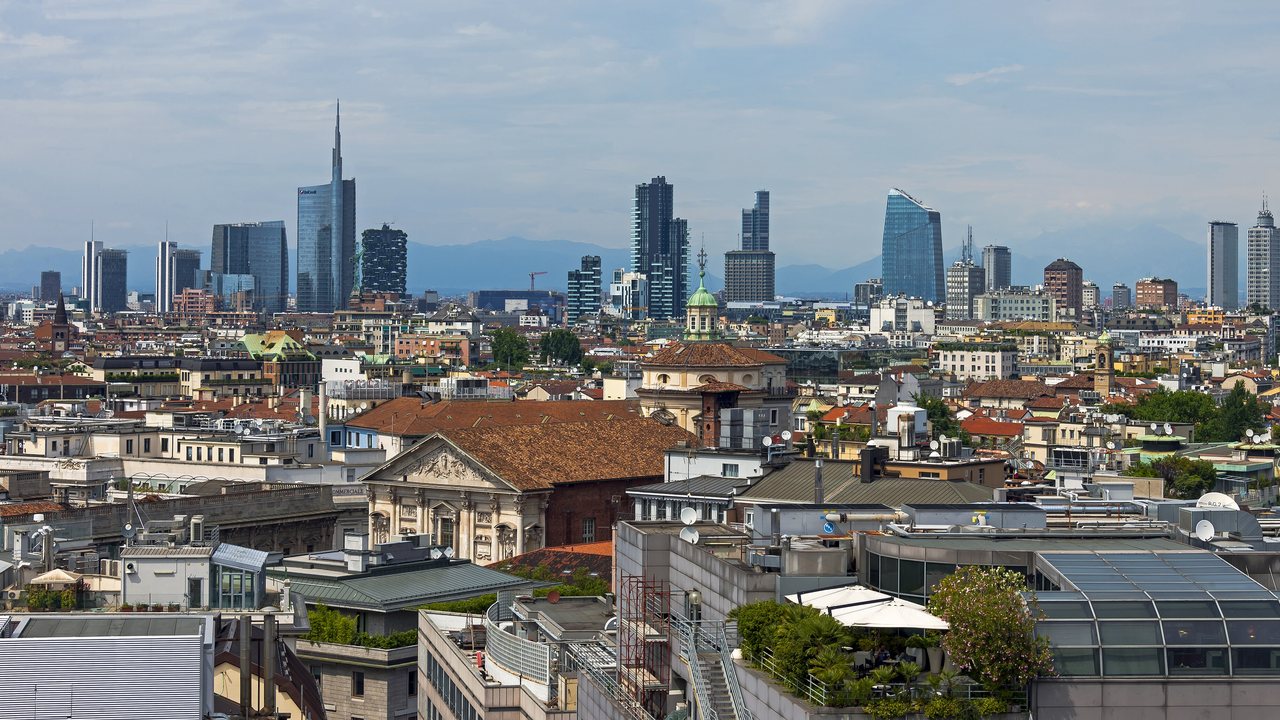
 Visit official site ↗
 Visit official site ↗
 Visit official site ↗
 Visit official site ↗
 Visit official site ↗
 Visit official site ↗
 Visit official site ↗
 Visit official site ↗
 Visit official site ↗
 Visit official site ↗
 Visit official site ↗
 Visit official site ↗
 Visit official site ↗
 Visit official site ↗
 Visit official site ↗
 Visit official site ↗
 Visit official site ↗
 Visit official site ↗
 Visit official site ↗
 Visit official site ↗
 Visit official site ↗
 Visit official site ↗
 Visit official site ↗
 Visit official site ↗
 Visit official site ↗
 Visit official site ↗
 Visit official site ↗
 Visit official site ↗
 Visit official site ↗
 Visit official site ↗
 Visit official site ↗
 Visit official site ↗
 Visit official site ↗
 Visit official site ↗
 Visit official site ↗
 Visit official site ↗
 Visit official site ↗
 Visit official site ↗
 Visit official site ↗
 Visit official site ↗
 Visit official site ↗
 Visit official site ↗
 Visit official site ↗
 Visit official site ↗
 Visit official site ↗
 Visit official site ↗
 Visit official site ↗
 Visit official site ↗
 Visit official site ↗
 Visit official site ↗
 Visit official site ↗
 Visit official site ↗
 Visit official site ↗
 Visit official site ↗
 Visit official site ↗
 Visit official site ↗
 Visit official site ↗
 Visit official site ↗
 Visit official site ↗
 Open city/visitor reference ↗
 Visit official site ↗
 Visit official site ↗
 Visit official site ↗
 Visit official site ↗
 Visit official site ↗
 Visit official site ↗
 Visit official site ↗
 Visit official site ↗
 Visit official site ↗
 Visit official site ↗
 Visit official site ↗
 Visit official site ↗
 Visit official site ↗
 Visit official site ↗
 Visit official site ↗
 Visit official site ↗
 Visit official site ↗
 Visit official site ↗
 Visit official site ↗
 Visit official site ↗
 Visit official site ↗
 Visit official site ↗
 Visit official site ↗
 Visit official site ↗
 Visit official site ↗
 Visit official site ↗
 Visit official site ↗
 Visit official site ↗
 Visit official site ↗
 Visit official site ↗
 Visit official site ↗
 Visit official site ↗
 Visit official site ↗
 Visit official site ↗
 Visit official site ↗
 Visit official site ↗
 Visit official site ↗
 Visit official site ↗
 Visit official site ↗
 Visit official site ↗
 Visit official site ↗
 Visit official site ↗
 Visit official site ↗
 Visit official site ↗
 Visit official site ↗
 Visit official site ↗
 Visit official site ↗
 Visit official site ↗
 Visit official site ↗
 Visit official site ↗
 Visit official site ↗
 Visit official site ↗
 Visit official site ↗
 Visit official site ↗
 Visit official site ↗
 Visit official site ↗
 Visit official site ↗
 Visit official site ↗
 Visit official site ↗
 Visit official site ↗
 Visit official site ↗
 Visit official site ↗
 Visit official site ↗