Danish porcelain — the Royal Copenhagen flagship on Amagertorv has sold hand-painted blue-fluted porcelain since 1775. The hand-painting workshop is visible through glass walls.
Best for The blue-fluted porcelain, the hand-painting workshop, and the 1775 heritage.
Three wavy blue lines, painted under the glaze of every piece: Denmark's three straits — Øresund, the Great Belt, the Little Belt — the waters that define the kingdom, adopted as a maker's mark in 1775. Royal Copenhagen's logo is older than most nations' constitutions, and it has meant the same thing without interruption: porcelain by royal decree, made to the crown's standard, from the manufactory the Danish court called into being.
Two patterns carry the house across its two and a half centuries. Blue Fluted, the fluted white porcelain traced in cobalt, still sets the northern table — the pattern so embedded in Danish life that it functions as national tableware, inherited, added to, and recognized at a glance. And Flora Danica, the botanical service originally intended as a gift for Catherine the Great: every piece hand-painted with a different Danish plant, stroke by stroke, exactly as in the eighteenth century — a botanical encyclopedia you can dine from, still produced, still painted by hand, still among the most extravagant tableware on earth.
The Amagertorv flagship holds the whole story two doors from Georg Jensen's silver — Copenhagen keeping its crown jewels retail, side by side on one square. Walk the shop and the centuries collapse: the straits still flow in blue under the glaze, the flora still blooms one brushstroke at a time, and the royal decree of 1775 is still, piece by piece, being carried out.
Four floors of Danish design orthodoxy since 1941 — the department store as national museum, everything purchasable. With artistic consultant Brita Drewsen, Dessau's BO presented fully arranged interiors rather than isolated stock — contemporary accounts describe the 1925–28 concept as previously unseen.
Best for Danish design under one roof
Illums Bolighus has traded on Amagertorv since 1941 as Copenhagen's — and by widespread consent Scandinavia's — definitive design department store: four floors given entirely to Nordic living, from furniture and lighting to ceramics, glass, textiles, and kitchenware. The store functions as a permanent survey of Danish modern and its heirs: Wegner and Jacobsen chairs, PH lamps, Kay Bojesen's teak monkey, Stelton and Georg Jensen steel, contemporary studio ceramics — the canon and its newest additions under one roof, staged with the store's celebrated Christmas displays as seasonal high point. For visitors it solves a real problem: Danish design is scattered across dozens of makers, and Illums assembles the whole argument in one building on Strøget. Buy the small classics — a Bojesen animal, a PH glass shade — as the portable essence of the Danish home.
Ship large purchases rather than carrying — the store handles export smoothly — and start at the top floor, working down as the rooms move from furniture to hand-luggage scale.
The silversmith of the North since 1904 — Art Nouveau hollowware to Ilse Crawford; the Amagertorv flagship gleams like a vault opened for visitors.
Best for Silver hollowware & Nordic jewelry
Georg Jensen, a sculptor turned silversmith, opened his Copenhagen workshop in 1904 and built the case that silver could carry modern art: his Art Nouveau hollowware and jewelry — grapes, blossoms, hammered surfaces — won international acclaim, and the designers he gathered made the smithy a movement. The house's collaborative model produced landmarks across a century: Johan Rohde's Acorn cutlery, Henning Koppel's biomorphic pitchers, Arne Jacobsen's steel, Vivianna Torun's open bangle watch. The Amagertorv flagship on Strøget presents jewelry, watches, hollowware, and home silver in the house's home city, where the silversmithy tradition continues. The silver jewelry — Möbius rings, Torun bangles, Koppel pieces — is the accessible entry; the hollowware is the museum-grade summit. Danish design's entire twentieth century can be read in this one company's catalogue.
The Amagertorv store displays museum pieces beside current stock; ask to compare a vintage-pattern piece with its modern production — the continuity is the house's proof.
A.C. Perch's has traded from Kronprinsensgade 5 in Copenhagen since 1835, when Niels Brock Perch named the shop for his son Axel Christian. An upstairs tearoom still serves brewed pots above the retail counter.
Best for Tea from Copenhagen’s historic A.C. Perch’s Tehandel
A.C. Perch's Tehandel has traded tea from Kronprinsensgade 5 in Copenhagen since April 1835, when Niels Brock Perch opened the shop and named it for his third son, Axel Christian Perch. It's recognized as Scandinavia's oldest tea merchant and occupies one of Copenhagen's oldest surviving shop premises -- the building itself dates to 1805 and is listed. The founding aim, sourcing the best teas from around the world alongside a bit of porcelain, still shapes the range nearly two centuries later: green, white, black and oolong teas, herbal blends, matcha, and tea accessories, sold both loose from the counter and as gift sets. An upstairs tearoom lets customers drink what the shop sells rather than only buying it to take home, serving brewed pots above the retail floor in a space that has grown alongside the original ground-floor counter. The business has since expanded into other Scandinavian locations and added an e-commerce platform, but the Copenhagen shop remains the original site -- nearly 190 years of continuous trading from one address, run today as both a working retail counter and a sit-down tearoom.
Sankt Peders Bageri has operated on Sankt Peders Stræde in Copenhagen's Latin Quarter since 1652, in the reign of Frederick III, and is widely credited by local press and the city's own tourism board as Copenhagen's oldest continuously operating bakery.
Best for Copenhagen pastries and bread from the city’s oldest bakery
Sankt Peders Bageri has operated on Sankt Peders Stræde in Copenhagen's Latin Quarter since 1652, in the reign of Frederick III, and is widely credited by local press and the city's own tourism board as Copenhagen's oldest continuously operating bakery. Its home is a protected heritage building that has undergone only two minor restorations in that span, with an interior — two black chandeliers, nine bar stools — largely unchanged in character from its old-world shopfront feel.
The bakery is best known today for a single weekly ritual: onsdagssnegle, or "Wednesday snails," a sticky cinnamon roll sold only on Wednesdays, of which the shop moves an estimated 4,000 in a single day — a scale that has made the item a minor institution in Copenhagen's food culture in its own right. Beyond that flagship pastry, the bakery's regular case runs to buttery kringle, breads, and other Danish laminated and yeasted classics.
No independent corporate website could be confirmed for the bakery beyond its social media page and third-party tourism listings — a gap consistent with a nearly four-century-old neighborhood shop that has never needed one to stay full. Verification here rests on Copenhagen's official tourism authority and multiple independent local and travel-press accounts rather than a single first-party source, and that limitation is disclosed rather than papered over.
Hans J. Wegner's workshop — the exclusive manufacturer of Wegner's Wishbone Chair (Y-stolen), Shell Chair, and other mid-century Danish classics. Handcrafted in oak, walnut, and cherry since 1908.
Best for The Wishbone Chair, the Wegner classics, and the handcrafted quality.
Danish design royalty — makers of Arne Jacobsen's Egg Chair, Series 7 chair, and collaborations with Jaime Hayon and Kasper Salto. The showrooms and factory visits are design pilgrimages.
Best for The Egg Chair, the Series 7, and the Arne Jacobsen legacy.
New Nordic design — a contemporary furniture and home accessories brand known for the fiber chair, cosy lamp, and collaborations with Scandinavian designers like Iskos-Berlin.
Best for The fiber chair, the contemporary Nordic style, and the design collaborations.
Denmark's architecture hub — exhibitions on Danish architecture and urban planning, and an architecture bookshop worth the trip. The DAC Passage links BLOX to the harbour, with the views that come with it.
Best for The architecture exhibitions, the bookstore, and the harbor passage.
Copenhagen menswear brand begun in 2004 as a streetwear shop and gallery by Tobia Sloth, Anton Juul and Mikkel Grønnebæk, who launched their own line in 2009. Known for the Aros chino; production spread across Denmark, Italy and Portugal.
Best for Scandinavian outerwear, knitwear, trousers and functional basics
Norse Projects began in Copenhagen in 2004, not as a clothing label but as a retail shop and informal gallery space founded by Tobia Sloth, Anton Juul and Mikkel Grønnebæk. In its early years the shop functioned as a hub for imported streetwear that wasn't otherwise easy to find in Denmark, while also hosting art exhibitions and supporting local artists - closer to a curated multi-brand concept store than a fashion house. The founders launched Norse Projects as its own menswear line in 2009, building a design language around understated Scandinavian tailoring crossed with technical and workwear references rather than logo-driven streetwear. A womenswear line followed for the Fall/Winter 2015 season. Among its recurring pieces, the Aros chino has become one of the label's signatures: offered in a heavyweight broken cotton twill for a classic straight-leg cut, and in a lighter stretch-cotton twill for a slimmer, mid-rise fit, aimed at a wardrobe basic rather than a seasonal statement piece. Production is spread across Denmark, Italy and Portugal, consistent with the brand's positioning as a considered, quality-driven independent label rather than a mass-market chain.
Sustainable Danish basics — ethically produced knitwear and basics using llama wool and organic cotton. The antithesis of fast fashion, with pieces designed to last decades.
Best for The llama wool, the ethical production, and the longevity.
Copenhagen fashion house founded 1986 by Mads Norgaard, third generation of a family retail line dating to his grandfather's 1944 Stroget shop. Known for its striped-tee signature; stores in Copenhagen, Aarhus and Berlin.
Best for Playful knitwear
Mads Norgaard - Copenhagen traces its retail lineage to 1944, when Mads Norgaard's grandfather, Matthes Mathias, opened a shop on Stroget, Copenhagen's main pedestrian street. Mads' father, Jorgen, took over the business in 1959 and, with his wife Ellen, turned a struggling fabric retailer into a shop attuned to the youth culture and women's-liberation movements of the 1960s and '70s. Mads Norgaard himself, born 1961, opened his own menswear shop in 1986, initially selling only his own small collection before expanding into womenswear - the founding date the brand now uses officially, making Mads the family's third generation of Copenhagen retailers and designers. The brand's defining visual signature is its striped T-shirt. Today the company operates its own stores in Copenhagen, Aarhus, and Berlin in addition to the original Stroget location.
MK Studio makes porcelain coffee cups and sensory vessels as well as pour-over drippers in a workshop in Glostrup outside Copenhagen. It sells them from a shop at Frederiksberg Alle 52. Founders Magdalena Kałużna-Włodarek, a ceramicist, and Michał Kałużny-Włodarek, a chef, design for cafés and restaurants as much as for home tables. The studio's B cup began as a 2016 World Brewers Cup competition cup.
Best for Porcelain coffee cups and pour-over drippers made for cafés and roasteries
MK Studio is a Copenhagen design and production studio founded by Magdalena Kałużna-Włodarek, a ceramicist, and Michał Kałużny-Włodarek, a chef. The two met in Poznań in Poland, and they now make porcelain coffee cups and sensory vessels, along with pour-over drippers and tableware for cafés and restaurants. The same pieces go to people who care how coffee and food are served at home. Every piece is developed and produced in the studio's own workshop in Glostrup, just outside Copenhagen, and sold from a shop at Frederiksberg Alle 52. Magdalena studied fine arts at Poznań University of Technology and domestic design at the School of Form. No design enters production without her review. Michał came to ceramics from restaurant kitchens including Relæ and Manfreds. He rebuilt the workshop's processes around CAD modelling and 3D printing together with digital mould design. In 2016 the studio made a competition cup for Mikaela Wallgren of Coffee Collective. She used it to finish runner-up at the World Brewers Cup in Dublin, and that shape became the studio's B cup. The same year the studio produced a full tableware collection for Restaurant 108 in Copenhagen.
Denmark's grand department store since 1868, in the Belle Époque palace on Kongens Nytorv where Hans Christian Andersen once boarded. Five floors of Nordic fashion and design — Royal Copenhagen to Georg Jensen — above the Mad & Vin food hall in the basement.
Best for One roof over the whole of Danish design.
Illum is a department store in central Copenhagen, offering a setting for fashion and personal shopping. Its personal-shopping service uses a dedicated suite, where customers can discuss clothing choices with a stylist. The store's Østergade building forms part of its history, distinct from any claim about where products are manufactured.
Best for Department-store fashion and personal shopping
ILLUM is a Copenhagen department store that places fashion beside beauty and design alongside food within one building. Its directory covers womenswear and menswear. Sport and children's goods share space with jewellery and watches as well as home-oriented design. The store also houses Bucherer for watches and jewellery, giving that category a specialist presence within the larger department-store format. Service is part of the proposition. ILLUM's personal-shopping programme operates from a private suite on the second floor, where stylists work with customers on a defined wardrobe brief. Above the retail floors, ILLUM Rooftop adds restaurants and a city view, turning the building into a place where shopping and dining share the same address. The combination explains the store's range: it is not simply a row of fashion concessions, because beauty and design share the building with food and specialist services. The useful distinction is between the breadth of a department store and the focused expertise inside it. ILLUM provides both, with broad floor-by-floor choice and dedicated styling plus specialist watch and jewellery services.
A Copenhagen shopping street — a cobblestone lane of independent boutiques, Michelin-starred restaurants (Relæ, Manfreds), ceramic studios, coffee roasters, and artisan food shops.
Best for 40-plus galleries, ceramics studios, and Koan by Relæ on a once-dodgy lane.
Jægersborggade is a short, cobblestoned street in Nørrebro that Visit Copenhagen's own guide describes as having "turned from dodgy to hip," now counted among the city's busiest shopping lanes. In a few blocks it packs in roughly 40 art galleries, organic produce shops, vintage clothing, and ceramics and jewelry studios alongside wine bars, coffee shops, and restaurants. Keramiker Inge Vincents runs a studio shop here selling paper-thin ceramic pieces the site describes as sitting "between craft and fine art."
Coffee Collective has one of its nine Copenhagen locations on the street, run under World Barista Champion Klaus Thomsen's direct-trade model. Karamelleriet, billed as the only caramel kitchen in Copenhagen, and Koan by Relæ, a fine-dining spot from the team behind Relæ, both operate here too. The street also hosts a popular spring flea market that draws crowds beyond its usual gallery-and-coffee traffic. What distinguishes Jægersborggade from other Copenhagen shopping streets isn't scale — it's still a narrow residential lane — but density: galleries, a caramel-only kitchen, a ceramics studio, and a serious coffee roaster all within easy walking distance of each other.
Copenhagen's most diverse and creative district — multicultural, youthful, and filled with artisan coffee, natural-wine bars, vintage shops, and the Assistens Cemetery.
Best for Shawarma Championship energy, Michelin-star Thai at Kiin Kiin, cemetery lounging.
Nørrebro is Copenhagen's most populated district and, per Visit Copenhagen's own description, its most multicultural — a neighborhood the city's tourism board calls "a melting-pot of world cuisines." That mix shows up most visibly on Nørrebrogade, which hosts an annual Shawarma Championship reflecting the street's reputation for Middle Eastern food stalls. The same district holds real culinary weight at the other end of the scale: chef Henrik Yde's Kiin Kiin, on Guldbergsgade, is the only Thai restaurant outside Thailand to hold a Michelin star, and Bæst (Italian-Nordic pizza) and Sasaa (Pan-African) both draw destination crowds.
Music venues Stengade and Rust book international acts, while BRUS and the Barking Dog anchor the neighborhood's beer and cocktail scene. For quieter time, Assistens Cemetery — which Visit Copenhagen calls the city's most popular cemetery for lounging rather than mourning — sits alongside the Copenhagen Lakes, linked by a cycling route the city brands the Green Path. It's a district defined less by any single landmark than by that range: shawarma stalls a few blocks from a Michelin star, and a cemetery treated as a park.
Copenhagen multi-brand menswear shop at Pilestraede 39, opened 2004 by Tobias Sloth, Anton Juul and Mikkel Gronnebaek alongside their Norse Projects label next door; carries Red Wing, Trickers, Fjallraven and other outdoor/heritage brands.
Best for Scandi-Japanese curation
Norse Store began in Copenhagen in 2004 as a retail shop and art gallery founded by Tobias Sloth, Anton Juul and Mikkel Gronnebaek. Their in-house menswear label, Norse Projects, launched from the same address in 2009, blending streetwear, classical workwear and technical materials into understated Scandinavian menswear. As Norse Projects grew into its own brand with a dedicated flagship, the original multi-brand retail operation was moved next door and kept the name Norse Store, stocking a wide range of third-party labels - including Red Wing, Levi's Vintage Clothing, Yuketen, Trickers, Woolrich Woolen Mills and Fjallraven - alongside Norse Projects' own pieces.
Copenhagen label founded in 2002, now part of DK Company, selling Scandinavian clothing, denim, accessories and seasonal collaborative collections through its current webshop.
Best for Premium streetwear; Danish streetwear and graphics
Copenhagen menswear founded 2002 — tailored streetwear rooted in skateboarding and graffiti culture.
Best for Danish menswear with playful graphics
Soulland was founded in Copenhagen in 2002 by Silas Adler and Jacob Kampp Berliner, beginning with hand-printed t-shirts and evolving into a full-sized menswear imprint. The brand's design principles and aesthetics remain deeply rooted in artisanship and storytelling rather than seasonal trends or commercial calculation. Silas Adler draws inspiration from the cultures and inner circles the founders grew up with—skateboarding, graffiti, and hip-hop culture (Wu-Tang Clan references appear frequently)—translating these influences into minimalist European silhouettes mixed with playful graphics. Collections have debuted at fashion weeks across London, Paris, and Copenhagen, establishing the label as a voice within contemporary menswear discourse. Notably, Adler resists the 'streetwear' label despite its common application, preferring to emphasize intentionality and storytelling over categorical trends. The brand maintains its commitment to pieces that make sense and tell a coherent narrative rather than chasing seasonal collections or fast-fashion cycles.
Libertine-Libertine makes relaxed Scandinavian menswear through shirts, trousers, knitwear and outerwear in strong fabrics. Understated design keeps the pieces easy to combine, with texture and cut carrying most of the character.
Stine Goya makes womenswear in bold prints, vivid colours and flowing silhouettes. Dresses, tailoring and accessories are designed for expressive dressing, while print scale and drape are best judged in person.
Rotate is Birger Christensen’s Copenhagen answer to going-out clothes: sequins, minidresses and emphatic party silhouettes. The Danish label is most useful for shoppers comparing statement dresses rather than everyday basics.
Copenhagen fashion label founded 1999 by Rikke Baumgarten and Helle Hestehave, who met at the Royal Danish Academy of Fine Arts; flagship on Vognmagergade since 2010, sold in 400+ retailers.
Best for Playful Scandi prints
Baum und Pferdgarten was founded in 1999 in Copenhagen by Rikke Baumgarten and Helle Hestehave, who met while studying at the Royal Danish Academy of Fine Arts and began working together shortly after graduating, initially from a roughly 35-square-meter studio in the Norrebro area of central Copenhagen. The brand's name is a wordplay combining pieces of both founders' surnames. Its flagship store on Vognmagergade in central Copenhagen has been open since February 2010. As of the mid-2020s the label reports distribution through some 400 retail outlets across more than 30 countries, alongside its own e-commerce, and it continues to show at Copenhagen Fashion Week.
Copenhagen label that began as a 1993 jewelry shop opened by the Samsoe brothers; relaunched as a fashion house in 2000 under Peter Sextus and Per-Ulrik Andersen; now sold through 40+ own stores in 31 countries.
Best for Scandi essentials, minimalist
Samsoe Samsoe traces back to 1993, when brothers using the Samsoe name opened a small jewelry shop in Copenhagen's Latin Quarter. The label gradually expanded into premium T-shirts and knitwear, primarily menswear, before Peter Sextus and Per-Ulrik Andersen took over the brand in 2000 and rebuilt it into a broader contemporary fashion house covering clothing, footwear and accessories for men and women. The company is headquartered in Norrebro, a Copenhagen neighborhood known for its independent, street-facing retail character, and today the brand is sold through more than 40 of its own stores and over 1,600 retail accounts across 31 countries. Its aesthetic is generally described as combining Copenhagen street-style ease with a broader Scandinavian design sensibility.
Copenhagen fashion brand founded 2008, blending brutalist Scandinavian design with avant-garde streetwear aesthetics in eyewear and clothing.
Best for Bold Danish eyewear and fashion
Han Kjøbenhavn was founded in 2008 in Copenhagen by Jannik Wikkelsø Davidsen, initially as an eyewear brand before expanding to include outerwear and shirting. The name Kjøbenhavn (Copenhagen in Danish) anchors the brand's Scandinavian identity. The label blends raw, gritty streetwear influences with avant-garde Scandinavian design, marrying bold aesthetics with premium build quality and construction. The brand offers menswear (jeans, knitwear, outerwear, t-shirts, hoodies) and womenswear (including dresses and skirts), plus a "Second Life" secondhand line and specialized eyewear collections. Han Kjøbenhavn gained international recognition when it designed actress Julia Fox's viral black leather 'Grip Dress' for the 2022 Oscars. The website features distinctive branding including an integrated audio player called "HanAmp" with customizable equalizer settings, reflecting the brand's lifestyle-oriented identity.
Copenhagen fashion house by Charlotte Eskildsen since 2002 — geometric organic silhouettes, Scandinavian minimalism, sculptural womenswear.
Best for Charlotte Eskildsen's sculptural, responsibly made Scandi womenswear
Designers Remix was created in 2002 when Charlotte Eskildsen was commissioned by IC Companies to develop new brands from surplus materials—hence the name reflecting the creative remix of existing textiles. In 2006, Eskildsen and partner Niels Eskildsen purchased 49% of company stock, establishing Designers Remix A/S as an independent venture. The brand draws from Danish design principles—organic modernism, functionalism, and the legacy of design tradition—translating these into minimalistic womenswear characterized by geometric, organic, and asymmetrical silhouettes with distinctive 3D accents. Eskildsen's design approach emphasizes clean lines and functional beauty over ornamentation. The label garnered recognition with the Danish Fashion Award for Brand of the Year (2012) and an Elle Style Award in the same category (2013). In 2008, the designer expanded into children's wear with Little Remix, a line for ages 6–16. The Copenhagen-based house operates at the intersection of Scandinavian restraint and contemporary fashion, serving an international clientele seeking architecturally thoughtful garments.
Torvehallerne calls itself Copenhagen's pantry, pulling in more than 100,000 shoppers a week for smørrebrød, fresh fish, and cheese. Coffee service starts at 7am, ahead of the market's regular hours.
Best for Smørrebrød, fresh fish, and cheese
Torvehallerne opened in September 2011 on a site with a much longer commercial history: after Copenhagen's old fortifications were dismantled in the late 1800s and the city expanded north, the location became Gronttorv, the city's central wholesale produce market. Architect Hans Peter Hagens first proposed converting the site into a public food hall in 1997, after studying markets from Sweden to Morocco to China and Cuba, but the company formed to build and run the project was forced into bankruptcy by the 2007-2008 financial crash. Property company Jeudan took over the development and finished the two glass-and-steel halls that stand today by Norreport Station. Now drawing more than 100,000 Copenhageners a week, Torvehallerne houses over 80 stalls covering smorrebrod, fresh fish, artisan cheese, Nordic chocolate, coffee, and wine -- less a single food destination than a working replacement for the corner grocers and produce sellers the city lost over the 20th century. Its two-decade gap between concept and construction, and the market history underneath it, make it as much a piece of Copenhagen civic infrastructure as a tourist stop: locals shop here for weekly groceries alongside visitors sampling the stalls.
Copenhagen's produce market since the 19th century, the site became a car park in 1958 before architect Hans Peter Hagens revived it as two glass-roofed halls in 2011. More than 100,000 locals shop its 100-plus stalls each week.
Best for Two glass food-market halls opened in 2011
The site Torvehallerne occupies has been a food market for longer than the current glass-hall buildings suggest. By the late 19th century it had formalized into Grønttorv, Copenhagen's central wholesale produce market, supplying the city's kitchens well into the 20th century — until the market declined after the Second World War and the site was paved over as a car park in 1958, sitting empty of any culinary use for four decades.
Architect Hans Peter Hagens first proposed reviving it as a market in 1997, drawing partial inspiration from Moorish market architecture, and after years of planning and negotiation with the city, the current Torvehallerne opened at Israels Plads, next to Nørreport Station, in September 2011. Hagens designed two adjoining glass-roofed halls — glass chosen specifically to pull daylight in through the dark Danish winter — with raw concrete walls referencing the old market sheds and warm oak counters softening the industrial materials.
More than 100,000 Copenhagen residents now pass through its stalls each week, buying from more than 100 vendors selling smørrebrød, fresh seafood, artisan cheese, Nordic chocolate, coffee and wine. It's Copenhagen's first purpose-built central food hall — not a renovated market, but one designed from scratch to replace the wholesale trade it stands on.
A chocolate and ice-cream shop on Frederiksberg Alle making pralines and ice cream on the premises. The counter sells boxed chocolates and seasonal specialities to a neighbourhood clientele.
HAY's concept store — the full range of HAY furniture, accessories, and collaborations in a beautiful Østerbro showroom. The seasonal sales are among Copenhagen design lovers.
Best for The HAY collection, the Østerbro showroom, and the seasonal sales.
Danish contemporary womenswear label founded in Copenhagen in 2008 by Sanne Sehested; the French retail reference is a Gestuz concession within Printemps department stores, rather than the label's founding location.
Best for Copenhagen leather minis and sharp Scandi partywear.
Danish fashion house founded 1994 in Copenhagen by designer Naja Munthe, relaunched 2014. Known for hand-painted prints and feminine silhouettes across six collections a year, sold at munthe.com and select European retailers.
Best for Artistic womenswear
Munthe was founded in Copenhagen in 1994 by Naja Munthe, a graduate of Design School Kolding who has cited a long engagement with art and environmental activism - she has been a Greenpeace member for over three decades - as an influence on the label. The brand was relaunched in 2014 and has since become one of the more established names associated with Copenhagen Fashion Week, marking its 30th anniversary in 2024. Munthe's design signature is built on hand-painted prints and feminine, artistic silhouettes, released across six collections annually. It is carried by European multi-brand retailers including Lodenfrey and Boozt, and sells direct via munthe.com.
Copenhagen fashion label founded 2004 by Nikolaj Nielsen, built around denim, leather and a rock-influenced, utilitarian design ethos. Organic-cotton denim is produced with manufacturing partners in Italy. Showroom in Frederiksberg since 2020.
Best for Denim, Essentials
Won Hundred is a Copenhagen fashion label founded in 2004 by Nikolaj Nielsen, built around denim, leather and a rock-and-roll-inflected, utilitarian design sensibility for men, women and unisex wear. Its denim is made from organic cotton, produced with manufacturing partners in Italy under EU textile regulations. In 2020 Won Hundred moved its showroom to Gammel Kongevej in Frederiksberg, a district bordering central Copenhagen. The label has shown at Copenhagen Fashion Week and is carried by international stockists including Liberty London.
Leather-focused womenswear label launched in 2019 by Birger Christensen Collective, the Copenhagen fur-and-fashion house founded in 1869 at Ostergade 38; draws on the atelier's leather-working craft alongside sister label ROTATE.
Best for Leather-led Copenhagen womenswear with moto-minimalist styling by Birger Christensen
REMAIN Birger Christensen is a Copenhagen womenswear label launched in 2019 by Birger Christensen Collective, a Danish house that began in 1869 as a fur atelier at Ostergade 38 and grew over roughly 150 years into a major Scandinavian luxury retailer and long-standing partner to houses like Chanel and Hermes. In 2022, Birger Christensen formally repositioned itself as a group backing new Nordic labels, with REMAIN and the more widely known ROTATE as its two in-house brands. REMAIN draws specifically on BCC's decades of leather-atelier expertise, applying it to everyday-focused collections built around leather pieces, blazers and outerwear.
Copenhagen-headquartered basics brand founded around 2017-2018 by Tue Deleuran, built on organic-cotton essentials in 40+ colors. Garments are manufactured in Barcelos, Portugal under stated ethical working conditions.
Best for Classic vibrant polos; Tee style polos; Merino wool polos; Vibrant basics, organic
Colorful Standard is a Copenhagen-based clothing brand founded by Tue Deleuran, whose earlier venture was the lifestyle label Bjorkvin, launched in 2006. Sources differ slightly on the exact founding year of Colorful Standard itself - 2017 in some trade coverage, 2018 in others - but consistently credit Deleuran as founder and describe the brand's origin as a reaction against fast-fashion seasonality: the company states it does not work with seasons, trends, or markdown sales. The line centers on simple, color-driven basics offered in more than 40 colorways. All garments are manufactured in Barcelos, Portugal, under conditions the brand describes as strict and ethical, using 100% organic cotton.
Organic Basics makes underwear from organic cotton and recycled nylon, with published impact information. The range centers on sustainable organic basics, with production associated with Turkey / Europe.
Joe & The Juice began in 2002 when Kaspar Basse opened a juice bar inside a friend's Copenhagen clothing shop. It has since grown into a global chain known for its music-filled bars.
Best for Cold-pressed juices and coffee blended to music at the bar
Before there was a global chain, there was one bar called Rue Verté, inside a clothing shop on Ny Østergade in central Copenhagen. In 2002, Kaspar Basse — a former advertising employee inspired by Starbucks and café-in-boutique concepts — persuaded two friends to let him open a juice counter in their store. He ran it largely alone at first, with a Coca-Cola fridge in the corner and liquor on the shelf for regulars.
The brand's culture took shape gradually. Philip "Pippo" Finsteen, hired after arriving from Milan, shifted the focus from products to people, training staff on personality as much as skill. Sebastian Vestergaard joined as a "Juicer" in 2005 after Basse recruited him at a grocery store checkout; he became CEO in 2019 at age 33, when Basse stepped back to chair the board.
The company opened its first additional stores inside Magasin department stores in Bremerholm, Aarhus, and Lyngby, then expanded into Norway, the UK, the US, and the Middle East. Swedish private equity firm Valedo took a majority stake in 2013, and General Atlantic invested in 2016, becoming majority shareholder in 2023. What began as one unbranded juice bar is now defined by its music-filled counters and self-described "ambience."
Storm Copenhagen was an independent boutique of avant-garde international designers and a launchpad for Scandinavian brands that went global. The shop traded for 32 years before closing in mid-May 2026; the brand and online shop continue.
Best for Avant-garde international and Scandinavian designers in the Latin Quarter for 30 years
Founded in Copenhagen in 2018 by Richard Hart with René Redzepi, Hart Bageri grew from its first Frederiksberg bakery to multiple city locations. Hart had previously spent seven years as head baker at Tartine; the bakery now sells sourdough loaves and pastries across Copenhagen.
Best for Sourdough loaves, cardamom pastries, and dark-baked Copenhagen bread
Tiny Østerbro bakery founded by Emil Glaser, focused on cardamom buns, sourdough and laminated pastry. The shop’s small production and strong local demand mean queues and early sell-outs are common.
Best for The cardamom bun, the sourdough, and the early-morning queue.
Refshaleøen's waterfront bakery — wood-fired sourdough, laminated pastries, and seasonal lunches in a converted industrial space with views over the water. The most scenic bakery in Copenhagen.
Best for The wood-fired oven, the waterfront views, and the sourdough.
A Nørrebro roastery-bakery that starts baking at 3am, pairing house-roasted single-origin coffee with pastries from chef Milton Abel, ex-Noma and Amass. Opened in 2018 inside a former bank, it now runs three Copenhagen locations.
Best for House-roasted coffee and Milton Abel pastries in Copenhagen
Andersen & Maillard opened in 2018 inside a former bank on Nørrebrogade 62, one of Copenhagen's busiest streets, with a plan to combine a roastery, bakery and café under one roof. The kitchen starts at 3am, the company says, 'to make sure yours begins the way it should' — laminating croissants and shaping the day's bread hours before the espresso machine turns on. Pastry work is led by Milton Abel, who previously cooked at Noma and Amass before moving to baking, and the coffee is roasted on site in small-origin lots that have included Yellow Catuai, Pacamara and honey-processed beans.
The original Nørrebro location proved popular enough to expand: a second site opened in Antwerpengade, Nordhavn, in 2019, and the company now runs three locations across Copenhagen, including one in the city center. Coffee is sold both direct-to-consumer online and through a wholesale program supplying other cafés and restaurants.
What distinguishes Andersen & Maillard from Copenhagen's other roaster-cafés is the pairing itself — a kitchen that treats pastry with the same single-origin specificity as the coffee, run by a team with fine-dining credentials rather than straightforward bakery training. The 3am start is less a marketing line than the literal mechanism behind croissants laminated, proofed and baked before most of the city is awake.
Copenhagen's coffee pioneers — founded by World Barista Champion Klaus Thomsen, with direct-trade relationships, in-house roasting, and multiple locations. The company was founded in 2007 by Klaus Thomsen, Peter Dupont and Casper Engel Rasmussen. Beans are also offered by subscription.
Best for Direct-trade beans roasted in-house across nine Copenhagen and Aarhus cafés.
Coffee Collective is Copenhagen's specialty-coffee network, built on what its own site calls "100% directly traded coffee, supporting fairer farmer income." The company roasts everything itself and now runs nine locations across Copenhagen and Aarhus — Trianglen, Bernikow in Indre By, Carlsberg Byen, Godthåbsvej in Frederiksberg, Guldsmedgade in Aarhus, Jægersborggade, Sankt Hans Torv, a stall inside Torvehallerne, and Collective Bakery on Nørrebrogade, its own in-house bakery arm. B Corp certified, it publishes a transparency report detailing its direct farmer relationships and runs paid courses in both coffee tasting and roasting for anyone who wants to learn the trade rather than just drink the result.
The chain was founded by Klaus Thomsen, a former World Barista Champion, whose competition pedigree still shapes the house style: precise, single-origin-forward brewing rather than a fixed house blend. Wholesale customers get free shipping across Denmark and the EU, reflecting a business built as much around training baristas and roasters elsewhere as around pulling shots in its own cafés. For a visitor, the practical read is simple — nine addresses, one roastery, and a bean list that changes with the harvest calendar.
April Coffee Roasters is run by Patrik Rolf, runner-up at the 2019 World Brewers Cup, and roasts out of a dedicated facility in Solrød Strand, south of Copenhagen.
Best for Direct-trade coffee where partner farmers set their own prices
April Coffee Roasters is run by Patrik Rolf, runner-up at the 2019 World Brewers Cup, and roasts out of a dedicated facility in Solrød Strand, south of Copenhagen. The distinguishing part of April's model sits upstream of the roaster: a direct-trade arrangement in which partner farmers set their own prices, rather than the roastery negotiating a rate and asking growers to accept it. That reversal of the usual buyer-sets-the-price dynamic is a structural choice built into the sourcing, not a marketing line layered on top of it.
In Copenhagen itself, April's public face is the Flagship Store & Showroom on Pilestræde, in the city center, which functions as both a retail counter and a place to see the roastery's sourcing and brewing standards in person rather than only through packaging copy.
Rolf's competition background at the World Brewers Cup level sits behind the training and cupping standards connecting the Solrød Strand roastery to what's served at Pilestræde. For a roastery whose reputation rests partly on how it prices its green coffee, the Copenhagen showroom is where that sourcing model becomes a cup you can taste rather than a claim you take on faith.
A B Corp-certified Copenhagen roaster with four bars, including one in the city's Meatpacking District, pouring single-origin coffee from Colombia, Peru, Ethiopia and Costa Rica. Beans are 'omni roasted' to suit both filter and espresso.
Best for Omni-roasted single-origin coffee from a B Corp-certified bar in Copenhagen's Meatpacking District
Prolog Coffee runs four locations across Copenhagen — Papirøen, Vesterbro, Østerbro and Frederiksberg — pouring single-origin coffees sourced from Colombia, Peru, Ethiopia and Costa Rica. Its Vesterbro bar sits in the city's own Meatpacking District (Kødbyen), a cluster of former slaughterhouses turned into bars, galleries and coffee shops, where Prolog roasts and serves alongside a rotating cast of neighboring venues.
The company describes its process as 'omni roasting,' developing profiles meant to suit both filter and espresso preparation from the same lot rather than roasting separately for each — a practical response to running bars where customers order both. Beans ship the same day for orders placed before 14:00, and the company operates as a certified B Corporation, with each of its four sites separately certified under Denmark's Smiley Reports food safety scheme.
Prolog frames its mission around four words — Quality, Life, People, Coffee — treating the drink as inseparable from the community built around it, evident in a bar model built for lingering rather than pure throughput. For visitors, the draw is less any single flagship location than the fact that the same sourcing and roasting standard holds across all four — Papirøen's harbor-front stall performs to the same lot specification as the Kødbyen bar in the middle of the city's nightlife district.
Copenhagen burger specialist that began in a converted 1950s gas station near Central Station, serving smash burgers made with Danish beef and house-made buns. The original gas-station setting became the template for a concept that has since expanded to locations across the city.
Best for The smash burger, the gas station origin, and the Danish beef.
The global craft beer phenomenon's home base — Mikkel Borg Bjergsø started in a Copenhagen kitchen and built an empire. The Vesterbro bar has 20 rotating taps of experimental, boundary-pushing beer.
Best for The 20 rotating taps, the experimental beers, and the craft beer origin.
Mikkeller's barrel-aged brewery — a wild and sour beer facility on Refshaleøen producing some of the most experimental beers in Scandinavia. The waterfront taproom has harbor views.
Best for The wild ales, the barrel aging, and the waterfront taproom.
Apotek 57 is a seasonal eatery inside FRAMA's Studio Store at Fredericiagade 57 in Copenhagen's Nyboder district. Chef Chiara Barla's offer includes house-made food and drinks, with baked goods also available in the former St. Pauls pharmacy. FRAMA dates the eatery's opening to October 2020, separate from the pharmacy's nineteenth-century history.
Best for Seasonal café food within FRAMA’s Copenhagen design store
Apotek 57 is the eatery inside FRAMA's Studio Store in Copenhagen's Nyboder district. Its address, Fredericiagade 57, places it in the former St. Pauls pharmacy, whose history reaches back to 1878. The food business is much newer: FRAMA records its opening in October 2020.
Chef Chiara Barla's menu centres on seasonal house-made food and drinks, with baked goods also available. The selection changes, so the useful reason to visit is that approach rather than an expectation of one fixed dish. Coffee and a pastry can be a shorter stop than a meal, while the surrounding store provides a separate reason to spend time in the building.
The interior keeps pharmacy woodwork and cabinets alongside FRAMA's contemporary furniture and objects. Tables, lighting and tableware are encountered in use rather than only as products on display. That relationship between the café and the design store is the defining feature of the visit. It does not mean that every object sold there was made in Denmark, or that the pharmacy's nineteenth-century date is the café's founding date.
Nordic-Italian fermentation — Christian Puglisi's pizzeria and charcuterie bar makes its own mozzarella from organic milk, cures its own meats, and ferments its own vegetables.
Best for The house-made mozzarella, the charcuterie, and the organic philosophy.
BRUS is a Nørrebro brewpub at Guldbergsgade 29F in Copenhagen, with a bar, eatery and tours on its current website. It opened in May 2016 as a To Øl project in a former locomotive-factory setting. A 2017 All About Beer report documented brewing close to the bar, without establishing the present beer list.
Best for Beer, food and brewery visits in Copenhagen’s Nørrebro
BRUS is a Copenhagen brewpub at Guldbergsgade 29F in Nørrebro, with a bar, eatery and tours listed on its own website. It opened in May 2016 as a project from To Øl. The location brings beer and a place to sit together, rather than functioning only as a shop for packaged bottles.
Daniel Bruce's January 2017 report for All About Beer described the former locomotive-factory setting, with large windows, simple outdoor benches and brewing equipment close to the bar. His account recorded beer made nearby and transferred into serving tanks. These details explain the site's brewing history; the particular beers and number of taps in that report should not be read as today's menu.
For a visit, distinguish the bar and eatery from a booked tour or tasting. The current site lists those as separate parts of the offer, alongside events. Choosing a short stop for a drink or a more structured brewery visit is more useful than expecting one beer mentioned in an older article to still be available.
Vesterbro burger joint serving smash burgers made with Danish beef, house-made buns and rotating creative toppings. The Copenhagen shop is consistently busy with local customers.
Best for The smash burgers, the Danish beef, and the Vesterbro energy.
Danish lifestyle on a budget — beautifully designed homeware, stationery, and accessories at affordable prices. The stores are designed as labyrinths that encourage discovery.
Best for The affordable design, the labyrinth layout, and the Scandinavian aesthetic.
A small independent bookshop in Vesterbro that hand-picks fiction, poetry and children's titles chosen for their literary nerve rather than bestseller lists. Staff recommendations and in-store readings anchor a shop that calls itself a delicatessen for books.
A workshop and shop on Vesterbrogade where kidney-shaped tables are built on the premises and more than seventy Danish craftspeople supply ceramics, jewellery and glass. The two-floor space keeps the woodworking studio in view of the sales floor.
A zoo in northern Europe — founded in 1859, with the Panda House designed by Bjarke Ingels Group, Arctic Ring, and Elephant House by Norman Foster. In the heart of Frederiksberg.
Best for Panda House designed by Bjarke Ingels Group, Arctic Ring
A Dutch Renaissance jewel in the King's Garden — Christian IV's 17th-century pleasure palace houses the Danish Crown Jewels, coronation thrones, and royal portraits in a fairy-tale setting.
Best for The Crown Jewels, the King's Garden, and the Dutch Renaissance architecture.
Denmark's most magical Christmas market — Tivoli transforms into a winter wonderland with wooden stalls, gløgg, æbleskiver, ice skating, and thousands of twinkling lights.
Best for The wooden stalls, the gløgg, the ice skating, and the winter wonderland.
An elevated highway for bikes — Dissing+Weitling's 230-meter orange ramp carries cyclists over the harbor from Bryggebroen to Dybbølsbro, separating bike traffic from pedestrians.
Best for The orange ramp, the elevated views, and the bike-priority design.
Copenhagen Opera House is a modern waterfront venue on Holmen with a sail-like roof. The range centers on the sail-like roof, the waterfront position, and the world-class opera, with production associated with Denmark.
Best for The sail-like roof, the waterfront position, and the world-class opera.
Copenhagen's waterfront theatre — Lundgaard & Tranberg's dark cube of a building juts into the harbor opposite the Opera House. The long promenade is Copenhagen's favorite sunset spot.
Best for The waterfront position, the promenade sunsets, and the Danish theatre.
The Green Light District — Christiania's (and tolerated) cannabis market on Pusher Street operates in a legal gray area. A unique social experiment and a draw for visitors worldwide.
Best for The unique social experiment, the Pusher Street, and the alternative culture.
Copenhagen menswear label named after Hesiod's poem, founded in 2022 by British designer Raff Godfrey after relocating from London; reworks archival workwear pieces using updated materials and construction.
Best for Considered menswear
The brand trading as Works and Days was founded in 2022 by British designer Raff Godfrey after he moved to Copenhagen and took a job at the Danish menswear retailer Norse Projects. Godfrey has said he wouldn't have felt able to take the leap into starting his own label while still living in London, and credited Copenhagen's design community with making it easier. The label takes its name from Hesiod's ancient Greek poem 'Works and Days,' reflecting the brand's stated focus on process and craftsmanship - clothing designed from archival workwear references and rebuilt using updated materials. The line began shipping product for fall/winter 2023 and has been carried by Copenhagen multi-brand retailers including Grocery.
Copenhagen menswear label founded 2019 by Frederik Berner Kuhl, working in restrained silhouettes with fabrics sourced mainly in Japan and Italy. Sells online and via stockists (Grocery, Dr. Adams), not a dedicated shop.
Best for Clean tailoring
Berner Kuhl is a Copenhagen menswear label founded in 2019 by Frederik Berner Kuhl, built around what the brand's own materials call 'clothing of substance.' Its design language favors restraint, proportion and quieter permanence over trend-driven output - a small, considered range of outerwear, knitwear and tailoring updated slowly rather than seasonally. Fabrics are sourced mainly in Japan and Italy, often in limited runs. No dedicated flagship storefront turned up in research; the brand sells direct through its own site and through a small set of stockists, including Copenhagen's Grocery and Dr. Adams, plus Sportivo and Harreso. Highsnobiety profiled the label as an example of Copenhagen's understated, craft-forward menswear scene.
Bruuns Bazaar makes commercially accessible Scandinavian womenswear and menswear with clean tailoring, knitwear and everyday separates. The range favours coordinated wardrobes and restrained colour over experimental construction.
Craft spirits on Refshaleøen — organic gin, akvavit, and liqueurs made in a converted warehouse, with tastings and cocktails. The most exciting craft distillery in Denmark.
Best for The organic gin, the akvavit, and the warehouse tastings.
Copenhagen's cocktail hideaway — a reservations-only cocktail bar in the Meatpacking District with a 1930s-inspired interior and some of the most creative drinks in the city.
Best for The reservations-only policy, the 1930s interior, and the creative cocktails.
Founded in Copenhagen in 1997 by Keld Mikkelsen and designer Malene Birger, Day blends Scandinavian ready-to-wear with craftsmanship details like embroidery and beading that Mikkelsen drew from years spent in Asia; Birger left as creative director in 2002.
Best for Copenhagen tailoring with relaxed bohemian detail
Day Birger et Mikkelsen was founded in Copenhagen in 1997 by Keld Mikkelsen together with designer Malene Birger, who served as the label's creative director until she departed in 2002 to found her own eponymous brand, By Malene Birger. Mikkelsen, who had spent over a decade living and working across Asia before founding Day, built the label around what he described as a craftsmanship revival — bringing embroidery, beading and other handwork details into otherwise everyday, wearable pieces, drawing directly on techniques and textile traditions he encountered during his years there. The brand describes its own identity as "democratic" in its functionality and "bohemian" in its mindset: designed to be worn easily day to day, but carrying decorative, artisanal touches uncommon in mass-market womenswear at that price point. Since its founding, Day has grown into one of the larger Scandinavian fashion houses, selling through its own stores and stockists including department stores such as Harvey Nichols, while remaining headquartered in Copenhagen. The Asian-tailoring influence Mikkelsen brought to the founding collections has remained part of the brand's stated design language in subsequent collections.
DLSTUDIO is Copenhagen designer DL Andersen's bespoke atelier in Østerbro, crafting made-to-order garments from European fabrics through personal consultations and multiple fittings, with prices starting at 8,000 DKK. The showroom operates by appointment only and ships finished pieces worldwide.
DORA is a mother-and-daughter interior and vintage shop run by Frida Frank and Sara Aagaard on Værnedamsvej. The edit mixes design objects and vintage finds with small exclusive collaborations developed directly with selected designers.
Best for Homeware, gifts, glass, ceramics, textiles and stationery
Copenhagen's craft and design gallery — exhibitions of ceramics, glass, textiles, and jewelry in a historic building on Gammel Strand. The focus on Danish craft makes it a unique cultural destination.
Best for The craft exhibitions, the ceramics, and the historic building.
Hansen Garments is a Copenhagen menswear label rooted in Nordic design, running two brand stores in the city, on Pilestræde and Gammel Kongevej, alongside its online shop. The stores also carry a curated edit of locally made goods from family businesses that share the brand's focus on quality and craft.
HAY's kitchen and tableware store — colorful, functional, and beautiful kitchen tools, cutlery, glassware, and serving pieces. The most inspiring kitchen shop in Copenhagen.
Best for The colorful tableware, the functional design, and the kitchen inspiration.
Copenhagen menswear label founded in 2017 by Kasper Juhl Todbjerg and Oliver Abrenica, producing collections from biodegradable fabrics and deadstock materials in the brand's own city micro-factory.
Best for Modern tailoring
Isnurh is a Copenhagen menswear label founded in 2017 by Kasper Juhl Todbjerg and Oliver Abrenica. The brand positions itself at the intersection of luxury and contemporary design, built around an in-house micro-factory in Copenhagen where much of its production happens on-site. Its stated environmental approach includes biodegradable fabrics, waterless printing technology, regenerated fibres and deadstock materials, aiming to keep production local and reduce waste. Isnurh's sustainability focus earned it a place among ten international brands selected for S|STYLE, the sustainable-fashion platform at Pitti Uomo 104 in Florence in June 2023.
Handmade ice cream in Vesterbro — creative flavors like licorice, sea buckthorn, and brown cheese, made in small batches. The most adventurous ice cream in Copenhagen.
Best for The licorice flavor, the sea buckthorn, and the creative combinations.
Copenhagen fashion label founded in 1981 by designer and former dancer Jan Machenhauer; known for architecturally cut clothing in natural fabrics, produced and sewn locally in Copenhagen for over four decades.
Best for Architectural cuts in washed cottons from a Copenhagen atelier since 1979
Jan Machenhauer founded his eponymous Copenhagen label in 1981, following training at the Royal Danish Academy. His earlier background as a dancer informs the label's design language, centering on the relationship between shape and function; the resulting clothes have a sculptural, architecturally inspired quality. Production has stayed local: for more than 40 years, pieces have been designed and sewn in Copenhagen using natural fabrics. Machenhauer also co-founded the French scarf and knitwear house EPICE Paris with Bess Nielsen in 1999.
Konges Sløjd's Copenhagen boutique brings together clothing and objects from the children's brand. Prints and playful shapes run through a selection intended for babies and young children. The shop is on Gothersgade, where visitors can see pieces from the collection in person.
Best for Children's clothing and playful design in Copenhagen
L'Art Copenhagen deals in ceramics, art glass, silver and porcelain by makers including Arne Bang, Axel Salto and Bjørn Wiinblad, alongside brands such as Royal Copenhagen, Arabia and Georg Jensen. The business has showrooms in Copenhagen and London and 22 years in the trade.
Best for Scandinavian designer ceramics and art glass
Copenhagen menswear brand founded in 2011 by two friends from contrasting backgrounds who met over a hand-patched T-shirt in a bar; blends preppy and streetwear influences and now employs around 100 people.
Best for Preppy, Streetwear
Les Deux ('the two', in French) takes its name from its two founders, who met in a Copenhagen bar: one a law student with a preppy sensibility, the other a creative with an urban aesthetic. The spark for the brand was a plain white T-shirt one of them had hand-patched with military-style badges; the pair decided to build a menswear label that united their contrasting styles. The company grew from a small operation run out of a founder's apartment into an international business employing roughly 100 people, while keeping its French name and Danish design and production sensibility.
Silkegade 13 / Kronprinsensgade 9, Copenhagen K / Online
Maria Black is a Copenhagen house for ethically produced abstract jewellery — sinuous rings, chokers, bangles in 14ct gold and recycled silver, lab-grown diamond huggie hoops. Founded in 2010; International shipping is available.
Founded in 1973 in Copenhagen by Niels Martinsen; still designed in the city today, part of Danish group DK Company, focused on smart-casual menswear blending formal and relaxed pieces.
Best for Smart casual, Scandi
Matinique was founded in 1973 in Copenhagen by Niels Martinsen, with the aim of making comfortable, well-made menswear at accessible prices rather than either strictly formal tailoring or casualwear. The label has remained headquartered and designed in Copenhagen since its founding, and is now part of the Danish apparel group DK Company, which also owns other Scandinavian fashion brands. Matinique's collections sit in the 'smart-casual' category, blending tailored details with more relaxed cuts, and the brand emphasizes fabric selection and fit as its main differentiators rather than seasonal trend pieces. Over five decades the label has maintained a consistent design identity built around understated, functional menswear rather than repositioning itself around one signature product, which distinguishes it from brands built around a single flagship item. It sits within the same market segment as other Scandinavian menswear labels, competing on wearability and value rather than status branding, and is sold both through DK Company's own retail network and via wholesale menswear retailers across Europe.
Molo makes children’s clothing in bright digital prints, including outerwear, dresses and jersey basics. Organic and certified materials appear in parts of the range, so composition should be checked by product.
Best for Technicolor digital-print kidswear in GOTS organic cotton from Denmark
Copenhagen sneaker and streetwear boutique founded in 2004, focused exclusively on women's footwear from Nike, adidas Originals, New Balance and other major sportswear labels; two stores in Copenhagen plus one in Aarhus.
Best for Danish women's sneaker boutique.
NAKED Copenhagen opened in 2004 as a sneaker retailer built specifically around women's footwear, at a time when sneaker culture and limited releases were marketed almost entirely to men. The company grew from a single Copenhagen shop into two stores in the city's central shopping district plus a third location in Aarhus, alongside an online store shipping internationally. Its stock centers on women's-specific sneaker lines and exclusive colorways from Nike, adidas Originals, ASICS SportStyle, New Balance and Salomon, supplemented by streetwear apparel and accessories. NAKED runs its own raffles and early-access drops for limited releases, a mechanism that has made it a recurring stop for sneaker release trackers and city guides covering Copenhagen's footwear scene. The stores are minimalist white interiors that put the product on display against a plain backdrop.
Copenhagen menswear label founded in 2007 by Victor Lindh and Ulrik Pedersen; the name stands for 'No Nationality,' reflecting a design approach built around individual style and global influence rather than geographic origin.
Best for Copenhagen menswear's soft tailoring and knit polos of quiet, understated ease
NN.07 was founded in Copenhagen in 2007 by two Danish friends, Victor Lindh and Ulrik Pedersen. The brand's name combines their founding philosophy with their launch year: 'NN' stands for 'No Nationality,' expressing an intent to design around individual personality and self-expression rather than national or regional fashion identity, while '07' marks 2007, the year the label began.
The founders' first product was the NN.07 Chino Simon 1000, conceived as a wardrobe staple meant to anchor a modern-casual menswear collection rather than a directional statement piece — an approach that set the tone for the brand's broader focus on soft tailoring, knitwear, and understated, wearable menswear. From early on, the label drew inspiration internationally rather than from a single design tradition, positioning itself as an outward-looking Scandinavian brand rather than one defined narrowly by Danish design conventions.
Sustainability has been part of the brand's stated approach as it has grown, with Lindh and Pedersen describing an intent to think in both short- and long-term terms about the garments they produce. The label remains based in Copenhagen and continues to build collections around the same modern-casual, quietly tailored menswear positioning it launched with in 2007.
Frederiksberg's neighborhood café — excellent coffee, sourdough sandwiches, and a relaxed atmosphere that captures the essence of Copenhagen café culture. The local office for Frederiksberg creatives.
Best for The coffee, the sourdough, and the Frederiksberg local vibe.
Copenhagen watch brand founded in 2017; every collection is designed by Jakob Wagner, whose work for Bang & Olufsen and HAY has also entered MoMA's permanent design collection since 2006.
Best for Sustainable minimalist watches
Nordgreen was founded in Copenhagen in 2017 by two Danish entrepreneurs aiming to build a watch brand around Scandinavian minimalist design. Rather than design in-house, the founders commissioned Copenhagen-based industrial designer Jakob Wagner, whose three-decade career includes work for Bang & Olufsen, HAY, Alessi, Cappellini, Stelton, and Muuto; Wagner is a five-time recipient of the iF Product Design Award, and a piece of his design work has been in the Museum of Modern Art's permanent collection in New York since 2006. Wagner designed Nordgreen's core lines, including the Native collection, aiming for watches that read as classic rather than trend-driven, in cases running from 28mm to 40mm and finishes spanning silver, gold, rose gold, gunmetal, and black. The brand states it has sold more than 300,000 watches, and pairs its design positioning with a stated giving program tied to purchases. Assembly draws on components sourced from both China and Denmark.
The design house of the Norm 69 lamp — Jan Andersen and Poul Madsen's 1999 challenge to Scandinavian convention, its flagship a 1,700 m² former cinema where furniture, lighting and fragrance are staged like exhibitions.
Arne Jacobsen's total design — a hotel where Jacobsen designed everything: building, furniture (Egg, Swan, Drop chairs), lighting, cutlery, and door handles.
Best for Room 606, the Egg Chair, and the total design concept.
Founded in 2016 in Copenhagen by David Andersson Sahlin; the name honors a Japanese friend named Yui he met while living in Paris, and the brand builds its quiet menswear silhouettes from Japanese shuttle-loomed fabric.
Best for Japanese-fabric menswear
Rue de Tokyo was founded in 2016 in Copenhagen by David Andersson Sahlin. The brand's name comes from Sahlin's time living in Paris, where he became close friends with a Japanese man named Yui; the name is meant to hold together the French and Japanese threads of that friendship rather than describe an actual street. That French-Japanese pairing carries into the clothes: the label designs quiet, minimal menswear silhouettes but sources fabric with an emphasis on Japanese textile-making, including cloth woven on traditional shuttle looms, a slower process than modern high-speed weaving that produces a denser, more textured fabric. The brand positions its clothing as everyday pieces built for longevity from carefully chosen materials rather than seasonal trend pieces, and has since collaborated with outside partners, including a licensed collection built around the Moomin characters.
Copenhagen's hottest outerwear — Barbara and Cathrine Saks Potts create colorful, statement fur and leather coats worn by celebrities worldwide. The most Instagrammed Danish fashion brand.
Best for The colorful fur coats, the celebrity following, and the Danish boldness.
Shrig Shop is a Copenhagen house for limited edition David Shrigley prints, posters, postcards, photography, books, art installations. International shipping is available.
Best for Limited edition David Shrigley prints, posters, postcards, photography, books, art installations
Simon Tuntelder makes leather tote bags, device cases, wallets, glasses cases and travel wallets, plus leather aprons and one-off pieces. The workshop also publishes its own leather care guide and runs a wholesale and stockist program.
Copenhagen menswear label founded 2018 by Ulrik Pedersen and Alan Blond; its jeans use GOTS-certified organic cotton woven in Italy and washed at a family-run factory in Ancona.
Best for Copenhagen minimalism in Italian-made tailoring and dark denim
Sunflower is a Copenhagen menswear label founded in 2018 by Ulrik Pedersen and Alan Blond, built around understated, quality-driven basics - tailoring, denim and knitwear - rather than seasonal trend pieces. Its denim uses 100% GOTS-certified organic cotton sourced from Japan and Italy, developed with an older, more environmentally focused Italian mill; the washing and production take place at a family-owned factory in Ancona using treatments aimed at reducing energy, water and chemical use. The brand's fits draw on 1990s vintage denim silhouettes, and it has shown collections at Copenhagen Fashion Week.
Copenhagen's intellectual heart — narrow cobblestone streets around the university, with bookshops, cafés, secondhand stores, and a bohemian atmosphere. The city's most charming historic neighborhood.
Best for The bookshops, the university atmosphere, the cobblestones, and the cafés.
Area names come from each shop’s published address record; ORBIS does not invent neighbourhoods.
Copenhagen register facts
Recorded stores
112
Records with made-in data
92
Records with best-for data
112
Largest atlas sections
Nordics — Minimalism & Craft81
Scandinavian — Minimalist & Sustainable22
Gourmet, Pantry & Kitchen18
Home, Design & Craft16
Ready-to-Wear — Worldwide11
Books, Stationery & Art Supplies4
Most-recorded made-in values
Denmark.44
Denmark23
Copenhagen, Denmark5
Made in Europe5
Turkey / Europe3
Denmark; Made in Europe2
Most-recorded best-for values
The figure-eight shape, the bike ramp, and the residential innovation.1
Tea from Copenhagen’s historic A.C. Perch’s Tehandel1
The llama wool, the ethical production, and the longevity.1
House-roasted coffee and Milton Abel pastries in Copenhagen1
Seasonal café food within FRAMA’s Copenhagen design store1
Direct-trade coffee where partner farmers set their own prices1
ORBIS city intelligence
Copenhagen makes good design look inevitable, which is precisely why judgment must extend beyond the showroom. A celebrated silhouette, pale timber and quiet upholstery say little about licence, dimensions, maintenance, spare parts or the room that must live with the object.
Few cities make the systems behind design so visible. A new licensed chair, a restored vintage example, a contemporary edition and a studio ceramic may share an air of restraint while requiring entirely different evidence. Copenhagen’s distinction lies not in a single look, but in the precision with which those categories can be compared.
What is Copenhagen genuinely good for buying?
Furniture and lighting lead, but the most rewarding purchases extend to porcelain, silver and hollowware, textiles, contemporary ceramics, clothing that values material over display, and smaller domestic objects whose function has been refined rather than decorated. The city’s strongest shops make scale, service and use visible.
For licensed furniture, Carl Hansen & Søn and Fritz Hansen provide direct encounters with current production, finish options and warranty. HAY House and Muuto show the younger, more accessible end of the design economy, where colour, modularity and compact domestic life matter. Klassik moves the conversation into vintage, restoration and reupholstery, where condition and intervention become part of value.
Porcelain and silver can be compared within the historic centre. Royal Copenhagen brings painting, pattern and the house’s long production history into view; Georg Jensen’s flagship nearby provides a different material vocabulary. Illums Bolighus is valuable not as a single-author destination but as a multibrand comparator, allowing several Danish and international approaches to sit under one roof.
What makes Copenhagen’s retail culture distinct?
Copenhagen treats design less as decoration than as infrastructure. Chairs, lamps, tableware, bicycles, clothing and public interiors participate in a culture that expects objects to work repeatedly and age intelligibly. The resulting retail language is one of proportion, material, maintenance and compatibility—not novelty for its own sake.
That reputation can also become a selling shortcut. “Danish design” may describe the designer’s nationality, a historic model, a current licensed manufacturer, a retailer’s selection or only an aesthetic resemblance. The buyer should identify which role is present. A famous shape without a clear producer is not made authoritative by being photographed in Copenhagen.
The best merchants can explain why one finish suits a use better than another, what happens when cord or upholstery wears, how the object will be packed and whether a current part fits an older edition. Here, service is not an administrative sequel to design. It is one of the ways design proves itself.
How Copenhagen districts divide the work
Indre By is the essential first classroom. The Danish Architecture Center gives context before the shopping begins. Around Amagertorv and Østergade, HAY House, Royal Copenhagen, Georg Jensen and Illums Bolighus allow a dense comparison of contemporary furniture, porcelain, silver and multibrand retail. The concentration is real, but it should be used to slow down rather than to collect logos.
Bredgade is the more serious second chapter. Carl Hansen & Søn’s flagship and Klassik bring new licensed production into direct conversation with vintage, restoration and shipping. The street’s design and art ecosystem rewards appointments and exact dimensions. Fritz Hansen on Valkendorfsgade sits close enough to connect to the central day while retaining its own production and warranty questions.
Nørrebro and Vesterbro are better for independent fashion, smaller design businesses and the everyday use of the city’s aesthetic. Norse Projects, Aiayu and Mads Nørgaard should be approached through fibre, construction and care rather than as tokens of a Copenhagen look. Studio names such as MK Studio require current access arrangements to be confirmed; a working studio is not automatically a walk-in shop.
How do I distinguish licensed furniture from a replica?
Begin with the current authorised manufacturer and the model’s production history. Ask for the exact model, designer, producer, dimensions, material, finish, serial or maker marks where applicable, warranty and replacement-part policy. A retailer should be able to identify the chain of authority without relying on visual resemblance.
For vintage, the question becomes more complex. A legitimate older chair may predate current labels, have a replaced upholstery or carry repairs that are necessary to its continued use. At Klassik, ask what is original, what has been restored, who performed the work, whether dimensions or construction differ from current production and what documentation accompanies the piece.
Do not use age as a substitute for authenticity or condition. A newer licensed edition can be a better purchase than an unstable vintage example, while a well-restored older piece can offer material and historical value that current production does not. The right answer depends on use, evidence and the buyer’s willingness to maintain it.
What should I know about porcelain and craft?
At Royal Copenhagen, pattern, painting method, factory marks, first or second quality, care and replacement should be discussed together. The house’s painting school makes the labour behind decoration more legible, but not every product carries the same level or type of handwork. Ask about the exact piece rather than absorbing a general heritage atmosphere.
Contemporary ceramics demand a different vocabulary. Establish whether the seller is the maker, a studio, a gallery or a retailer; identify clay body, firing, glaze, food safety and whether variation is intentional. A studio visit should be arranged rather than inferred from an address.
How should I buy Danish clothing?
Copenhagen clothing is often strongest when it refuses to shout. At Norse Projects, Aiayu or Mads Nørgaard, read fibre, knit density, seam construction, finishing and care. Trace where the garment was made and whether repair or spare components are available. A restrained silhouette is not evidence of longevity; the fabric and service must carry that claim.
Try garments with the coat, shoes and layers you will actually use. The city’s clean styling can make an isolated piece appear more versatile than it will be at home. Buy the item that joins an existing wardrobe rather than the one that temporarily borrows the store’s architecture.
Where judgment usually slips in Copenhagen
The familiar mistakes begin before the sale: buying an icon before measuring the room, assuming every classic-looking object is authorised, and treating Sunday as a normal furniture-shopping day. A beautiful chair becomes an expensive logistical problem when the doorway, table height or opening calendar enters too late.
A quieter error is confusing curation with manufacture. Illums Bolighus is valuable because it allows producers to be compared; it is not the author of everything it sells. The same role discipline should follow the buyer through museums, concept stores, studios and vintage dealers.
A Copenhagen method worth taking home
Begin with architecture, then compare one category across three roles: manufacturer, multibrand editor and vintage specialist. A chair might move from Fritz Hansen or Carl Hansen & Søn to Illums Bolighus and Klassik; tableware might move from Royal Copenhagen to contemporary studio work. Let the city reveal not only how an object looks, but how it will be owned.
Copenhagen’s best purchase survives the long test. It fits the room, names its producer, accepts maintenance and remains serviceable after the showroom calm has disappeared.
<!-- ADDITIONS BEGIN: every section below this line is new prose by KIMI. Floor text above is untouched. -->
Copenhagen in one minute
The hub holds 107 Copenhagen doors, and the story between them reads as a spine of dated houses. Porcelain came first. The Royal Copenhagen manufactory was founded in 1775 under Queen Juliane Marie, and its three wavy lines still mark the Sound, the Great Belt and the Little Belt on every piece 3. Silver follows in 1904, the year Georg Jensen dates itself to 4. Furniture carries two founding dates a visitor will meet constantly. Fritz Hansen began with a Copenhagen cabinetmaker's licence in 1872 5. Carl Hansen & Søn followed in 1908, though in Odense rather than in this city 6. The younger wave is dated just as precisely. HAY began in 2002 7, and Muuto in 2006, its name drawn from the Finnish muutos, meaning a new perspective 8.
The middle of the spine is tea and cake. Niels Brock Perchs opened his teashop at Kronprinsensgade 5 in April 1835, and the house still trades on that date 9. Conditori La Glace opened on 8 October 1870 in Skoubogade, and it calls itself the city's oldest confectionary 10. The pleasure district around them is older than both in one case and younger in the other. Tivoli opened its gates on 15 August 1843 with royal permission behind it 13. Rosenborg Castle began as Christian IV's garden project in 1606 and stood completed as a pleasure house in 1624 14. The thread tying the dates together is Strøget, the walking street the tourism board describes as one of Europe's longest 1.
The city frames this inheritance loudly. Copenhagen carried the World Capital of Architecture title for 2023, with the Danish Architecture Center as host institution 2. The frame flatters the walk. It does not replace the work, because every date above belongs to a house that still answers for it at a counter, and the counter is where this guide sends you.
Where the city's crafts actually live
Amagertorv and the Strøget core
The Strøget core is where the hub concentrates the historic houses, and the walk along it covers several centuries without leaving the pedestrians' pavement 1. Royal Copenhagen keeps the porcelain argument in its flagship, and Georg Jensen puts silver a short stroll away, which is exactly why the two sit against each other. Between them stands Illums Bolighus, the multibrand comparator that lets a buyer hold Danish and international approaches under one roof. The hub lists A.C. Perch's Tehandel at Kronprinsensgade 5, the same address where Niels Brock Perchs opened in 1835 9. Conditori La Glace holds the cake side of the street in Skoubogade, where the house has been since 1870 10. The two department stores close the circuit. Magasin du Nord traces to 1868, when Theodor Wessel and Emil Vett founded the company in Aarhus, and its Copenhagen shop opened on Kongens Nytorv in 1870, taking the Magasin du Nord name in 1879 11. Illum covers the other end of the scale, a name the guide uses without a date because the register supplies none.
Bredgade: the furniture and vintage mile
Bredgade is the street the Guardian's shopping survey called full of high-end vintage shops, and it has held that role since at least 2011 17. The hub's records make the mile concrete. Klassik has worked Nordic furniture art since 1991 and runs its own restoration and reupholstery workshops, which is the credential that separates a vintage specialist from a dealer in old chairs 16. Frama gives the mile its studio counterpoint, a record the hub holds under Furniture. Fritz Hansen and Carl Hansen & Søn anchor the licensed end of the same argument from their manufacturer doors, the first begun in 1872 5, the second a 1908 Odense house whose Copenhagen presence is a door rather than an origin 6. The mile rewards this method: compare the licensed object, the edited object and the restored object as three separate purchases, because each one answers a different question at home.
Nørrebro and Jægersborggade
The hub records Jægersborggade and Nørrebro as district records in their own right, which is the register's way of marking a neighbourhood where the shops matter more than any single door. This is where the city's younger making trades cluster, ceramics, coffee and small clothing lines rather than the grand houses of the centre. The guide keeps its claims modest here. The district records point the way, the individual store pages carry the addresses, and the pleasure of the walk does the rest. Budget an unplanned hour and let the street order the stops.
Vesterbro and the clothing grid
Vesterbro is the hub's clothing quarter in practice if not in name, and the records under Clothing read like a domestic industry in full. Norse Projects began in 2004 as a retail streetwear shop and art gallery run by Tobia Sloth, Anton Juul and Mikkel Grønnebæk, and launched its own line in 2009 15. Norse Store, Wood Wood, Soulland and Libertine-Libertine give the grid its multi-brand spine. The women's side runs from Ganni, Stine Goya and Rotate through By Malene Birger, Baum und Pferdgarten and Samsøe Samsøe. Aiayu and Mads Nørgaard carry the material-over-display argument for Copenhagen clothing, and Han Kjøbenhavn, Henrik Vibskov and Designers Remix keep the grid from reading as one taste. Buy here by the fibre test described above: fabric first, silhouette second, logo last.
The market halls: Torvehallerne
Israels Plads got its two market halls in September 2011, two fifty-metre glass structures holding more than sixty vendors 12. The hub holds both food records the site offers, Torvehallerne and TorvehallerneKBH, and the halls are where the city's pantry and its lunch hour share a roof. This is the strongest single food stop in the register, which is why the eating section below returns to it.
Frederiksberg and the western calm
Frederiksberg keeps its own record in the register, and Frederiksberg Chokolade gives the western district its sweet argument. The stop pairs naturally with the zoo and garden end of a westward day, and it asks nothing of a buyer beyond a taste for chocolate made close to where it sells. The register holds no founding date for the house, and this guide supplies none.
What to buy here and nowhere else
Five purchases carry the city's signature, and each one arrives with its evidence already public.
The first is a chair, specifically the Wishbone. Hans J. Wegner designed the CH24 in 1949, and Carl Hansen & Søn has kept it in continuous production since 1950, which makes the licensed current piece a fifty-year-old design you can still buy new from its maker 6. Buy it at the manufacturer's own door rather than from a catalogue, because finish, wood choice and delivery questions deserve the house that answers for the joint.
The second is porcelain. Royal Copenhagen's three wavy lines stand for the Sound, the Great Belt and the Little Belt, and the hand-painting behind them has run since the manufactory's founding in 1775 3. A single dinner plate carries the argument home more honestly than a cabinet's worth of seconds.
The third is silver. Georg Jensen's house dates itself to 1904, and the hollowware counter is where the city's metalwork vocabulary is widest 4. Compare it against the porcelain across the street and the difference between the two materials becomes the lesson.
The fourth is tea. Perch's opened in 1835 and the house presents itself as the oldest tea shop in Scandinavia, a claim it makes for itself and this guide repeats only with that attribution attached 9. The purchase travels better than any other on this list.
The fifth is cake eaten on the spot. La Glace has stood in Skoubogade since 1870 and calls itself Copenhagen's oldest confectionary, again the house's own title 10. The cake is not a souvenir. It is a sit-down argument for why the city keeps its old rooms working.
Vintage furniture is the honourable sixth, and it follows a different rule. Klassik has handled Nordic furniture art since 1991 with its own workshops behind the salesroom 16, and the Bredgade mile around it has carried high-end vintage since at least 2011 17. On this street the buyer's questions shift from design to condition: what is original, what was restored, and whose workshop did the work.
The Copenhagen systems: trades read as a whole
The furniture trade is a chain, and Copenhagen lets you watch every link. The manufacturer link is Fritz Hansen, licensed in Copenhagen in 1872 and still producing the Series 7 from 1955 and the Egg and Swan from 1958 5. Carl Hansen & Søn owns the second manufacturer link, the 1908 Odense house that has never stopped making Wegner's Wishbone since 1950 6. The editor link is Illums Bolighus, whose value is comparison rather than authorship. The vintage link is Klassik, where condition and intervention carry the price 16. One category, three roles, three different receipts.
The young wave runs the same chain in a faster tempo. HAY began in 2002 with Mette and Rolf Hay and a mission the house states as good design being everyone's right 7. Muuto followed in 2006 with a Finnish name meaning a new perspective, younger in both senses 8. HAY House and HAY Kitchen Market show the brand across two registers in the city, and Haytorvet and Muuto round out the hub's contemporary-furniture shelf. The test at every door is the same one: authorship, production and service named separately.
Porcelain and silver form the second system. Royal Copenhagen has painted porcelain since 1775 3. Georg Jensen has worked silver and hollowware since 1904 4. The two houses sit close enough to visit in a single morning, and the visit teaches the difference between a painted surface and a worked metal body better than any museum label.
Clothing is the third system, and its Copenhagen signature is material discipline. Norse Projects is the anchor, a 2004 shop-and-gallery that became a 2009 clothing line and stayed put in the city that formed it 15. Around it the register spreads across Aiayu, Mads Nørgaard, MK Studio, Gestuz, Munthe, Won Hundred, Remain, Colorful Standard and Organic Basics. The system read whole says: cut follows fabric here, and the label comes last in the decision.
What the tiers mean in Copenhagen
The hub sorts its doors into tiers, and the tiers are claims about evidence rather than judgements of taste. A tier badge tells you how much of the record could be confirmed and how much of it rests on the house's own word. It says nothing about personal taste, and it says nothing about price.
In Copenhagen this distinction matters more than usual, because the city is exceptionally good at making a new object look inevitable. A celebrated silhouette and pale timber prove design, not licence, not provenance and not service. Use the tier as a prompt for these questions. Who made it, who repairs it, what happens when it ages. The badge tells you how hard those questions have already been pressed.
The two cities inside Copenhagen: house and door
Every global design house reaches Copenhagen, and the hub records plenty of them. The house door, meaning a brand whose name travels ahead of its address, appears here through HAY House7, Muuto8, Ganni, Pandora and Joe & The Juice. These doors are worth visiting on their own terms. The point is only to know which city you are standing in when you stand in them.
The Copenhagen door is the other city, and it is the one this guide exists for. Perch's, trading since 1835 at the address where it began 9. La Glace, in its Skoubogade room since 1870 10. Klassik, restoring Nordic furniture art since 1991 16. Frama and Storm Copenhagen carrying the studio and streetwear registers. Sankt Peders Bageri and Hart Bageri holding the bread counter. The Copenhagen door answers for its own history because its history happened in the building you are standing in, and that answer is the purchase.
Where the city eats between shops
Copenhagen eats between shops better than almost any city in the register, and the hub's food records map the habit. The market halls at Israels Plads, opened in 2011 as two fifty-metre glass structures, hold more than sixty vendors and work as the city's shared lunch counter 12. Torvehallerne and TorvehallerneKBH are the two records to work from, and the halls are where a shopping day absorbs its pauses without losing its thread.
The counter meal has its own records. Gasoline Grill runs the burger-in-a-petrol-station register that the city has made famous on its own word. Mikkeller Bar and Mikkeller Baghaven carry the beer argument across the bridge and back. Apotek 57, Bæst, Brus and Sliders extend the list from bakery to bar. None of these needs a reservation plan. They need only to be slotted between two doors that matter more.
What to bring home for the price of lunch
The lightest purchases carry the most city. A tin of Perch's tea, from the house that has sold it since 1835 9. A bar from Frederiksberg Chokolade, made in the district it sells in. A single Royal Copenhagen plate with the three wavy lines for the Sound, the Great Belt and the Little Belt 3. Each one survives the suitcase, and each one opens the same conversation at home. The larger objects, the chair, the silver, the vintage lamp, belong to the shipping conversation reserved for them.
How to use Copenhagen without wasting the day
The city rewards a plan built in blocks, and the register makes the blocks obvious.
Open on the Strøget core, the walking street the tourism board counts among Europe's longest 1. Royal Copenhagen, Georg Jensen, Perch's, La Glace and the two department stores all sit inside this block, and the morning absorbs them without transit.
Walk the Bredgade mile after lunch. Klassik, Frama and the vintage circuit reward the condition questions 1617, and the licensed houses sit in the same argument.
Give Torvehallerne the lunch hour the halls earn, with their sixty vendors under two glass roofs 12.
Cross to Nørrebro or Jægersborggade for the unplanned hour the district records promise, and let the ceramics and coffee stops set their own pace.
Spend the clothing block in the Vesterbro grid, where Norse Projects and the domestic labels run the material test 15.
Close with architecture rather than retail. Rosenborg, complete as a pleasure house in 1624 14, or Tivoli, open since 1843 13, or the Danish Architecture Center's own building argument 2.
Respect the calendar before the plan. Sunday closing applies to the furniture doors above every other stop, and a beautiful chair becomes an expensive logistical problem when the opening calendar enters too late.
Questions a shopper asks
How do I buy a Wegner chair without overpaying? Decide first if the licensed current piece or a vintage example is the target. The licensed Wishbone is still made by Carl Hansen & Søn, in continuous production since 1950 6. A vintage example routes through Klassik or the Bredgade mile, where the questions shift to condition and intervention 1617. The two purchases share a shape and nothing else.
Is the three-wavy-lines mark meaningful? It is the maker's own geography. The lines stand for the Sound, the Great Belt and the Little Belt, and the painting behind them has run since 1775 3. It is a maker's mark, not a guarantee of age on its own, and the house's own counter is the place to ask which period a piece belongs to.
Does the World Capital of Architecture title change what I buy? No. The 2023 designation, hosted at the Danish Architecture Center, describes the built city rather than the shops 2. What it changes is the walk between doors, and that is free.
Where do I take someone who only has one morning? The Strøget core 1, then La Glace for the sit-down cake 10, then Perch's for the tea that travels 9. Three stops, two centuries, one walkable line.
Is vintage Danish furniture a safe buy? It is a well-documented buy, which is different. Klassik has handled the category since 1991 with its own workshops 16, and the Bredgade mile has supported the trade for years 17. Bring the condition questions, original versus restored, and the category answers honestly.
What is the one purchase that is pure Copenhagen? Tea from Perch's, on the strength of the 1835 address it still occupies 9. It is the lightest object in the guide and the one with the longest answer behind it.
One record sits deliberately outside the city. Helsingør (Elsinore) belongs to a different day on the coast, and the guide names it here only so it is not mistaken for a neighbourhood stop. The same honesty applies in reverse to the Radisson Collection Royal Hotel, whose predecessor hotel received the Egg and Swan chairs designed in 1958 5, a useful landmark for anyone tracing the furniture story to the room it was furnished for.
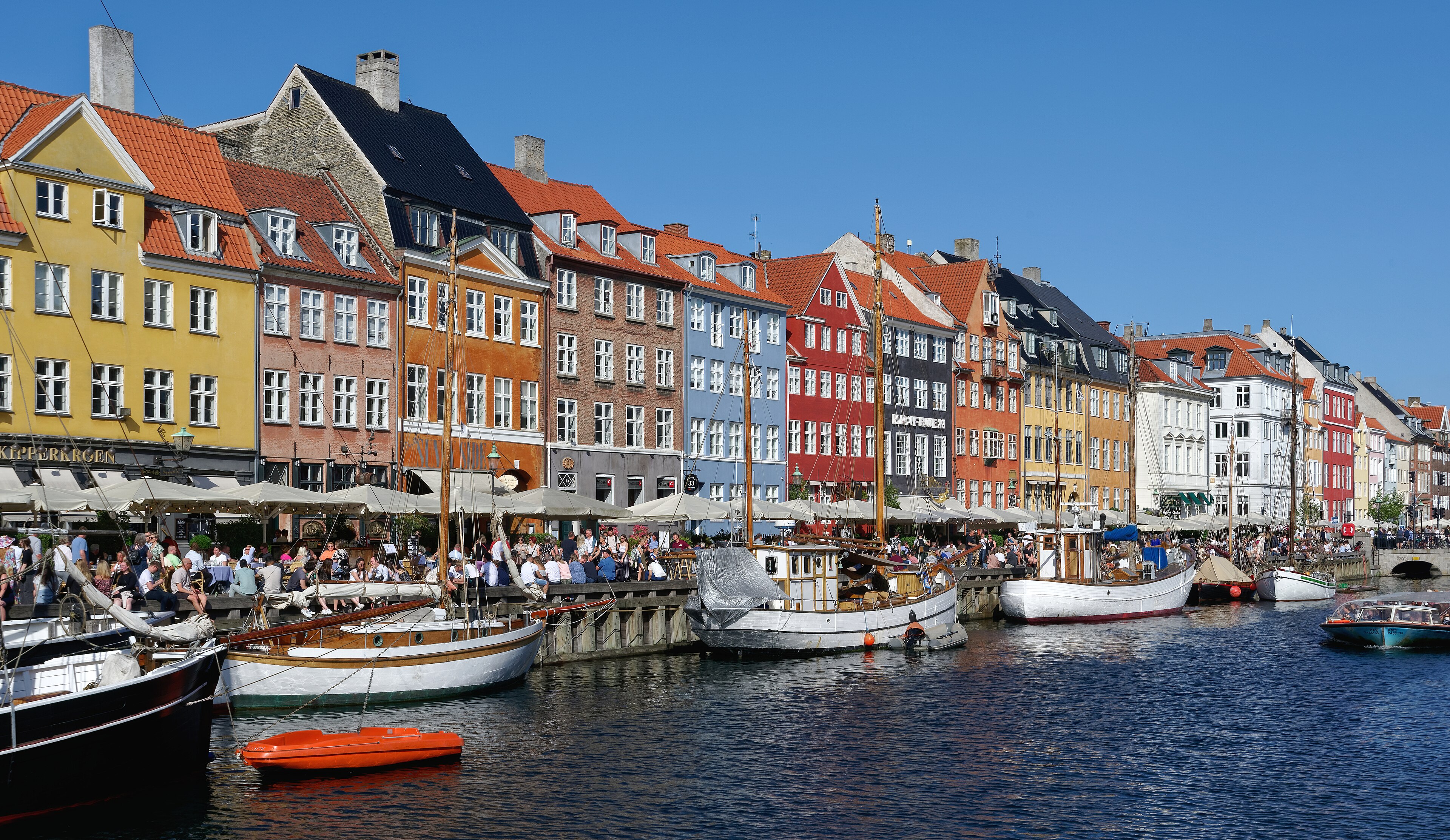
 Visit official site ↗
 Visit official site ↗
 Visit official site ↗
 Visit official site ↗
 Visit Facebook ↗
 Visit official site ↗
 Visit official site ↗
 Visit official site ↗
 Visit official site ↗
 Visit official site ↗
 Visit official site ↗
 Visit official site ↗
 Visit official site ↗
 Visit official site ↗
 Visit official site ↗
 Visit official site ↗
 Visit official site ↗
 Visit official site ↗
 Visit official site ↗
 Open city/visitor reference ↗
 Visit official site ↗
 Visit official site ↗
 Visit official site ↗
 Visit official site ↗
 Visit official site ↗
 Visit official site ↗
 Visit official site ↗
 Visit official site ↗
 Visit official site ↗
 Visit official site ↗
 Visit official site ↗
 Visit official site ↗
 Visit official site ↗
 Visit official site ↗
 Visit official site ↗
 Visit official site ↗
 Visit official site ↗
 Visit official site ↗
 Visit official site ↗
 Visit official site ↗
 Visit official site ↗
 Visit official site ↗
 Visit official site ↗
 Visit official site ↗
 Visit official site ↗
 Visit official site ↗
 Visit official site ↗
 Visit official site ↗
 Visit official site ↗
 Visit official site ↗
 Visit official site ↗
 Visit official site ↗
 Visit official site ↗
 Visit official site ↗
 Visit official site ↗
 Visit official site ↗
 Visit official site ↗
 Visit official site ↗
 Visit official site ↗
 Visit official site ↗
 Visit official site ↗
 Visit official site ↗
 Visit official site ↗
 Visit official site ↗
 Open city/visitor reference ↗
 Visit official site ↗
 Visit official site ↗
 Visit official site ↗
 Visit official site ↗
 Visit official site ↗
 Visit official site ↗
 Visit official site ↗
 Visit official site ↗
 Visit official site ↗
 Visit official site ↗
 Visit official site ↗
 Visit official site ↗
 Visit official site ↗
 Visit official site ↗
 Visit official site ↗
 Visit official site ↗
 Visit official site ↗
 Visit official site ↗
 Visit official site ↗
 Visit official site ↗
 Visit official site ↗
 Visit official site ↗
 Visit official site ↗
 Visit official site ↗
 Visit official site ↗
 Visit official site ↗
 Visit official site ↗
 Visit official site ↗
 Visit official site ↗