Prepared meals and sandwiches accompany groceries at Sterk Staaltje, where Amsterdam cooks use ingredients from the shop's own shelves. The Pancake Bakery serves sweet and savoury Dutch pancakes inside a seventeenth-century warehouse on Amsterdam's Prinsengracht canal. Metzgerei Spahni Andermatt combines its meat counter with Alpine cheeses, also carrying Urner dried beef and venison sausages.
What makes great gourmet & pantry?
This plate lists 1,249 shops in 91 countries. Paris has the most with 23, followed by New York with 21. Among these shops, 5 describe made-to-order work, 179 sell online and 3 work by appointment, going by their own descriptions.
Ask how long it keeps: fresh and preserved foods have very different lives, so ask for the date.
Ask for a taste: many counters will let you taste oil or preserves before you choose a jar.
Check the import rules: meat, dairy and fresh produce are restricted in many countries, so check before buying to carry.
Explore gourmet & pantry
Use the city plates when they appear below, or open any store for its official door and related ORBIS city and craft links.
Wafer maker founded in 1925 by confectioner Alfons Loacker in a small Bolzano patisserie on Piazza Domenicani. His son Armin moved production in 1974 to the Renon/Ritten plateau in the Dolomites, roughly 1,000 meters above sea level.
Best for Wafer classics and alpine treats.
Loacker traces to 1925, when Alfons Loacker, a trained confectioner from Gotzis, Austria, bought a small pastry shop on Piazza Domenicani in Bolzano, South Tyrol. Working with two assistants, he began producing the 'Bolzano wafer' - thin, crisp layers filled with cream - using natural raw ingredients. The business remained a small regional bakery until 1974, when Alfons's son Armin Loacker moved production to the Renon (Ritten) plateau high in the Dolomites, marking the shift from an artisanal shop to an industrial confectionery producer. Loacker remains family-owned and marked its hundredth anniversary in 2025.
A.C. Perch's has traded from Kronprinsensgade 5 in Copenhagen since 1835, when Niels Brock Perch named the shop for his son Axel Christian. An upstairs tearoom still serves brewed pots above the retail counter.
Best for Tea from Copenhagen’s historic A.C. Perch’s Tehandel
A.C. Perch's Tehandel has traded tea from Kronprinsensgade 5 in Copenhagen since April 1835, when Niels Brock Perch opened the shop and named it for his third son, Axel Christian Perch. It's recognized as Scandinavia's oldest tea merchant and occupies one of Copenhagen's oldest surviving shop premises -- the building itself dates to 1805 and is listed. The founding aim, sourcing the best teas from around the world alongside a bit of porcelain, still shapes the range nearly two centuries later: green, white, black and oolong teas, herbal blends, matcha, and tea accessories, sold both loose from the counter and as gift sets. An upstairs tearoom lets customers drink what the shop sells rather than only buying it to take home, serving brewed pots above the retail floor in a space that has grown alongside the original ground-floor counter. The business has since expanded into other Scandinavian locations and added an e-commerce platform, but the Copenhagen shop remains the original site -- nearly 190 years of continuous trading from one address, run today as both a working retail counter and a sit-down tearoom.
Founded in 1859 near Kurseong and farmed biodynamically since the 1970s, Makaibari was the first tea garden in India certified organic and the first worldwide certified biodynamic; its silver-tip and moonlight-harvest lots, including a record $302/kg first flush, ship direct from the estate.
Best for Biodynamic Darjeeling silver-tip and moonlight teas
Makaibari, in the hills above Kurseong, dates its founding to 1859 by its own account and calls itself the world's first tea factory - one of the oldest continuously run gardens in Darjeeling. For generations the estate stayed in the hands of the Banerjee family, who began shifting cultivation toward biodynamic and organic methods in the 1970s under planter Swaraj Kumar Banerjee; by 1988 Makaibari had become the first tea garden in India certified fully organic, and later the first in the world certified biodynamic under the Demeter standard. The estate uses a permaculture system spread across six ridges, letting native forest and wildlife share the land with the tea bushes rather than clearing them out, and times some of its harvesting to the lunar calendar - the basis for its 'Full Moon Harvest' and moonlight lots. Its silver-tip teas, picked from the youngest, unopened buds, sit at the top of the range. The estate sells direct, without intermediary brokers, and its lots have set records at auction: a 2017 first-flush batch sold for $302 per kilogram, among the highest prices ever paid for first flush Darjeeling. Beyond tea sales, Makaibari runs a homestay and ecotourism program, putting visitors on the same ridges the biodynamic system was built to protect.
Founded in 1790 by Lala Sukh Lal Jain, this Chandni Chowk sweet shop served Mughal royalty and colonial-era Delhi for over two centuries before closing in 2015; eighth-generation descendant Aryan Jain has since reopened it nearby at Maliwara Tiraha Bazar.
Best for Sohan halwa and Old Delhi mithai
Ghantewala was founded in 1790 by Lala Sukh Lal Jain, a sweet-maker who migrated to Delhi from Rajasthan and first sold mishri mawa, a Rajasthani specialty, before building a reputation across the Mughal court. According to the shop's own oft-repeated history, its name comes from a bell-ringer (ghantawala) at the Red Fort who became a devoted regular customer. The 1857 edition of the newspaper Dihli Urdu Akhbar recorded rebel soldiers from other regions being won over by Delhi's comforts, singling out Ghantewala's sweets by name — one of the earliest documented press references to an Indian sweet shop. Ghantewala continued operating through Mughal rule, British colonial administration and into independent India, drawing visitors including national political figures, before closing in 2015 after 225 years, a closure widely attributed to disputes among family shareholders and the pressures of modern food-safety regulation on a legacy business. Aryan Jain, described as the family's eighth-generation custodian, and Sushant Jain revived the brand, reopening a shop nearby in Chandni Chowk at Maliwara Tiraha Bazar, Katra Shah N Shah, combining the original recipes with updated operations.
Snack and sweets chain founded in 1937 in Bikaner, Rajasthan, by Ganga Bhishen Agarwal, who began selling bhujia and traditional sweets from a small shop before the family opened a Nagpur manufacturing plant in 1970.
Best for Sweets & snacks.
Haldiram's traces back to 1937, when Ganga Bhishen Agarwal — known as Haldiram Ji — opened his own small shop in Bikaner, Rajasthan, after learning the trade in his father's bhujia business. Bhujia is a crunchy, deep-fried chickpea-flour snack seasoned with spices, and it became the foundation of what Agarwal built: a shop selling bhujia alongside other traditional Indian sweets and namkeen. As demand grew beyond Bikaner, the family expanded operations to Kolkata and, in 1970, opened a manufacturing plant in Nagpur, Maharashtra, a move aimed at reaching markets across western and southern India. Nagpur later became the company's operational base. The broader Agarwal family runs several related but separately structured businesses under different names — including Haldiram's, Bikanervala, Bhikharam Chandamal and Bikaji — a pattern common among Rajasthani trading families that split operations among siblings and branches over generations. Today Haldiram's product range spans namkeen, packaged sweets, chaat and ready meals, sold through its own outlets and wide retail distribution across India and abroad.
Roasting in Detroit's Eastern Market since 1924, Germack was the first company in America to import and roast pistachios and is now run by its fourth generation of family owners. The Russell Street store sells house-roasted nuts, seeds and coffee alongside a small cafe.
Best for House-roasted nuts, seeds and coffee alongside a small cafe
Germack Pistachio Company has roasted in Detroit's Eastern Market since 1924, when it became the first company in America to import and roast pistachio nuts — at a time when the nut was still largely unknown to American shoppers. The company also takes credit for inventing the red-colored pistachio, the dyed shell that later became a supermarket standard before naturally-colored nuts came back into fashion. Four generations of the same family have run the business since, roasting nuts and seeds in small batches with premium canola oil at a factory on Wilkins Street, a few blocks from the Russell Street retail shop and cafe where customers can buy directly off the roaster. Coffee joined the lineup in 2010, applying the same small-batch approach to beans as the company already used for pistachios, cashews, and sunflower seeds. The company has picked up QVC's vendor award eight times in nine years, a recognition earned through a home-shopping channel rather than a food-press write-up, which fits a business that has always sold more through direct relationships than through branding. A century after its first pistachio shipment, Germack still frames itself as a small, family-run roaster working out of the same historic market district where it started.
Maison Boissier, Paris confectioner since 1827 and inventor of the marron glacé, sells chocolates, dragées and confections from its counter at Galeries Lafayette Gourmet.
Best for Historic Parisian confectionery and chocolate — marrons glacés
Maison Boissier has traded as a Paris confectioner since 1827, when Bélisaire Boissier, arriving from the south of France, opened a shop that soon drew the era's fashionable élégantes — and, by reputation, admirers including Victor Hugo. The house is credited as the inventor of the marron glacé, and candied chestnuts remain its signature, wrapped in the gold paper the brand still uses today. Alongside the chestnuts, Boissier makes chocolate — pétales, mendiants, tablets and truffles — and a run of old-fashioned confectionery: sugared almonds, marshmallows, fruit pastes and the pearl-shaped bonbons boules in apricot, cherry and blackcurrant. The house keeps its own boutiques at Galerie Vivienne, rue du Bac and rue de Passy, and its best-known outpost sits inside Galeries Lafayette's Haussmann flagship, where a Boissier corner and periodic pop-ups occupy the Le Gourmet food hall alongside the store's other specialty grocers. It is a confectioner first — its own site and its Galeries Lafayette listing both center on chestnuts, chocolate and candy rather than a dedicated tea program, so shoppers looking specifically for loose-leaf tea should treat Boissier as a stop for sweets and gifting rather than a tea specialist.
Fauchon was founded in 1886 when Auguste Fauchon opened a specialty grocery at Place de la Madeleine in Paris. The house added its Grand Salon de Thé in 1889, establishing the gourmet épicerie now recognized by its signature pink.
Best for Gilded French gourmet goods from the 1886 Place de la Madeleine épicerie.
Fauchon was established in 1886 when Auguste Fauchon, a young Norman passionate about quality products, opened a specialty grocery store at Place de la Madeleine in Paris. He chose the location to offer Parisians exceptional products from Normandy: peppers, nutmeg, tea, and coffee achieved quick success. Fauchon stayed current with innovations, selling LU biscuits from their 1887 creation and Maggie bouillon. In 1889, the opening of the Grand Salon de Thé revolutionized the French art of living, offering a refined space dedicated to women. The Grandes Caves de Réserve opened four years after the original shop, known for its selection of authentic wines. In 2018, Fauchon opened Hôtel Paris on Place de la Madeleine, combining hotel excellence with French gastronomy, perpetuating Auguste's legacy of French elegance and culinary excellence.
Founded in 1867 by Pavel Kousmichoff in St Petersburg and relocated to Paris after the Russian Revolution, Kusmi Tea now produces its organic, B Corp-certified blends — including the historic Anastasia recipe — in Normandy.
Best for Anastasia blend and colorful tins from the 1867 St Petersburg house
Kusmi Tea's founder, Pavel Kousmichoff, left home at 14 to work for a St Petersburg tea merchant, and was given a small tea house of his own on his marriage in 1867 — the year the brand now dates itself to. The business grew quickly under him: a favorite of Russian nobility by 1880, and a chain of roughly ten tea houses by 1901. That history ended with the Russian Revolution, when the family relocated the business to Paris in 1917, carrying the Russian tea tradition — and recipes like the historic Anastasia blend — into French retail.
The brand now operates from Paris with production based in Normandy, where it makes its teas to organic and B Corp-certified standards — a very different operational footprint from the imperial-era tea houses it descends from. The catalog runs past 100 varieties, spanning the historic Russian-style recipes alongside newer wellness-oriented lines, including the organic Detox series launched in 2007. What ties the current business to its 1867 origin is mostly Anastasia and the brand's colorful tin packaging, both treated as a throughline to the St Petersburg tea house Kousmichoff built before the family ever set foot in Paris.
Antoine-Claude Maille opened his first boutique in Paris in 1747 and supplied vinegars and mustards to the court of Louis XV; the Dijon shop followed in 1845. Both boutiques still pump fresh mustard straight from the tap, alongside the house vinegars, cornichons, and gift jars.
Best for Fresh mustard from the pump, flavored vinegars, and gift jars
Florence gelateria founded 1929 (as Latteria Vivoli) by Serafino Vivoli, near Santa Croce; now run by the fourth generation, known for its affogato and additive-free artisanal gelato.
Best for Affogato, crema gelato and Florentine frozen desserts
Vivoli was founded in 1929 as Latteria Vivoli by Serafino, one of three brothers from the Tuscan town of Pelago, at Via dell'Isola delle Stinche 7r, in Florence's historic Santa Croce district, where the original shop still operates. The gelateria makes handmade gelato without additives, preservatives or artificial colorants, and its best-known offering is 'la gran crema al caffe,' an affogato-style combination of espresso and premium ice cream. Now run by the fourth generation of the same family, Vivoli has expanded beyond Florence with branches in New York (opened 2013) and at Disney Springs in Orlando.
Hadji Sadık Bey, an Albanian migrant who arrived in Istanbul in 1870, spent six years carrying his improved boza recipe through the streets in copper containers before opening a permanent shop in Vefa in 1876. His fourth-generation descendants still run it today, serving the fermented millet drink alongside grape vinegar and Ottoman-style syrups made to the original recipe.
Founded in 1885, this family-run sweet house built its reputation on classic sandesh and later added baked and fusion mishti such as chocolate sandesh without abandoning traditional recipes. Multiple outlets across South Kolkata still make sweets fresh daily using the original family formulas.
Manuel Tavares has sold cheese, charcuterie, salt cod and vintage port from its narrow Rua da Betesga storefront since 1860, the shelves stacked floor to ceiling behind a marble-topped counter. The Financial Times named it among the world's best food shops in 2021, citing a selection built on direct relationships with small Portuguese producers.
This fifth-generation Lyon charcuterie has worked the same rue des Archers shop since 1937, turning out rosette, jesus de Lyon and pate en croute alongside a daily changing traiteur counter. Orders travel across France by temperature-controlled shipping, and the family still serves the 2nd arrondissement in person from Tuesday to Saturday.
Best for Charcuterie, traiteur, saucisson, pate en croute
Madrid’s gilded pantry since 1839 — consommé from the silver samovar downstairs, Isabelline salons above. serving yourself consommé from the samovar at street level has been a house tradition since 1839.
Best for Consommé, croquetas, the takeaway counter
Mantequerías Bravo opened in 1931, when Cruz Bravo established the shop on Calle Ayala in Madrid's Salamanca neighborhood, after years working from age fourteen as an apprentice in a Madrid ultramarinos — a general grocery.
Best for A century-old Madrid delicatessen where jamón ibérico sits alongside wine, cheese, and caviar
Mantequerías Bravo opened in 1931, when Cruz Bravo established the shop on Calle Ayala in Madrid's Salamanca neighborhood, after years working from age fourteen as an apprentice in a Madrid ultramarinos — a general grocery. Nearly a century later the business remains in the same family's hands at the same address, its wooden storefront and much of its mid-twentieth-century interior intact.
It is worth being precise about what kind of shop this is: not a single-product ham specialist, but a full gourmet delicatessen. Alongside jamón ibérico de bellota, it stocks a wine cellar built around labels such as Vega Sicilia, extra virgin olive oils the shop describes as pressed from trees up to 2,000 years old, hand-made conservas, foie gras, caviar, and French cheeses. Ham has been part of that range since the shop's ultramarinos origins, sold alongside the coffee Cruz Bravo once roasted on the street outside in the 1940s.
Mantequerías Bravo still trades from the same Calle Ayala address as a family-run neighborhood institution rather than a chain. Jamón is one specialty among several, rather than the whole of what the shop sells.
Milan gastronomy hall founded in 1883 by Francesco Peck, a Prague-born salumiere; moved to its Via Spadari 9 address in 1912 under Eliseo Magnaghi and was an official supplier to Italy's Royal House by 1890.
Best for Milanese gourmet hampers of serious pedigree.
Peck is a Milanese food hall founded in 1883 by Francesco Peck, a charcuterie maker originally from Prague, who opened a shop specializing in cured meats and smoked goods. The business quickly attracted an upscale clientele and, by 1890, was named an official supplier to Italy's Royal House. In 1912 new owner Eliseo Magnaghi moved the business to its present address at Via Spadari 9, near Milan's Duomo, and broadened the offer to fresh pasta and prepared gastronomy. Over the twentieth century Peck became a meeting place for Milanese cultural figures, reportedly including the writer Gabriele D'Annunzio.
Giusti has aged balsamic vinegar in the attic barrel cellars, the 'Antiche Acetaie', of its Modena estate since 1605. The Strada Quattro Ville site pairs working production with the Museo Giusti and guided tastings, feeding six boutiques from Milan to Catania.
Best for Aged balsamico and gift-worthy vinegar flights.
A Modena family has aged Traditional Balsamic Vinegar DOP here since 1850, tending some 3,500 barrels. Bottles and seasonings sell through the online shop, and the acetaia offers free guided tours and tastings.
Best for DOP balsamic vinegar aged in 3,500 barrels since 1850
A historic Munich delicatessen, coffee roaster and fine-food merchant. A former Royal Bavarian Purveyor to the Court with its flagship on Dienerstrasse. Established 1700.
Best for Historic Munich delicatessen, coffee roaster and fine-food merchant
Dallmayr's roots reach back to 1700, when the merchant Christian Reitter ran a forerunner grocery business in Munich; the name it carries today comes from Alois Dallmayr, who acquired the shop around 1870. In 1895 Dallmayr sold the business to Therese and Anton Randlkofer, and it was under Therese's management that the delicatessen built its reputation among European nobility, eventually holding fifteen separate royal purveyor titles. The Stammhaus — the original store on Dienerstraße in Munich's old town, still the company's flagship and headquarters — now draws an estimated 2.8 million visitors a year. Coffee entered the business in 1933, when Bremen coffee merchant Konrad Werner Wille established a specialist coffee department inside the delicatessen; that division grew large enough to be spun off as its own independent subsidiary in 1985 and is today Dallmayr's largest single business unit. The company remains family-owned, employing roughly 3,500 people worldwide across four divisions — delicatessen and gastronomy, party and catering services, coffee and tea, and vending and office-coffee supply — with group revenue of approximately 900 million euros. The Munich flagship still functions as both a working delicatessen hall and the symbolic home of the brand's three-century history.
A Munich fine-food store for delicacies, wine, confectionery and gift hampers. Its flagship is a defining local gourmet address. Established 1930.
Best for Delicacies, wine, confectionery, and gift hampers since 1930
Käfer traces its origin to 1930, when Elsa and Paul Käfer opened a colonial-goods and delicatessen shop on Munich's Amalienstrasse. Rapid early success led the couple to relocate, in 1933, to larger premises at Prinzregentenstrasse 73 in the Bogenhausen district — the address that remains the company's headquarters and flagship store today, nearly a century on. Sons Gerd and Helmut Käfer took over management during the 1960s, expanding the business through West Germany's postwar economic boom, and in 1970 the family opened Käfer-Schänke, a restaurant adjoining the delicatessen that became a fixture of Munich business and society dining. A third generation entered in 1988, when Michael Käfer joined the management team, assuming full leadership by 1992. Under his direction the company grew from a single food shop into the broader Käfer-Gruppe, spanning delicatessen retail, catering, and restaurants. The Prinzregentenstrasse flagship itself has stayed close to its founding format: a ground-floor delicatessen hall selling wine, confectionery, prepared delicacies, and gift hampers, supplied in part by the group's own catering kitchens. Nearly a hundred years after Elsa and Paul Käfer's original shop, the family-run business remains headquartered at the same Bogenhausen address, still trading under the name synonymous with Munich fine food.
Four generations of one family slicing smoked salmon on Houston Street since 1914 — the appetizing store that defines the genre. Bagels, belly lox and babka; New York in a pink box.
Best for The appetizing store — smoked fish royalty since 1914
Four generations of one family slicing smoked salmon on Houston Street since 1914 — the appetizing store that defines the genre, and the rare New York institution whose name honors the daughters who ran the counter. Bagels, belly lox, babka: New York in a pink box, cut by hand by the family that's been cutting it for over a century.
Yonah Schimmel has hand-rolled and baked knishes on Manhattan's Lower East Side since 1910, filling them fresh daily from the original vegan potato recipe to seasonal flavors. The kosher-certified bakery has been named Best Knish in NYC by both Yelp and TripAdvisor, with knishes shipped nationwide via Goldbelly.
Best for Hand-rolled potato knishes from the original 1910 recipe
Yonah Schimmel has baked knishes on Manhattan's Lower East Side since 1910, making it one of the neighborhood's oldest continuously operating food businesses. The bakery still hand-rolls and stuffs each knish rather than using mechanized production, filling them fresh daily from a range that runs from the classic potato, made to what the bakery calls Uncle Yonah's original recipe and entirely vegan, to seasonal flavors.
The bakery holds full kosher certification, a status maintained through more than a century of ownership changes and neighborhood transformation around it. That combination of age, technique and certification has earned it recognition from both Yelp and TripAdvisor as serving the best knish in New York City.
Beyond the East Houston Street storefront, the bakery has adapted to modern ordering without changing its product: knishes ship nationwide through Goldbelly, arrive via DoorDash, and are available for free local delivery through Sauce, giving a century-old recipe several new ways to reach customers who cannot visit the original shop in person.
Termini Brothers Bakery has hand-made Italian cannoli, cookies and pastries in Philadelphia since 1921, when brothers Giuseppe and Gaetano Termini opened its South 8th Street shop. Three generations of the family have since passed down the bakery's original cannoli-shell tools and techniques across six Philadelphia-area locations.
Best for Hand-shaped cannoli made with century-old family tools
Termini Brothers Bakery opened in 1921 on Philadelphia's South 8th Street, founded by brothers Giuseppe and Gaetano Termini, who brought Italian pastry-making traditions into a South Philadelphia neighborhood then home to a large Italian immigrant community.
The bakery's craft has been handed down within the family for three generations, including the original tools and techniques used for its hand-shaped cannoli shells — still described by the bakery as its most celebrated item. Termini also bakes a torrone, an Italian nougat candy, to a family recipe it traces back to the early 1800s, alongside Italian cookies such as pignoli, amaretti and cucidati, coffee ring cakes, biscotti and almond horns.
Today Termini Brothers operates six Philadelphia-area locations, including its original South 8th Street flagship, a stall at Reading Terminal Market, and outposts at the Comcast Center and Live! Casino & Hotel Philadelphia. The bakery ships nationwide, continuing to sell cannoli, cookies and pastries made using its founding-era methods.
Babington's Tea Rooms opened on December 4, 1893, at Via Due Macelli 66 near Piazza di Spagna in Rome, founded by two young women, Anna Maria Babington and Isabel Cargill — granddaughter of Captain William Cargill, founder of Dunedin, New Zealand — who invested 100 pounds of their own savings into a tea and reading room for Rome's Anglo-Saxon community.
Best for Hand-blended tea served in a Piazza di Spagna tea room
Babington's Tea Rooms opened on December 4, 1893, at Via Due Macelli 66 near Piazza di Spagna in Rome, founded by two young women, Anna Maria Babington and Isabel Cargill — granddaughter of Captain William Cargill, founder of Dunedin, New Zealand — who invested 100 pounds of their own savings into a tea and reading room for Rome's Anglo-Saxon community. It was a genuine risk at the time: in 1890s Italy, tea was sold mainly in pharmacies, not in shops built to serve and drink it.
The business survived where the risk might have suggested otherwise, staying open through Mussolini's anti-English climate and the Second World War with its English-language sign intact in solid bronze on a Roman travertine plaque. It is now run by a fourth generation of the founding families, still hand-blending teas with no artificial flavoring, and in 2018 launched the Babingtons Foundation, funding education in Darjeeling — tying the shop's supply chain back to the region much of its tea still comes from.
For a Roman institution founded by an Englishwoman and a New Zealander, Babington's own description still holds: not entirely British, not precisely Italian, but Babingtons.
The Parisian macaron maison since 1862 — pastel towers, double-decker macarons and salon-de-thé romance. Pierre Desfontaines, Louis-Ernest Ladurée's second cousin, joined two macaron shells with a filling; Jeanne Souchard (Ernest's wife) is credited with creating one of the first Paris tea rooms at Rue Royale.
Best for Pastel macaron boxes.
Ladurée began as a Parisian bakery in 1862, and its tea salon on Rue Royale — with ceiling cherubs painted by Jules Chéret — helped establish the salon de thé as an institution where women could meet unaccompanied. The house's claim on posterity is the double-decker macaron: two almond-meringue shells joined with ganache, an assembly Ladurée popularized in the twentieth century and turned into the pastel-boxed emblem of Parisian sweetness worldwide. The Rome address on Via Borgognona delivers the full ritual — the mint-green livery, the pyramid of shells in rotating seasonal flavors, the pastries beyond macarons that reward attention: the Ispahan's rose-lychee-raspberry combination has entered the pastry canon. Buy macarons to carry, but sit if there is time; the salon experience, unhurried and slightly theatrical, is the original product.
Macarons travel poorly beyond a day; buy the last morning, and choose the seasonal flavors over the permanent ones — the pastry kitchen's invention shows there.
Confiserie Lilamand has made candied fruit in Saint-Rémy-de-Provence since 1866, now spanning five generations of the same family. Its crystallized fruit remains a Provençal specialty, produced and sold from the same Provence address for over 150 years.
Best for Candied fruit crafted by five generations since 1866 in Saint-Rémy
Operating at Pike Place since 1930, this fish market is known for fishmongers who toss customers' orders across the counter. It ships fresh Northwest seafood nationwide.
Best for Fresh Pacific Northwest seafood and the fish-throwing spectacle
Operating since 1945, Kim Choo Kueh Chang sells its Nyonya rice dumplings and Peranakan snacks from its original Joo Chiat Place location as well as an East Coast Road branch near the Singapore Visitor Centre. The business also runs an online store and has publicly stated it does not distribute its products through supermarkets or hawker centres.
Best for Peranakan-food, kueh-chang, nyonya-cuisine
Mei-Dong has been brewing soy sauce by hand in Taichung's Dongshi township since 1928, rebuilding its wood-fired twin hearths after the 1999 earthquake destroyed the original vats. The family-run workshop, now in its third generation, still sources black soybeans from contracted Taiwanese farmers and welcomes visitors at its Dongqi Road address six days a week.
Abulafia — also transliterated Abouelafia — has baked from the same corner of Yefet Street in Jaffa since 1879, run across generations by one Arab family and now stewarded by Said Abulafia.
Best for 24-hour Jaffa bakery serving sambusak and pita since 1879
Abulafia — also transliterated Abouelafia — has baked from the same corner of Yefet Street in Jaffa since 1879, run across generations by one Arab family and now stewarded by Said Abulafia. "When people hear that the bakery started in 1879, they think about history," he told Enviro Magazine in 2026, framing the shop's age as an obligation rather than a marketing point, and describing longevity as the sum of many small decisions rather than one big one.
The bakery bakes around the clock, open by multiple accounts 24 hours a day, turning out pita and sambusak — a folded pastry sold with fillings such as mashed potato, onion, mushroom and cheese, topped with sliced hardboiled egg and finished briefly on a grill. On how the shop handles change, Abulafia's own stated rule is blunt: "You have to modernize carefully."
Jaffa's mixed Jewish-Arab neighborhood has made the counter itself a small emblem of coexistence: staff have handed out shirts reading "Jews and Arabs refuse to be enemies" to visitors, and outlets from Mother Earth News to regional coexistence groups have documented residents and tourists of every background lining up at the same window at all hours. Almost 150 years on, it is still a family bakery first — Said Abulafia's own test for any change is whether regular customers can feel it, even if they can't explain it in technical terms.
The Gil family has pressed olives at this mill since 1900, drawing on roughly 6,000 trees across one of Europe's oldest olive-growing districts, some over a thousand years old and still hand-picked because their size defeats mechanical harvesters. Four generations in, the mill pairs that hand-harvest tradition with modern centrifugal extraction to produce single-varietal Picual, Arbequina, and Empeltre extra virgin oils.
Ginza Kimuraya traces its origin to 1869, when a former samurai left unemployed by the Meiji Restoration, Yasubei Kimura, met a baker who had trained under a Dutch resident of Nagasaki's Dejima trading post and opened a Western-style bread shop, first called Bun'eido and renamed Kimuraya the following year.
Best for The birthplace of anpan, baking in Ginza since 1869
Ginza Kimuraya traces its origin to 1869, when a former samurai left unemployed by the Meiji Restoration, Yasubei Kimura, met a baker who had trained under a Dutch resident of Nagasaki's Dejima trading post and opened a Western-style bread shop, first called Bun'eido and renamed Kimuraya the following year. In 1874, Kimura and his son Eizaburo adapted the sake-yeast starter used for a steamed bun called sakamanju to leaven bread in a way suited to Japanese palates — the company's own history dates the result, anpan, a bun filled with sweetened azuki bean paste, to that year.
The bun's reputation was made the following spring. On April 4, 1875, Kimura presented Emperor Meiji with a sakura anpan studded with a salted cherry blossom sourced from Yoshino, and the emperor and Empress Shoken reportedly asked that it continue to be served to them afterward — the same date is now marked in Japan as Anpan Day, and Kimuraya's own corporate history page recounts the audience and the flower detail directly.
The Ginza flagship still occupies a multi-floor building at 4-5-7 Ginza: a bakery on the ground floor, a café upstairs, and a Western-style grill above that, run today as a roughly 95-employee company making close to 130 products, some of them seasonal. By its own and outside accounts it remains Japan's oldest Western-style bakery still trading under a name it chose for itself in 1870.
Tsuen Tea dates to 1160, when its founder — a retainer who had left service to build a hermitage at the eastern end of Uji Bridge — began offering tea to travelers crossing it.
Best for Uji green tea from Japan's oldest teashop, trading at the foot of Uji Bridge since 1160
Tsuen Tea dates to 1160, when its founder — a retainer who had left service to build a hermitage at the eastern end of Uji Bridge — began offering tea to travelers crossing it. That makes Tsuen, by its own and outside accounts, Japan's oldest continuously operating teashop: the 13th-oldest company in Japan and the 30th-oldest in the world, still run by the same family now in its 24th generation.
The shop's location was never incidental. For more than 860 years Tsuen has sat at the foot of Uji Bridge, one of the oldest bridges in Japan, serving simultaneously as a teahouse and as an informal guardian watching over travelers who crossed it — a role woven into local memory alongside its tea. The current building dates to 1672, over 350 years old in its own right, a fraction of the shop's full history but still a genuinely old structure by any standard.
Today Tsuen sells matcha, gyokuro, sencha, hojicha, and genmaicha, including organic-certified leaves, alongside soba and confections that pair with them. Eight and a half centuries of continuous operation on one site is a claim almost no retail business anywhere can make, let alone verify against a bridge that's still standing.
The design factory on Lake Orta — Sapper kettles, Graves birds, and Italian design wit since 1921. 1983 Tea & Coffee Piazza research with Alessandro Mendini led to Michael Graves and Aldo Rossi entering the catalogue.
Best for Design icons for kitchen and table.
On the shore of Lake Orta stands the factory that taught the world's kitchens to smile. Alessi, founded in 1921, is Italian design's great translator — the house that takes the most serious architects and designers alive and asks them to make a kettle, a corkscrew, a citrus squeezer, and then actually manufactures the answer. Richard Sapper's kettle, with its melodic whistle, became the object that announced design had moved into the kitchen. Michael Graves's bird-spout kettle followed — the little red bird at the tip turning boiling water into a small daily theater — and between them they defined an entire category: the household object as wit.
That wit is the house method, not an accident. Alessi calls itself a design factory, and both words carry equal weight: the dreaming happens with the world's designers, but the making happens in Omegna, where the metalworking traditions of the lake district give the jokes their engineering. A funny object that fails is a gadget; a funny object built to last decades is design. Alessi's classics have now outlived the centuries they were designed in — the Sapper kettle whistles on, the Graves bird still perches — because the humor was always load-bearing.
The shop and the catalogue amount to a museum where everything is for sale: design icons for kitchen and table, a hundred years of Italian conviction that daily life deserves delight. Omegna made a bet in 1921 that beauty and function could share a factory floor. The kettles are still singing the result.
Run by nine generations of the same family since 1806, this butcher on Greve's central Piazza Matteotti cures Tuscan salami, finocchiona, and prosciutto alongside cuts of local beef. The historic shop sits beside a bistro and an online store that ships the family's cold cuts.
Babylonstoren is a 1692 Cape Dutch farm near Franschhoek whose 8-acre, 300-plant garden supplies its own rooibos and honeybush tea, wine, olive oil and produce, served at the Babel restaurant and sold in the farm shop.
Best for Farm-grown rooibos, honeybush, wine and olive oil
Babylonstoren occupies one of the oldest Cape Dutch farms in South Africa, established in 1692 at the foot of the Simonsberg mountain between Franschhoek and Paarl. The estate's defining feature is its garden, redesigned from 2007 by French garden architect Patrice Taravella, whose earlier work on the kitchen garden at Notre-Dame d'Orsan caught owner Karen Roos's attention. Spread across roughly eight acres, the garden holds more than 300 edible or medicinal plant varieties arranged in 15 clusters — vegetables, stone and pome fruit, citrus, berries, nuts, bees, ducks and chickens among them — and every restaurant and shop on the property draws directly from what's in season there.
Alongside its wine cellar and olive grove, Babylonstoren has built a tea programme around the Cape's own fynbos plants: rooibos and honeybush, sourced organically from a Cederberg supplier and, more recently, grown on the farm's own Simonsberg slopes. Both are naturally caffeine-free, with rooibos's fruity red infusion and honeybush's honeyed, floral cup sold loose or bagged in reusable tins from the farm shop. The Babel restaurant and the Greenhouse eatery cook from the same beds, so a visit can move from garden rows to a cellar tasting to a pot of estate-grown honeybush without leaving the property.
Cinco Jotas traces its founding to 1879, when the ancestors of today's owners opened what the company describes as the first operation dedicated entirely to a pure Iberian acorn-fed pig, in Jabugo, a town in Huelva's Sierra de Aracena.
Best for 100% acorn-fed Iberian ham cured in Jabugo's founding cellars since 1879
Cinco Jotas traces its founding to 1879, when the ancestors of today's owners opened what the company describes as the first operation dedicated entirely to a pure Iberian acorn-fed pig, in Jabugo, a town in Huelva's Sierra de Aracena. The venture grew from a partnership among the Sánchez Romero family and ham specialists Manuel Romero and Vicente Carvajal, whose combined surnames still identify the parent company, Sánchez Romero Carvajal.
The hams cure in what the company calls centuries-old cellars built into Jabugo's particular microclimate, a combination it credits for the character of the finished product. Production runs by hand and is measured in years rather than months, and the pigs are raised on a deliberately limited scale under acorn-fed (bellota) standards the company says exceed Spain's official Black Label minimum, alongside stated attention to animal welfare during rearing.
Today Cinco Jotas sells whole jamón, paleta, lomo, and cured sausage through its own online shop, restaurants, and cellar-visit experiences, in addition to wholesale distribution, and remains headquartered in Jabugo — the town most closely identified with the ibérico category as a whole.
Confetti Mario Pelino makes the sugar-coated sweets associated with Sulmona, with almond confetti at the centre of its range. The family business dates its founding to 1783 and offers gift arrangements for weddings and other celebrations. A museum within the factory site explains the tools and techniques behind confetti-making.
Best for Sulmona almond confetti and celebration gifts
The Sulmona range of Confetti Mario Pelino centres on confetti, the sugar-coated sweets associated with celebrations. Almond versions sit alongside other flavours, and the shop offers arrangements shaped as flowers or gathered into bouquets. A purchase can therefore be a packet of sweets to share or a more elaborate presentation for a wedding or family occasion.
The family business dates its foundation to 1783. At its factory site on Via Stazione Introdacqua, a museum places the finished sweets in the context of confectionery-making. Its displays include historic packaging and tools, with machinery used to prepare and coat the sweets. Seeing that equipment helps explain the work hidden by a confetto's smooth outer surface.
Choose according to the purpose of the gift. A decorative arrangement emphasises presentation, while a selection of confetti allows the recipient to compare flavours. The museum provides a reason to spend longer at the site. Check access arrangements directly before visiting. The factory's Sulmona location should not be confused with the origin of every ingredient or accessory sold with the sweets.
⚒ Gourmet & Pantry · Pelino describes its confetti as produced at its Sulmona factory / this is not an origin claim for the almonds or all accessoriesORBIS register
Opened in 1930 near the Baixa, Conserveira de Lisboa still wraps its tins of sardines, mackerel and cod roe by hand in paper printed from decades-old designs. The family running the shop today descends from the founders, and the narrow counter and stacked wooden crates look much as they did mid-century.
Edmond Fallot has milled mustard in Beaune since 1840 and remains independent and family-owned, still stone-grinding its seed on traditional millstones. The range spans sharp Dijon classics and IGP-labeled Burgundy mustards, all made at the Faubourg Bretonnière mill.
Best for Stone-ground Dijon and IGP Burgundy mustards
Fortwenger has made pain d'épices in Gertwiller, Alsace, since 1768, alongside bredele cookies, leckerlis, and nonnette honey cakes. The house also runs a chocolaterie and épicerie, and pauses chocolate shipments in hot weather to protect quality.
Best for Alsatian pain d'épices gingerbread since 1768.
Fundokin has brewed soy sauce and miso in Usuki, Oita since 1861, still relying on live fermentation cultures alongside modern production for its dressings, sauces, and seasonings. The company sells its full range through its own online shop and offers factory tours at the Usuki plant.
Karashi renkon, lotus root stuffed with mustard-miso paste and fried in a turmeric batter, traces its origin to 1632, when this shop's ancestor Heigoro is said to have presented the dish to feudal lord Hosokawa Tadatoshi. Mori still fills each root by the traditional hand method and sells it fresh from stores around the city as well as by mail order.
Gilles is a Wisconsin frozen custard stand, opened by Paul Gilles in 1938 and still run by the Linscott family from the 1950s-era building on West Bluemound Road. Alongside cones, shakes, and a flavor of the day, the stand sells bulk custard and packaged treats and takes online orders for its drive-thru pickup window.
Best for Cones, shakes, and flavor-of-the-day frozen custard from Wisconsin's oldest custard stand
Henderson's Relish has blended its spicy Worcestershire-style table sauce to a secret recipe in Sheffield since 1885, still run by the same family generations later. The company sells relish, snacks, and merchandise worldwide through its own online shop.
Founded in 1946 when Gajanand Jallan acquired the estate from Kingsley Assam Tea Company, this fourth-generation family business processes Assam CTC tea in Golaghat district, employing over 300 workers, 70% of them women.
Best for Fourth-generation Assam CTC tea from a 1946 family estate
Jallan Golaghat Tea Co. traces to 1946, when Gajanand Jallan acquired a tea estate in what was then still pre-independence India from the Kingsley Assam Tea Company. Four generations later, the Jallan family still runs it as an independent estate rather than a plantation folded into a larger conglomerate, sitting in Golaghat district's tea belt in Assam's Brahmaputra valley. The estate now employs more than 300 workers, 70% of them women, and produces Assam CTC (crush-tear-curl) tea, the processing method responsible for the strong, malty, quick-brewing character most associated with everyday Assam tea rather than the more delicate orthodox leaf styles. Golaghat Supreme Tea is the company's flagship blend, described on its own site as refined over the years by family members rather than outsourced to a contract processor. Selling directly rather than exclusively through wholesalers or a national distributor lets the estate put its own name, rather than a generic tea-company label, on what reaches the cup - a structure that has held for close to eighty years across four generations of the same family, from Gajanand Jallan's original 1946 acquisition to the estate as it operates today.
Johs H Giæver AS has dried and exported stockfish from Henningsvær since Johannes Holmboe Giæver took over the old trading post in 1868, making it a six-generation family business built on an 1795 foundation. Alongside the fish-drying operation, the company still runs the island's general store - selling groceries, fresh bread and postal services - from buildings German forces spared during WWII for their historic value.
Best for Stockfish (tørrfisk) direct from a historic fish-drying house
Joselito's history in Guijuelo, Salamanca, goes back to 1868, when Vicente Gómez began the family's ham production there; the name comes from his grandson, nicknamed Joselito, who later put it on the products.
Best for Sixth-generation Guijuelo ibérico house curing continuously since 1868
Joselito's history in Guijuelo, Salamanca, goes back to 1868, when Vicente Gómez began the family's ham production there; the name comes from his grandson, nicknamed Joselito, who later put it on the products. Six generations of the Gómez family have run the business since, curing hams in natural drying rooms and century-old cellars on the same ground and raising pigs on open dehesa pasture.
The company distributes to restaurants and shops in a reported 56 countries and has drawn attention from Michelin-starred chefs and gastronomy critics over the years, alongside producing fresh meat and other cured products beyond ham itself. It also runs its own retail points in Madrid, at Velázquez and Las Rozas, putting a direct-to-customer shop front on what is otherwise primarily a producer-and-wholesale operation based in Guijuelo.
More than a century and a half after Vicente Gómez started curing there, Joselito remains one of Guijuelo's oldest continuously family-run ibérico houses, still headquartered where it began and still describing the work, in its own account, as a single obsession carried across six generations: making the best jamón it can. That continuity — same town, same family name, same stated goal across six changes of leadership — is what the company itself points to first when it talks about what sets it apart in a crowded producing region.
Julián Martín dates to 1933, when Julián Martín García founded the business at Alto Campillo in Guijuelo, Salamanca, initially as a seasonal sideline meant to supplement family income.
Best for Acorn-fed Iberian ham from a Guijuelo house trading continuously since 1933
Julián Martín dates to 1933, when Julián Martín García founded the business at Alto Campillo in Guijuelo, Salamanca, initially as a seasonal sideline meant to supplement family income. The company's own account of its history singles out July 18, 1936, when the founder lost an entire shipment of merchandise sent to Madrid — a setback the family credits with hardening the resolve that carried the business through the following decades. The first purpose-built factory went up on the current site during the 1940s.
Leadership has passed through several generations on the same ground: Julián Martín Rodríguez took over in the 1950s, Julián Martín Sánchez in 1988 — the period in which the company also became an official supplier to Spanish department store El Corte Inglés — and the Enrique García family assumed management in 2022. Along the way the business expanded into Portugal, acquiring two Portuguese pork operations and a farm there in 2005.
Today Julián Martín describes itself as dedicated exclusively to acorn-fed Iberian ham, shoulder, and sausage, produced above 1,000 meters in the sierras surrounding Guijuelo and sold through its own online shop as well as wholesale, with reported production capacity around 2,000 tons annually as of 2003. It is one of Guijuelo's founding-generation ibérico houses still trading under its original family name.
Founded in 1861 in Lititz, the bakery describes itself as the first commercial pretzel bakery in America. Visitors watch bakers hand-twist soft pretzels using century-old methods and can try twisting their own.
Best for Hand-twisted pretzel history and bakery tours
Julius Sturgis opened this bakery in Lititz, Pennsylvania in 1861, and it is recognized today as America's first commercial pretzel bakery. The Sturgis name has stayed attached to pretzel-making ever since, and the family is credited as the country's oldest pretzel-baking lineage, a claim the business has built its identity around for more than a century and a half.
The bakery no longer operates as a working pretzel factory; it now functions primarily as a historic site open to visitors, with retail hours six days a week and reduced Sunday hours. What draws people through the door is the chance to watch bakers "twisting old-fashioned soft pretzels by hand," using the same methods and some of the same ovens as the original operation. Visitors can also try the twist themselves with a playdough mixture during hands-on lessons, and groups of twenty or more can book dedicated tours.
Beyond the pretzels, the shop sells a range of shapes, sizes and souvenir packaging tied to the site's history. For a business built on a single, repetitive hand movement — dough rolled, looped and twisted into shape — the draw is less about novelty than continuity: a 165-year-old process still performed the way it was first done on the same Lititz street.
A.L. and Sue Kauffman bought their 90-acre farm in 1904, and their descendants have run it as a fruit orchard and market since the first roadside stand went up in 1935; a fifth generation took over in 2019. The farm still presses flash-pasteurized cider and makes apple butter to a recipe used since 1989.
Best for Orchard fruit, apple cider, and apple butter
La Segunda has baked Cuban bread by hand in Tampa's Ybor City since 1915, still pressing a fresh palmetto leaf into each loaf before baking, a labor-intensive tradition few bakeries keep up. Now run by the fourth generation of the More family, it produces 20,000 loaves daily and sells through four Tampa Bay locations and online.
Best for Hand-shaped Cuban bread pressed with a fresh palmetto leaf
Argentina's largest dairy brand, produced by Mastellone Hermanos, founded 1929 by Antonino Mastellone as a small cheese producer in General Rodriguez, Buenos Aires Province; name taken from a WWI Italian air squadron.
Best for Argentine dairy dulce.
La Serenisima is the consumer brand of Mastellone Hermanos S.A., an Argentine dairy company founded in 1929 by Antonino Mastellone as a small cheese-making operation; the company is headquartered in General Rodriguez, Buenos Aires Province. Antonino's son Pascual Mastellone led the company for more than fifty years, from 1952 until his retirement in 2013, during which it grew into Argentina's largest dairy producer. The brand name comes from an Italian aviation squadron that fought in the First World War. La Serenisima was an early mover in several categories in the Argentine market - introducing lactose-free milk in 1984 and cultured milk in 1988 - and became the country's leading yogurt seller through a joint venture with Danone starting in 1996.
Founded in 1845 and run by the same family ever since, Isautier is a Réunion rum house, best loved today for its rhums arrangés — vanilla, banane flambée, spiced citrus — steeped in the island's own harvest. The Saint-Pierre maison anchors nearly two centuries of Creole distilling.
Best for Arranged rums from the island's oldest family house
Maison Villaret has baked in Nîmes since 1775 and remains in its sixth generation of family ownership on Rue de la Madeleine. Its signature croquant biscuits are joined by hand-shaped tuiles, calissons de Provence, nougats and chocolate-covered olives, sold in shop and shipped across France.
Best for Six generations of Nîmes croquant biscuits and Provençal confections
Maison Villaret has baked in Nîmes since 1775, and the business has stayed in the same family for six generations since, one of the longer continuous family tenures among French artisan bakeries still trading from their original city. Its bakers describe the work as croquants, pains et pâtisseries façonnés à la main, hand-shaped breads and pastries rather than machine-formed.
Its signature item is the croquant, a hard, twice-baked almond biscuit still made only in Nîmes on the same Rue de la Madeleine site. Alongside it, the fournil turns out tuiles, Provençal calissons, nougats and chocolate-covered olives, a range that leans on regional confectionery traditions as much as on bread itself.
The bakery has added online ordering with delivery across France and in-store pickup in recent years, extending a shop that opens seven days a week, without changing what it sells: recipes the family describes as part of Nîmes's own cultural heritage, un savoir-faire artisanal handed down through the generations.
The last Orléans vinegar house (1797) keeping the old barrel method — vinegars and mustards of Orléans. House taken over in September 2019 by David Matheron and Paul-Olivier Claudepierre (official + GM).
A family food hall on Shop Street since 1925, McCambridge's stocks Irish farmhouse cheeses, chocolates, wines and deli provisions downstairs with a restaurant above. Four generations have run the shop, now known for its own-label preserves and hampers.
Best for Irish food and wine
McCambridge's of Galway is a family food hall at 38-39 Shop Street, next door to Lynch's Castle, trading since 1925. George McCambridge came to Galway in 1922 from James McGlade and Co., a Belfast wine and spirit merchant, to manage Powell's at the Four Corners on Shop Street. On 3 July 1925 he and Francis Brennan opened McCambridge, Brennan and Co. as what the family describes as a high class grocery and provision house with a wine and spirit trade and a bar at the present address. Brennan left in the 1930s and the shop became McCambridge's Ltd. George's son Pat joined in 1950, and George bought the premises outright in 1955. A 1972 renovation brought Galway its first off-licence. Pat's son Eoin joined in 1985 and his daughter Natalie returned in 2002 to run the wine and spirits side. The kitchen gained a hot food counter and outdoor seating in 2010, and in June 2012 the restaurant Upstairs at McCambridge's opened above the shop. Downstairs the food hall holds a full grocery range and a sandwich bar. A self-serve salad bar sits beside an olive bar and a deli counter of cold meats and Irish and international cheeses. The wine shop leans to continental bottles and the whiskey shelf ranges across Irish and Scotch. Hampers and own-label gifts ship from the website. The Irish Farmers Journal profiled Natalie McCambridge, general manager, in 2018.
Mount Gay traces its rum records to 1703, and the house describes itself as the world's oldest rum brand. The distillery welcomes visitors for tours and tastings at its centre.
Best for Heritage Barbados rum and distillery tours
The Kocbek oil mill in Stara Gora near Sveti Jurij ob Scavnici has pressed Styrian-Prekmurje pumpkin-seed oil since 1929, now in its third generation and PGI-certified. Its online shop sells cold- and hot-pressed oils, seeds, chocolate and gift sets, and the homestead offers tastings and guided tours.
Garofalo has made pasta in Gragnano since 1789, when Michele Garofalo secured a royal concession to produce pasta in the town credited with inventing bronze-die drawing. Its durum-wheat shapes are still extruded through bronze dies — leaving the rough, porous surface that grips sauce — and carry the Pasta di Gragnano IGP certification.
Tracing its roots to the Russian-founded Churin trading house of 1900, this Harbin institution makes the city's Russian-style staples: red sausage, dinner-plate-sized dalieba rye bread and liqueur-filled candies. Its bread and sausage carry provincial intangible-cultural-heritage status, sold across nine product lines from the Nangang headquarters.
S. Clyde and Emma Weaver started selling smoked meats and cheese from a market stall in 1920, and the family firm still smokes ham, bacon, and bologna the same way from its East Petersburg storefront. It has held a stand at Lancaster's Central Market since the business began.
Siroperie Charlier has cooked apple and pear syrup over wood fire in Henri-Chapelle since 1940, a method the family has now run for three generations in the Pays de Herve. The siroperie sources most of its fruit from local producers, keeping the syrup rooted in the same Vervietois terroir it has always drawn from.
A fifth-generation family grocer founded in St. Louis in 1901, with its Clayton store on Forsyth Boulevard known for a USDA Prime butcher counter, prepared foods and its long-running chicken salad. The specialty market also bakes, ships gourmet gift boxes and stocks a deep wine and cheese selection.
Best for Specialty grocery, butchery and prepared foods
Behind an eighteenth-century shopfront on the Groentenmarkt, this family firm has ground its sharp, unpasteurised mustard the same way since 1790, ladling it fresh from a cellar barrel into stoneware pots. The counter also carries pickles, vinegars and dressings made to the same slow method.
The world's largest truffle company, Umbrian since 1852 — fresh and preserved truffles from the Valnerina. museum opened to the public in March 2012 in what was the first Urbani plant, founded by Paolo Urbani at the end of the 19th century in his own house in Scheggino.
Best for Truffles fresh, preserved, and gift-boxed.
Secondo Vergani has made Cremona's classic torrone since 1881, pressing honey, egg white and toasted almonds into hard nougat bars alongside marrons glacés and candied mostarda. The confectionery on Via Tacito also turns out chocolate pralines, truffles and seasonal specialties under the historic Vergani name.
Wagh Bakri traces to 1892, when Narandas Desai first owned a tea estate in Durban, South Africa, before founding the Gujarat Tea Depot Co. in Ahmedabad in 1919. The company remains headquartered in Ahmedabad and privately run by his descendants.
Best for Everyday Indian chai blends from a Gujarat house dating
Wagh Bakri traces to 1892, when Narandas Desai first owned a tea estate in Durban, South Africa. Racial prejudice pushed him to leave, and by 1919, back in India and carrying a letter of recommendation from Mahatma Gandhi praising his integrity and skill in the tea trade, he used it to found the Gujarat Tea Depot Co. in Ahmedabad, aiming to bring quality tea blends to India's working class, particularly the city's textile mill workers who had little access to it before.
The brand name Wagh Bakri — tiger and goat — was registered in 1934, paired with a logo showing the two animals sharing a teacup. The image was chosen deliberately: it represented social harmony and the breaking down of caste and class divisions, a message built directly into the company's branding rather than added as marketing after the fact.
More than a century after Desai founded the Gujarat Tea Depot Co., Wagh Bakri remains headquartered in Ahmedabad and privately run by his descendants, one of India's oldest continuously operating tea houses. Its founding story — a South African tea estate, a Gandhi reference letter, and a logo built around social equality — is unusually well documented for a company of its age.
Yutang has fermented soy sauce, vinegar, and pickled vegetables in Jining since the Qing dynasty, a run of roughly 300 years that earned it recognition as a China Time-Honored Brand. Its jiangcai pickled condiments remain the signature Jining product, still made by the original slow-fermentation methods described on the company's own site.
Best for Jiangcai pickled vegetables, brewed soy sauce and vinegar
On Staalstraat in the heart of Amsterdam, Sterk Staaltje is a neighborhood eetwinkel where the in-house cooks shop the same shelves they cook from, stocking wine, beer, dairy, cheese, cured meats, roasted nuts, and olives. Fresh salads, prepared meals, and sandwiches sit alongside a rotating selection of fruit and vegetables, so regulars can pick up both dinner and the week's groceries in one stop.
Dutch pancake restaurant in a 17th-century canal warehouse on the Prinsengracht in Amsterdam's Jordaan district, serving sweet and savoury Dutch pancakes for breakfast, lunch and dinner.
Best for Dutch pancakes.
The Pancake Bakery occupies a 17th-century former warehouse at Prinsengracht 191, on one of Amsterdam's best-known canals in the Jordaan neighborhood. The restaurant has built its reputation over four decades on a single format executed well: large, thin Dutch pancakes served with both savoury toppings, such as bacon and cheese, and sweet ones, such as fruit and syrup. The building's exposed beams and canal-side setting give it a warmer, more historic feel than the tourist-strip crepe stands nearby, and it runs a full daily schedule from breakfast through dinner, with an open kitchen and a summer terrace overlooking the water.
Beyond the meat counter, the Andermatt branch carries roughly 40 Alpine cheeses plus butter, Ziger and soups. House specialities include Urner dried beef and sausages made from goat, yak and venison.
Best for Regional meat, dried specialities and alpine cheese
Brynju Ís has served Akureyri its old-school Icelandic soft-serve since the 1930s, including the 'bragðarefur' mix-in sundae. It is a genuine local landmark that draws queues in summer.
Cozmo is a premium supermarket in Amman founded in 2003 by THE Group. Its 4,800 square metre main store at 7th Circle sells local and imported groceries alongside fresh food and specialty lines. An in-store bakery and an organic and free-from section sit alongside. Seven Simply Cozmo neighbourhood markets and the cozmo.jo online grocery, launched in 2016, extend the range across the city.
Best for Premium local and imported groceries with an in-store bakery at 7th Circle
Cozmo is a premium supermarket in Amman founded in 2003 by THE Group. The same Jordanian retail company runs THE Department Store and Hamleys, as well as Readers Bookshop and Cozmo Home. Its main store at 7th Circle covers 4,800 square metres. The range runs from fresh food and grocery staples to specialty items and household goods, mixing local products with imported ones. Inside, THE Bakery bakes breads and pastries daily in a Mediterranean and Western style, and custom cakes to order. An Organic and Free From section gathers gluten-free and vegan lines as well as keto and sugar-free products. From 2010 the group added Simply Cozmo, a neighbourhood gourmet market format that now has seven branches across Amman. It also runs a small Cozmo boutique inside The Ritz-Carlton Residences for residents there. In 2016 THE Group launched cozmo.jo, which it describes as Jordan's first major online grocery platform, delivering the same range to the door. A mobile app has followed. Customer service for online orders is handled from Amman, and a store locator lists the main branch alongside the Simply Cozmo shops.
Dun Yong has supplied Chinese and other Asian groceries to Amsterdam since 1959, running its shop at Stormsteeg 9 near the Red Light District alongside a full webshop stocking sauces, noodles, produce, and cookware. The online store offers free shipping over 55 euros and pickup at the physical location, which keeps daily hours.
Best for Asian-grocery, specialty-foods, kitchenware
This Kalverstraat shop makes fresh, warm caramel stroopwafels to order, finished with a choice of chocolate dips and toppings. Each waffle is pressed and dressed on the spot.
Best for Fresh stroopwafels, Dutch caramel waffles
The Arkhangelsk Seaweed Plant has harvested and processed Arctic White Sea kelp since 1918, turning it into superfoods, supplements, and cosmetics under the Snow Sea brand. This is the maker's official store.
Best for Arctic kelp superfoods, supplements and seaweed cosmetics
Kim Allen and Jillian Kelly opened Asheville Bee Charmer downtown in 2014, taking the name from a line in Fried Green Tomatoes at the Whistle Stop Cafe. The shop sells single-origin and infused honeys, bee pollen, honeycomb, soaps made with raw honey. It publishes its own sourcing map and harvest calendar. Two downtown addresses trade, at 38 Battery Park Avenue and 32 Broadway Street, under the shorter name The Bee Charmer.
Best for Single-origin and infused honeys, honey body care and bee-themed gifts
Kim and Jillian met in Chicago, where Jillian traded commodities, and moved to Asheville after several weekend visits. Both had already swapped refined sugar for honey at home, and that domestic habit turned into an interest in bees and pollinators. They opened Asheville Bee Charmer in downtown Asheville in 2014. The name comes from page 87 of Fried Green Tomatoes at the Whistle Stop Cafe, which the owners told the Asheville Area Chamber of Commerce is the piece of trivia nobody guesses. The shop sells infused honeys and bee pollen. Honeycomb and artisan teas sit beside soaps made with raw honey. It publishes a sourcing map, a harvest calendar and a crystallisation index. That index argues that crystallised honey is a good sign rather than a fault. The business grew into two downtown shops and an online trade, the first at 38 Battery Park Ave and a second on Broadway. A mead tasting bar was planned and then delayed. The business now trades under the shorter name The Bee Charmer.
Standing at the Atami station front, this dried-fish specialist offers gift-boxed and mail-order himono. It is a familiar stop for visitors carrying home seafood souvenirs.
This long-established Atami maker sun-dries its own additive-free himono along the Ginza and Nakamise streets. Dried horse mackerel, squid and seasonal fish are its signature onsen-town souvenir.
Best for Traditional Atami himono (dried horse mackerel, squid, seasonal fish)
Food hall and hotel — Greek artisan producers under one roof: cheese, charcuterie, wine, olive oil. Eat at the restaurant or buy to take home. The future of Greek food retail.
Best for Greek artisan cheese, charcuterie, wine, and olive oil under one roof — eat in or take home.
Mokka has roasted coffee from the same building in central Athens since 1923, now run by a fourth generation, sourcing green beans from farms in Kenya, Ethiopia, Guatemala, and Panama that it lists on its site with roast dates. Visitors can buy bags of single-origin coffee and Greek-style blends directly from the Athinas Street headquarters or order online for courier delivery.
Best for Single-origin coffee roasted on Athinas Street
This multi-floor concept store is devoted to Greek gastronomy, bringing artisanal producers together under one roof. Olive oil, cheese, honey, wine and deli goods fill its floors.
Starting from a single cart in 2010, this Atlanta producer makes handmade fruit and cream ice pops. It now sells its popsicles from carts and locations across the city.
Best for Handmade artisan popsicles and local frozen treats
Wild Wheat began in 1999 as a wholesale operation out of a small factory in East Tamaki, Auckland, supplying bread to the city's restaurants and cafes before it ever had a retail counter of its own.
Best for A twenty-year-old apple-culture starter behind Auckland's award-winning 48-hour sourdough.
Wild Wheat began in 1999 as a wholesale operation out of a small factory in East Tamaki, Auckland, supplying bread to the city's restaurants and cafes before it ever had a retail counter of its own. Founder Andrew, who trained as a chef at AUT after leaving school at sixteen and later worked at London's Le Pont de la Tour, describes his approach in blunt terms: "I believe in simplicity with food: be honest and cook with integrity." It was during that London stint, in a brief spell covering the restaurant's bakery, that he found the trade he'd stay in.
The bakery's sourdough runs on an apple-based starter now more than twenty years old, fed and maintained daily, with loaves taking upward of 48 hours from mix to bake — six to eight hours of bulk fermentation, shaping, then a full 24 hours of cold retardation to break down starches and sugars before baking. Wild Wheat states its dough uses only flour, water, and salt, with most loaves free of additives and suitable for a vegan diet, the same minimal-ingredient discipline that defines the current wave of serious New Zealand and Australian sourdough houses.
The wholesale reputation built through the early 2000s translated into recognition once the bakery opened its first retail shop in Mt Eden in mid-2004: Best Hot Cross Buns in the North Island in 2004, 2005, and 2010, Metro Magazine's Best Bread through 2004–2010 and Best Bakery in 2011, an NZ Food Award for its Kumara sourdough in 2012, and a win at the Farmers Mill Great NZ Bread Bake Off in 2016. The bakery now supplies stockists across Auckland and wider New Zealand alongside its retail counters.
Making ice cream in Austin since 1984, Amy's is known for its Mexican Vanilla, crush'n mix-ins and rotating flavors. The homegrown maker now serves several Texas cities.
Best for Local ice cream with crush'n mix-ins
Amy Simmons was a premedical student at Tufts, working at Steve's Ice Cream in Boston, when Steve's was bought by a larger company. She left, and in 1984 she and Scott Shaw signed a lease on Guadalupe Street in Austin. The house has stayed in Texas since: around fifteen shops across Austin, Houston and San Antonio, a production plant on Northland Drive that runs a short free tour on weekday mornings, and a rotating book of roughly 350 flavours and fruit ices from which a handful are out on any given day. Mexican vanilla is the constant. Orders are finished with crush'ns worked into the scoop at the counter, and the Texas-specific flavours run to Shiner Bock. The Austin Chronicle has described it as an institution wholly characteristic of the city and as the dominant name in local ice cream, and its readers have voted it their favourite for eight consecutive years. None of that reach extends past the state line, and that is a decision rather than a limit. Simmons told Forbes in 2019 that the company had grown by staying hyperlocal, and framed the ambition as "a hundred years, not a hundred stores".
Dai Due, on Manor Road in Austin, runs as a working butcher shop and deli by day and a reservation-based supper club by night, with a butcher's rail carrying meat from a walk-in cooler to a front workspace where it is broken down into traditional cuts and charcuterie in view of customers.
Best for A working daytime butcher case and charcuterie counter attached to an Austin supper club
Dai Due, on Manor Road in Austin, runs as a working butcher shop and deli by day and a reservation-based supper club by night, with a butcher's rail carrying meat from a walk-in cooler to a front workspace where it is broken down into traditional cuts and charcuterie in view of customers. The retail butcher shop keeps its own hours, Tuesday through Sunday, 10am to 10pm, separate from the supper-club dining room in back — a structural detail that matters for a category specifically about retail butchery rather than restaurant concepts, since it means a customer can walk in, buy cuts from the case, and leave without ever sitting down to eat.
The shop's steak program lets diners choose their own cut directly from the butcher case, and the team also pickles and cans in the retail space, adding items such as local olives and miso alongside the meat counter. Dai Due's stated approach extends whole-animal use into wild game as a matter of course rather than a novelty menu item, consistent with its self-description as a butcher shop built around Texas beef, pork, and poultry.
The supper-club side has drawn outside recognition — USA Today named it to a 2025 restaurants list, and a local publication placed it among Austin's top restaurants in January 2026; that recognition concerns the dining program rather than the retail counter. The retail butcher case can be visited separately from the dining room.
Austin-born taco chain (est. 1999) serving handcrafted breakfast tacos, lunch/dinner tacos and daily specials with organic ingredients and founder's Mexico City heritage.
Best for Doña salsa, breakfast tacos, and organic ingredients at this Austin taco institution
Taco Deli is a handcrafted taco restaurant chain established in Austin, Texas in 1999 by founder Roberto, who drew inspiration from his childhood taqueria experience in Mexico City. The restaurant philosophy emphasizes 'a big, bold menu made by hand every day' using carefully sourced, quality ingredients. The brand is known for breakfast tacos (served until 11am on weekdays, 3pm on weekends), lunch and dinner taco offerings, starters, salads, and daily specials that rotate seasonally. Beyond dining, Taco Deli offers online ordering, full catering services (including gallon-sized margaritas), merchandise, gift cards, and a rewards program. The chain has expanded from its Austin roots to locations in Dallas, Houston and beyond, while maintaining the handcrafted preparation philosophy of its founding. A wholesale breakfast taco program supplies grocers and other retail venues. Taco Deli appeals to consumers seeking authentic, ingredient-conscious Mexican-American food rooted in founder heritage rather than industrial chain standardization.
Maritime Market is a supermarket on Bald Head Island, supplying groceries as well as fresh produce and seafood. Its food offering extends to a butcher and deli as well as bread and prepared meals for island visitors. A café and separate kitchen broaden the options for visitors who want something to eat rather than ingredients to cook.
Best for Island groceries, seafood and prepared food
Maritime Market combines everyday grocery shopping with prepared food on Bald Head Island, serving visitors as well as residents. Its shelves and counters cover fresh produce and seafood alongside butcher and deli offerings. The café and kitchen provide alternatives when cooking is not part of the day's plan.
The Bald Head Island Conservancy dates the market's establishment to 2001 in its account of the business. A WECT report confirms that Bald Head Island Limited sold the market to Claude and Melissa Pope in January 2011. The sale and the market's establishment are therefore separate events, rather than competing dates for the business.
The Conservancy's August 2023 spotlight also describes the market's support for local conservation projects. Oyster shells from market-hosted roasts were donated to its recycling programme for creek-bed restoration, alongside other fundraising support. That is a documented example of the business's island involvement, not a promise of an event during any particular visit. For shopping, the practical distinction remains between buying ingredients to prepare elsewhere and choosing food through the café or kitchen.
Maker of the Baltimore Berger Cookie, a shortbread-style cookie under a thick layer of fudge. DeBaufre Bakeries produces it from a recipe dating to the 1830s.
A Baltimore maker of small-batch organic fermented foods, kombucha and kraut. Its Belvedere Square superette carries the range as a Made in Baltimore producer.
Best for Small-batch kombucha, kraut and fermented foods
An independent Banff candy shop, Banff Sweet Shoppe carries retro sweets, chocolates and nostalgic confectionery. It is a small, locally run stop for old-fashioned candy.
Founded in 2007 by Susanne Gillies-Smith, who grew up at Lake Louise's Plain of Six Glaciers Teahouse, Banff Tea Co. sells over 180 loose teas and herbals — including 40-plus exclusive mountain-themed blends — from its Caribou Street shop.
Best for Sells over 180 loose teas and herbals — including 40-plus exclusive mountain-themed
Banff Tea Co. opened in June 2007, founded by Susanne Gillies-Smith after a personal loss, drawing on childhood summers spent at the Plain of Six Glaciers Teahouse near Lake Louise, where her family had a connection to the historic mountain teahouse. The shop is now owned by Siona Gartshore, its longtime manager and Gillies-Smith's friend, who took over the business while keeping its original character intact.
Tucked along Caribou Street in downtown Banff, the shop stocks more than 180 varieties of loose tea and herbal infusions, including over 40 blends mixed exclusively in-house with names and flavors keyed to the surrounding Rocky Mountains. Alongside the tea itself, the shop sells brewing equipment and tea-related gifts, and gives twenty-five percent of its profits to charity — a detail baked into the business rather than an occasional promotion.
For visitors passing through Banff, it's a low-key but well-stocked stop: a genuinely independent tea specialist, not a tourist-souvenir shop that happens to sell tea, with a range deep enough to reward regulars as well as one-time visitors picking up a mountain-themed blend to take home.
DoiTung sells coffee and macadamia grown through the royal Doi Tung Development Project, alongside handicrafts made by the same highland communities. Its retail runs beside its own lodges in Chiang Saen and near the Golden Triangle.
Best for DoiTung sells coffee and macadamia grown through the royal Doi Tung Development
DoiTung traces back to the Doi Tung Development Project, a royal initiative in Thailand's far north tied to what the site refers to as the Princess Mother's entourage and officials of the project — the origin story behind why a single brand today sells coffee, macadamia and handicrafts together rather than specializing in one category. The coffee itself is 100% roasted Arabica, offered across light, classic and dark roasts plus capsules, drip bags and cold brew, giving the estate's beans several formats rather than a single default blend. Macadamia, grown in the same highland project area, comes in natural, salted and wasabi flavors alongside cookies, spreads and honey — a second cash crop sold under the same roof as the coffee. The handicraft side covers fashion (blouses, scarves, bags), tableware and homeware like ceramics, carpets and cushion covers, work that ties back to the highland communities the development project was set up to support. DoiTung also runs its own hospitality arm, with DoiTung Lodge in Chiang Saen and the Greater Mekong Lodge near the Golden Triangle's Hall of Opium, turning the brand into a full destination rather than just a retail line.
In Banglamphu, Nittaya hand-pounds authentic Thai curry pastes the traditional way. The pastes are exported and sold to home cooks and shops well beyond the neighbourhood.
Heavenly sweets from convents — a shop selling pastries, jams, and biscuits made by nuns in Spanish convents, from Seville to Santiago. The marzipan, yemas, and mantecados are divine.
Best for The convent-made sweets, the marzipan, and the unique sourcing.
Casa Gispert has roasted nuts, coffee and dried fruit in a single wood-fired oven since 1851. It still hand-serves from its original El Born storefront on Carrer dels Sombrerers.
Best for Wood-fired roasted nuts and coffee since 1851
Casa Gispert has operated from the same El Born storefront on Carrer dels Sombrerers since 1851, a run long enough to make it, by its own description, Barcelona's oldest food shop. The defining piece of equipment is a single wood-fired oven that's stayed central to the operation across that span — it's used not just for roasting nuts but for preparing the shop's own Romesco sauce, tying two product lines to one traditional heat source rather than splitting roasting and sauce-making across separate modern equipment. The catalogue built around that oven runs wide: roasted, raw, fried and caramelized nuts, dehydrated fruits, seeds prepared multiple ways, organic lines, coffee and saffron, plus the Romesco sauce itself. Service still leans on the old format — products are hand-served in traditional paper cones, a detail carried alongside newer recyclable packaging rather than replacing it outright. At a fixed Sombrerers, 23 address with regular six-day opening hours, Casa Gispert reads less like a specialty grocer chasing trends and more like a 19th-century roasting operation that's kept its original oven and location running continuously into the present, adding product lines around that same fixed point rather than relocating or modernizing away from it.
The menu goes beyond scoops with lemon granita, made-to-order crêpes and brioche filled with up to three gelato flavours. That range makes the counter useful for breakfast-like pastries as well as dessert.
Pasta Dagostino has made pasta and artisan foods in Giovinazzo, near Bari, since 1983. Fresh pasta in Puglian shapes and filled pasta with seasonal fillings sit alongside taralli and focaccia, with panzerotti as well. The firm cuts new shapes on its own dies. It supplies reception halls and restaurants as well as wholesalers and supermarkets, and it sells to retail customers too.
Confiserie Bachmann is a long-established family confiserie and bakery with several Basel branches. It makes Basler Läckerli, pralines and seasonal specialities, including a Läckerli for football club FCB.
Best for Basler Laeckerli, pralines and Basel bakery specialities
Confiserie Bachmann began in 1942, when Anton and Lydia Bachmann opened a bakery at Drosselstrasse 50 on the Bruderholz in Basel. In 1947 the family added a confiserie with a tea room at Blumenrain 1 by the Schifflände. By 1954 production had moved there entirely. A second shop followed in 1962 with the purchase of the Konditorei Kümmin on Gerbergasse. A third opened at Centralbahnplatz 7 by the main station in 1986. Anton Bachmann created the Schoggiweggli in 1975, a chocolate roll that remains a house staple. In 1984 the confiserie introduced the Schoggi-Läckerli, a chocolate variation on the traditional Basler Läckerli. The sons Gregor and Philipp Bachmann took over the management in 1980. Aurel Bachmann, Gregor's son, has run the business since 2015 as the third generation. All production has been concentrated in the Blumenrain building since 1993. The shop and café there reopened in August 2009 after a rebuild. In 2017 the firm marked its 75th year with 60 staff across its Basel locations. The house makes its products fresh each day by hand, without additives, using regional ingredients where possible. In December 2023 Aurel Bachmann relaunched the Läckerli packaging in pink and black under the Baseldeutsch spelling Baasler Läggerli. The project was carried out with the Basel agency Yellow. He told Prime News that the confiserie calls itself the most Basel of the Basel Läckerli makers, a claim he described as a little provocative.
Founded by French baker Richard Bertinet, this Bath bakery turns out sourdough and viennoiserie by hand. Croissants, pastries and a cafe have made it a fixture of the city's food scene.
Best for Artisan sourdough, croissants and pastries
Topping & Company's Bath branch, open since 2007, moved in 2021 into a former Quaker meeting house designed in 1818 by William Wilkins. Rolling ladders reach floor-to-ceiling shelves, free tea is poured for browsers, and author events run regularly.
Best for Sliding-ladder bookcases and free tea in Bath
Topping & Company opened its Bath branch in 2007, the second shop from Robert and Louise Topping after their original Ely store launched in 2002. After fourteen years on The Paragon, the Bath shop relocated in December 2021 into the former Friends Meeting House on York Street, a building designed in 1818 by William Wilkins, the architect later responsible for London's National Gallery. The building has cycled through several identities since then -- Masonic lodge, chapel, assembly rooms, and Quaker meeting house -- before becoming a bookshop. Inside, the shop follows the chain's signature look: floor-to-ceiling bookcases reached by rolling ladders, hand-painted section signs, and stock that runs into the tens of thousands of titles across multiple floors. True to the Topping house style found at its other branches (Edinburgh, Ely, St Andrews, York), staff pour free tea and coffee for browsing customers, and the shop runs a regular programme of ticketed author events. It's a shop built around lingering rather than a quick errand -- tall shelves, a ladder to reach them, and a cup of tea to make the browsing last.
Delia's Signature Bakery on Harold Lane opens at five with breakfast tacos — nopales and beans among them — and a case of cookies, cakes and canastitas. Delia works the window; there is a drive-through.
Best for Independent baked goods and take-home food craft
Cecilia Martinez and brothers Alejandro and Armando bake pan dulce, conchas, caracoles, bolillos, tres leches and chocoflan at El Globo on Garth, with special-order cakes. The Baytown Sun caught them turning out king cakes for the Day of the Three Kings.
Best for Pan dulce, conchas, tres leches, chocoflan and cakes
Heart & Whisk turns a Baytown-born baking practice into a current storefront. The operator traces cookie decorating to 2013 and documents the shop’s September 14, 2024 opening; the present offer includes small-batch pastries, decorated cookies and custom cakes.
Best for Small-batch pastries, decorated cookies and custom cakes
La Michoacana on North Main is one of the Houston-born meat-and-grocery halls that started in 1986: butcher counter, panaderia, produce, Hispanic staples and a taqueria inside the store.
Best for Meat bakery and prepared food at a verified Baytown door
Puer on Garth cold-brews Taiwan milk tea and coffee for forty-eight hours and puts banh mi on the same counter. The Baytown Sun ordered the ham sandwich with peanut sauce and called Baytown one of the banner's few doors.
Best for Tea, coffee and take-home food craft at a verified Baytown door
Across from the fountain on West Texas Avenue, Sabor of Mexico freezes ice cream and paletas in the shop with fresh fruit. A small kitchen sends out tortas, tostadas and elote, including a vegan line the owners' daughter tastes.
Best for A Town Square frozen-treat stop and prepared Mexican snacks
Scott Sebastien, raised in Opelousas, brought The Best Stop's Scott, Louisiana boudin and cracklins to North Highway 146. The counter also holds stuffed chickens, house sausage and oven-ready Cajun trays.
Best for Cajun provisions and prepared food at a verified Baytown door
Tortilleria y Taqueria De La Cruz crossed Alexander Drive in April 2025 into the old Conn's building — one of the house's two Baytown doors. Baytown Sun sports editor Ron McDowell calls the trompo tacos true to the house's Monterrey roots; weekends add barbacoa, carnitas and menudo with tortillas made on the spot.
Best for Tortillas, prepared food and take-home provisions
Georges Attié opened the first chocolaterie of Beirut in 1928 after five years of training in Paris; the Pasteur Street factory-shop still makes the house chocolate marguerites.
Best for House chocolate marguerites from a Beirut factory-shop founded in 1928.
Feryal Boutique gathers Lebanese pantry products from village producers in a shop on Petro Trad Street in Beirut. Its selection draws on mouneh traditions, with ingredients such as olive oil and sumac reflecting different parts of the country. The shop shares the producers' stories as well as their food, connecting a purchase with the place it comes from.
Best for Lebanese mouneh and village pantry products in Beirut
Feryal describes itself as a mouneh boutique, placing Lebanese pantry traditions at the centre of the business. The team says it travelled through villages across Lebanon and met producers in family homes and roadside settings as well as markets before choosing what to represent. That fieldwork gives the shop a clearer purpose than a broad gourmet assortment. Products are presented through the people and places behind them, with producer stories carrying as much weight as the contents of a bottle or jar. Mouneh itself supplies the organising idea: foods preserved or prepared within household and village traditions become a record of season and region as well as practice. Feryal translates that domestic knowledge into a retail setting without separating the goods from their makers. The result is a pantry collection with a documented route through rural Lebanon. It connects urban retail to family-scale production, while the stories gathered by the team explain how ingredients and methods belong to particular communities. The merchant's useful distinction is therefore provenance. The merchant is defined by village sourcing and named cultural context rather than by an anonymous shelf of Lebanese food.
House of Zejd sells olive oils and related products from its shop on Mar Mitr Street in Beirut's Achrafieh district. Its selection includes extra-virgin and infused oils alongside tapenades and prepared olives. Olive-oil soaps form a separate part of the range, while the brand's Lebanese olive-growing story is connected with Akkar.
Best for Lebanese olive oils, tapenades and olive-based gifts
House of Zejd is an olive-focused shop on Mar Mitr Street in Beirut's Achrafieh district. Its current pickup listing places it in the Issa Building, opposite the Brazilian cultural centre. Extra-virgin olive oil is the core of the offer, with infused versions providing a different choice from the plain oils.
The Zejd brand describes its olive derivatives as Lebanese in origin. A 2016 account of the shop connected the Fares family's olive-growing history with Baino in Akkar and described Youssef Fares' work modernising the family business. That agricultural background belongs to the oil's production story, while the Beirut address is the retail destination.
Tapenades and prepared olives extend the food selection beyond bottles of oil. Olive-oil soaps form another category, separate from products intended for cooking. Start with the intended use when comparing them: an infused oil for dipping is a different purchase from a plain oil or a jar of olives. The wider catalogue also contains other foods, whose origin should be checked individually rather than assumed from the olive-oil label.
The Lebanese Bakery opened in Beirut's Achrafieh district, founded, in the company's own words, "by two Lebanese brothers in honour of their childhood memories," with a stated mission to bring artisanal baking back into neighborhood daily life.
Best for Contemporary manousheh from a Beirut family bakery, now international
The Lebanese Bakery opened in Beirut's Achrafieh district, founded, in the company's own words, "by two Lebanese brothers in honour of their childhood memories," with a stated mission to bring artisanal baking back into neighborhood daily life. Its own site frames manousheh and mouajjanet, the two products the bakery is built around, as "two pillars of Lebanese culture and cuisine."
The Beirut flagship, on Salim Bustros Street, bakes manousheh in a wide range beyond the classic za'atar version — cheese, meat, egg and vegetable variations among them — alongside mouajjanet, bite-sized savory and sweet bakes, and kaake, a sesame-crusted bread used for the shop's sandwiches. It opens early and stays open late, 7:00 a.m. to 11:00 p.m. daily, matching how manousheh is actually eaten in Lebanon: as much a morning and late-night habit as a sit-down meal.
What began as a single Beirut bakery has since opened outposts in Qatar, Bahrain, Cairo, Riyadh and London — a modern retail footprint built entirely on the manousheh and mouajjanet the brand was founded on, with each location keeping the same signature-manousheh menu format and the same daily rhythm as the Beirut original. The dough and the taboon-style oven stay the through-line; the presentation is what has been updated for each city.
Indie Fude is an independent food company and deli that champions small-batch producers from across Ireland and Northern Ireland. It trades from the Ormeau Road in Belfast and from Comber.
Trading in Belfast since 1897, Sawers is a delicatessen and fine-food emporium stocking local cheeses, cured meats and seafood. Its shelves lean heavily on Irish artisan produce and hampers.
Founded in Belfast in 2005 by Annie Irwin and Oscar Woolley, Suki Tea blends loose-leaf teas in plastic-free, compostable packaging. It became Northern Ireland's first certified B Corp tea company in 2024, scoring 98.3 against a global average of 50.9.
Best for Belfast loose-leaf tea from a certified B Corp
Suki Tea began in 2005, when friends Annie Irwin and Oscar Woolley, brainstorming business ideas on a walk into Belfast city centre, settled on tea. The original plan was a tea house, but early sales at farmers' markets convinced them to pivot toward wholesale instead, supplying loose-leaf tea to cafes and restaurants. A 2006 trade show appearance in Dublin caught the attention of Matthew Algie, one of the UK and Ireland's largest coffee and equipment suppliers, and became the company's first major break.
Two decades on, Suki Tea blends and packs its teas, black, green, white and oolong, plus herbal infusions, fruit teas and organic Japanese matcha, using entirely plastic-free, biodegradable and compostable materials. In 2024, the company became Northern Ireland's first B Corp-certified tea business, passing the assessment on its first attempt with a score of 98.3 against a global average of 50.9. It moved into a new eco-friendly production facility near Belfast in March 2023, built to grow production capacity substantially over the following decade. Both founders are Accredited Tea Certifiers, and the business still supplies its signature Belfast Brew alongside a wider retail and wholesale range that now reaches well beyond Northern Ireland.
Alimentari da Caio is a small grocery on Via Garibaldi in Bellagio's old centre, run by Claudio Moneta and stocked with olive oils pressed around Lake Como, including a Bellagio oil and a Vanini oil. Its shelves gather wine, pesto, truffle products and balsamic from small Italian producers across Umbria, Sicily and Puglia.
Founded in 1945 on the Yayoi Tengu-dori arcade near Beppu Station, Sanmi Zabon-ten specializes in zabon-zuke, candied pomelo peel that its first generation reinvented without the usual sugar coating so the pieces resemble translucent jewels. Each additive-free batch is handmade in three styles, kohaku, bekkou and shirayu, using pomelo peel sourced from Akune in Kagoshima.
In the Heckmann courtyards off Oranienburger Strasse, the Bonbonmacherei boils and cuts old-fashioned hard candies by hand in front of visitors, using antique moulds and traditional recipes. Its signature Berliner Maiblatter, a woodruff-flavoured leaf sweet, revives a local Berlin specialty.
Founded in Berlin in 2011 by Jens de Gruyter, whose godfather was a tea trader, Paper & Tea (P&T) opened its first shop in Charlottenburg in 2012, displaying single-origin teas on open tables to be smelled and studied before buying.
Best for Single-origin teas presented and tasted like art
Paper & Tea was founded in Berlin in 2011 by Jens de Gruyter, a Canadian whose godfather was a tea trader and who grew up with an early affection for the drink before traveling widely through Asia and Africa and building out the concept that became P&T. The first store opened in Charlottenburg in 2012, built around an idea closer to an art gallery than a conventional tea shop: single-origin teas set out on open tables, meant to be smelled and examined before a customer commits to buying.
That approach has since expanded to multiple stores — including locations at KaDeWe and in Mitte in Berlin, plus Amsterdam, Düsseldorf and Hamburg's Hanseviertel — each built around a "Brew Bar" where visitors can taste before they buy. The range spans black, green, white, oolong, pu-erh, herbal and fruit teas alongside matcha and cold-brew options, organized as much by mood and moment — focus, calm, energy — as by conventional tea category, plus teaware from kettles to cups.
In a city built on coffee culture, P&T is widely credited with getting Berlin to take loose-leaf tea seriously again, treating it with the same curatorial seriousness usually reserved for specialty coffee or wine.
Maison Arostéguy is a Biarritz gourmet house for Basque pantry goods, peppers, preserves, oils, spices, and gift boxes. At Biarritz, the range centers on basque pantry goods, peppers, preserves, oils, spices, and gift boxes.
Best for Basque pantry goods, peppers, preserves, oils, spices, and gift boxes
Basque charcutier trading since 1946 from its workshop in Bardos, with shops in Biarritz, Anglet, Bayonne and Peyrehorade. Its signature Ibaïama ham is aged a minimum of 20 months, alongside Jambon de Bayonne, saucisson, chorizo and confits.
Best for Ibaïama ham, aged 20+ months, and Basque Jambon de Bayonne charcuterie.
Founded in 2011, this Ortakent confectioner is the Bodrum peninsula's own Turkish delight and candy producer, flavouring its lokum with the region's tangerine and mixed fruits. Alongside the sweets it makes jams, tangerine-scented cologne and soaps in the Bodrum tradition.
Best for Bodrum tangerine Turkish delight and jams
Baking bread and rolling pasta in Bologna since 1880, Paolo Atti & Figli makes handmade tortellini, tortelloni, and the almond-and-spice Certosino cake, along with panettone and pastries. The family runs two central shops, on Via Caprarie and Via Drapperie, where sfogline still roll pasta by hand.
60-62 Allées de Tourny, 33000 Bordeaux, France / Bordeaux / France
Founded 1880 by Madame Badie in an 18th-century Allées de Tourny building; first Bordeaux cave to offer classified-growth en-primeur allocations to private customers (official; Bordeaux Tourisme).
Best for Bordeaux wine and classified-growth en-primeur expertise dating to 1880.
Canton Tea was set up in 2007 by Jennifer Wood, who left a career in branding to build a company around a single, specific attachment: fifteen years of drinking Pouchong tea before she ever considered selling it.
Best for Direct-sourced specialty tea from a Bristol company built on one
Canton Tea was set up in 2007 by Jennifer Wood, who left a career in branding to build a company around a single, specific attachment: fifteen years of drinking Pouchong tea before she ever considered selling it. The business started, as many of this kind do, from her kitchen table, and has since grown into a dedicated Bristol warehouse carrying more than 120 teas.
Canton's stated approach favors direct relationships with producers and visits to origin over buying through intermediaries, on the argument that honesty in sourcing matters more than complexity in presentation — the company's own line is that great tea "doesn't need to be complicated, it needs to be honest." That sourcing has carried it into wholesale relationships with Michelin-starred restaurants, hotels and department stores including Harrods, alongside a direct-to-consumer shop and a subscription service, the Canton Collectors Circle.
For a company whose founding motivation was one tea a person kept coming back to for fifteen years, the eventual reach into some of the UK's most demanding restaurant kitchens is a specific validation of a very personal starting point.
Acme Smoked Fish opens a Greenpoint retail counter on Friday mornings for smoked salmon, whitefish and herring. The limited schedule and wholesale-style pricing make planning essential before visiting.
Best for Wholesale smoked fish on Friday mornings — deal in NYC.
Hand-assembled, single-estate whole-leaf teas from high-elevation gardens across eight countries, blended at the atelier's own former pencil factory in Greenpoint.
Best for Hand-assembled, single-estate whole-leaf teas from high-elevation gardens across eight countries
Michael Shannon and Heidi Johannsen Stewart met working as a designer and stylist at Martha Stewart Living, where a shared interest in tea turned into Bellocq — a brand that began as a London pop-up on King's Road in 2011, planned to run only a few months but successful enough to stay open a year, before the founders brought it home to a former pencil factory in Greenpoint, Brooklyn.
Bellocq works exclusively in single-estate, whole-leaf tea, sourcing from high-elevation gardens across China, Japan, India, Nepal, Taiwan, Sri Lanka, Vietnam, and Malawi, with leadership spending months abroad each year visiting the estates directly. Every blend is still hand-assembled rather than machine-mixed, a small-batch discipline the founders extended into perfumed candles built around the same tea profiles.
From a design-world friendship and a short-lived London pop-up to a Greenpoint atelier sourcing across eight countries, Bellocq's arc is a case of stylists' instincts for craft and presentation applied directly to the leaf itself.
Marlow & Daughters began as a supply problem rather than a shop concept: the founders of the Williamsburg restaurant Diner wanted consistently good grass-fed beef for their burgers and steaks, and concluded that buying whole animals directly from farmers was the only way to get it reliably.
Best for Whole-animal cuts and housemade charcuterie from the Williamsburg butcher shop
Marlow & Daughters began as a supply problem rather than a shop concept: the founders of the Williamsburg restaurant Diner wanted consistently good grass-fed beef for their burgers and steaks, and concluded that buying whole animals directly from farmers was the only way to get it reliably. That solution became a retail butcher shop in its own right, on Broadway in Williamsburg, historically tied to a small family of related restaurants under the Marlow Collective name — Roman's and Achilles Heel remain open, though the original restaurant, Marlow & Sons, closed permanently in April 2025.
Because the shop buys whole carcasses rather than pre-cut sections, it built a housemade product line to use everything that isn't sold as a chop or steak: sausages, smoked meats, pates, rendered fats, and stocks are all made on-site as part of what the shop frames as a zero-waste approach to whole-animal butchery. Around the meat counter, the shop also stocks locally sourced seasonal produce, farmstead cheese, specialty groceries, and naturally leavened bread from its sister bakery, She Wolf — closer to a curated neighborhood grocery anchored by a butcher counter than a single-purpose meat market.
The shop is open daily, 11am to 7pm, and offers drop-off catering in addition to counter sales, but its core remains cuts and charcuterie sold retail rather than a dine-in menu. Its direct lineage to Diner and the wider Marlow restaurant group is worth knowing going in — it is a butcher shop that grew out of a restaurant's supply chain, not the reverse.
Deldycke is a Bruges traiteur and delicatessen stocking fine cheeses, charcuterie, prepared dishes and wines. The shop supplies both walk-in customers and catered events.
Market offering fruit, vegetables, meat, dairy products and other groceries. The operator's current contact address is on Ziduri Moși, not the older Colentina lead.
Coffee shop from the Origo roaster, whose catalogue includes coffee and brewing equipment. The Lipscani shop is distinct from its academy and production addresses.
Around 100 Japanese, Chinese, Taiwanese, Nepalese and Indian teas sampled before purchase, in a courtyard shop off Váci utca open more than two decades.
Best for Around 100 Japanese, Chinese, Taiwanese, Nepalese and Indian teas
1000 Tea sits through an archway off Váci utca, one of Budapest's busiest shopping streets, in a courtyard space that multiple independent Hungarian tea guides describe as having operated for more than two decades — a specific founding date isn't published, but the shop's long-running reputation among Budapest's small circle of tea specialists is consistently corroborated across reviews spanning that period.
The catalog runs to roughly a hundred varieties, organized by category rather than blend — white and yellow tea, green, a dedicated Japanese section, oolong, red and black, pu-erh, herbal, and mate — sourced from China, Taiwan, India, Nepal and Japan. Stock rotates with the season: fresh first-flush Darjeeling arrives each spring, Japanese shincha alongside it, rather than a static year-round list.
Service leans toward instruction over self-service: staff let customers smell and examine leaf before buying, and walk through steeping times and water temperature for whatever's chosen. The courtyard itself splits into distinct zones — plain tables for conversation, low armchairs, floor cushions in a dimmer back room, and a patio with a small bamboo grove for warmer months — giving one shop several different ways to actually sit down with a cup.
The shop sells sweet, hot and smoked paprika powder made from Hungarian peppers with no artificial additives, including the Fajszi Vikica sweet variety. Orders ship worldwide, with express delivery of 2 to 4 business days to the United States.
Matea Reserva Ahora Experiencia Eventos Corporativos Franquicias Nuestro impacto 🇪🇸 🇺🇸 Reserva Ahora Your browser does not support the video tag. Descubri la Experiencia Matea Primer Mate Bar Boutique de LATAM Somos el primer espacio dedicado 100% a esta icónica infusión.
Ryan and his partner Mei-Hsin, both originally from Taiwan and Mei-Hsin a resident of Argentina for more than thirty years, founded Pei Chen Tea Palace in Buenos Aires's Belgrano neighborhood in 2012 as a house dedicated specifically to Asian tea culture, distinct from the city's more common European-style tea rooms.
Best for Asian tea ceremony and sourcing taught through a Zhejiang University-based
Ryan and his partner Mei-Hsin, both originally from Taiwan and Mei-Hsin a resident of Argentina for more than thirty years, founded Pei Chen Tea Palace in Buenos Aires's Belgrano neighborhood in 2012 as a house dedicated specifically to Asian tea culture, distinct from the city's more common European-style tea rooms. The shop sits a short distance from Barrio Chino and runs an in-house academy — an e-learning platform with more than fifteen courses built around Zhejiang University's tea-tasting curriculum, alongside a free YouTube course on tea fundamentals.
Beyond retail, Pei Chen has hosted visiting Chinese tea masters running hands-on workshops as far afield as Oberá, Argentina, and Huayopata, Peru, extending its teaching program well past its own Olazábal Street storefront.
In a city where afternoon tea usually means a European-style salon, Pei Chen Tea Palace stands apart as a house built specifically around Asian tea ceremony and sourcing, run by founders teaching a curriculum drawn directly from a Chinese university's own program.
Salvaje describes its own origin plainly on its ordering page: "Desde 2016 horneando desde el garage" — baking from the garage since 2016.
Best for Organic sourdough, rye and whole-grain breads
Salvaje describes its own origin plainly on its ordering page: "Desde 2016 horneando desde el garage" — baking from the garage since 2016. The bakery, on Av. Dorrego 1829 near the Colegiales–Palermo line, still runs counter-service only, with no delivery, and has kept that same start-small footing even as it became one of Buenos Aires's known sourdough addresses. Before opening Salvaje, its founder worked in the kitchens of Pablo Massey's La Panadería de Pablo, then spent time baking abroad in New York and Uruguay, where he began developing his own masa madre after encountering San Francisco's Tartine Bakery.
The bread program is built on organic flour and natural fermentation: sourdough loaves, baguettes, and a rotating line of whole-grain, rye, buckwheat, and flax breads, alongside croissants and a brunch menu of toast, sandwiches, and cheese boards. Many items are marked vegetarian, vegan, or lactose-free, reflecting a kitchen built around the same slow-fermentation bread base doing double duty as breakfast and lunch fare.
Open Tuesday through Sunday, 8am to 9pm, and closed Mondays, Salvaje trades scale for a fixed routine: no delivery, a cash discount at the counter, and bread paced to what the garage-turned-bakery can turn out fresh each day. Its name — "wild" — and its rock-inflected room (graffiti, counterculture references) mark it as a distinct read on Buenos Aires's newer wave of sourdough bakeries, apart from the city's older confitería tradition of facturas and medialunas.
Kafkas is a Bursa confectioner devoted to kestane sekeri, the candied chestnuts for which the city and its Uludag chestnut groves are known. Each nut is slowly simmered in sugar syrup until glossy, then sold loose, glazed or dipped in chocolate.
Samjin Eomuk has made Busan fish cake since 1953 at its Yeongdo main store, 36 Taejong-ro 99beon-gil, where the third-generation company still produces and sells. In December 2013 it opened the country's first bakery-style eomuk counter, and the Yeongdo store now adds a history hall with eomuk-making sessions. Branches have followed in Lotte department stores and overseas from Singapore in 2017.
Best for Busan fish cake (eomuk)
Samjin Eomuk has made fish cake in Busan since 1953. Its main store still stands where production began, at 36 Taejong-ro 99beon-gil in Yeongdo-gu, in the Bongnae-dong district. The company, Samjin Food, is now in its third generation under representative Park Yong-jun. It frames its work as building a food culture on fish protein. In December 2013 it opened what it calls the country's first eomuk bakery. That format sells fish cake in bakery style from counters rather than only as an ingredient for soups and tteokbokki, and the company credits it with changing the shape of the industry. The Yeongdo main store pairs that counter with an experience hall and history museum. Visitors book sessions there to make eomuk themselves. Product ranges run from square sheets and sticks to rolled pieces, with gift sets such as the 1953 set named for the founding year. Samjin has since opened branches in Lotte department stores in Seoul and Busan and at Yongsan and Busan stations. Abroad it began with a Singapore opening in 2017 and has reached Jakarta and Hanoi and Lidcombe in Australia.
Byron Hot Bread Kitchen has served Byron Bay since 1982, baking bread, pies and sausage rolls fresh daily from original family recipes. Its two locations split day and night service, at Marvel Street by day and Jonson Street after dark.
Best for Fresh-baked pies and bread since 1982, day and night
Byron Hot Bread Kitchen has been family-owned and baking in Byron Bay since 1982, making it a more than 40-year fixture of the New South Wales coastal town's food scene. The bakery bakes daily from what it describes as original family recipes, prioritizing locally-sourced ingredients where available.
Its core range runs to fresh bread rolls and loaves, meat pies and other savoury pastries, sausage rolls, cakes and slices, sandwiches and gluten-free options, alongside custom celebration cakes and event catering for the wider community. Unusually, the business splits its operation across two addresses and two shifts: 1 Marvel Street handles daytime trade, while 50 Jonson Street runs through the night, together giving the bakery close to round-the-clock service.
That day/night split lets Byron Hot Bread Kitchen serve both the town's daytime routine and Byron Bay's famously late nightlife from freshly baked stock, a structure the bakery has maintained across four decades of continuous, family-run operation.
Founded by baker Aviv Fried, Sidewalk Citizen built its name on naturally leavened sourdough and braided challah. It bakes breads, pastries, and Middle Eastern-inflected dishes from scratch each day across its Calgary cafes.
Best for Naturally leavened sourdough and braided challah from baker Aviv Fried
Cannolive is a Provencal grocer in central Cannes stocking regional olive oils, tapenades, black-olive spreads, jams and lavender honey alongside hand-painted santon figurines and olive-oil cosmetics. The shop sources from small southern producers and assembles its own gift hampers of Mediterranean pantry goods.
Best for Provencal olive oil, tapenade and santons
Artsauce is a Western Cape art supplies retailer at 62 Roeland Street that was started at the end of the last century and supplies materials for painting, sculpture, printmaking and drawing. It also fulfills bulk orders for art rooms from pre-school through university level and delivers art kits across the Western Cape.
152 Main Road, Sea Point, Cape Town, South Africa / Cape Town / South Africa
Getaway: Cape Town purveyor of fine wine to the cognoscenti since 1997, with current shops in Sea Point and Tokai. Cape Town ETC (22 Nov 2021) called it the city's legendary specialist cellar after more than two decades in the CBD.
Best for Cape Town purveyor of fine wine to the cognoscenti since 1997, with current shops in Sea Point and Tokai.
Espresso Lab has roasted small-batch coffee at Woodstock's Old Biscuit Mill since 2009, serving precise espresso, filter coffee, latte art and coffee cocktails from the same Cape Town spot.
Best for Traceable single-origin coffee and Nordic-leaning roasts
Espresso Lab Microroasters was founded in Cape Town in 2009 by husband-and-wife team Renato Correia and Helene Vaerlien, who built the roastery around a Scandinavian-influenced program: fully traceable single-origin beans and light, Nordic-style roast profiles at a time when darker, blended roasts were still the norm in South African coffee. The original roastery and cafe opened at The Old Biscuit Mill in Woodstock -- a converted former biscuit factory that became one of the anchors of the neighborhood's redevelopment -- putting Espresso Lab at the center of Cape Town's third-wave coffee scene from the late 2000s onward. The company has since become a reference point for specialty coffee in the city, built on direct-producer relationships and fair-trade sourcing rather than blended commercial lots, with its V&A Waterfront counter extending that same roasting program and single-origin, traceable-lot approach to Cape Town's tourist harbour front. Correia has been recognized individually within South Africa's coffee industry, including a Cape Mocha Awards nomination. More than fifteen years after opening, Espresso Lab remains one of the longer-running independent microroasters in Cape Town, having helped establish the light-roast, traceable-origin style much of the city's specialty coffee scene has since adopted as a baseline rather than a point of differentiation.
Located at 71 Waterkant Street, Cape Town, Hemelhuijs operates as a restaurant with a deli and retail shop, open Monday-Friday 9am-4pm and Saturday 9am-3pm, and also hosts events and takes reservations.
The Tea Chest, founded by Ieva Tomase, is the sole distributor of TWG Tea in Southern Africa and also introduced the Nordic herbal tea brand PLUKT to South Africa, including five new PLUKT herbal teas such as Lady's Mantle and Cowslip. It sells white, green, oolong, black, rooibos and herbal teas along with tea accessories and teapots.
Founded in 2012 in Misterbianco on Catania's edge, this producer dries and preserves Sicilian fruit, legumes, herbs and spices and bottles oils, pesto and condiments using salt, vinegar and sun-drying. Ingredients are sourced from Sicilian farms and worked by artisanal methods for gift boxes and pantry staples.
Best for Sicilian dried fruit, spices and preserves
Route de la Fin 44, 1874 Champéry / Champéry / Switzerland
La Cavagne 1874 Champéry offers local cheese, meat, jam, bread, wine and cooperative produce. The range centers on a direct, edible reading of the valley rather than a generic souvenir, with production associated with Switzerland.
Best for A direct, edible reading of the valley rather than a generic souvenir
Rue du Village 69, 1874 Champéry / Champéry / Switzerland
Le Chalet des Saveurs offers fine groceries, gifts, souvenirs and homemade cakes. Production is associated with Switzerland, while the range centers on an easy final stop for something consumable or giftable.
Best for An easy final stop for something consumable or giftable
La Sabrosa Meat Market #2 is a meat market and grocer in Channelview. Its in-person selection includes fresh meat, dairy goods, bakery items, fruit and pantry provisions, with a focus on fresh cuts, Mexican groceries and bakery staples.
Best for Fresh cuts, Mexican groceries and bakery staples
This family-run European delicatessen smokes its own sausages and cures meats in-house, filling a Lincoln Square emporium with imported cheeses, breads, and pantry goods beneath a seasonal rooftop beer garden. The counters run to Polish, German, and Eastern European specialties made from old-country recipes.
Best for House-smoked sausage and European deli goods
Gene's Sausage Shop & Delicatessen came to Lincoln Square in September 2009. It took over the space of Delicatessen Meyer, a German-American grocer that had served the neighbourhood for 53 years before closing in 2007. The business behind it is older. In March 1972 two brothers from a farm village in Malopolskie in southern Poland, John and Gene Luszcz, opened a small deli on West Roscoe Street. It specialised in homemade smoked sausage and other Polish foods, drawing on the family's recipes and smoking methods. The shop served the Polish neighbourhood around St. Ladislaus church. After eight years it moved in 1980 to larger premises on Belmont Avenue. A life-size sculpture of a cow on the sign still marks that store. Gene and his wife Alice built it into a European market with forty kinds of smoked sausage made fresh on the premises each day by sausage-makers trained in Europe. Fresh meat is cut to order from the cooler by butchers. Prepared foods and imported specialties fill the rest of the floor. Their delicatessen was featured on the Frugal Gourmet Show and 190 North. The Lincoln Square store at 4750 North Lincoln Avenue was opened as a second full-range European market in the same mould. It has the sausage counter and specialties downstairs and a rooftop above the shop. Weekly specials run across imported pantry goods, from German curry ketchup to barrel sauerkraut, and the counter keeps to the Polish and German lines the brothers started with.
Manny's has served hand-carved corned beef and cafeteria-style Jewish deli fare from the same Chicago address since 1942. Mayors, US presidents and generations of local families have eaten here.
Best for Hand-carved corned beef at Chicago’s historic cafeteria-style Jewish deli
Manny's has operated from the same Chicago address since 1942, and describes itself as the oldest cafeteria-style Jewish deli still running in the country. The format is part of the draw: instead of table service, customers move down a line, watch sandwiches get hand-carved to order, and pick sides cafeteria-style before finding a seat — a structure that hasn't changed across roughly 85 years of the same family's ownership.
Corned beef, hand-carved rather than machine-sliced, is the signature order, alongside bagels with lox, house-made soups and standard deli sides. The self-service cafeteria format keeps throughput high without sacrificing the made-to-order carving that distinguishes it from a pre-packaged deli counter.
Located at 1141 South Jefferson Street, Manny's has built a reputation as a genuine cross-section of Chicago rather than a tourist stop: the restaurant's own account of its clientele includes mayors, "icons," and — by its own description — visiting U.S. presidents, alongside generations of the same local families returning for lunch. Almost 90 years into operation, that continuity of ownership and format, more than any single dish, is what the place is known for.
Rex's Market is Choteau's full-service grocery at 29 1st Street NE, with a produce section, deli, and meat counter. The independently run store is supplied through the Associated Food Stores cooperative rather than a national chain.
A Collioure anchovy house salting and filleting anchovies by traditional methods, with an atelier open to visitors. It sells fillets, marinades and anchovy spreads through its town-centre boutiques.
For more than 16 years, Gertrude No. 20 has stocked its Cologne shop with German and international delicacies, coffee and tea sourced individually from small and mid-sized producers rather than through large distributors.
Best for Small-producer delicacies, coffee and tea hand-picked over 16-plus years rather than sourced
Gertrude No. 20 has run from its Gertrudenstrasse address in central Cologne for more than sixteen years, built around a simple sourcing principle: everything on the shelves comes from small and mid-sized producers rather than large distributors. The shop pairs German delicatessen goods with coffee and tea chosen the same way -- by the counter, one producer at a time -- rather than through a wholesale catalog, and it markets its selection around the idea of limited-quantity, high-quality ingredients rather than volume. That approach carries through to how the shop is run day to day: staff describe taking time with each customer, offering guidance on the selection rather than treating it as self-service grocery shopping. Beyond the walk-in shop, Gertrude No. 20 handles gift orders, delivery and shipping for customers who want the same curated stock sent elsewhere, and keeps an active presence on social media to flag new arrivals from its producer network. It's a small-format specialty grocer built on relationships with individual makers rather than scale -- a coffee-and-tea counter that happens to sit inside a broader delicatessen rather than the other way around.
Singhagiri sells appliances, televisions, audio, kitchen equipment and electronics with after-sales service in Colombo. The Bambalapitiya branch gives buyers a physical point for demonstrations, delivery and warranty questions.
Best for Home appliances, TVs, audio systems, and after-sales service
Refshaleøen's waterfront bakery — wood-fired sourdough, laminated pastries, and seasonal lunches in a converted industrial space with views over the water. The most scenic bakery in Copenhagen.
Best for The wood-fired oven, the waterfront views, and the sourdough.
Bodegas Mezquita runs a small group of tabernas in Córdoba's old town serving local dishes such as salmorejo, and keeps an online shop of regional products. The tienda carries Montilla-Moriles wines, Los Pedroches Iberian ham and Andalusian cheeses.
Belloterra trades from Añora, in the Los Pedroches valley north of Córdoba, a dehesa the region's own promotional material describes as the most populated and best-preserved oak forest of its kind in the world — a claim substantial enough that UNESCO designated the area a Biosphere Reserve in 2002.
Best for DOP Los Pedroches acorn-fed ham from an under-recognized producing region
Belloterra trades from Añora, in the Los Pedroches valley north of Córdoba, a dehesa the region's own promotional material describes as the most populated and best-preserved oak forest of its kind in the world — a claim substantial enough that UNESCO designated the area a Biosphere Reserve in 2002. It is one of the acorn-fed ibérico-producing areas the trade treats as foundational, alongside Guijuelo and Extremadura, even though it draws far less outside attention than Jabugo.
The shop's hams and shoulders carry the Los Pedroches Denominación de Origen Protegida seal, a regional certification distinct from Jabugo's or Guijuelo's own designations, graded with color-coded labels: black for 100% Iberian bellota, red for 75% Iberian bellota, and green for campo, or pasture-raised non-acorn product. The DOP council specifies a montanera acorn-feeding season running from November through February, the period the region credits for the natural sugars that shape the ham's final flavor.
Alongside whole and deboned hams and shoulders, Belloterra sells sliced formats, Iberian sausages, and a small range of regional gourmet extras — olive oil, cheese, wine, conservas — plus gift packaging. It functions as the DOP's retail-facing shop for a producing region that supplies real volume to Spain's ibérico trade but rarely gets named on its own in front of consumers.
Univers Cosmetix is an online cosmetics and parapharmacy retailer based in Dakar, Senegal. It sells facial care, body and bath products, makeup and haircare, with delivery in under 24 hours.
Family-run since the Sarias bought it in 1953-54, Gopaldhara sits at 5,500-7,000 feet, among Darjeeling's highest gardens; sister estate Rohini adds lower-grown lots, with first/second flush, white and specialty teas sold direct from the source.
Best for First/second flush, white and specialty teas sold direct from the source
Gopaldhara traces to 1881, when a tea garden was cut into paddy fields owned by a farmer named Gopal, threaded by the small streams ("dhara" in Nepali) that gave the estate its name. The property changed hands several times in the early twentieth century before the Saria family bought it in 1953-54; generations later it is still run by the family, now under the Sona Tea Group banner alongside its sister garden, Rohini. Gopaldhara's plantings run from 5,500 to 7,000 feet, among the highest elevations worked for tea anywhere in Darjeeling, where the thin air and long ripening slow the leaf and concentrate its aromatics. Rohini, lower and younger, tops out around 4,400 feet at its Tukuriya division and fills out the range with earlier-picking, softer-character lots. Between the two gardens the estate turns out first and second flush black teas, whites, oolongs and specialty handcrafted lots, sold straight from the source rather than through a broker chain, with a separate international storefront handling orders outside India. For a house that has spent seven decades under one family's management, the range still centers on a simple claim: altitude and direct control over the leaf from bush to packet.
Planted in the early 1870s near Mirik, certified-organic Okayti spans about 1,600 acres from 4,000 to 6,200 feet and sells its own First, Second and Autumn Flush lots direct, prized especially for its grape-like muscatel-grade second flush.
Best for Certified-organic single-estate Darjeeling from Okayti's roughly 1,600-acre Mirik gardens, rising to 6,200 feet
Okayti's tea gardens near Mirik date to the early 1870s, one of the older plantings in the Darjeeling hills, and now spread across roughly 1,600 acres between 4,000 and 6,200 feet, ringed by pine forest with clear views of the Himalayan range on a good day. The estate is certified organic, and its shop sells direct from the garden rather than through a broker or blender, with distinct lots for First Flush, Second Flush and Autumn Flush picked and processed separately by season. The estate's reputation rests chiefly on its muscatel-grade second flush, the grape-like sweetness prized in top Darjeeling black teas and a character Okayti markets under names like Muscatel Spirit and Signature Muscatel as identifiably its own single-estate style rather than a generic Darjeeling label. Beyond the black-tea core, the range extends to green, white and oolong teas and seasonal specialty lots, all grown and processed on site. The website itself functions as the estate's storefront, with sections laying out the plantation and factory behind each harvest so a buyer can trace a given lot back to the specific flush and season it came from, the kind of transparency direct-from-garden operations use to distinguish themselves from blended commercial Darjeeling.
Sycamore Grounds is a coffee shop and retail bakery in Deer Park. Its in-person selection includes coffee, fresh-baked pastries and take-home bakery goods, with a focus on fresh pastries and a focused bakery counter.
Best for Fresh pastries and a focused bakery counter
Delhi tea company established in 1981 under master tea taster Sanjay Kapur, blending Darjeeling first, second and autumn flush teas alongside masala chai and green, white and oolong teas. Rainforest Alliance certified, with 15 retail stores in India and exports to more than 26 countries.
Devan's has sourced and roasted coffee from Delhi's Khanna Market since 1962, now run by a third generation. The catalog spans single-origin beans and custom blends to cold brew bags, chicory, and Nespresso-compatible capsules.
Best for Catalog spans single-origin beans and custom blends to cold brew bags, chicory
Devan's has been sourcing and roasting coffee from the same Khanna Market address in Delhi's Lodhi Colony since 1962, which makes the current operation a three-generation family business rather than a single founder's shop still running on its original owner. The company's own description is specific about the work involved — sourcing and expertly roasting the best single origin coffees and skilfully crafting blends — for what it counts as nearly six decades, a claim that lines up with the 1962 founding date rather than rounding up. The catalog reflects a business that has kept adding formats rather than sticking to one: single-origin beans, custom blends, cold brew and hot brew bags, chicory blends aimed at a more traditional filter-coffee drinker, imported coffee, and Nespresso-compatible capsules for customers who've moved to pod machines, plus a complementary tea line. Customer testimonials cited on the company's own site reference relationships going back fifty years and beyond — a detail that, paired with the three-generation framing, suggests a business built more on repeat, long-term customers than one-time tourist traffic. For a shopper today, Devan's reads as a rare case of a mid-century Delhi roaster that adapted its product line, capsule compatibility included, without relocating from its original market address.
Founded in Denver in 2011, Huckleberry Roasters sources green coffee through direct grower relationships and roasts it for cafes in neighborhoods including Baker, Tennyson, and Congress Park. The company also runs a webshop, subscriptions, and a wholesale program.
Best for Direct-trade coffee roasted for three Denver cafés
Founded in 1930 by Cross Moceri and Peter Cipriano and making chips on Gratiot Avenue since the 1940s, Better Made is a Detroit heritage snack maker still cooking potato chips in the city. The line also includes potato sticks, pretzels, pork rinds and popcorn.
The National Food Company has grown, cured and packed dates in A'Sailiya since 1997, turning out roughly 2,500 tonnes a year of Khalas, Ajwa, Medjool and Safawi. Its shop extends to date syrup, paste and butter, plus chocolate-coated fruit in gift boxes.
Monoprix Qatar is a supermarket for groceries, fresh food, prepared meals, cheese and imported French products. The West Bay record needs a precise branch because range and services differ by store.
Best for French groceries, ready meals, cheese, and imports
Qinwan Dates offers Medjool dates and gift boxes alongside chocolates, dragées and Arabic coffee. Its Medjool dates come from Palestine and Jordan, as well as California in the United States. Bespoke boxes provide a way to choose the presentation and combination of products for a particular recipient or occasion.
Best for Medjool dates and bespoke sweet gift boxes
Qinwan Dates sells Medjool dates alongside chocolates and other gifts, with a retail presence in Qatar and beyond. The business describes its Medjool supply as coming from Palestine and Jordan, together with California in the United States. That growing origin is distinct from where a gift box is sold, assembled or eventually given to someone.
Dates are selected and inspected before becoming part of the range, which includes boxes intended for different gifting occasions. Chocolate and dragée options broaden the choice beyond plain fruit, while Arabic coffee provides another part of the offer. Someone choosing a present can therefore start with the recipient's preference for dates themselves or a more varied sweet selection.
Qinwan also offers bespoke gift boxes, so presentation is part of the purchase rather than an incidental wrapper. Its international presence includes Dubai and London, but the dates' growing origins do not change with the boutique location. For a Doha purchase, distinguish the fruit you want from the combination and presentation of the finished gift.
A Dresden bakery brand known for Dresdner Russisch Brot, the alphabet-shaped letter pastry, alongside Dinkelchen spelt biscuits, Dominosteine and Dresdner Christstollen. Founded in 1991, it keeps to local recipes rooted in the city's baking tradition.
Jim and Mary Sheehan opened this Driggs, Idaho café in 2023, with Jim roasting on his first commercial machine after 20 years at home. The couple also make their own ice cream, echoing a shop they ran together in the 1990s.
Best for Jim roasting on his first commercial machine after 20 years at home
Jim and Mary Sheehan opened Wydaho Roasters' downtown Driggs café in July 2023, but the path there started decades earlier, on a ski trip to Jackson in 2000 that led the couple over the pass to Grand Targhee — the trip that sold them on the Teton Valley for good. Jim's coffee interest predates the shop by even longer: he began exploring coffee roasting about 35 years ago, and the roaster now running at 495 South Main Street is his first commercial machine after some 20 years of roasting at home.
The couple's history with food-and-drink businesses also runs back to the 1990s, when they ran a cookie and ice cream shop together — Mary made the cookies, Jim the ice cream and waffle cones. That earlier venture shows up again at Wydaho: alongside coffee and daily baked goods, the café makes its own ice cream in-house from scratch. In 2019, Jim had already founded Wydaho Property Management, stocking Teton vacation rentals with fresh-roasted beans — effectively a trial run for the roasting business before the café existed.
The name 'Wydaho' nods to the Teton Valley's straddle of the Wyoming-Idaho border, and the shop leans into that regional identity directly, describing its coffee as 'crafted for the Tetons' rather than positioning itself as a generic specialty roaster that happens to be located there.
Dublin-area butcher trading since 1930 from shops in Dalkey, Deansgrange and Rathfarnham. It dry-ages beef, lamb, pork and poultry sourced from traditional breeds including Aberdeen Angus and Hereford, with next-day delivery to South County Dublin and the city centre.
Best for Dry-aged Aberdeen Angus and Hereford beef since 1930.
Started by a family who moved from mechanical engineering into olive farming, Dubrovnik Olive Oil produces award-winning extra virgin oil from groves close to the Old Town. The owners, certified olive oil sommeliers, run tastings and farm tours and sell their own oil.
Sans Rival Cakes & Pastries is a Dumaguete bakery associated with silvanas and its namesake cake. Published accounts trace the business to Trinidad Teves-Sagarbarria's small bakeshop in 1977, later continued by her family. Its pastries make this a food-shopping stop, with the current selection and collection arrangements available by direct enquiry.
Karolina Kreuzer runs Milchlokal on Vorwaldstrasse 86, an ABCERT organic-certified shop built around unpackaged milk and regional Allgaeu groceries that customers fill into their own containers. It keeps short opening hours across Wednesday and Thursday afternoons plus Friday, with stock focused on plastic-free, locally sourced staples.
Trading as Durban's Coffee Company, Colombo Coffee and Tea roasts specialty single-origin and blended beans from Africa and the Americas at its Durban North cafe, alongside cafe equipment, training programs and wholesale supply for other Durban businesses.
Best for Trading as Durban's Coffee Company
Trading as Durban's Coffee Company, Colombo Coffee and Tea runs its cafe and roastery from Adelaide Tambo Drive in Durban North, after consolidating operations there from an earlier site on what was Gale Street (now Magwagaza Maphalala Street) in Lower Glenwood. The company roasts specialty coffee sourced from Africa and South and Central America, selling both single-origin lots - Burundi and Ethiopia among them - and named blends such as Aggressive Chocolate and Athari, the latter marketed under a 'Positive Impact Coffee' line pointing to a direct-trade or farmer-support angle in its sourcing. Beyond retail bags for home brewing, the business supplies professional cafe equipment, runs coffee training programs, and operates a wholesale arm serving other cafes and businesses, positioning itself as infrastructure for Durban's wider coffee trade rather than only a shopfront. The name nods to tea as well as coffee, though the bulk of the published range and the roastery's own emphasis sits squarely on specialty coffee. For a city where much of the coffee scene runs through a handful of roasters, Colombo's combination of cafe, training arm and wholesale supply gives it a wider footprint in Durban's coffee trade than a single retail counter would.
A deep-red herbal liqueur macerated from more than 90 fruits, berries, herbs and spices at 42 percent, sold from a narrow stand-up bar on Flinger Strasse in the Old Town. The Busch family recipe is bottled in Düsseldorf and poured by the shot alongside its own online shop and small tasting shop.
Best for Herbal liqueur, Old Town nightcap, gift bottles
Broughton Street butcher founded in 1955 by Alex Crombie, a former bacon curer and meat inspector, and expanded from the 1970s by son Sandy. Its 'Sausages of Distinction' won Scotland's Best Butcher's Beef Sausage in 1985 and grew into a range of more than 100 handcrafted varieties.
Best for Award-winning handcrafted sausages, more than 100 varieties since 1955.
Alex Crombie was 49 when he took over a small, run-down butcher's shop at 49 Broughton Street in Edinburgh in 1955. He came to it with experience as a butcher, bacon curer and meat inspector for Edinburgh City Council, and built the business around four stated principles: quality, value, cleanliness and service. His handcrafted sausages, marketed as 'Sausages of Distinction,' became the shop's signature early on.
Alex died in 1961 at 55. His son Sandy, who had joined the business in 1956, took over and expanded the shop through the 1970s by incorporating neighbouring units on Broughton Street. In 1985 the business won Scotland's Best Butcher's Beef Sausage with a low-fat recipe, a result that pushed the team to develop what is now a range of more than 100 handcrafted gourmet sausages.
The shop, at 97-101 Broughton Street within the Broughton Market, is today run by Sandy's son and daughter-in-law as a broader food store alongside the original sausage and meat trade. A pause in nationwide courier shipping currently limits customers to shop collection or delivery within Edinburgh's EH postcodes.
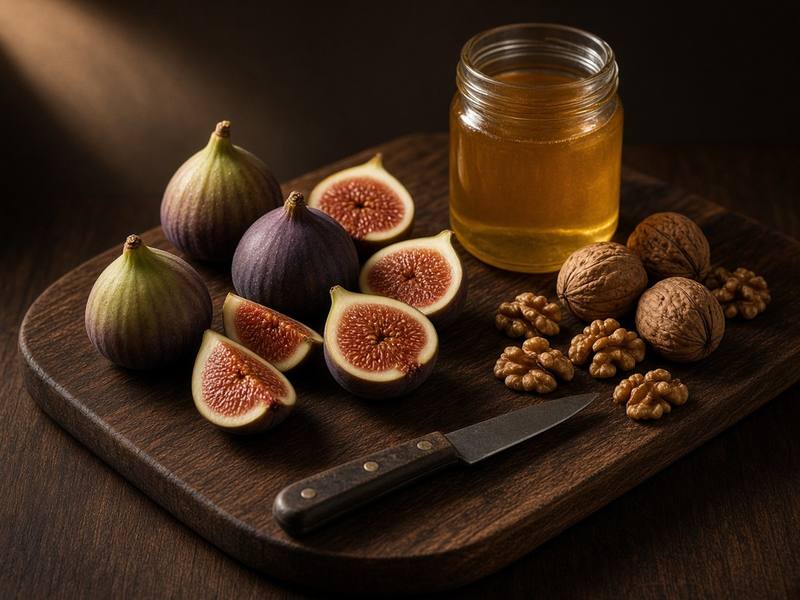
 Visit official site ↗
 Visit official site ↗
 Visit official site ↗
 Visit official site ↗
 Visit official site ↗
 Visit official site ↗
 Visit official site ↗
 Visit official site ↗
 Visit official site ↗
 Visit official site ↗
 Visit official site ↗
 Visit official site ↗
 Visit official site ↗
 Visit official site ↗
 Visit Instagram ↗
 Visit official site ↗
 Visit official site ↗
 Visit official site ↗
 Visit official site ↗
 Visit official site ↗
 Visit official site ↗
 Visit official site ↗
 Visit official site ↗
 Visit official site ↗
 Visit official site ↗
 Visit official site ↗
 Visit official site ↗
 Visit official site ↗
 Visit official site ↗
 Visit official site ↗
 Visit official site ↗
 Visit official site ↗
 Visit official site ↗
 Visit official site ↗
 Visit official site ↗
 Visit official site ↗
 Visit official site ↗
 Visit official site ↗
 Visit official site ↗
 Visit official site ↗
 Visit official site ↗
 Visit official site ↗
 Visit official site ↗
 Visit official site ↗
 Visit official site ↗
 Visit official site ↗
 Visit official site ↗
 Visit official site ↗
 Visit official site ↗
 Visit official site ↗
 Visit official site ↗
 Visit official site ↗
 Visit official site ↗
 Visit official site ↗
 Visit official site ↗
 Visit official site ↗
 Visit official site ↗
 Visit official site ↗
 Visit official site ↗
 Visit official site ↗
 Visit official site ↗
 Visit official site ↗
 Visit official site ↗
 Visit official site ↗
 Visit official site ↗
 Visit official site ↗
 Visit official site ↗
 Visit official site ↗
 Visit official site ↗
 Visit official site ↗
 Visit official site ↗
 Visit official site ↗
 Visit official site ↗
 Visit official site ↗
 Visit official site ↗
 Open city/visitor reference ↗
 Visit official site ↗
 Visit official site ↗
 Visit official site ↗
 Visit official site ↗
 Visit official site ↗
 Visit official site ↗
 Visit official site ↗
 Visit official site ↗
 Visit official site ↗
 Visit official site ↗
 Visit official site ↗
 Visit official site ↗
 Visit official site ↗
 Visit official site ↗
 Visit official site ↗
 Visit official site ↗
 Visit official site ↗
 Visit official site ↗
 Visit official site ↗
 Visit official site ↗
 Visit official site ↗
 Visit official site ↗
 Visit official site ↗
 Visit official site ↗
 Visit official site ↗
 Visit official site ↗
 Visit official site ↗
 Visit official site ↗
 Visit official site ↗
 Visit official site ↗
 Visit official site ↗
 Visit official site ↗
 Visit official site ↗
 Visit official site ↗
 Visit official site ↗
 Visit Facebook ↗
 Visit official site ↗
 Visit official site ↗
 Visit official site ↗
 Visit official site ↗
 Visit official site ↗
 Visit official site ↗
 Visit official site ↗
 Visit official site ↗
 Visit official site ↗
 Visit official site ↗
 Visit official site ↗
 Visit official site ↗
 Visit official site ↗
 Visit official site ↗
 Visit official site ↗
 Visit official site ↗
 Visit official site ↗
 Visit official site ↗
 Visit official site ↗
 Visit official site ↗
 Visit official site ↗
 Visit official site ↗
 Visit official site ↗
 Visit official site ↗
 Visit official site ↗
 Visit official site ↗
 Visit official site ↗
 Visit official site ↗
 Visit official site ↗
 Visit official site ↗
 Visit official site ↗
 Visit official site ↗
 Visit official site ↗
 Visit official site ↗
 Visit official site ↗
 Visit official site ↗
 Visit official site ↗
 Visit official site ↗
 Visit official site ↗
 Visit official site ↗
 Visit official site ↗
 Visit official site ↗
 Visit official site ↗
 Visit official site ↗
 Visit official site ↗
 Visit official site ↗
 Visit official site ↗
 Visit official site ↗
 Visit official site ↗
 Visit official site ↗
 Visit official site ↗
 Visit official site ↗
 Visit official site ↗
 Visit official site ↗
 Visit official site ↗
 Visit official site ↗
 Visit official site ↗
 Visit official site ↗
 Visit official site ↗
 Visit official site ↗
 Visit official site ↗
 Visit official site ↗
 Visit official site ↗
 Visit official site ↗
 Visit official site ↗
 Open city/visitor reference ↗
 Visit official site ↗
 Visit official site ↗
 Visit official site ↗
 Visit official site ↗
 Visit official site ↗
 Visit official site ↗
 Visit official site ↗
 Visit official site ↗
 Visit official site ↗
 Visit official site ↗
 Visit official site ↗
 Visit official site ↗
 Visit official site ↗
 Visit official site ↗
 Visit official site ↗
 Visit official site ↗
 Visit official site ↗
 Visit official site ↗
 Visit official site ↗
 Visit official site ↗
 Visit official site ↗
 Visit official site ↗
 Visit official site ↗
 Visit official site ↗
 Visit official site ↗
 Visit official site ↗
 Visit official site ↗
 Visit official site ↗
 Visit official site ↗
 Visit official site ↗
 Visit official site ↗
 Visit official site ↗