Amorepacific's flagship experience center in Seongsu. Free product testing, personalized skincare consultations, and samples. The space itself is a architectural showpiece — a K-beauty temple.
Best for Free product testing, personalized skincare consultations, and samples
K-beauty brand inspired by Joseon Dynasty skincare traditions. Hanbang ingredients meet modern formulations. The Dynasty Cream and Glow Serum are viral sensations.
Best for Dynasty Cream, Glow Serum and hydrating K-beauty
Minimalist Korean skincare — the Heartleaf Soothing Toner went viral for its calming, hydrating properties. Simple, gentle formulations for sensitive skin. Quietly one of Korea's most brands.
Best for Gentle Korean skincare and heartleaf formulas
Ader Error's Seongsu outpost — their playful, deconstructed streetwear in a converted warehouse space. The brand that defined Korean streetwear's global moment. Regular art installations and limited collaborations.
Best for Deconstructed Korean streetwear with an art-school edge
The Seongsu flagship of Korea's most exciting unisex brand. Scandinavian minimalism meets Seoul streetwear in a converted warehouse space. The brand's architectural approach to clothing feels perfectly at home in Seongsu.
Best for Andersson Bell unisex fashion at its Seongsu flagship
Seoul fashion label LE17SEPTEMBRE, based in Seongdong-gu, producing seasonal men's and women's ready-to-wear collections - tailored separates, outerwear, and accessories - organized as Resort, Spring/Summer, and Fall/Winter drops.
Best for Draped shirting and fluid tailoring in muted tones from Seoul
LE17SEPTEMBRE is a Seoul-based fashion label offering ready-to-wear clothing and accessories for both men and women, with its registered address in Seongdong-gu, one of Seoul's fashion and design-industry districts. The brand organizes its output into seasonal collections - Resort, Spring/Summer, and Fall/Winter - alongside curated capsule groupings, covering tops, dresses, pants, skirts, outerwear, shoes, and accessories. Its business registration lists Lee Dong-gyoo as company representative.
Gentle Monster is a Korean eyewear brand offering glasses and sunglasses, with a parent business founded in 2011. Fashion-led frames sit alongside more everyday designs, while art installations form part of the brand's retail approach. Individual stores have distinct settings and service listings, so a particular branch should be checked for fitting or repair arrangements.
Best for Fashion-led glasses and sunglasses with installation-based retail
Gentle Monster is a Korean eyewear brand whose parent business was founded in 2011 by Jay Oh and Kim Han-kook. Its range includes glasses and sunglasses, with fashion-led shapes forming part of its approach alongside more everyday designs. The company became associated with television and popular culture, including exposure through the series My Love From the Star in 2014.
The brand's retail spaces are another part of its identity, using art and installations around the eyewear display. That approach creates a reason to look at the store itself, as well as the frames being sold. It does not mean each location has the same installation or that an older presentation will remain in place.
The current online catalogue separates glasses from sunglasses and also offers tinted-lens choices within the sunglasses range. Start with the kind of eyewear you need, then compare shape and fit rather than choosing solely from an installation photograph. Individual stores have their own listings and services, so use the branch page when arranging a fitting or repair visit.
Hanbok (traditional Korean clothing) rental near Gyeongbokgung Palace. Choose from hundreds of designs and wear them while exploring the palace grounds. The most popular hanbok experience in Seoul.
Best for Hanbok (traditional Korean clothing) rental near Gyeongbokgung Palace
Hwang Leesle's modern-hanbok house — the brand that made Korea's traditional dress an everyday wardrobe, worn by BTS and the first hanbok label to show at Milan Fashion Week. Design lab in Jeonju, shops in Hongdae and Insadong, silhouettes that carry five centuries lightly.
Best for Daily hanbok — Korean heritage cut for the present tense.
Seoul's largest traditional market with over 10,000 vendors. Everything from kitchenware and textiles to street food and souvenirs. It has a Kalguksu (knife-cut noodle) alley. Open since 1414.
Best for Everything from kitchenware and textiles to street food and souvenirs
The Milanese concept store's Seoul outpost — fashion, art, design, and publishing under one roof. The courtyard garden and gallery spaces make it a cultural destination, not just a shop.
Best for Fashion, art, design, and publishing under one roof
Samsung's fast fashion brand — Korean-designed basics and trends at accessible prices. The name refers to the time it takes to make a first impression. Clean, modern aesthetic.
Best for Samsung's fast fashion brand — Korean-designed basics and trends at accessible prices
The Swedish minimalist brand's Seoul flagship on Dosan-daero. Clean Scandinavian design meets Korean appreciation for quality basics. The denim, knitwear, and accessories are staples of Seoul's fashion-conscious crowd.
Best for Denim, knitwear, and accessories at the Seoul flagship
Korea's most influential streetwear brand — worn by BTS, Blackpink, and K-pop royalty. Deconstructed, slightly offbeat designs that have become the visual language of Korean youth culture. The Hongdae flagship captures the brand's playful, art-school aesthetic.
Best for Korea's most influential streetwear brand — worn by BTS, Blackpink, and K-pop royalty
ÅLAND's Hongdae shop presents fashion and lifestyle goods from emerging Korean designers within a multi-brand retail format. Clothing sits alongside smaller items such as stationery, giving shoppers more than one route into the range. Its Hongdae address is on Yanghwa-ro 16-gil, distinct from the company's other shops in Seoul and elsewhere.
Best for Emerging Korean fashion and lifestyle brands
Seoul ready-to-wear label founded in 2016 by designer MK Lee (Mikyung Lee), known for architectural tailoring in organic cotton and other sustainable fabrics sourced from Japan and Europe. Flagship store in Seoul's Jongno district; stocked at 120+ retailers worldwide, including Printemps Paris.
Best for Minimalist Amomento womenswear and curated designer imports
Amomento is a Seoul-based ready-to-wear label founded in 2016 by designer MK Lee (Mikyung Lee), growing out of Shop Amomento, a multi-brand boutique she opened in Seoul's Jongno district in 2015. Her brother, Myeongsoo Lee, joined the company in 2016 and the label has since expanded from womenswear into a unisex/menswear line in 2021. The collections are built around structured, architectural silhouettes - oversized-shoulder shirts, curved-leg trousers, precise seam placement - made largely from organic cotton and other sustainably sourced fabrics supplied by partners in Japan and Europe. Lee has described the brand's approach as pursuing essential beauty through clothes that become more comfortable and personal as they are worn. Amomento operates a flagship store in Seoul and, per recent trade coverage, is carried by more than 120 stockists in 19 countries, including Printemps in Paris, Assembly New York, The Frankie Shop, and Slam Jam.
Andersson Bell’s current Gyeongbokgung Store is at 42 Yoon Bo-seon-gil in Jongno-gu. The Seoul label sells men’s and women’s fashion through this flagship and other stockists.
Best for Andersson Bell fashion at the Gyeongbokgung flagship
Korean unisex brand blending Scandinavian minimalism with Seoul streetwear edge. Oversized silhouettes, muted palettes, and innovative textiles. A defining voice in contemporary Korean fashion.
Best for Korean unisex fashion mixing Seoul streetwear and Scandinavian minimalism
A concept store and online magazine selling Korean-made natural cosmetics, home decor, stationery, accessories, handbags and socks from independent Korean artisans and small businesses, with worldwide shipping.
Best for Korean artisan lifestyle goods and cosmetics
Athis-Seoul makes natural fragrance goods in Seoul, including reed diffusers, room and car sprays, essential oils, hand creams and all-natural Korean-style incense sticks packaged in an eco-friendly box. The company, DAON INTERNATIONAL, is based in Gangnam-gu, Seoul, and is represented by Danbi Kim.
BEAKER is a Seoul multi-brand retailer bringing Korean and international fashion together with selected goods for everyday living. Its Cheongdam shop uses reclaimed furniture and door panels within an interior that also displays accessories and lifestyle products. Hannam and Cheongdam opened in 2012, while the later Seongsu flagship introduced another location with its own layout.
Best for Korean and international designer clothing in Seoul
BEAKER's Seoul shops combine clothing from Korean and international labels with a wider selection of lifestyle products. The retailer opened in Hannam and Cheongdam in 2012, according to its parent company's account of the business. A third flagship followed in Seongsu in November 2022, giving the group another distinct shopping space.
The Cheongdam location is listed at 408 Apgujeong-ro by the local tourism service. Its interior incorporates discarded mother-of-pearl cabinets as displays and old door panels as fitting rooms. That setting accompanies contemporary clothing and accessories rather than a shop devoted to selling reclaimed furniture. The assortment described by the tourism listing extends to cosmetics and items for the home, with pet products also included.
Seongsu's opening account describes a three-floor layout that separates a lifestyle and pop-up area from clothing collections above. Those details belong to Seongsu, not to the Cheongdam address. A shopper choosing between the branches should therefore check the intended location rather than assume every store shares the same floor plan. The common thread is a multi-brand selection, not a single designer's complete collection.
Playful Korean fashion label known for dog motifs and preppy-meets-street style. Fun, wearable designs with a sense of humor. Popular among younger K-pop idols and college students.
Best for Playful Korean fashion label known for dog motifs and preppy-meets-street style
Korea's most fried chicken chain — the original Korean fried chicken. Crispy, juicy, with a range of sauces from sweet soy to fiery spicy. The cheese-bburing chicken is an indulgent masterpiece.
Operating in Seoul's Gahoe-dong since 1949, Biwon Tteokjip hand-mixes and steams its rice cakes daily, grinding red-bean fillings and roasting sesame in-house rather than buying premade. The shop sells its royal-court-style tteok and gift sets both from its storefront and through its own online ordering system.
Serious Korean outdoor gear brand — mountaineering and alpine equipment. Professional-grade gear used by Korean Himalayan expeditions. If you're climbing in Korea, this is what the locals wear.
Best for Professional-grade gear used by Korean Himalayan expeditions
California's third-wave coffee pioneer in Seongsu — minimalist design, exceptional pour-overs, and a Seoul-specific menu. The industrial space fits perfectly in the converted factory district.
Best for Pour-over coffee and minimalist café design in Seongsu
Boon The Shop is a Seoul luxury concept store combining international designers with selected Korean labels. Its multi-brand edit and strong presentation make it useful for comparing fashion across regions in one visit.
Seoul fragrance house founded in 2022 by Jun Lim, a former investment banker and longtime perfume collector; grew from about €200,000 in sales in 2022 to more than €20 million by 2024, with stock at Harrods, Printemps and Dover Street Market Ginza.
Best for Provocative Seoul perfume and onggi-aged extrait
Born to Standout (stylized BORNTOSTANDOUT) was founded in Seoul in 2022 by Jun Lim, a former investment banker who had specialized in South Korea's cosmetics and retail sectors before leaving finance to build a fragrance brand. Lim traces his interest in perfume to buying a bottle of Versace Blue Jeans at a discount shop while at high school in Toronto; the habit grew into a personal collection reported at more than 2,000 bottles by the time he founded the brand. Since launching, the label has scaled quickly: reported revenue grew from roughly €200,000 in 2022 to more than €20 million in 2024, with about 95 percent of sales coming from outside South Korea. The brand has placed product in Harrods in London, Printemps in Paris and Dover Street Market's Ginza location, positioning itself among a small group of Asian fragrance houses with that kind of Western retail footprint. Lim has described his aim in interviews as building the most unconventional fragrance house carried by Sephora, rather than a conventional niche-perfumery label.
Workshop and shop for traditional Korean crafts in Bukchon. Hands-on classes in pottery, knot-making, paper crafts, and hanji. Take home a piece you made yourself.
Best for Hands-on classes in pottery, knot-making, paper crafts, and hanji
The center is a Seoul public-hanok craft facility at 24-5 Bukchon-ro 12-gil, where visitors can try traditional making rather than only browse finished souvenirs. Current programs include activities such as handkerchief dyeing, hanji accessories and decorative knot work, with offerings rotating by program and season. Its value is practical participation inside Bukchon’s hanok district: visitors handle materials, follow a guided craft process and leave with something made during the session rather than treating the center as another conventional retail stop.
Ultra-feminine Korean fashion brand for their -5kg jeans — designed to make legs look slimmer. Colorful, youthful aesthetic with a massive following in Japan and Southeast Asia. The Hongdae fla.
Best for -5kg jeans designed for a slimmer-leg silhouette
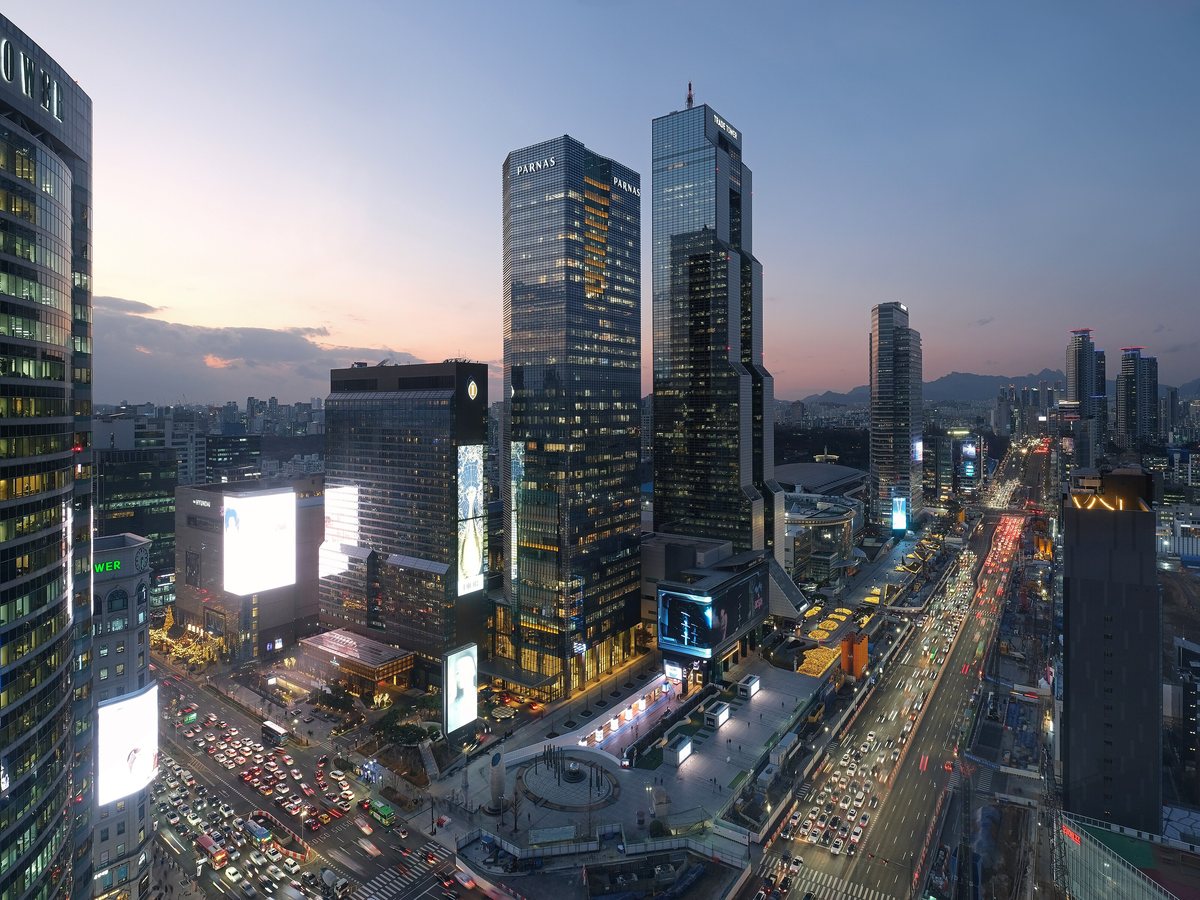
Starfield COEX Mall brings shopping and dining together in Seoul's Gangnam district near Samseong Station. Its directory includes fashion shops and beauty retailers, while the Starfield Library provides a space to browse books between shops. The aquarium and cinema are separately listed attractions within the complex, alongside the neighbouring convention facilities.
Best for Gangnam shopping and dining with a stop at Starfield Library
Starfield COEX Mall sits beneath Gangnam and works less like a shopping centre than a district with a roof over it. Around 320 brands fill it. The range runs from the big international fast-fashion names through street labels to a deep stretch of beauty. Walking it tells you what Seoul is wearing at the moment.
The centrepiece is not a shop. At the centre of the mall is an open library, free to enter, built as a place to rest and meet as much as to read. It programmes talks and performances by figures from literature and the arts rather than simply shelving books.
For a great many visitors that library is the reason to come at all, and it costs nothing to walk into.
Eating is treated as seriously as shopping. There are roughly a hundred restaurants and cafes, among them American-style Asian dining and two of the names that led Korean coffee culture. Beyond the retail the complex carries a cinema and an aquarium, along with exhibition space and a hotel. Three hundred brands without a plan will take a day you had not meant to spend.
DADOTEA sells artisanal, single-origin Korean tea and matcha -- green, yellow, oolong, black, oxidized and herbal -- alongside single-cultivar ceremonial matcha and handcrafted porcelain, buncheong, bamboo and glass teaware made by Korean artists Moomooyo and Sorangyo.
Korea's thousand-won shop, where the rule is that nothing goes over a dollar. Household goods, stationery, cosmetics and snacks in quantities that stop making sense. Myeongdong runs to four floors of it.
Best for Korea's 1,000-won shop (everything under $1)
Daurim sells handmade Korean ceramics -- teapots, tea sets, teacups, sake cups, tea bowls and moon jars -- including buncheong and onggi pieces, along with wooden tea accessories such as a juniper-wood stand for tea ceremony use.
Dior Beauty's rotating pop-up space in Seongsu — part of the neighborhood's constant rotation of luxury brand activations. Each installation is a temporary temple of beauty.
Best for Fashion, leather goods and fragrance in Seoul
Seoul footwear label founded 2019 by designer Jai Baek (formerly DC, HUF, Creative Recreation); opened its Gangnam/Dosan flagship in 2024, plus Myeongdong and Seongsu stores.
Best for Retro court-sneaker silhouettes in earthy suedes from Seoul specialists
East Pacific Trade (EPT) is a Seoul-based footwear brand founded in 2019 by Jai Baek, a designer with prior experience at skate- and streetwear-adjacent labels including DC Shoes, HUF, Creative Recreation and Gourmet. EPT's shoes started from a skateboarding-shoe silhouette and lean toward retro court-sneaker shapes rendered in muted suede colorways, aimed at Seoul's streetwear scene. The brand opened its first flagship store in the Dosan/Gangnam district in 2024, followed by additional Seoul locations in Myeongdong and Seongsu the same year. EPT also sells internationally through stockists such as Newstyle (Netherlands), Kapok and Likelihood, alongside its own eastpacifictrade.com site.
Eastlogue is a Seoul menswear label founded in 2011 that reinterprets traditional sportswear once worn for hunting and fishing and for hiking and in the military. Collections aim for a modern silhouette the brand says does not date, and collaborations have included Brooks Brothers, New Balance and Tricker's. Its offline flagship shop in Seoul is listed as fr8ight dosan.
Best for Korean outdoor function-wear
Eastlogue is a menswear label established in 2011 and based in Seoul, South Korea. The name joins East and Logue, and the brand describes its work as reinterpreting clothing from around the world while telling a story of its own. Its inspiration comes from traditional sportswear, meaning the garments once worn for hunting and fishing and for hiking and in the military. The label says it gathers an archive of such pieces and keeps their refined construction and balance while giving them a modern silhouette it says does not date. Collections run in spring-summer and fall-winter seasons and are archived on the site back to 2017. A second line, Eastlogue Permanent, covers staples such as striped pocket long-sleeve tees and baseball caps. Collaborations have included Brooks Brothers, New Balance, Reebok, Tricker's, Gramicci, Gloverall, Merrell and Nanga, with Harley of Scotland and Robert Mackie knitwear under the Permanent line. The offline flagship is fr8ight dosan in Seoul, one of several fr8ight shops in the city's department stores and neighbourhoods. Stockists abroad include Taipei, Portland, Fitzroy and Newtown in Australia, Toronto, Bangkok and Beijing. An international online shop ships the collections to buyers abroad.
Korea's most playful makeup brand — princess-pink packaging, affordable prices, and trend-forward colors. The Myeongdong flagship is a pink palace of K-beauty. beauty beginners.
Best for Trend-led Korean makeup in a playful Myeongdong flagship
Rising K-beauty brand with a Seongsu flagship. Innovative makeup formulations with a focus on natural, dewy finishes. The store design is minimal and beautiful — very Seongsu.
Best for Innovative makeup formulations with a focus on natural, dewy finishes
Two connected luxury malls in Gangnam — the East and West halls. The West hall's 'Luxury Hall' is Seoul's destination for international designer brands. A who's who of luxury retail.
Best for International designer brands in Gangnam’s Luxury Hall
Seoul's largest wholesale agricultural and seafood market. The scale is staggering — acres of fresh produce, live seafood tanks, and flower stalls. The auction floor at dawn is a sight to behold.
Best for Acres of fresh produce, live seafood tanks, and flower stalls
Garak Market opened in June 1985 in Seoul's Songpa district as the city's central wholesale hub for agricultural and marine products, and remains, decades later, one of the largest markets of its kind in Asia. It is operated by the Seoul Metropolitan Agricultural Products & Foodstuffs Corporation, a public entity that manages both trading operations and, more recently, price-index and market-data services covering everything bought and sold on site. The market's scale is built for wholesale volume rather than retail browsing: covered halls of fresh produce stretch across acres, live seafood tanks supply the city's restaurants directly, and a separate flower market handles cut blooms for florists across the region. Its defining spectacle is the pre-dawn auction, when wholesalers and restaurateurs bid in rapid, coded calls over crates of fish and produce before the rest of the city wakes — a tradition that predates the market's current buildings and continues largely unchanged by the corporation's modernization of its pricing and logistics systems. Reachable directly by its own subway stop, Garak Market functions as both an essential piece of Seoul's food-supply infrastructure and, increasingly, a destination for visitors curious to see a wholesale market working at full scale.
Gojeonsa trades from the Jeongsaland Main Building inside Seoul's Yongsan Electronics Land district, registered under business number 106-09-76494.
Best for A multi-decade Yongsan high-end dealer for Wilson Audio, Burmester
Gojeonsa trades from the Jeongsaland Main Building inside Seoul's Yongsan Electronics Land district, registered under business number 106-09-76494. Its own site lists Wilson Audio, Sonus Faber, Devialet, Esoteric, Boulder, Bakoon Products, and dCS among its current lines, spanning speakers, amplification, digital and analogue sources, and a standing inventory of pre-owned high-end equipment.
Independent corroboration comes from a feature in the Korean publication Monthly Audio (월간오디오), which traces the shop's history: it operated originally in the Sewun Sangga electronics arcade before relocating to Yongsan around 1989, and its current owner, Cho Nam-hyung, joined as a young employee in the early-to-mid 1980s and has run the business since roughly 2008 — over 30 years of continuous service by his own account to the magazine. The same feature describes an earlier-era catalogue of Sansui, Kenwood, JBL, Tannoy, and McIntosh gear giving way to today's Burmester- and Mark Levinson-led lineup, and quotes Cho on system matching and setup as the shop's core expertise, built through decades of in-home installations.
The shop's site does not describe a dedicated demonstration room in as many words, but its installation reports, product write-ups, and Yongsan's broader reputation as Seoul's cluster of walk-in high-end audio shops point to genuine in-person audition practice rather than pure mail order.
Gucci's Seoul flagship on Dosan-daero with a seasonal Alpine-inspired design. Korea-exclusive capsule collections and special editions. The outdoor terrace is a fashion-week hotspot.
The Seoul outpost of Massimo Bottura's MICHELIN-recognized restaurant, set within Gucci's Cheongdam flagship. Korean-infused Italian cuisine in a deep green, lush interior by head chef Jun Hyungkyu.
Best for The Seoul outpost of Massimo Bottura's MICHELIN-recognized restaurant, set within Gucci's Cheongdam
Shops around Seoul's grand public square — traditional souvenirs, palace-themed items, and Korean cultural products. The statues of King Sejong and Admiral Yi Sun-sin dominate the plaza.
Best for Traditional souvenirs, palace-themed items and Korean cultural products
A cooperative of ginseng merchants inside Seoul's historic Gyeongdong Market, this shop sells Geumsan-grown fresh and red ginseng directly from its stall on the market's second floor. Orders can also be placed through its own online store, ranging from raw roots to ginseng extract sticks and gift sets.
Best for Fresh and red Geumsan ginseng, extracts and gift sets
Hanbok Yechan makes and sells traditional and fusion hanbok through its Eunpyeong-gu workshop and online shop, with children’s hanbok, adult ceremonial clothing, made-to-order traditional pieces and accessories all represented in the current range. The atelier sells directly to customers and also distributes through Korean marketplaces, keeping production and retail tied to the same specialist hanbok business.
Premium Korean beauty brand known for sophisticated makeup and skincare. The Black Cushion foundation is a K-beauty classic. Sleek, modern packaging that feels luxurious at accessible prices.
Hyein Seo is a Seoul-based fashion label whose clothing draws on streetwear while exploring more restrained cuts and handmade pieces. Its first physical shop also brought the label's atelier into the same setting, as described in an interview with its designers. The online collection and stockist list offer another way to explore the label before choosing where to shop.
Best for Seoul fashion with streetwear roots and experimental cuts
HYEIN SEO's Seoul flagship is listed by the label at 15-3 Dosan-daero 25-gil in Gangnam-gu. The address matters because the brand also maintains an international stockist network; the Seoul entry is its own flagship rather than one of those wholesale accounts. The official information page names STATELESS as the operator of the HYEIN SEO online business. Its contact channels distinguish general enquiries from customer service and route wholesale or press requests separately. The label's archive supplies a useful view of its design programme, running from FW14 through the SS26 Windward season. Named chapters include FW18 Waste Land and FW20 Transformation, followed later by FW22 Nausicaä, FW23 Horizon and FW25 Midnight Riders. The retail categories cover outerwear and shirts, with a separate place for hoodies plus tops. Dresses sit beside skirts and trousers. Swimwear and bags complete the clothing offer, with accessories in their own category. This long collection record supports reading HYEIN SEO as a Seoul fashion house with a continuing seasonal practice. The flagship is listed separately from BOON THE SHOP, the other Seoul stockist on the official page.
A family-run incense manufacturer now in its second generation, making incense sticks in scents such as sandalwood, plum blossom, lotus and orchid through grinding, dough mixing, forming, drying and cutting, and producing OEM/ODM incense for other brands.
Innisfree's Myeongdong flagship at 15 Myeongdong-gil in Jung-gu, Seoul, presents the Jeju Island skincare brand launched in 2000 under its Innisfree The Isle concept. Skin analysis and sets sold only there are part of the concept. Green tea serums and creams lead a range that also runs to orchid and black tea, and to volcanic cleansers. The brand belongs to Amorepacific, and its Empty Bottle campaign recycles used containers.
Best for Green-tea, volcanic-clay and orchid skincare
Innisfree is a Korean skincare brand launched in 2000 that builds its formulas around ingredients from Jeju Island. It combines them with what it calls Korean skin science to make products it describes as accessible and gentle as well as effective. Green tea lines sit at the centre of the range. Alongside them are black tea and orchid creams, a cherry blossom jelly cream and volcanic cleansers. Its Myeongdong store at 15 Myeongdong-gil in Jung-gu, Seoul, is the brand's flagship. It is presented since a rebrand as Innisfree The Isle, a concept that leans on higher-strength actives such as retinol and vitamin C while keeping the Jeju sourcing. The flagship offers skin analysis and sets not sold elsewhere. The brand has long marketed to teenagers and young women who favour eco-friendly products. Its Empty Bottle campaign has taken back more than 35 million used containers for recycling. Innisfree belongs to Amorepacific, whose US arm runs the brand's American online store. That store is certified cruelty-free by PETA and offers recycling through TerraCycle.
Korea's breakfast toast chain — thick toast with egg, cheese, ham, and special sauce. Isaac Toast is a Korean morning ritual. Cheap, delicious, and uniquely Seoul.
Best for Korea's breakfast toast chain — thick toast with egg, cheese, ham
Seoul's craft beer capital — dozens of microbreweries and bottle shops along Itaewon's hills. Korean craft brewers experiment with local ingredients like yuzu, omija, and Korean hops.
Best for Seoul's craft beer capital — dozens of microbreweries and bottle shops along
Jiyong Kim uses months of Korean sunlight as a finishing process, fading garments into one-off gradients. The result is couture-minded clothing whose variation comes from exposure and time rather than a printed imitation of wear.
Korean avant-garde menswear — deconstructed tailoring, oversized silhouettes, and Paris Fashion Week regular. Pushing the boundaries of masculine dress.
A vegan incense brand making incense sticks from natural ingredients including agarwood, sandalwood and floral notes such as osmanthus, orchid and cherry blossom, sold across series ranging from floral to low-smoke black incense, alongside room sprays, incense holders and DIY kits.
Best for Vegan natural incense sticks and diy kits
Knife Gallery is a working bladesmith's showroom in Seoul's Insadong district, run by knifemaker JW Han and described by South Korea's official tourism organization, Visit Korea, as the country's sole knife-specialty museum.
Best for 6,000+ knives, custom forging and a working Insadong smithy
Knife Gallery is a working bladesmith's showroom in Seoul's Insadong district, run by knifemaker JW Han and described by South Korea's official tourism organization, Visit Korea, as the country's sole knife-specialty museum. Visit Korea's own listing places it at 7 Insadong 9-gil, Jongno-gu, with a collection exceeding 6,000 knives spanning traditional Korean and Japanese blades, Chinese cutlery, and film-prop pieces, alongside functional knives for sale, and confirms current operating hours (weekdays 9:30 a.m.–7 p.m., reduced weekend hours, closed Seollal and Chuseok).
Unlike a pure retail gallery, Han is himself both a swordsmith and kitchen-knife maker who forges blades from raw steel, including Damascus-pattern steel, on-site; independent visitor accounts (Tripadvisor, BladeForums) describe customers commissioning custom knives and being able to observe the forging process directly — a genuinely working smithy rather than a curated antiques shop.
Given the Korean peninsula's comparatively thin roster of currently operating, publicly documented independent bladesmiths relative to Japan's Sakai and Seki forging towns, Han's gallery-workshop is presented here on the strength of its government-tourism-board corroboration and direct visitor accounts of live forging, rather than as evidence of a broader Korean cutlery-town cluster — none was found to exist at comparable scale.
Kolon Sport is a South Korean outdoor brand created in 1973, making technical clothing, footwear and equipment for hiking, camping and mountain use. Its Seoul retail presence also carries urban outdoor pieces, connecting a half-century of technical outdoor development with contemporary city-ready layers and equipment.
Best for High-performance gear for hiking, skiing, and urban life
Korea Craft Gallery has anchored Insadong's craft district since opening its shop there in 2005, specializing in mother-of-pearl lacquerware, hanji paper crafts, and traditional fans made by its own workshop. The company runs a full online store alongside its physical Insadong location.
Best for Traditional craft general store, Mother-of-pearl lacquerware, Fans
Cultural complex with indie fashion boutiques, design shops, a cinema, concert hall, and gallery. The design market on weekends features emerging Korean designers.
Best for Cultural complex with indie fashion boutiques, design shops, a cinema, concert hall
KT&G Sangsangmadang Hongdae opened in 2007 as the first of the organisation's five Korean cultural spaces. KT&G defines Sangsangmadang as a multidisciplinary arts venue that supports emerging artists and gives the public access to cultural programmes. The network also operates in Nonsan and Chuncheon, with additional sites in Daechi and Busan. Across the network, more than 3,000 artistic and cultural programmes are presented each year. Design Square gives the Hongdae venue a retail-facing component. The current venue guide places this design market across the first two floors and describes it as a living-and-gift store presenting Korean and international design. The wider building contains seven floors above ground and four below. It accommodates design and exhibitions, with education beside cinema and performance spaces. KT&G also records lifts and accessible toilets at Hongdae. Printed material includes braille, while videos use sign language or subtitles. Its Over the Rainbow exhibition has supported disabled artists since 2018. The result is a cultural complex where merchandise and exhibitions operate alongside artist programmes within one institutional structure.
Ktown4u's COEX branch occupies floors two to four of COEX Artium at 513 Yeongdong-daero in Gangnam, Seoul. The complex combines an offline K-pop shop with an academy and café, alongside changing pop-up spaces. It is separate from Ktown4u's Insa-dong shop, so event and store information should be matched to the intended branch.
Best for K-pop shopping and pop-up experiences at COEX Artium
Leejo Workshop crafts traditional hanbok accessories - norigae ornaments, binyeo hairpins, and bridal jewelry - sold from its storefront in Jongno's Hyosung Jewelry City alongside a full online shop. The workshop specializes in mother-of-pearl and natural-stone pieces worn at weddings and traditional ceremonies.
LG's flagship retail experience showcasing the latest Korean home appliances, TVs, and beauty tech. The Pra.L beauty devices and Styler steam closet are uniquely Korean innovations.
Best for LG TVs, appliances and Styler home-care technology
One of the first Korean designers to achieve international recognition, particularly in Paris. His designs famously incorporate Hangeul (the Korean alphabet) into couture.
Best for One of the first Korean designers to achieve international recognition, particularly
Massive BT21 and Line Friends store in Hongdae. Giant character figures, exclusive merchandise, and endless photo zones. A for BTS Army and character fans.
Best for Giant character figures, exclusive merchandise, and endless photo zones
Massive BT21 and Line Friends flagship in Myeongdong. Character merchandise, exclusive collaborations, and photo zones with giant BT21 figures. A pilgrimage for BTS Army and character fans.
Best for Character merchandise, exclusive collaborations, and photo zones with giant BT21 figures
LMC lists its Hongdae flagship at 27 Jandari-ro in Seoul's Mapo district, separate from its other retail locations. The label sells casual clothing, with hooded down jackets among the products shown in its online catalogue. Use the Hongdae listing for this branch rather than the nearby multibrand stockists that also carry LMC.
Lotte's Gangnam department store offers multi-department shopping in Seoul, with home furnishings forming part of its wider range. The Conran Shop opened there in 2019, introducing its furniture and design objects within the store. A food area adds another reason to visit, separate from browsing the clothing and household departments.
Best for Department-store shopping and home furnishings in Gangnam
Korea's most internationally acclaimed minimalist fashion brand. Clean lines, architectural silhouettes, and impeccable tailoring. Worn by Jennie from BLACKPINK and spotted at Paris Fashion Week. The essence of understated Korean luxury.
Best for Minimalist Korean fashion and architectural tailoring
Clean Korean skincare brand known for the Pure Cleansing Oil — a gentle, effective oil cleanser that removes makeup without stripping skin. Part of the growing clean K-beauty movement.
Best for Pure Cleansing Oil and straightforward Korean skincare
Seoul's traditional herbal medicine market near Jegi-dong — ginseng, deer antler, medicinal roots, and traditional remedies. The aroma of a thousand herbs fills the air.
Best for Seoul's traditional herbal medicine market near Jegi-dong — ginseng, deer antler
Missha Myeongdong is a cosmetics stop in Seoul's Jung-gu district, within the neighbourhood's concentration of beauty shops. The Korean brand's range covers skincare and makeup, giving shoppers a place to compare products for different parts of their routine. The Myeongdong Mega Store is listed on Myeongdong 8-gil, distinct from other branches that have operated in the area.
Korean fast fashion brand with feminine, wearable designs. Part of the E-Land group. Affordable prices with surprisingly good quality. Popular among Korean college students.
Best for Affordable Korean womenswear, dresses, knitwear and cardigans
Mosaic Seoul is a vinyl record shop stocking LPs, 12-inch and 7-inch singles, CDs and tapes across genres including rock, jazz, soul/funk/disco, club, hip-hop, world, reggae, Korean and Japanese music, plus record sleeves, equipment, merchandise and books. It operates two locations in Seoul, in Sindang and Sangsu.
Mujagi sells tableware and home goods -- plates, bowls, cups and cutlery -- under its MUJAGI Home line, describing its pieces as objects meant to be kept and used for a long time. The company is based in Icheon, Gyeonggi-do.
One of the longest-established K-pop stores in Myeongdong, located above the Nature Republic flagship. for new releases with pre-order benefits. Dedicated sections for Ateez, Seventeen, Tre.
Best for One of the longest-established K-pop stores in Myeongdong, located above the Nature
Knife-cut noodle soup alley in Namdaemun Market — handmade wheat noodles in rich chicken or clam broth. Dozens of stalls competing for decades, each with their own loyal following. The Seoul.
Best for Handmade knife-cut noodles in chicken or clam broth
Specialized street within Namdaemun Market dedicated to kitchenware — pots, pans, knives, and restaurant supplies. The quality Korean-made kitchen tools here are exceptional value.
Best for Specialized street within Namdaemun Market dedicated to kitchenware — pots, pans, knives
K-beauty brand known for natural ingredients — the Soothing & Moisture Aloe Vera 92% Gel is a global bestseller. Affordable skincare with a focus on plant-based formulations.
Best for Affordable skincare with a focus on plant-based formulations
O'sulloc Tea House in Insadong, at 45-1 Insadong-gil in Jongno-gu, brings the Jeju tea brand's museum format to Seoul. It serves green tea grown on Jeju alongside desserts made with drinking-grade sejak leaf. The shaved ice is frozen milk, the red bean is blended with chestnut, and the ice cream uses the same green tea powder. Packaged teas and teaware are also sold on site.
Best for Jeju green tea and sejak-grade tea desserts near Anguk station
Object's Seogyo main store is in Seoul's Hongdae area on Wausan-ro 35-gil. It brings stationery together with small accessories and design goods, including work by independent creators. Browsing the collection offers a way to compare illustrated paper goods and gifts rather than search for one large brand.
Best for Illustrated stationery and independent design gifts in Hongdae
Object Hongdae is the Seogyo main store of Object, a Korean retailer that presents small design goods alongside temporary exhibitions. Its official store guide identifies the branch at 13 Wausan-ro 35-gil in Mapo-gu. The online catalogue shows the breadth of the selection. Stationery and living objects share space with character-led accessories and work sold under individual maker names. That range frames the shop as a survey of contemporary Korean character design rather than a single-brand store. The branch also treats retail space as an exhibition platform. Object's programme has used its second floor for maker pop-ups and project-led displays. A 2026 presentation by Next Design School paired a new publication with goods designed by Hongik University students and material documenting the course process. Another project, Check-in Seoul, brought together work by 46 artist teams around views of the city, with new drawings and branch-exclusive stickers. These programmes show the store's editorial role: products are grouped around a maker, process or theme, giving context to the objects on the shelves.
Korea's largest health and beauty retailer. The Myeongdong flagship is a multi-floor temple of K-beauty with every Korean skincare and makeup brand imaginable.
Best for K-beauty, beauty tools and tax-refund shopping in Myeongdong
Seoul fashion label launched 2011 by designer Jang Hyeong-cheol with about 30 million won (~$26,000) starting capital, built on classic, workwear- and military-influenced tailoring. First two-year-college grad to show at Seoul Fashion Week (2013); youngest Korean designer at NYFW (2015).
Best for Korean tailoring
Ordinary People is a Seoul fashion label launched in 2011 by designer Jang Hyeong-cheol, who started the brand with roughly 30 million won. Jang's stated design philosophy is clothing 'ordinary people' can actually wear day to day, built around a classic silhouette with workwear and military detailing. In its first month the brand sold about 13 million won of stock across just four stores. Jang became the first designer from a two-year college to show at Seoul Fashion Week, in 2013, and in 2015 became the youngest Korean designer to stage a runway show at New York Fashion Week, as part of the government-backed 'Concept Korea' program.
Pocaspot Hongdae sells K-pop photocards through an in-store kiosk system that lets visitors search for cards before buying. The Hongdae shop offers on-the-spot purchases, which can be useful when looking for a particular performer during a visit to Seoul. The selection changes, so a searchable catalogue is more useful than assuming a specific card will be available.
Best for Searching for K-pop photocards in Hongdae
POCA SPOT Hongdae is a specialist K-pop photocard store on the third floor at 48-14 Wausan-ro 29-gil in Mapo-gu, Seoul. Its focus is narrower than a general music shop: the official FAQ describes album cards, merchandise-exclusive cards and special-event or broadcast cards from more than 100 K-pop groups. Named examples include ATEEZ, BTS, Stray Kids, Seventeen and NCT. The branch combines physical browsing with a kiosk-based catalogue. POCA SPOT says the kiosks cover more than one million photocards and allow customers to search and order within the store. A separate POCA SPOT Selected section holds cards that can be browsed and purchased directly. This creates two retail formats in the same branch: a searchable digital inventory and a smaller edit displayed for direct selection. The company also presents a random-photocard product and an unboxing zone as parts of the store model. Hongdae is one of two Seoul locations shown on the company's current site; the other is on Myeongdong 8na-gil in Jung-gu. INFLUDEO, Inc. is identified in the site's copyright and contact information.
Korea's most popular stationery and lifestyle chain. Cute, clever Korean-designed goods at impulse-buy prices. Everything from novelty socks to desk organizers to phone cases.
Best for Korean stationery, desk goods and novelty accessories
Area names come from each shop’s published address record; ORBIS does not invent neighbourhoods.
Seoul register facts
Recorded stores
136
Records with made-in data
111
Records with best-for data
138
Largest atlas sections
Korea — Seoul & Beyond135
Gourmet, Pantry & Kitchen12
Home, Design & Craft6
Books, Stationery & Art Supplies6
Ready-to-Wear — Worldwide4
Fragrance, Beauty & Wellness4
Most-recorded made-in values
South Korea.82
South Korea11
Made in Korea9
Korea3
Curated global and Korean2
Designed in Seoul, Made globally1
Most-recorded best-for values
Fashion, art, design, and publishing under one roof1
Bold lip colors, trend makeup and graphic 3CE packaging1
Samsung's fast fashion brand — Korean-designed basics and trends at accessible prices1
Denim, knitwear, and accessories at the Seoul flagship1
Korea's most influential streetwear brand — worn by BTS, Blackpink, and K-pop royalty1
Deconstructed Korean streetwear with an art-school edge1
ORBIS city intelligence
Shopping in Seoul — Shop the Iteration
Seoul treats retail as iteration. Product, packaging, flagship, neighbourhood and launch can change quickly, making novelty easy to mistake for substance. The city is most useful when the buyer separates the enduring product from the experiment built around it.
The skincare formula is reformulated, repackaged and relaunched. The fashion label turns a familiar garment into a new proportion. The eyewear store becomes a theatre for the next collection before the previous one has settled into ordinary use. A neighbourhood associated with factories becomes the city’s laboratory for pop-ups, flagships and brand experiences.
This speed is part of Seoul’s retail intelligence. It is also the reason to shop carefully. The newest product is not automatically the best one for your skin, wardrobe or life. The most immersive shop is not proof of the most useful object.
Seoul’s shopping discipline is to shop the iteration without becoming trapped by the launch.
Beauty begins with the routine
Amore Seongsu is valuable because it allows the buyer to compare a large family of products within one manufacturer’s ecosystem. Seoul’s official tourism material describes a broad Amorepacific selection and a space designed for testing rather than a conventional single-brand counter. Use that abundance to narrow, not expand.
Arrive with a skin concern, current routine and list of ingredients you already tolerate. Patch-test where possible, and establish whether the product belongs to daily use, seasonal use or a short treatment period. Record the exact formulation rather than relying on the line name, because packaging and formulas can change.
Beauty of Joseon and Anua belong to the wider K-beauty conversation, but the same rule applies. A product that trends internationally may be widely available outside Korea. The Seoul advantage is not always price. It may be access to a broader range, better testers, current reformulations, staff knowledge or a product that genuinely suits you.
Buy duplicates only after the first product has survived your skin.
Seongsu is a launch system
The former industrial fabric of Seongsu is now used by beauty, fashion and lifestyle brands as a testing ground. Seoul Tourism describes the area’s old shoe-factory traces alongside pop-ups, flagship stores and new retail complexes. The contrast gives the district energy, but it also encourages the visitor to confuse novelty with significance.
At Ader Error Seongsu and Andersson Bell Seongsu, examine the garment after the spatial concept has done its work. Check fibre, manufacture, fit, care and whether the piece can be altered. A dramatic store can reveal a brand’s point of view; it cannot improve a garment that does not move well on the body.
Newer spaces such as Haus Nowhere Seoul and large multi-brand developments make Seongsu even more immersive. Treat them as editors of the current moment. Then step outside, compare prices and ask whether the product remains convincing without the installation.
Proportion survives the hype
Seoul fashion is particularly strong at changing silhouette: shoulder, rise, volume, length, layering and the relationship between formal and casual clothes. Le 17 Septembre represents a quieter position than the city’s most theatrical labels; Ader Error Seongsu and Andersson Bell Seongsu make the edit more visible.
Try clothing with the shoes, bag and outer layer you will actually use. Korean sizing can vary dramatically across brands and categories. The number on the label is less important than the garment’s intended proportion.
The exact place of manufacture still matters. A Seoul design identity does not imply Korean manufacture. The distinction does not diminish the design; it makes the production relationship honest.
Eyewear reveals the service
Gentle Monster’s retail spaces are among Seoul’s most memorable. Haus Dosan and Haus Nowhere Seoul use installation, robotics and brand storytelling to turn eyewear into a full environment. The official store information also lists fitting and repair services at Haus Nowhere Seoul.
That service layer is the part to carry into the purchase. At Gentle Monster Dosan, check optical fit, bridge pressure, temple length, lens specification and whether adjustment or repair will be available where you live. Sunglasses should be tested in natural light, not only inside a spectacular room.
The store is allowed to be theatre. The frame still has to become equipment.
Decide which hanbok relationship you want
Hanbok in Seoul can be rental costume, contemporary wardrobe, formal commission or cultural garment. Those are different purchases.
Hanboknam is designed around rental near the palaces, with current branch hours and return rules controlled by the company. Treat it as an experience and fit service, not as proof that every garment reflects traditional construction.
LEESLE represents the contemporary wardrobe category. For a purchase, ask whether the garment is intended for everyday wear, ceremony or styling over modern clothing. Understand fibre, lining, cleaning, fastening and whether alterations are available.
Formal hanbok on a short visit makes sense only when the fitting and delivery sequence is clear.
In markets, the stall is the seller
Gwangjang Market is a district of many sellers, not one authenticated shop. Textiles, vintage clothing, food and household goods vary by stall. Inspect the exact object, identify the vendor and keep a receipt for significant purchases.
A market’s age and fame do not transfer automatically to every product under its roof.
Treat the tax refund as paperwork, not persuasion
Korea Customs states that eligible non-residents seeking VAT refunds may need to present passport, sales documentation and the purchased goods, which should remain unused, for outbound confirmation. Goods must be taken out within the required period. Eligibility should be confirmed before payment, with packaging kept accessible until departure.
An expected refund should never rescue a product that makes no sense at the full price.
What should not survive the launch
Leave skincare bought only because it launched this week. Leave the garment that works only inside the brand’s mirror. Leave eyewear that cannot be adjusted comfortably. Leave a market object whose seller cannot describe it. Leave formal hanbok without a fitting plan.
Seoul’s advantage is the chance to test the proposition before believing it.
Seoul’s strongest purchase survives the next iteration. Formula, fit, material and maker should remain valuable after the launch, queue and neighbourhood buzz have moved elsewhere.
Seoul in one minute
Seoul's retail story is older than the launch cycle suggests, and the register's own anchors show it. The government market beside the old city's southern gate finished construction in September 1414, under King Taejong. It opened as a state-licensed trading floor of silk importers and clothing sellers centuries before today's flagship-store circuit 1. The lineage runs straight through the modern register: Namdaemun Market, Namdaemun Kitchenware Street and Namdaemun Kalguksu Alley are all living descendants of that 1414 floor.
The second anchor is 1905. That year, Korean merchants established what became Gwangjang Market: Korea's first permanent daily market, and originally a textile house. The founding was partly an act of commercial independence, a reply to Japanese moves into Namdaemun. The market took the name Gwangjang in the 1960s 23. The floor essay warns that a market's age and fame do not transfer to every product under its roof. The corollary is that the long history of market trading is what makes the stall-by-stall discipline worth stating.
The third anchor is a company, and it explains the beauty half of the register. In 1932, Yun Dok-jeong was making and selling camellia oil by hand, one bottle at a time, in Gaeseong, in what is now North Korea. Her son founded Pacific Chemical in 1945, relocating to Namdaemun where materials were easier to secure. The company became Pacific, then Amorepacific in 2002 4. Amore Seongsu, the house's experiential retail space that the floor essay leads with, is the physical endpoint of that lineage rather than a gimmick bolted onto a conglomerate. Seoul's official tourism material describing its test-first design traces back to the company's own story 4.
The fourth anchor is more recent. Gentle Monster was founded in Seoul in 2011 by Hankook Kim 56. It turned the eyewear store into an installation and made the store-as-theatre model a Seoul export. Haus Dosan and Haus Nowhere Seoul are its hometown expressions.
That is the frame the floor essay deserves: 1414 to 1905 to 1932 to 2011. Centuries of market history sit alongside more recent launch-cycle retail. Seoul's shopping intelligence, as the live page says, is separating the enduring product from the experiment built around it. The dates are why the city can make that separation at all: the historic markets and newer flagships offer different kinds of shopping experience.
Reading the register honestly
The Seoul register rewards a close read. Of 126 recorded stores, 112 carry made-in data. The values are also candid: one record states "Designed in Seoul, Made globally" in plain text, which is the floor essay's point about design identity and manufacture written into the data itself.
The category spread also matters for expectations. The register is led by the "Korea — Seoul & Beyond" catch-all with 47 entries of 126, followed by Concept Stores (18) and Ready-to-Wear (9). Perfumery, the weight that distorts cities like Naples, is nearly absent here (5). Seoul's register is a fashion-and-beauty register built on a market floor.
Houses to know by role
Seoul's register sorts cleanly by shopping job rather than by fame. These groupings help a reader work through the 126.
Markets and the market streets.Namdaemun Market descends from the 1414 government market 1, with Kitchenware Street and Kalguksu Alley as its specialist neighbours. Gwangjang Market (1905) is the textile-and-food house for which the floor essay's "the stall is the seller" rule was written 23. Gyeongdong Market and Noryangjin Fish Market extend the market layer into ginseng, herbs and seafood.
Concept stores and multi-brand editors. 10 Corso Como Seoul, Boon The Shop, BEAKER, Rare Market, Musinsa EMPTY Seongsu, Aland, Object, Amomento, Eastlogue, Ordinary People and Post Poetics Seongsu. This tier is Seoul's answer to the department store: curation as the product. The floor essay's advice to treat these spaces as editors of the current moment was written about Seongsu because this tier concentrates there.
Fashion labels. Le 17 Septembre and Low Classic sit at the quiet end. Recto, Ader Error, Andersson Bell, Juun.J, Hyein Seo, Kanghyuk and Post Archive Faction sit at the directional end. Pushbutton, Lie Sangbong and Beyond Closet sit between. The register's best-for notes name specific facts here: the 8seconds entry identifies it as Samsung's fast-fashion brand, and the Ader Error entry names its K-pop wearers.
Beauty.Amore Seongsu is the manufacturer's-ecosystem space the floor essay leads with 4. Olive Young Myeongdong Flagship is the mass-market range. Dr. Jart+, fwee and the Hera, Laneige, Etude, Missha and Innisfree Myeongdong counters form the brand-flagship layer. Beauty of Joseon, Anua and Manyo Factory are the export-famous labels whose Seoul advantage, as the floor notes, may be testers and current formulations rather than price.
Eyewear.Gentle Monster, at Haus Dosan and Haus Nowhere Seoul: the 2011-founded house whose installation-led retail made the store-as-theatre concept a Seoul export 56.
Hanbok and traditional craft. Hanboknam (rental near the palaces), Hanbok Yechan and LEESLE (contemporary wardrobe) are the three hanbok relationships the floor essay separates. The craft-and-tea circuit adds Bukchon Hanok Village Shops, Bukchon Traditional Craft Center, Korea Craft Gallery, Leejo Workshop, Gojeonsa, Kyung-in Museum Shop and O'sulloc Tea House Insadong. O'sulloc also connects back to Amorepacific: the company opened its tea museum on Jeju in 2001 4.
What we could not verify
Named plainly, per the register's own standard of honesty.
Jagalchi and Bupyeong Kkangtong are Busan markets, not Seoul stops 7. Jagalchi is a Busan fish market, not a stop on this Seoul route.
Chain and mall entries carry no made-in or made-by claim. BHC Chicken Myeongdong, Isaac Toast Myeongdong, Daiso Myeongdong, LG Best Shop, COEX Mall, Galleria Department Store and Lotte Department Store are chains, franchises or malls. They may be useful to a visitor, but this guide does not treat them as craft evidence.
Generic names that do not resolve to one verifiable door. "Medicinal Herb Market" and "Itaewon Craft Beer District" are descriptive labels, not identifiable single establishments with a verifiable address. The register lists them as records; this guide makes no claim about what is actually there.
Small traditional-craft names pending verification. Knife Gallery (JW Han), Samhaesoju-ga, Saegimsori and Biwon Tteokjip read as traditional-craft candidates in the register. In this pass we could not confirm a specific, currently operating location for each from a verifiable source. They are flagged as unverified rather than asserted as anything else. If they check out, they belong in the hanbok-and-craft circuit above.
 Visit official site ↗
 Visit official site ↗
 Visit official site ↗
 Visit official site ↗
 Visit official site ↗
 Visit official site ↗
 Visit official site ↗
 Visit official site ↗
 Visit official site ↗
 Visit official site ↗
 Visit official site ↗
 Visit official site ↗
 Visit official site ↗
 Visit official site ↗
 Visit official site ↗
 Visit official site ↗
 Visit official site ↗
 Visit official site ↗
 Visit official site ↗
 Visit official site ↗
 Visit official site ↗
 Visit official site ↗
 Visit official site ↗
 Visit official site ↗
 Visit official site ↗
 Visit official site ↗
 Visit official site ↗
 Visit official site ↗
 Visit official site ↗
 Visit official site ↗
 Visit official site ↗
 Visit official site ↗
 Visit official site ↗
 Visit official site ↗
 Visit official site ↗
 Visit official site ↗
 Visit official site ↗
 Visit official site ↗
 Visit official site ↗
 Visit official site ↗
 Visit official site ↗
 Visit official site ↗
 Visit official site ↗
 Visit official site ↗
 Visit official site ↗
 Visit official site ↗
 Visit official site ↗
 Visit official site ↗
 Visit official site ↗
 Visit official site ↗
 Visit official site ↗
 Visit official site ↗
 Visit official site ↗
 Visit official site ↗
 Visit official site ↗
 Visit official site ↗
 Visit official site ↗
 Visit official site ↗
 Visit official site ↗
 Visit official site ↗
 Visit official site ↗
 Visit official site ↗
 Visit official site ↗
 Visit official site ↗
 Visit official site ↗
 Visit official site ↗
 Visit official site ↗
 Visit official site ↗
 Visit official site ↗
 Visit official site ↗
 Visit official site ↗
 Visit official site ↗
 Visit official site ↗
 Visit official site ↗
 Visit official site ↗
 Visit official site ↗
 Visit official site ↗
 Visit official site ↗
 Visit official site ↗
 Visit official site ↗
 Visit official site ↗
 Visit official site ↗
 Visit official site ↗
 Visit official site ↗
 Visit official site ↗
 Visit official site ↗
 Visit official site ↗
 Visit official site ↗
 Visit official site ↗