Cuchillería Expósito makes knives and navajas in Albacete, continuing more than a century of handcrafted cutlery production. The navaja is the traditional Spanish folding knife, giving the Albacete workshop a specific form around which to work. In Tandil, Cuchillería Artesanal El Chaja makes facones and dagas within its criollo cutlery range, alongside knives intended for the parrilla.
What makes great knifemakers & cutlers?
This plate lists 83 shops in 31 countries. Osaka has the most with 5, followed by Albacete with 4.
Ask about the steel: ask whether the blade is stainless or carbon steel, and how each needs to be cared for.
Ask about sharpening: find out whether the shop sharpens its own knives and how often a blade will need it.
Check the rules for carrying it: knives are restricted in hand luggage and in some countries, so arrange shipping if needed.
Explore knifemakers & cutlers
Use the city plates when they appear below, or open any store for its official door and related ORBIS city and craft links.
Pirge is the trading name of Yeşilyayla Cutting Tools, a family-run knife manufacturer in Bursa that the company states has operated continuously since 1879 and is now in its fifth generation of family ownership — making it, by its own account, one of the oldest still-operating cutlery houses in Turkey.
Best for Professional and home kitchen knives from a fifth-generation family cutlery
Pirge is the trading name of Yeşilyayla Cutting Tools, a family-run knife manufacturer in Bursa that the company states has operated continuously since 1879 and is now in its fifth generation of family ownership — making it, by its own account, one of the oldest still-operating cutlery houses in Turkey. The factory sits in the Kestel Organized Industrial Zone outside Bursa, a city the company's own materials and independent reporting both identify as one of Turkey's historic centers for knife production alongside Sivas, Gaziantep and Denizli.
Unlike smaller ateliers, Pirge operates at genuine industrial scale — CNC-equipped production lines turning out chef's, santoku, butcher and other professional kitchen knives across several product tiers, supplying both home cooks and commercial kitchens. The company's own site does not make Damascus-steel claims for its core range, a useful distinction given how loosely that term gets used elsewhere in Turkish knife marketing; Pirge instead emphasizes conventional cutlery steels and five generations of continuous production as its credential.
It operates as a heritage manufacturer rather than a boutique bladesmith — a real 1879-founded factory still run by the founding family, rather than a modern brand borrowing Bursa's historic reputation without the underlying continuity.
Zhang Xiaoquan has forged scissors in the Hangzhou tradition since 1628, and in 2006 its layered steel-and-iron forging technique was listed among China's first National Intangible Cultural Heritage items. The centuries-old name now also makes kitchen knives, garden tools and cutting boards.
Best for Heritage Chinese scissors and kitchen knives
The Zhang clan moved to Hangzhou and founded Zhang Xiaoquan in 1628, building scissors from fine steel sourced from Longquan and combining it with ancestral forging craftsmanship. The brand takes its place among a handful of Chinese trade names that have operated under the same identity for close to four centuries.
Its reputation reached the imperial court during the reign of the Qianlong Emperor (1735-1796), when Zhang Xiaoquan scissors were presented to the royal family and used within the palaces -- a mark of prestige that helped cement the brand's standing through the centuries that followed. In 2006, the State Council listed the company's layered steel-and-iron forging technique in the first official batch of National Intangible Cultural Heritage items, formally recognising the craft.
Today the company trades well beyond scissors, with product lines spanning kitchen knives, cutting boards and garden and pruning tools sold through retail stores, e-commerce platforms and its own online shop -- one of the oldest surviving names in Chinese cutlery still trading under its original mark.
Founded in Kyoto in 1560, Aritsugu traces its roots to swordsmith Fujiwara Aritsugu and has long operated in Nishiki Market. The Kyoto shop sells handmade kitchen knives, pots and other cooking utensils to professional chefs and home cooks, and is distinct from the unrelated Tokyo Aritsugu business.
Best for Kyoto kitchen knives, pots, and cooking utensils from Aritsugu
The steel remembers. Aritsugu began in 1560 as sword-smiths to the imperial house — forging blades in the era when a Kyōto smith's work decided arguments of state. When history retired the sword, the house did what great craftsmen do with a perfected skill: it changed the question. The same metallurgy, the same folded discipline, the same edge — turned toward the kitchen. Four and a half centuries later, Aritsugu knives are what serious cooks mean when they say Japanese steel.
The shop stands in Nishiki Market, Kyōto's kitchen-corridor, and the buying of a knife here is a small ceremony with an heirloom at the end of it. You choose the blade — for vegetables, for fish, for the single-purpose tasks Japanese cutlery refuses to compromise on — and then, at the counter, while you wait, your name is engraved into it. The handle is fitted; the edge is finished; the knife leaves the shop already yours in a way no anonymous purchase can be.
That engraving is the house philosophy in miniature. A sword was never generic — it belonged to a hand, a family, a name. Aritsugu simply never abandoned the idea. The imperial court it once served is gone from the market's daily life, but walk the Nishiki arcade past the fishmongers and pickle-sellers to this counter, and the transaction is continuous with 1560: a Kyōto smith, a blade, a name cut into steel that will outlast its owner and be sharpened by their children.
A Nakatsu blacksmith since 1900, when founder Nakamura Eiji opened the forge, Nakamura Hamono still hand-forges kitchen knives, sickles, hoes, cleavers and pruning shears across the full smithing process. The shop beside the workshop sells the blades and also sharpens, re-handles and repairs tools.
Best for Hand-forged kitchen knives and farm tools
Böker has operated in Solingen since 1869, giving the house over a century and a half of continuous production in Germany's traditional cutlery city.
Best for German pocket, fixed-blade, and collector knives from an 1869 Solingen house
Böker has operated in Solingen since 1869, giving the house over a century and a half of continuous production in Germany's traditional cutlery city. The company's own site states plainly, "Since 1869, we have been crafting knives by hand in Solingen," and it maintains a working manufactory and physical shop on-site rather than sourcing production out entirely.
The catalogue spans pocket knives, fixed-blade knives, kitchen knives, and straight razors, organized under three house brands: Böker itself for premium handcrafted pieces, Böker Plus for contemporary utility and folding designs aimed at everyday-carry buyers, and Magnum for value-tier outdoor and leisure knives. Every Böker-branded piece carries the company's long-standing Tree Brand mark, a quality mark the firm says has run through its history, and the shop offers laser engraving, resharpening, repair, and lifetime warranty service on select lines directly from Solingen rather than through a third-party service network.
Böker describes itself as the largest manufacturer of sport, duty, and collector knives in Europe, a scale claim distinct from the smaller family workshops nearby, but the underlying facts — an 1869 founding, continuous Solingen manufacture, and a three-tier brand structure running from handcrafted collector pieces down to everyday folders and straight razors — are what a visitor can verify directly from the maker's own history and shop, independent of the marketing claim.
Güde has forged kitchen cutlery in Solingen, Germany since 1910 and remains family-run today under Dr. Karl Peter Born, great-grandson of founder Karl Güde. Forging, sharpening, finishing, and packaging all still happen in-house at its Katternberger Straße workshop.
Best for Hand-forged German kitchen knives from a fourth-generation family workshop
Güde has forged kitchen cutlery in Solingen since 1910, and remains a family business today: Dr. Karl Peter Born, the current owner and manufacturing director, is the great-grandson of founder Karl Güde. The workshop sits at Katternberger Straße 175 in Solingen, where the company says forging, sharpening, finishing, inspection, packaging, and shipping all happen in-house rather than being split across contractors — a vertically integrated setup the firm presents as increasingly unusual in an industry that has moved much of its production offshore or out to subcontractors over the past several decades.
The range covers classic and Santoku-style chef's knives, Chinese-style cleavers, serrated bread knives, vegetable and utility blades, Japanese-influenced Kiritsuke and Nakiri shapes, Damascus-steel pieces with visible layered patterning, table and dining cutlery, and a smaller line of hunting and pocket knives. Güde states that each knife passes through up to fifty-five manual steps from forging to finishing, using chrome-vanadium-molybdenum steel for its standard lines and layered Damascus construction for its higher-tier pieces.
What distinguishes Güde within Solingen's dense cluster of cutlery houses is the combination of small scale and four unbroken generations under the founding name. The company's own framing is explicit about resisting globalization pressures rather than simply inheriting a name: a hand-forged kitchen knife house that has stayed independent and kept every production step in-house through the same industrial shift that pushed much of the Solingen trade toward outsourced or overseas manufacture.
Wüsthof traces to 1814, when Johann Abraham Wüsthof converted his father's small Solingen grindery on the Weinsberg Valley's Wupper River into a dedicated "Shears Factory, Steel and Iron Works," working the trade from an underground cellar in the city that would become known as the City of Blades.
Best for Single-piece-forged German chef's knives from a seven-generation Solingen house
Wüsthof traces to 1814, when Johann Abraham Wüsthof converted his father's small Solingen grindery on the Weinsberg Valley's Wupper River into a dedicated "Shears Factory, Steel and Iron Works," working the trade from an underground cellar in the city that would become known as the City of Blades. His son Eduard added pocket knives as a second product line in 1836, and in 1881 Robert Wüsthof made the company's first trip overseas to the United States, beginning an export history the company says now reaches roughly eighty countries.
The house has stayed in Wüsthof hands for seven generations and has kept forging exclusively in Solingen rather than moving production abroad. Its current kitchen range spans chef's, utility, santoku, bread, paring, and steak knives, alongside sharpening tools, cutting boards, and storage blocks. The flagship Classic Ikon line is forged from a single piece of specially formulated stainless steel, a construction the company presents as central to edge retention and durability, and knives carry a limited lifetime warranty.
For a visitor, Wüsthof represents the large, still-independent end of Solingen cutlery: a single-piece-forged German chef's knife from a firm whose own founding predates the German Empire, made in the same Solingen valley where the family business began over two centuries ago.
Founded in 1902 by Blaise Dozorme near Thiers, the manufactory earned France's "Entreprise du Patrimoine Vivant" living-heritage designation in 2009. Still family-run under Claudine Dozorme, it makes Le Thiers knives, table sets, champagne sabres, and Damascus blades entirely in France.
Best for Le Thiers knives, table sets, champagne sabres, and Damascus blades
Helle was founded in 1932 in Holmedal, on Norway's western coast, by brothers Steinar and Sigmund Helle, sons of the village blacksmith.
Best for Norwegian sheath knives handmade in the same coastal village since 1932
Helle was founded in 1932 in Holmedal, on Norway's western coast, by brothers Steinar and Sigmund Helle, sons of the village blacksmith. Steinar had recently returned to Norway from the United States, and Sigmund had trained in metallurgy under their father; together they began making knives when other work grew scarce, and the company's own account describes Steinar packing a rucksack of finished knives and cycling over mountain passes to sell them in Oslo when the local market was exhausted, getting the equivalent of a few cents per knife on that first selling trip.
For Helle's first fifteen years the workshop made only simple sheath knives before adding table knives in 1948 and later forks and spoons. The founders built stone water channels on the mountainside above Holmedal to harness the local river for the forge's power, an engineering solution the company credits as much as the smithing itself for keeping the workshop running through its early decades. Production has stayed in that same village through three generations of the family — grandsons Svein-Erik Helle and Jan Steffen Helle now run the company, which the firm says still emphasizes hand-work and quality materials over relocating or outsourcing, and still frames the business around the idea that knives should be made by people who like the work.
Helle is Norway's clearest example of a still-family-run, still-village-based sheath-knife maker in the Scandinavian bushcraft and outdoor tradition — a lineage distinct from Finland's Marttiini.
Moritaka Hamono is a bladesmithing house at 434 Miyaji-machi, Yatsushiro, Kumamoto Prefecture — not one of the Sakai or Seki forging towns, but a continuously operating smithy the company's own English site traces to 1293, when its founder made swords for the Buddhist priesthood at Mt.
Best for Hand-forged Aogami Super kurouchi-finish kitchen knives from a 700-year sword-smithing lineage
Moritaka Hamono is a bladesmithing house at 434 Miyaji-machi, Yatsushiro, Kumamoto Prefecture — not one of the Sakai or Seki forging towns, but a continuously operating smithy the company's own English site traces to 1293, when its founder made swords for the Buddhist priesthood at Mt. Homan in Dazaifu. The family relocated to Yatsushiro in 1632 in the service of the Hosokawa clan and continued sword production for roughly thirteen generations before an ancestor, Chuzaemon Moritaka, redirected the forge toward kitchen knives and edged agricultural and forestry tools five generations ago.
The workshop's own site confirms it is currently operating: it lists daily hours from 8 a.m. to 7 p.m., and factory tours available on request by email. It produces hand-forged kitchen knives across santoku, nakiri, yanagiba, gyuto, and deba styles in Aogami #2 and Aogami Super carbon steel, sold both as standard stock and made-to-order, and is now led by the family's 27th generation.
Moritaka's raw, unpolished kurouchi (black-forged) finish — the blade left in its just-forged state rather than mirror-buffed — is the house's signature look, distinguishing it from the more heavily finished blades of Sakai. Multiple independent specialist retailers (Knifewear, Cutlery and More, Chef Knives To Go) currently carry the brand, corroborating ongoing production.
Seki Kanetsugu forges kitchen knives in Seki, Japan, a blade town where the company was founded in 1949 as an outgrowth of a firm making knives since 1918. Its knives carry the convex hamaguri edge derived from Japanese sword cross-sections.
Best for Seki-forged kitchen knives with the convex hamaguri edge derived from Japanese sword-making
Seki Kanetsugu Cutlery Co., Ltd. (Sekikanetsugu Hamono) is a blade manufacturer at 345-13 Hidase, Seki City, Gifu Prefecture — Japan's other historic blade town, whose smithing tradition traces to the swordsmith Motoshige's 13th-century arrival there. Japan's own external trade organization, JETRO, lists the company in its Gifu prefecture directory: founded December 30, 1949 (as an outgrowth of Kawamura Matsujiro & Co., which had made kitchen knives since 1918), with roughly 20 employees, capital of 10 million yen, and CEO Mitsuyasu Kawamura as representative director. JETRO records the firm exporting cutlery to 24 countries across Asia, Europe, North America, Oceania, Africa, and the Middle East, and importing metal-processed components from China, South Korea, and Spain — evidence of a currently trading manufacturer, not a dormant brand name.
The Kawamura family traces its lineage to the historical swordsmith Kanetsugu, and the workshop's kitchen-knife line applies the convex 'hamaguri' (clam-shell) edge geometry carried over from Japanese sword cross-sections. The company combines this traditional grind with contemporary heat-treatment methods, including what retailers describe as a sub-zero tempering process, across professional and home kitchen-knife lines.
Seki Kanetsugu knives are currently stocked by numerous independent Japanese-knife specialists (Knifewear, Japanese Chef's Knife, Seisuke Knife), and the brand marked its centennial-adjacent anniversary in 2018 with a new Damascus-steel 'Zuiun' series, per retailer histories corroborating the JETRO founding record.
Cuchillería Expósito states on its own site that it has spent more than one hundred years making handcrafted knives and navajas — the traditional Spanish folding knife — in Albacete.
Best for Century-old handcrafted Albacete navajas with provincial-origin certification
Cuchillería Expósito states on its own site that it has spent more than one hundred years making handcrafted knives and navajas — the traditional Spanish folding knife — in Albacete. The range centers on artisanal folding knives and fixed-blade knives, including machetes and pocketknives finished with handle materials such as buffalo horn and alpine stone, sold through the shop's own online store alongside its physical premises in the city.
Products carry the AB-Cuchillería de Albacete guarantee mark, a designation the house describes as certifying that a knife's entire manufacturing process — not just final assembly — takes place within Albacete province using the area's traditional and technical methods. That mark distinguishes genuinely locally forged pieces from imported blades finished or badged in the city, a distinction that matters in a trade with a long history of cheaper imitation goods sold under Albacete's name. The site's customer reviews consistently cite durability and finish quality, and the shop offers free shipping on its knives.
For a visitor, Expósito represents Albacete's century-plus navaja tradition in something close to its classic form: horn- and stone-handled folding knives, made start to finish within the province, from a house whose own claimed history runs back well over a hundred years rather than a newer entrant trading on the city's reputation alone.
El Chaja is a criollo cutlery workshop at Figueroa 1167 in Tandil, the Buenos Aires Province town that has been Argentina's best-known center for handmade gaucho knives since an industrial cluster of cutlerías first formed there in the 1950s.
Best for Traditional Argentine facones, dagas and parrillero knives forged in Tandil
El Chaja is a criollo cutlery workshop at Figueroa 1167 in Tandil, the Buenos Aires Province town that has been Argentina's best-known center for handmade gaucho knives since an industrial cluster of cutlerías first formed there in the 1950s. The workshop states forty years of experience and produces the full traditional Argentine range: facones, puñales (daggers), dagas, monteros and parrillero knives for asado, forged from carbon steels (1070, 1090) and stainless steels (420, 440) and heat-treated to a stated 50–52 Rockwell hardness.
Tandil's cutlery trade grew out of the town's stonemasons, who needed harder, more resilient blades for quarry work; that hot-forging and hammer-forging lineage is where the region's reputation for tough, flexible working knives comes from, distinct from the more decorative silver-mounted gaucho knives sold as tourist pieces elsewhere in Argentina. El Chaja's own naming of its product line — facón, daga, montero — follows the working vocabulary of that trade directly rather than a generic "gaucho knife" catch-all.
The business publishes a landline with stated hours, a mobile number, and WhatsApp contact, consistent with a real, currently operating retail workshop rather than a marketplace listing operating under a shop name. It is included as a genuine Tandil criollo cutlería with decades of continuous operation, distinct from the tourist-market gaucho-knife sellers that dominate general web search results for the category.
Castillo Knives makes handmade folding knives in Albacete, the city it identifies as the historic center of Spain's knife-making craft.
Best for Handmade Albacete folding knives spanning outdoor, collector, and EDC use
Castillo Knives makes handmade folding knives in Albacete, the city it identifies as the historic center of Spain's knife-making craft. The maker's site situates its own work inside the long arc of the Spanish folding knife, which it traces to the late sixteenth and early seventeenth centuries as a compact defensive tool, through what it calls the craft's eighteenth-century golden age of widespread recognition, and into a twentieth-century shift toward industrial technique that the company says Albacete's makers absorbed through modernized production without abandoning handwork on the finishing steps.
The current catalogue is aimed at three groups: outdoor users such as hikers, hunters, and anglers; collectors and craftspeople seeking precision handmade pieces; and everyday-carry buyers prioritizing reliability over decoration.
Castillo's own framing — steel shortages and foreign competition survived, craftsmanship, durability, and beauty endured as the trade's defining qualities — reads as a house positioning itself within Albacete's broader craft narrative more than asserting a singular, dated company history, and a visitor should treat the historical claims on site as describing the Albacete trade generally rather than Castillo's own founding specifically.
Cudeman, formally Cuchillería Deportiva Manchega, was established in 1988 in Albacete, the city its own site calls the birthplace of Spanish cutlery.
Best for Spanish-made hunting, bushcraft, and tactical knives from Albacete
Cudeman, formally Cuchillería Deportiva Manchega, was established in 1988 in Albacete, the city its own site calls the birthplace of Spanish cutlery. The catalogue is built around hunting, tactical, bushcraft, and survival knives alongside folding pocket knives and axes, positioning the house within Albacete's outdoor and working-knife tradition rather than the city's parallel decorative kitchen-cutlery trade.
The company describes its process as a blend of traditional artisan methods and modern manufacturing, with master artisans working alongside industrial production techniques rather than either replacing the other. Materials named on the site include named steel grades, hardwoods, micarta, leather, and Kydex for sheaths and handles, and the company's own language frames its knives as built for edge quality, durability, and ergonomics rather than as display pieces. Cudeman sells direct to consumers through its own online store, bypassing intermediaries between factory and buyer, and backs its knives with a lifetime warranty plus a complimentary sharpening service included with purchase.
Within Albacete's cluster of cutlery houses, Cudeman sits closer to the outdoor and tactical end of the trade than the decorative folding-knife tradition the city is best known for historically, giving a visitor a working-knife counterpoint to the ornamental navaja houses nearby and to Toledo's sword-focused workshops further north.
Chris and Sharon Bagby opened this shop as Highland Hardware in 1978 and renamed it Highland Woodworking in 2006. It has stood at 1045 North Highland Avenue in Virginia-Highland since 1984, selling hand and power tools from Lie-Nielsen, Festool and SawStop. Classes and seminars have run since 1980, and the shop remains the exclusive American source of the Wood Slicer resaw blade. Its newsletter Wood News has been printed with the tool catalogue since 1992.
Best for Fine woodworking hand tools, sharpening supplies and classes
Chris and Sharon Bagby opened Highland Hardware at 1034 North Highland Avenue on 15 May 1978, as an ordinary hardware store in Atlanta. A seminar programme started in the basement in 1980 and brought in Tage Frid, Sam Maloof and Roy Underhill. The store crossed the road in 1984 to 1045 North Highland Avenue, where it still trades, and added eight thousand square feet in a 1995 renovation that made room for a classroom and a loading dock. The newsletter Wood News merged with the tool catalogue in 1992 and the catalogue is still printed. In 2006 the business dropped the hardware name and became Highland Woodworking. It remains a family business. Molly Bagby, daughter of the founders, edits Wood News Online and Highland Woodturner, and publishes reader submissions with store credit as the reward. Rough Draft Atlanta reported in 2017 that most sales come through the website and catalogue, while the Virginia-Highland shop works as the place customers visit when they are in town. The tool selection runs to Lie-Nielsen, Festool and SawStop, and the store is the exclusive American home of the Wood Slicer resaw bandsaw blade. Its most popular class builds a box over two days.
House of Read, at No 4 Parliament Street in Dublin and dating to around 1712 when James Read became an apprentice cutler before the firm won a royal warrant for cutlery and surgical instruments in 1821, today sells chocolates, macaroons, pastries, jams, marmalades and chutneys. It also stocks china, silverware, candles and both new and vintage silver-plate tableware bearing its elephant-and-castle design, in a building restored in 2017.
Best for Chocolates preserves and silver tableware
Garbaty Knives began in 2012 when Jakub "Kuba" Szydłowski made his first knife in his father's carpentry workshop.
Best for Hand-finished Scandinavian-style bushcraft, hunting and kitchen knives from Gdynia
Garbaty Knives began in 2012 when Jakub "Kuba" Szydłowski made his first knife in his father's carpentry workshop. The hobby grew into a dedicated brand based in Gdynia, on Poland's Baltic coast, run today with his wife Magda, who the site says handles the business's "stage and backstage" — marketing and accounting — while Kuba works the bench.
Each knife is cut from sheet steel, ground, heat-treated, fitted with a wood, G10, or kydex handle, and paired with a hand-sewn leather sheath. The catalogue spans bushcraft and survival models (Traper, Hunter, Camper, Bear, Mini Parang, Crocodile, Machete Parang), hunting knives (Deer, Owl), an urban EDC neck knife, a fishing knife (Pike), Scandinavian-ground blades, and a kitchen line, alongside DIY "Mystery Knife Box" kits for beginners.
The site frames the work in personal terms rather than industry claims: Kuba describes himself simply as driven by "TRUE PASSION" for the craft, an adventure he says has "lasted so many years." Contact details on the site name the proprietor as Jakub Szydłowski and place the workshop in Gdynia, with no fuller street address published. Garbaty's own About and Contact pages are the primary sources for its founder, Gdynia workshop and product range; the maker does not publish production volumes or a fuller street address.
Haga of Sweden sells more than 2,000 gift items at Haga Nygatan 14 in Gothenburg, including Dala horses, trolls, hand-carved wooden birds and moose figures, plus juniper-wood butter knives and organic Ekelunds textiles. It has grown from within the Haga district into its own store over nearly nine years.
Cuchillería Ruiz traces its Granada shop history to 1910, when Antonio Ruiz established a workshop at El Pie de la Torre. His son José opened the J. Ruiz shop and workshop on Marqués de Gerona in 1936. The business later moved to Plaza de las Pasiegas during the 1980s, adding El Llavín de Oro to its name.
Best for A family cutlery business beside Granada Cathedral
Registered in Nepal as Nepali Khukuri (Kukri) House Private Limited (Company Register No. 17479/058/59), Nepalese Khukuri House manufactures and sells military-pattern, working, ceremonial and historical-reproduction khukuris from Kathmandu.
Best for Traditional and military-pattern khukuris from an independently registered Kathmandu manufacturer
Nepalese Khukuri House is a khukuri (traditional curved Nepali blade) manufacturer and wholesaler registered in Nepal as 'Nepali Khukuri (kukri) House Private Limited' (Company Register No. 17479/058/59), with a Kathmandu showroom in Thamel and a US-side contact operation through Joshi Merchants LLC. This is a distinct, separately incorporated company from the already-listed Khukuri House Handicraft Industry (KHHI) — the two operate under similarly worded names but different registrations, different addresses (KHHI's workshop is at Patan Industrial Estate, Lalitpur, versus Nepalese Khukuri House's Thamel, Kathmandu location), and no evidence of common ownership was found.
The company manufactures and sells khukuris across a wide range of styles: military-pattern blades modeled on Nepal Army and Police issue, hunting and village working knives, ceremonial and religious khukuris, and historical reproductions including WWII-era Gurkha patterns. Its site shows active, dated product listings and functioning e-commerce across multiple khukuri categories, consistent with an operating manufacturer rather than a dormant listing.
The khukuri is Nepal's defining edged-tool tradition, forged by Kami blacksmiths historically serving Gurkha regiments, and Kathmandu's Thamel and Patan districts both host multiple independently run khukuri workshops and showrooms — Nepalese Khukuri House being one of several genuine, differently incorporated houses in that trade rather than a rebrand of an already-listed one.
A knife maker founded in 1901, forging Gyuto, Santoku, Yanagi, Deba, Nakiri and Usuba blades in VG-10, SG2 and Super Blue carbon steel, including Damascus patterns, with a shop on Nishiki-Teramachi.
Founded in 1963 by José Ribeiro in Guimarães, Portugal's historic cutlery town, Cutipol makes minimalist, ergonomically shaped flatware supplied to Ritz, Shangri-La, and Hilton hotel properties. Its GOA collection won the design commission for the London 2012 Olympics opening-ceremony silverware.
Best for Minimalist Portuguese flatware used in fine-dining hotels worldwide.
In Ocotlán de Morelos, Oaxaca — a town independent sources put at roughly 45 blade-producing workshops — the Aguilar family workshop is documented as the only one that still forges every piece entirely by hand, using hammer, anvil and a stone-and-brick furnace fired with hardwood charcoal, rather than the semi-industrial methods most of the town's other shops have since adopted.
Best for Fully hand-forged knives and machetes from an Ocotlán charcoal forge
In Ocotlán de Morelos, Oaxaca — a town independent sources put at roughly 45 blade-producing workshops — the Aguilar family workshop is documented as the only one that still forges every piece entirely by hand, using hammer, anvil and a stone-and-brick furnace fired with hardwood charcoal, rather than the semi-industrial methods most of the town's other shops have since adopted. Brothers Ángel and Apolinar Aguilar Velasco learned blacksmithing from their uncle Ricardo Guzmán and formally established the workshop in 1970; a third brother, Jesús Aguilar Velasco, also works the forge. Ángel has since died; Apolinar continues the trade.
The workshop forges knives, machetes, daggers, sabers and swords from repurposed scrap steel — car parts and construction offcuts — a materials choice the family frames as a matter of available supply as much as tradition. Documented clients span Mexico's Colegio Militar and Boy Scouts, regional theater and film productions, and practitioners of shamanic and martial-arts traditions who commission specific blade forms; the workshop's Wikipedia-cited history also records one piece being sold to Amalia Solórzano de Cárdenas, a private individual, who separately gave it to then-president Gustavo Díaz Ordaz — a real but more indirect connection than a direct workshop-to-president commission, stated here plainly rather than implied as closer than the source actually supports. Apolinar is quoted arguing that mass-produced competitors sell blades that are "menos costosas, pero de menor calidad" (cheaper, but of lesser quality) — a specific trade claim rather than an unverifiable boast about heritage.
An encyclopedic biographical profile and Mexican business listings place the workshop at Callejón Victoria, Colonia Centro, Ocotlán de Morelos; it also has a Facebook business page. Sources also note the workshop's declining volume since 2006 amid falling regional tourism and cheaper Chinese imports.
Sakai Ichimonji Mitsuhide sells more than 2,000 kinds of kitchen knives from its shop on Doguyasuji in Osaka's Namba district. Hisaka Tanaka opened there in 1953, drawing on the Sakai blade tradition. Single-bevel deba and yanagiba, with usuba for vegetables, lead the Japanese range. Gyuto and petty knives serve Western cooks. Name engraving and sharpening are handled in store, along with handle replacement, and customers bring in inherited knives for a fresh edge.
Best for Sakai kitchen knives with name engraving and sharpening on Doguyasuji
Sakai Ichimonji Mitsuhide is a knife shop on Doguyasuji, the kitchen-tool street in Osaka's Namba district. Founder Hisaka Tanaka opened there in 1953 against the background of six centuries of Sakai blade making. The company traces its roots to the Keian-era swordsmith Ichimonji Narimune. The store sits on the basement and two lower floors of the Ichimonji Chuki head office building at 14-8 Namba-Sennichimae in Chuo-ku. It carries more than 2,000 kinds of knives, from professional single-bevel Japanese blades to home kitchen knives. Deba for fish, yanagiba for sashimi and usuba for vegetables anchor the Japanese range. Gyuto and petty knives, plus sujihiki slicers, cover Western shapes. Specialty pieces run from soba knives and Chinese cleavers to a tuna knife with a blade a metre and a half long. Whetstones and cutting boards sit alongside. The shop engraves names without charge, and it sharpens blades and replaces handles, so customers bring in knives inherited from grandparents for a fresh edge. Sharpening classes and an event space, Ichitoi, round out the store.
Takahashikusu forges yanagiba, gyuto and other Japanese knives in Shirogami, Aogami and Ginsan steel with handles in ebony, Japanese magnolia or Chinese quince burl, and has operated for 100 years in Sakai, a city known for knife-making for over 600 years. It is based in Sakai-ku, Sakai City, Osaka.
Tokuzo Knives sells Japanese kitchen knives -- santoku, gyuto, deba and nakiri among others -- in steels including Aogami Super, White Steel No. 1, VG10, AUS8 and SG2. Its Osaka Namba location, the brand's second shop, opened October 29, 2021.
Tower Knives Osaka sells Japanese kitchen knives that customers can test before buying, and offers engraving, resharpening and handle repair services. The shop is in Naniwa-ku, Osaka, with multilingual staff.
Best for Japanese kitchen knives with resharpening
YuiSenri sells Sakai-forged Japanese knives -- gyuto, yanagiba, santoku and nakiri -- in steels including Aogami, Shirogami, VG-10, Ginsan, Swedish AEB-L and HAP40 powdered steel, some forged by Satoshi Nakagawa. It has operated as a Japanese knife online shop from Sakai City, Osaka, since 2014.
Knife shop with kitchen, hunting and outdoor knives, alongside made-to-order work and sharpening courses. Use the Getreidegasse shop, not the separate workshop address.
Knife Gallery is a working bladesmith's showroom in Seoul's Insadong district, run by knifemaker JW Han and described by South Korea's official tourism organization, Visit Korea, as the country's sole knife-specialty museum.
Best for 6,000+ knives, custom forging and a working Insadong smithy
Knife Gallery is a working bladesmith's showroom in Seoul's Insadong district, run by knifemaker JW Han and described by South Korea's official tourism organization, Visit Korea, as the country's sole knife-specialty museum. Visit Korea's own listing places it at 7 Insadong 9-gil, Jongno-gu, with a collection exceeding 6,000 knives spanning traditional Korean and Japanese blades, Chinese cutlery, and film-prop pieces, alongside functional knives for sale, and confirms current operating hours (weekdays 9:30 a.m.–7 p.m., reduced weekend hours, closed Seollal and Chuseok).
Unlike a pure retail gallery, Han is himself both a swordsmith and kitchen-knife maker who forges blades from raw steel, including Damascus-pattern steel, on-site; independent visitor accounts (Tripadvisor, BladeForums) describe customers commissioning custom knives and being able to observe the forging process directly — a genuinely working smithy rather than a curated antiques shop.
Given the Korean peninsula's comparatively thin roster of currently operating, publicly documented independent bladesmiths relative to Japan's Sakai and Seki forging towns, Han's gallery-workshop is presented here on the strength of its government-tourism-board corroboration and direct visitor accounts of live forging, rather than as evidence of a broader Korean cutlery-town cluster — none was found to exist at comparable scale.
Mujagi sells tableware and home goods -- plates, bowls, cups and cutlery -- under its MUJAGI Home line, describing its pieces as objects meant to be kept and used for a long time. The company is based in Icheon, Gyeonggi-do.
Kamata Hakenshasha is a Japanese knife store with more than 800 types in stock, including blades in 33-layer VG10 Damascus steel and single-piece hand-forged knives. Founded in 1923 in Asakusa by Kosuke Kamata after the Great Kanto Earthquake, it has passed through four generations to descendants Masao, Seiichi and Yosuke, and marked its 100th anniversary; the shop is in the Kappabashi area of Taito-ku, Tokyo.
Founded in 2010 by chef Olivia Go and sharpener Ivan Fonseca, Tosho Knife Arts has connected Toronto cooks with handmade Japanese knives and whetstones from makers such as Konosuke and Fujiwara. The shop at 913 Bathurst Street sells in person and worldwide, alongside sharpening services and classes.
Best for Handmade Japanese kitchen knives and sharpening
A six-decade Arkansas cutlery house selling the full range of American pocket, hunting, kitchen and fixed-blade knives, including in-store-only automatics.
Best for A six-decade Arkansas cutlery house selling the full range
A.G. Russell Knives traces to 1964, when Arkansan A.G. Russell began selling Arkansas whetstones and his own knife designs from his farm; the operation moved into a small building in 1966, a larger one in Springdale in 1971, and finally, in 2002, into its current headquarters and warehouse just off Interstate 49 in Rogers. The retail store there still functions as the company's main distribution point, shipping the same online and catalogue orders that leave from its shelves.
The shop floor covers the breadth of American cutlery rather than one narrow niche: pocket knives, fixed blades, hunting and survival knives, kitchen knives, machetes, axes and hatchets are all sold on site, alongside a knife-sharpening service and a 24-hour order line. One detail is specific to the physical store rather than the catalogue — automatic switchblades and out-the-front knives are sold only in person, since they cannot legally be shipped, which makes the Rogers location the only place to buy that part of the range at all.
Russell himself is a recognized figure in American cutlery history, credited with popularizing the modern folding "Sodbuster" pattern and running one of the longest continuously operating knife-specific retailers in the country under his own name. The Rogers store, with regular Tuesday–Saturday hours, is the physical anchor of a business that otherwise ships nationally, and it is the one place the company's full in-person-only inventory can actually be handled and bought.
Hand-forged traditional Korean carbon-steel kitchen knives from a government-designated Intangible Cultural Heritage bladesmith, available only through authorized distributors.
Best for Hand-forged Korean carbon-steel kitchen knives from Master Shin In-young
Master Shin In-young (b. 1953) is a fifth-generation blacksmith (야장) at Anseong Daejanggan in Anseong, Gyeonggi Province, South Korea. Per the Gyeonggi Cultural Foundation's own registry entry — a Korean government cultural-heritage source, not a retailer — he was designated Gyeonggi Intangible Cultural Property No. 60 on November 8, 2016, having trained from 1966 under his grand-uncle Kang Seok-bong in a lineage the registry traces back through master smiths Kim Dong-suk and Kim In-yong. The same government profile credits him with reviving traditional clay forge-welding (접쇠).
Products are hand-forged carbon-steel kitchen knives — chef, sashimi, vegetable, and bread knives — with hickory or chestnut handles and forged steel bolster rings.
Avery Knifeworks makes custom chef's knives and outdoor knives by hand in Banner Elk, North Carolina, under maker Raleigh Avery, including the 4-inch Woodsman outdoor model. Every knife carries a lifetime guarantee covering the handle, edge, or sheath.
A Portuguese cutlery maker with more than seventy years of history, Belo Inox designs and produces its stainless-steel flatware entirely in Portugal, in collections including Yume, Alma and Wave. The range runs from full canteens to serving pieces, made for home tables and hospitality dining rooms.
Jesper Berthelsen founded Berthelsen Smedje in 1998 after apprenticing as a silversmith at Georg Jensen, then training at historical-reproduction smithies on the Copenhagen island of Amager, where the site says he studied medieval armor and weapon restoration for Danish museums.
Best for Hand-forged Danish chef, nakiri, bunka and petty knives from a two-generation smithy
Jesper Berthelsen founded Berthelsen Smedje in 1998 after apprenticing as a silversmith at Georg Jensen, then training at historical-reproduction smithies on the Copenhagen island of Amager, where the site says he studied medieval armor and weapon restoration for Danish museums. The site also states that blacksmithing can be traced within the Berthelsen family back to the 1400s via old church records, according to the workshop.
The workshop sits in Marup on Central Zealand, described on the site as overlooking a "viking landscape." Per the site's own description, "everything is manufactured here at the address," including forging the blades, sewing the leather sheaths, and shaping handles from recycled wood. Jesper's son, Lucas Berthelsen, has worked alongside him in the smithy since 2015, making it a two-generation operation.
Berthelsen describes himself on the site as a "multi-artist: tattooer, silversmith, blacksmith, leathersmith, handle-maker, grinder and polisher and maker of fine art" — an unusually broad description of a workshop spanning blades, handles, leather and finishing. The webshop sells chef's knives, nakiri, bunka, and petty knives, priced roughly 750–4,500 Danish kroner on the current webshop, with each piece described as unique since blade, handle, and sheath are all made in-house by hand rather than assembled from outsourced parts. The founding date, apprenticeship and family lineage are therefore presented as the workshop’s own account.
Çakıroğlu Knives is a Denizli-based cutlery house that traces its founding to Mustafa Çakır in 1960, making it, by its own account, a little over six decades old.
Best for Turkish fixed-blade, folding and pattern-welded Damascus knives
Çakıroğlu Knives is a Denizli-based cutlery house that traces its founding to Mustafa Çakır in 1960, making it, by its own account, a little over six decades old. The company runs an active e-commerce operation shipping worldwide, alongside a fixed workshop address in Denizli, and produces fixed-blade, folding and kitchen knives as well as axes and decorative swords, with individual pieces generally priced from roughly $45 to $300.
The workshop's materials list includes both conventional cutlery steel (N690 Böhler) and knives marketed as "Damascus steel" — a term that calls for care. Denizli, along with Bursa, Sivas and Gaziantep, is genuinely one of Turkey's historic knifemaking centers, but "Damascus steel" in current Turkish retail almost always means modern pattern-welded steel worked to produce a visible layered pattern, not a claim of descent from the historical wootz-based Damascus steel of the medieval Islamic world — a distinction Çakıroğlu's own site does not spell out, and one the site's own account does not verify.
Çakıroğlu is a Denizli cutlery workshop with over sixty years of continuous operation under the same family name, selling both everyday and decorative blades with options like personalized laser engraving.
Coltelli Artigianali Manca makes handcrafted Sardinian knives in Pattada using buffalo, deer and ram horn along with olive wood and exotic woods such as Santos and Red Heart. Proprietor Massimo Manca has produced pieces for Ferrari, Ducati and the Principality of Monaco.
Family knifemakers in Pattada, Sardinia, since 1985, now in their second generation — mouflon and sheep horn handles, AISI 420C or forged-carbon blades. Every knife is made to commission, backed by a 10-year guarantee and complimentary lifetime sharpening.
Best for Commissioned Pattada knife in ram horn and forged steel, ten year warranty
Coltelli Giagu is a family knife workshop on Via Vittorio Emanuele in Pattada, Sardinia. Salvatore Giagu and Maria Rosaria Deroma founded it in 1985. The couple were the first in the town to devote a workshop to the knife alone, where blacksmiths had made it alongside other tools. The second generation now works at the same bench, with Adriano and Letizia Giagu as knife-makers and Aurelia Giagu as the artisan behind Giagu Design. Every knife is made to commission rather than from stock, and each one carries the GIAGU mark and the mouflon stamp on the blade. Blades range from AISI 420C stainless steel for daily use to forged carbon steel and stainless Damascus for collector pieces. Ram horn remains the historic handle choice, and the family also works mouflon horn and fossil ivory. Mother-of-pearl and Sardinian olive or juniper wood are used for fixed blades. The ring is chosen by the client in brass or silver, with gold and Sardinian filigree also offered. Seven original models were patented in 1991 and registered in Rome, and they remain in the collection today. The building at number 52A has carried the Giagu Deroma name since 1901. It also houses the Museo Culter, a knife museum the couple founded in 2011. Each piece leaves the workshop with a ten year warranty and free sharpening for life.
Cook On Bay pairs its cookware shelves with professional knife sharpening, a useful service for local kitchens. The assortment covers knives, bakeware, grilling equipment and practical tools rather than decorative housewares alone.
Best for Kitchenware, cookware and grilling supplies
A family boutique in Mont-Dore, Auvergne, since 1946 — not a workshop itself, but a specialist retailer that sources Le Thiers, Laguiole, and other regional folding knives from small local artisan workshops. A second shop opened in nearby Issoire in 2022.
Best for Le Thiers, Laguiole, and regional French knives
The Nontron knife style traces to Guillaume Legrand's 1654 workshop in Périgord and is considered France's oldest; the current maker was founded in 1928 and has belonged to the Forge de Laguiole group since the early 1990s. Boxwood handles carry the knife's signature pyrography "fly" motif, burned in by hand.
Best for The pyrography-decorated Nontron boxwood knife, France's oldest regional knife style.
This Chania workshop on Karaiskaki Street has forged traditional Cretan knives since 1938, now run by the third generation after founder Skalidakis. It makes custom pieces alongside kitchen, shepherd and folding knives finished with horn, bone and wood handles, and offers sharpening and repair.
Roberto Alarcón Navarrete is a primary-school teacher in Melipeuco, in Chile's Araucanía region — currently director of Escuela N°10 Llaima, with 35 years in that town and 38 years in teaching overall — who took up knifemaking as a craft and now runs it as a named side business, Cuchillos Artesanales Llaima.
Best for Recycled-steel, araucaria-and-antler-handled hunting and utility knives hand-forged to order
Roberto Alarcón Navarrete is a primary-school teacher in Melipeuco, in Chile's Araucanía region — currently director of Escuela N°10 Llaima, with 35 years in that town and 38 years in teaching overall — who took up knifemaking as a craft and now runs it as a named side business, Cuchillos Artesanales Llaima. A Melipeuco-focused local news portal and the town's own municipal government, which has featured his work in interview segments, both independently document his name, profession and craft rather than relying on his own marketing copy alone.
Alarcón forges blades from recycled carbon steel — car leaf springs and worn agricultural tools — and fits handles from araucaria (monkey-puzzle) offcuts, naturally shed deer antler, and scraps of apple, pellín, luma and raulí wood, with inlay work in volcanic stone, alpaca, silver and bronze. Coverage states he received Chile's Sello de Excelencia a la Artesanía, a government craft-recognition program, and that his knives are sold by direct order through Instagram rather than an open storefront, priced from roughly 40,000 pesos.
This is a genuinely small, single-artisan operation without a dedicated commercial website, verified here through independent local journalism and municipal government coverage rather than self-published claims — a meaningfully different evidence bar than the tourist-market "traditional artisan" listings this category is prone to. It is included on that basis, with the explicit caveat that ordering is direct-to-maker via social media, not a conventional e-commerce checkout.
Eero Kovanen forges puukko knives, hunting and kitchen knives, carving knives, axes and daggers by hand in Turku, using carbon, Damascus, laminated and wootz steel. Handles and sheaths are made from curly birch and birch bark, some using traditional maasepän puukko techniques.
Facas Gaúcha began in 1983 in São Marcos, a district of Santa Maria in Rio Grande do Sul, as a two-employee operation working out of a 50-square-meter shed.
Best for Gaúcho-tradition churrasco knives, facões and daggers
Facas Gaúcha began in 1983 in São Marcos, a district of Santa Maria in Rio Grande do Sul, as a two-employee operation working out of a 50-square-meter shed. The company's own account describes starting small and expanding regionally through the 1990s before reaching the broader southern Brazil market in the 2000s. It sits within Rio Grande do Sul's documented gaúcho-knife tradition, a craft the state formally recognized in 2021 as being of relevant cultural interest, alongside the annual Feira Gaúcha da Faca Artesanal organized by the Associação Gaúcha de Cutelaria, a trade body founded in 2008.
The workshop forges its blades from 1070 carbon steel and 420 stainless steel, fitting handles turned from wood, horn and bone. Its stated product line runs from churrasco (barbecue) knives and steak sets through hunting, fishing and camping knives to daggers, machetes and sharpening steels — the working vocabulary of the region's rural cutlery trade rather than a single showpiece design. The company states its mission as combining "tecnologia com processos artesanais" (technology with artisanal processes), an honest framing given the business now ships nationally through e-commerce and reseller networks rather than operating as a single-bench workshop.
That growth is worth naming plainly: this is a mid-sized family cutlery business with four decades of continuous operation, not a one-person atelier, and its handmade claims should be read in that context. The 1983 founding, Santa Maria location and family-business history distinguish Facas Gaúcha from generic drop-shipped knives.
Fehu Forge Bladesmiths is run by Caleb Smit from a forge on Clark Street in Hikurangi, a small Northland town north of Whangarei; the company was formally incorporated in New Zealand in April 2020.
Best for Hand-forged San Mai carbon-steel and Nitro-V chef's knives
Fehu Forge Bladesmiths is run by Caleb Smit from a forge on Clark Street in Hikurangi, a small Northland town north of Whangarei; the company was formally incorporated in New Zealand in April 2020. The workshop makes handcrafted chef's knives — gyutos, paring and petty knives — offered in either carbon steel (Shiro-2 san-mai construction) or Nitro-V stainless, with finished pieces priced roughly between NZ$250 and NZ$580 on the shop's own listings.
Alongside knife sales, Fehu Forge runs one-on-one knifemaking classes at the Hikurangi forge, putting it in the same small category as other New Zealand and Australian bladesmiths who combine a working shop with hands-on instruction rather than selling exclusively online. Independently documented biographical detail on Smit is limited.
New Zealand's custom-knife trade is a genuinely small field, and Fehu Forge is one of a handful of full-time or near-full-time bladesmiths operating there with a public storefront and repeat retail sales rather than only occasional maker-fair or commission work.
Making high-end knives in Thiers since 1929, Fontenille Pataud helped found the Le Thiers brotherhood in 1993, and pieces from its workshop are held in the Thiers cutlery museum. Its range spans Laguiole, Le Thiers, and gentleman's folding knives in fine handle materials.
Best for High-end Le Thiers and Laguiole folding knives with exceptional handle materials.
Founded in 1987 to bring knife-making back to Laguiole itself, the manufactory works in a Philippe Starck-designed building topped by an 18-meter blade. Blades are forged hot from French steel; Starck's own 1988 aluminum-handled design is now part of MoMA's permanent collection.
Best for Forged, Laguiole-village-made pocket knives, sommelier tools, and designer editions.
Great Eastern Cutlery was founded in 2006 in Titusville, Pennsylvania, a town with its own 19th-century cutlery history, and builds traditional slip-joint pocket knives under four house brands: GEC Cutlery, Tidioute Cutlery, Northfield UN-X-LD, and Farm & Field Tool.
Best for Small-batch traditional American slip-joint pocket knives made in a working
Great Eastern Cutlery was founded in 2006 in Titusville, Pennsylvania, a town with its own 19th-century cutlery history, and builds traditional slip-joint pocket knives under four house brands: GEC Cutlery, Tidioute Cutlery, Northfield UN-X-LD, and Farm & Field Tool. The company states that each knife passes through roughly 200 hand operations before it leaves the factory, a figure it uses to explain why runs of any single pattern are kept small and irregular rather than mass-produced on demand.
The factory at 701 East Spring Street is a working plant with an attached retail store, and the company runs public tours that end on the shop floor where visitors can buy directly from current stock. Because patterns are released in limited, non-repeating runs, the secondary market for out-of-production Great Eastern knives is active enough that certain patterns trade well above original retail — a collector dynamic the company itself did not create but has come to define its releases.
Great Eastern's position in American cutlery is unusual for a company less than twenty years old: it makes old-pattern American slip-joints — jack knives, trappers, sowbellies — using construction methods (bolstered bone and stag handles, nickel-silver bolsters, carbon and stainless blade steels) associated with 19th- and early 20th-century cutlery houses, rather than reinterpreting them. It is, functionally, a modern factory revival of a regional trade that had largely disappeared from Titusville before the company opened.
A Reno, Nevada bladesmith forges custom handmade blades to order, taking commissions by direct message or through the shop's own small site. Beyond that, the maker keeps a low public profile, with little published history beyond current work.
Heavin Forge — the name a contraction of founders Heather and Kevin Harvey's first names — operates as a bladesmithing studio and school in Belfast, Mpumalanga.
Best for Collector-grade Bowie knives and Damascus steel work from Africa's only
Heavin Forge — the name a contraction of founders Heather and Kevin Harvey's first names — operates as a bladesmithing studio and school in Belfast, Mpumalanga. Both Harveys are American Bladesmith Society Master Smiths; in 2003 they became the only married couple to hold that rank jointly, and Heather was, at the time, only the second woman to earn Master Smith status. A permanent hand injury from a livestock accident later ended Heather's own forging, and she now runs administration and instruction while Kevin continues to make collector-grade Bowie knives, work that has won him Best Knifemaker on Show in South Africa four times.
Heavin Forge is one of a small number of bladesmithing schools worldwide recognized by the American Bladesmith Society and the only one on the African continent — ABS's own approved-schools list also includes one European school (La Forge d'Ostiches, Belgium), so it is not, as the school's own materials sometimes suggest, the sole ABS-recognized school outside the United States, but it does appear to be Africa's only one. Both Harveys have also taught at the ABS's own Bill Moran School of Bladesmithing in Arkansas, and in 2015 they jointly received the ABS and Southern African knifemaking associations' Chairman's Award.
The school takes on apprentices as well as short-course students — Gabriel De Leo joined in 2025 — and produces custom knives and Damascus steel work alongside its teaching programme. For African bladesmithing specifically, Heavin Forge and its founders represent one of only three ABS Master Smiths working on the continent, according to the school's own account, which is the basis for treating it as a genuinely notable rather than merely local craft business.
Karesuandokniven is based in Karesuando, in Swedish Lapland north of the Arctic Circle, at an address the site lists as Råstogatan 2.
Best for Handcrafted Swedish Lapland knives with reindeer-horn and birch handles
Karesuandokniven is based in Karesuando, in Swedish Lapland north of the Arctic Circle, at an address the site lists as Råstogatan 2. It operates seasonally, opening for its summer season on June 16 per the site's own notice. The workshop describes its knives as following "hundraåriga lokala slöjdtraditioner" — hundred-year-old local craft traditions — though no specific founding date is stated on the site itself, and this pass found no independently corroborated founding year worth reporting, so none is given.
Handles are made from materials the site says are sourced locally: reindeer horn, masur birch, and beech ("renhorn, masurbjörk och bok"). The catalogue includes traditional fixed-blade knives, folding knives, Damascus-steel knives, mushroom knives, hunting and fishing knives, axes, and accessories, plus a customizable "Galten" model buyers can specify themselves. The site frames the knife as historically "ett självklart och oumbärligt verktyg i vardagen" — an obvious and indispensable everyday tool — for life in the region's harsh climate, a claim presented as the maker's own cultural framing rather than independently verified history.
Karesuando sits in the same northern Sápmi craft region associated with Sámi duodji knife-making, but the site itself does not explicitly claim a duodji or Sámi lineage for the workshop, and no such claim is made here that the maker itself does not state.
Ex-Gurkha soldiers Til Bahadur Bishwakarma and Lalit Kumar Lama founded Khukuri House in February 1991 as Nepal's first organized khukuri maker, later supplying the British Gurkhas directly. Its Lalitpur workshop still forges each blade by hand, registered as a protected cottage industry since 2008.
Best for Hand-forged Gurkha khukuri knives
Two retired soldiers of the 10th Gurkha Rifles, Lalit Kumar Lama (22 years of British Army service) and Til Bahadur Bishwakarma (19 years, including a decade as an armour specialist with the Gurkha Reserve Unit in Brunei), first conceived the business in 1989 and formally established it as Khukuri House in February 1991 at Ekantakuna, Lalitpur, in the Kathmandu Valley.
Bishwakarma's motivation traced back to his own service: he had grown frustrated with the poor quality of khukuris supplied to Gurkha recruits by local contractors, and the two founders set out to preserve traditional blacksmithing knowledge while raising the standard of the blade itself. The company describes itself as Nepal's first organized khukuri manufacturer, and it went on to become an official supplier to the British Gurkhas, with documented supply on multiple occasions including 2012-2014.
The craft's standing was formalised in 2008, when Khukuri House Handicraft Industry was registered as a small cottage industry of the Nepalese government (registration number 6026/299/064/065, dated 24 February 2008) and joined the Federation of Handicraft Association of Nepal that same year. The workshop still forges each blade by hand, and the company now runs regional depots serving customers in the USA, UK, Australia and Canada.
Bob Kramer spent a decade in professional kitchens before turning to knife sharpening, then bladesmithing, in 1994; by 1997 he had earned Master Bladesmith certification from the American Bladesmith Society, one of a small number in the country to hold it and, notably, the only one to focus specifically on kitchen knives rather than fighting or hunting blades.
Best for Fully hand-forged custom chef's knives from an American Bladesmith Society
Bob Kramer spent a decade in professional kitchens before turning to knife sharpening, then bladesmithing, in 1994; by 1997 he had earned Master Bladesmith certification from the American Bladesmith Society, one of a small number in the country to hold it and, notably, the only one to focus specifically on kitchen knives rather than fighting or hunting blades. A 1998 Saveur feature on his work created a backlog that has effectively never cleared — Kramer makes only around twenty fully custom knives a year, released by email announcement or auction, with prices starting around $10,000.
The workshop operated in Olympia, Washington for twelve years before relocating to Bellingham, where knives are still made entirely in-house in the United States. Jessica Peterson, an industrial designer who joined in 2017, now runs day-to-day operations, customer service and the online store, while Kramer remains the shop's primary maker; his wife Leanne also works behind the scenes.
Kramer's name is also licensed to a separate, factory-made line produced with Zwilling J.A. Henckels — those knives are made in Germany and sit at a different price point, and are a distinct product from the hand-forged, shop-made pieces coming out of Bellingham. For a store listing, the distinction matters: it is the Bellingham workshop's own fully custom output, not the Zwilling collaboration, that represents an ABS Master Smith working exclusively in kitchen cutlery.
La Coroncina on Via dell'Indipendenza is a specialty shop stocking scissors and blades, soaps, greeting cards, and curated household goods. The selection favors well-made traditional Italian objects.
Based in Espalion, Aveyron, with its own forge, Laguiole en Aubrac continues a peasant-knife tradition traced to early-1800s Laguiole village and holds France's "Entreprise du Patrimoine Vivant" living-heritage designation. Each knife carries the bee-shaped spring detail that has marked the pattern since its origin.
Best for Handmade Laguiole knives from the maker's own Aveyron forge.
Marto, formally registered as Espadas y Sables de Toledo, S.L., was founded in 1961 in Toledo's old quarter with the stated aim of recovering the testimony and techniques of the city's sword-master tradition.
Best for Toledo-made swords and sabers rooted in the city’s arms tradition
Marto, formally registered as Espadas y Sables de Toledo, S.L., was founded in 1961 in Toledo's old quarter with the stated aim of recovering the testimony and techniques of the city's sword-master tradition. The company says its craftsmen include people trained at Toledo's historic National Factory of Weapons, tying the modern workshop directly to the city's centuries-old reputation for tempered steel, and it describes itself as drawing on over a century of accumulated specialized experience in sword and saber manufacture.
The house makes swords, sabers, armor, shields, and related accessories, including licensed film and fantasy replicas alongside museum-reproduction and Templar-themed pieces and a separate Oriental weapons line. Marto's brand portfolio also includes Bermejo, a separate brand Marto's own materials describe as the oldest in its field dating to 1910 — a date stated in Marto’s own materials — plus Windlass Steelcrafts. The group participates in Castilla-La Mancha's regional Strategic Internationalization Plan (2021–2025), reflecting Toledo's continued positioning of swordmaking as an active export craft rather than only a tourist-facing trade, and its own materials describe it as internationally recognized as a leader in sword manufacture.
Of the region's sword and blade houses, Marto is distinguished by scale and reach — a Toledo factory operating since 1961 under multiple brands, staffed in part by craftsmen trained at the city's own historic arms factory, producing everything from museum-grade steel reproductions to licensed collector pieces sold internationally.
Rinteenkulma Shopping Centre (Koskikatu 25) and Santa Claus Village store, Rovaniemi, Lapland
Blacksmith Janne Marttiini founded this knife house on Rovaniemi's Vartiokatu street in 1928, and it has specialized ever since in the puukko alongside hunting, fishing and filleting blades. Its Lapland factory shop carries the full range plus factory seconds, with free engraving on ordered knives.
Best for Traditional Finnish puukko, hunting and fishing knives
Janne Marttiini, born in 1893 in the Lapland village of Kierinki, was a blacksmith by trade when he set up J. Marttiini's Knife Factory Ltd. on Vartiokatu street in Rovaniemi in 1928. He sold his own knives around the region to support a large family, and as demand grew so did the workshop, drawing steadily on the puukko tradition of Finnish Lapland.
Marttiini turned to export earlier than most Finnish knife makers of its era. Janne made his first trip to the United States in 1952, and his son Toivo Marttiini built on that opening by cultivating direct customer relationships in export markets. An American inquiry about filleting knives grew into substantial export volume through the 1960s, and in 1967 the Finnish President recognized the company's export record with a national award.
The firm still operates from Rovaniemi today, making hunting, fishing, filleting, kitchen, folding and traditional puukko knives alongside contemporary design pieces. Its factory shop sells the full catalogue plus factory seconds, offers free blade engraving on knives ordered there, and backs its knives with a three-year warranty.
Messerschmiede Hangler is a working forge at Gratwein-Au 62 near Graz, Austria, run by founder Tobias Hangler, whose site credentials him with a technical master's degree alongside the smithing craft itself.
Best for Hand-forged Austrian hunting and kitchen knives, with forging courses on site
Messerschmiede Hangler is a working forge at Gratwein-Au 62 near Graz, Austria, run by founder Tobias Hangler, whose site credentials him with a technical master's degree alongside the smithing craft itself. The workshop makes hand-forged kitchen knives and traditional Austrian hunting knives, alongside one-off pieces and small-series production runs, and states its goal as producing what it calls the longest-lasting chef's knife possible through careful material selection and a deliberate forging process rather than mass-production shortcuts.
Hangler's own description of the craft leans on the physical mechanics of forging itself: the site describes the work as balancing "fire and the fine balance between brute force and delicate work," noting that every hammer blow leaves traces in the steel that shape both the blade's appearance and its edge-holding performance. Beyond retail sales of finished and custom knives, the workshop also runs bladesmithing courses and forging classes for visitors who want to work a blade themselves, and sells gift cards specifically for those forging experiences rather than only for finished products.
Hangler is a small, named-founder forge outside Graz combining hand-forged Austrian hunting and kitchen knives with hands-on forging instruction, distinct from both Solingen's larger industrial cutlery houses to the north and Albacete's folding-knife tradition to the southwest.
Michael May Knives has worked out of Portland Works since 2007 — a building the maker's own site describes as Sheffield's first purpose-built cutlery factory, dating to 1879.
Best for One-smith custom and traditional-pattern pocket knives from Sheffield's Portland Works
Michael May Knives has worked out of Portland Works since 2007 — a building the maker's own site describes as Sheffield's first purpose-built cutlery factory, dating to 1879. May calls himself a modern "Little Mester," the historical Sheffield term for an independent craftsman renting a single bench inside a shared factory building and working a trade start to finish alone, and states that each knife is hand-crafted from start to finish by one craftsman using locally sourced materials where possible.
The workshop's output splits into three strands: fully custom commissions, where clients choose handle material, blade shape, steel, and decorative filework to build a personalized pocket knife; a rotating stock of limited-edition and one-off pieces ready to buy immediately; and made-to-order runs of traditional Sheffield patterns — the site names Barlow, Erricks, and lambfoot styles specifically — alongside European- and Japanese-influenced kitchen knives, typically delivered in four to six weeks. The maker documents ongoing commissions through the workshop's own channels, showing work in handle materials such as spalted beech, snakewood, and apple wood alongside the finished pieces themselves.
Against Sheffield's large historic cutlery brands, Michael May represents the opposite end of the trade: a single working smith producing pocket and kitchen knives to order from inside the same Portland Works building that has housed Little Mesters since the Victorian era, rather than a factory-scale operation employing many hands under one name.
Mikov has manufactured knives in Mikulášovice, in the Czech Republic's far north, since 1794, giving it one of the longer continuous production histories among Europe's cutlery houses.
Best for Czech pocket, hunting, and kitchen knives from a maker founded in 1794
Mikov has manufactured knives in Mikulášovice, in the Czech Republic's far north, since 1794, giving it one of the longer continuous production histories among Europe's cutlery houses. The company describes itself as a traditional Czech manufacturer with more than two centuries of dedicated craftsmanship, positioning its output as genuinely Czech-made rather than assembled from imported components, and it maintains a Museum of the Knife-Making Tradition alongside its production facilities that documents the region's trade history.
The current range covers pocket knives, hunting knives, kitchen knives, outdoor and survival blades, and specialty knives, produced under the Mikov name and paired with the Narex hand-tool brand for chisels and other woodworking tools; the company is also known historically for switchblade designs and for its Richter-branded chisels within the broader hand-tool line. Mikov recently merged with fellow Czech maker KDS Sedlčany, a combination the company frames as uniting two established knife-making operations under one roof, and it offers personalized knife-making and deep engraving services alongside a loyalty program and standard retail and business-to-business wholesale lines.
For a visitor tracking Eastern European cutlery, Mikov offers the region's rare combination of an eighteenth-century founding date, continuous Czech manufacture, and a still-operating on-site museum documenting the trade's local history — a different profile from the smaller custom bladesmiths also working in the Czech Republic today.
Michalis Pahtikos forges Cretan knives by hand on Sifaka Street, in Chania's historic Mahairadika cutlers' quarter, continuing a trade his father Apostolos built into the shop. Handles are fitted with bone, horn, olive wood and aspalathos, often engraved with traditional mantinades verses.
Best for Hand-forged Cretan knives with horn and olive-wood handles
Joseph Opinel designed his beechwood-handled folding knife in 1890 in Chambéry, Savoie, building his first factory in 1901-1903 to mass-produce the wooden handles. The company still sells several million knives a year, spanning the original No.08 pocket knife plus kitchen and outdoor lines.
Best for The classic beechwood-handled No.08, plus kitchen and outdoor knife ranges.
Pizzadili Coltelli is run by Giampiero Pizzadili, a young Pattada knifemaker who hand-crafts the traditional sa resolza collector's knife according to the town's old artisan methods. He also creates newer pieces using alternative materials.
Randall Made Knives has operated from the same site on South Orange Blossom Trail in Orlando since the business grew out of Walter D.
Best for Hand-fitted Bowie, hunting, military and saltwater knives from an Orlando family workshop
Randall Made Knives has operated from the same site on South Orange Blossom Trail in Orlando since the business grew out of Walter D. "Bo" Randall Jr.'s hobby in the late 1930s. Today his son and grandson run the shop with a staff of about twenty, producing roughly 8,000 knives a year across a catalogue that spans Bowies, military fighting knives, hunting and skinning blades, saltwater models, and stilettos, each finished with a hand-cut leather sheath.
The workshop is a working factory, not a boutique storefront: visitors can tour the shop and showroom Monday through Thursday, and Randall also operates an adjoining museum, open the same days, that holds more than 7,000 knives and other edged pieces documenting the company's own history and the wider trade. It is a rare case of a mid-century American cutlery house that never left its original address or its founding family.
Ownership carries real friction by design. Randall caps orders at one knife per household every three months and quotes waits of roughly seven years for a custom piece, a backlog that has held for decades and is treated by the shop as evidence of standing demand rather than a problem to solve. Designs are still drawn from what the company describes as decades of customer-submitted patterns layered onto Bo Randall's own research, so the current catalogue reads as an accumulated record of the shop's whole working life rather than a fixed product line.
Sakai Kikumori is the brand of Kawamura Hamono Co., Ltd., founded in February 1926 as a wholesaler of Sakai knives and based at 3-1-7 Zaimoku-cho Higashi in Sakai-ku, Sakai City, Osaka — the same forging district as Aritsugu and Sakai Ichimonji Mitsuhide, but an independently run house.
Best for Sakai-forged Japanese and Western-style kitchen knives from a Wazashu-certified Sakai house
Sakai Kikumori is the brand of Kawamura Hamono Co., Ltd., founded in February 1926 as a wholesaler of Sakai knives and based at 3-1-7 Zaimoku-cho Higashi in Sakai-ku, Sakai City, Osaka — the same forging district as Aritsugu and Sakai Ichimonji Mitsuhide, but an independently run house. The company's own site names its current representative as Toshio Kawamura and states the firm received the 'Sakai Wazashu' certification (No. 0075) from Sakai's Chamber of Commerce in April 2011, a formal local recognition of craftsmanship within the city's blade-making trade.
The house makes both Japanese-style single-bevel knives and Western-style double-bevel chef's knives, including knives specialized for noodle-cutting and pastry work — a broader product range than a single-purpose kitchen-knife maker. Knives are made by named local craftspeople the company associates itself with in third-party retailer profiles, including Yoshikazu Tanaka, Satoshi Nakagawa, and Tomoyuki Ajioka, consistent with Sakai's tradition of separately credited forging and sharpening specialists.
The company maintains an active English-language site with current contact details and an Instagram presence, and multiple independent Japanese-knife retailers (Bernal Cutlery, Knifewear, Carbon Knife Co.) currently list Sakai Kikumori as an actively shipped, in-production brand, corroborating that it is a currently operating manufacturer rather than a defunct or dormant one.
Sakai Takayuki is the trading name of Aoki Hamono Seisakusho Co., Ltd., a blade manufacturer at 1-2-28 Zaimokucho-nishi in Sakai's historic cutlery district, the port city that has forged Japan's professional kitchen knives since the 16th century.
Best for Hand-forged single-bevel and Damascus kitchen knives from one of Sakai's
Sakai Takayuki is the trading name of Aoki Hamono Seisakusho Co., Ltd., a blade manufacturer at 1-2-28 Zaimokucho-nishi in Sakai's historic cutlery district, the port city that has forged Japan's professional kitchen knives since the 16th century. The company was founded in 1947, and the Sakai Takayuki brand name was established by the second generation around 1965; the third generation, who took over in 2011, expanded distribution both domestically and abroad. The workshop's own site lists its craftsmen under the government-recognized 'dento kogeishi' (traditional craftsman) designation, and Sakai's city tourism board separately lists the company's Sakai Hamono Museum storefront near Myokokuji-mae Station as a public-facing outlet for its knives.
Every Sakai Takayuki blade is forged and finished by hand in the Sakai workshop rather than stamped, following the same division-of-labor system — separate specialists for forging, sharpening, and handle-fitting — that has defined Sakai cutlery for centuries. The house produces both single-bevel traditional Japanese blades (yanagiba, deba, usuba) for professional chefs and Western-style double-bevel knives, spanning carbon and stainless steel lines as well as Damascus-pattern models.
The brand marked a 77th-anniversary model referenced on its own site, consistent with the 1947 founding date, and it maintains an active virtual showroom plus Instagram, Facebook, and YouTube presences alongside its Sakai storefront. It sits alongside — not in place of — Aritsugu and Sakai Ichimonji Mitsuhide as one of several distinct, independently operated forges within Sakai's blade district.
Samuel Staniforth has manufactured cutlery in Sheffield since 1864, and the firm's own history page points to a specific wartime credential: it names itself as one of the original companies that forged the Fairbairn-Sykes commando dagger, a blade the company notes is still issued today.
Best for Forged Sheffield kitchen and professional knives from an 1864 family firm
Samuel Staniforth has manufactured cutlery in Sheffield since 1864, and the firm's own history page points to a specific wartime credential: it names itself as one of the original companies that forged the Fairbairn-Sykes commando dagger, a blade the company notes is still issued today. That lineage sits alongside more than a century and a half of forged kitchen and professional knife production carrying the Made in Sheffield mark, a designation the site frames as representing the city's centuries-old reputation for steel quality rather than a purely decorative stamp.
The current range centers on hot-forged chef's, boning, and butcher's knives for professional and home kitchens, produced from high-quality stainless steel, hot-forged and then hand-finished and sharpened by skilled craftsmen, plus a separate Scorpion line of hunting, tactical, and survival knives aimed at a different buyer than the kitchen range. Staniforth describes itself as a traditional, family-owned company, and production runs to order rather than off a retail shelf — the site quotes six-to-eight-week lead times, reflecting the made-to-order approach, with customization available for buyers who want specific handle materials or blade configurations built to their own specification.
For a visitor tracing Sheffield's surviving cutlery trade, Staniforth offers a direct line from a Victorian-era forge to a WWII military contract to knives still made and finished by hand in the city today, without the business having pivoted away from forged blades into a broader houseware catalogue the way some larger Sheffield names eventually did.
Founded in 1996 by Mohamed Driss in Sfax, this workshop carves olive wood into bowls, knives, salad servers, spoons, ladles, mortars, chopping boards and pastry rollers. It recommends maintaining pieces with olive oil, which it notes the Phoenicians called liquid gold.
Best for Olive wood bowls knives and kitchen tools
Shibazi (十八子, also sold internationally as Shi Ba Zi Zuo) is a cutlery manufacturer in Yangjiang, Guangdong — the city whose blade-making tradition dates back roughly 1,400 years to the Tang dynasty and which today produces the large majority of China's knife exports.
Best for Stainless-steel Chinese kitchen cleavers and chef's knives from a Yangjiang
Shibazi (十八子, also sold internationally as Shi Ba Zi Zuo) is a cutlery manufacturer in Yangjiang, Guangdong — the city whose blade-making tradition dates back roughly 1,400 years to the Tang dynasty and which today produces the large majority of China's knife exports. English-language trade coverage has described the brand as founded in 1889, but that date does not hold up: Chinese-language sources — Baidu Baike, Chinese Wikipedia, and Yangjiang's own municipal government press release naming Shibazi a 'China Time-Honored Brand' — consistently trace the name to a family bladesmithing craft in the 1930s, a formal brand founding around 1950, and the present corporate entity's 1983 establishment (matching the '十八子集团有限公司 1983-2026' copyright line on the company's own site); none mention 1889. It is described in trade press as China's most recognized domestic kitchen-knife brand, with reported 2023 revenue of roughly 620 million RMB.
The company's site lists an English-language mirror domain and maintains active storefronts on major Chinese e-commerce platforms including Tmall, JD.com, and Suning, with company news posts current through 2023 — direct evidence of an actively trading business rather than a legacy name licensed onto unrelated goods. Its core product line is kitchen cleavers, chef's knives, and scissors, sold under the stainless-steel-forward positioning common to modern Yangjiang manufacturers.
Shibazi is listed by industry trade coverage (China Knife Fair, Yangjiang hardware trade press) as one of the city's flagship heritage cutlery brands alongside newer folding-knife exporters, distinguishing it from Yangjiang's large contract-manufacturing base by its own retail-facing brand identity and multi-generational operating history.
Karim Haddad began knifemaking in 1995 under Thomas Gerner, Australia's first ABS Master Bladesmith, started teaching bladesmithing himself in 1998, and founded Tharwa Valley Forge in 2003 on Naas Road in Tharwa, just outside Canberra.
Best for Custom Damascus and kitchen knives from a working Canberra-region forge
Karim Haddad began knifemaking in 1995 under Thomas Gerner, Australia's first ABS Master Bladesmith, started teaching bladesmithing himself in 1998, and founded Tharwa Valley Forge in 2003 on Naas Road in Tharwa, just outside Canberra. The business now combines a working forge making custom knives — Damascus, kitchen, fishing, and decorative pieces — with a structured programme of forging, knifemaking and sharpening courses, and onsite accommodation at Cuppacumbalong for course participants.
Haddad's own background outside the forge is unusual for the trade: before establishing Tharwa Valley he spent more than thirteen years as an outdoor educator with Outward Bound Australia, and he later served four years as president of the Australian Knifemaking Guild. That teaching instinct shaped the business model — Tharwa Valley is as much a bladesmithing school as a knife shop, and it has trained at least one bladesmith, Adam Fromholtz, to Journeyman status with the American Bladesmith Society.
The forge has also become something of a family operation: Haddad's daughter Leila has been forging since age six and has donated knives to charity auctions, one of which sold for over $4,000. For a region — Australia — with only a handful of full-time bladesmiths working at all, Tharwa Valley Forge is a rare case of a knifemaking business built to be visited, taught from, and bought from in person, all at one address.
Tojiro is a knife manufacturer in Tsubame, Niigata Prefecture — the Tsubame-Sanjo metalworking district that has produced Japanese nails, tools, and tableware since blacksmiths were invited there in the early Edo period, and which today supplies most of Japan's domestically made tableware.
Best for Clad-steel factory-made Japanese kitchen knives with an open factory
Tojiro is a knife manufacturer in Tsubame, Niigata Prefecture — the Tsubame-Sanjo metalworking district that has produced Japanese nails, tools, and tableware since blacksmiths were invited there in the early Edo period, and which today supplies most of Japan's domestically made tableware. The company's own site traces its founding to 1953 as Fujitora Farm Equipment, making machine parts and farm-implement blades; it entered kitchen cutlery in 1955 with a stainless-steel fruit knife, at a time the site says stainless was widely considered too soft to hold an edge against carbon steel — a bet the company built its early reputation on. It was renamed from Fujitora Industry Co., Ltd. to Tojiro Co., Ltd. in 2015 as the brand name overtook the corporate one.
Tojiro's own site confirms current operations directly: it runs an 'Open Factory' and Knife Gallery in Tsubame-Sanjo open to visitors, where guests can watch manufacturing, try knives before buying, get custom engraving, and have blades resharpened on-site — a working factory-showroom rather than a dormant brand. The company manufactures using clad-steel construction that pairs a hard cutting-edge core with softer cladding steel, combining traditional forging with industrial-scale production methods distinct from Sakai's or Seki's smaller hand-forge houses.
Tojiro is one of the most widely distributed Japanese cutlery brands internationally, and its scale and factory-visit program make it a useful counterpoint on the site to the smaller single-forge houses of Sakai and Seki, while remaining a genuine Tsubame-Sanjo blade manufacturer rather than a reseller.
Jesudas Puthumana is a Kochi-based mechanical engineer with more than two decades of industrial construction experience who now works as a bladesmith under the name Urukk Blades, forging Japanese-styled knives — gyutos, bunka cleavers, steak sets — with wooden saya scabbards, from a charcoal-fired home forge with a separate finishing workshop nearby.
Best for Hand-forged, Japanese-styled chef's knives from a one-man Kochi forge working
Jesudas Puthumana is a Kochi-based mechanical engineer with more than two decades of industrial construction experience who now works as a bladesmith under the name Urukk Blades, forging Japanese-styled knives — gyutos, bunka cleavers, steak sets — with wooden saya scabbards, from a charcoal-fired home forge with a separate finishing workshop nearby. His work has been covered by the Indian culture outlet Homegrown, which reports that professional chefs in India and abroad now use his knives.
The name Urukk references "urukku," the South Indian word for the crucible steel historically exported from the region and, per longstanding scholarly and etymological accounts, plausibly connected to the raw material that reached medieval Damascus workshops as wootz. That said, neither Puthumana's own site nor the Homegrown profile of his work offers metallurgical testing, academic citation, or any other independent verification that his current blades replicate the historical urukku/wootz crucible process rather than using it as a name and inspiration for otherwise modern bladesmithing — so historical metallurgical continuity is not established.
The one-man forge operates with published contact hours (Monday–Friday, Saturday by appointment), order-by-inquiry rather than open e-commerce, and independent press coverage of chef adoption. Its South Indian bladesmithing draws on a historically resonant tradition; metallurgical continuity with historical wootz/urukku remains unestablished.
WE Knife Co., Ltd. is a bladesmithing and cutlery manufacturer based in Yangjiang, Guangdong, founded in 2000 as an OEM producer for established international cutlery brands before launching its own WE-branded folding and fixed-blade knife line in 2016.
Best for Precision CNC-machined folding and fixed-blade collector knives from Yangjiang's modern cutlery sector
WE Knife Co., Ltd. is a bladesmithing and cutlery manufacturer based in Yangjiang, Guangdong, founded in 2000 as an OEM producer for established international cutlery brands before launching its own WE-branded folding and fixed-blade knife line in 2016. The company's own site describes CNC and EDM machining, CNC grinding, stamping, laser engraving, and anodizing equipment on its production floor, with roughly 100 skilled production workers, and states it manufactures fixed-blade knives, folding knives, kitchen knives, and Kydex sheaths — a genuine blade manufacturer rather than an importer or reseller.
In 2018 the company launched CIVIVI as a second, more affordably priced everyday-carry knife brand, expanding beyond WE's higher-end collector and tactical folding-knife lines while keeping production in the same Yangjiang facility. The company maintains a US-based service and warranty center alongside its China manufacturing base, and its site lists active social-media channels and ongoing new product releases, evidence of current operation rather than a dormant OEM shell.
WE Knife/CIVIVI represents a distinct strand of the Yangjiang blade industry from century-old kitchen-cutlery houses like Shibazi: precision-engineered folding and fixed pocket knives aimed at the international collector and EDC (everyday-carry) market, built on modern CNC manufacturing rather than hand-forging, but grounded in the same Yangjiang blade-making cluster.
Winkler Knives has custom manufactured edged tools since 1975, including the Belt Knife, Contingency, and Operator knives along with the RnD Front Spike Axe, Ridge Line Hatchet, and Blue Ridge Hunter axes. Its full-tang tools are used by armed forces, law enforcement, first responders, and outdoor enthusiasts, and it also makes breaching and rescue tools.
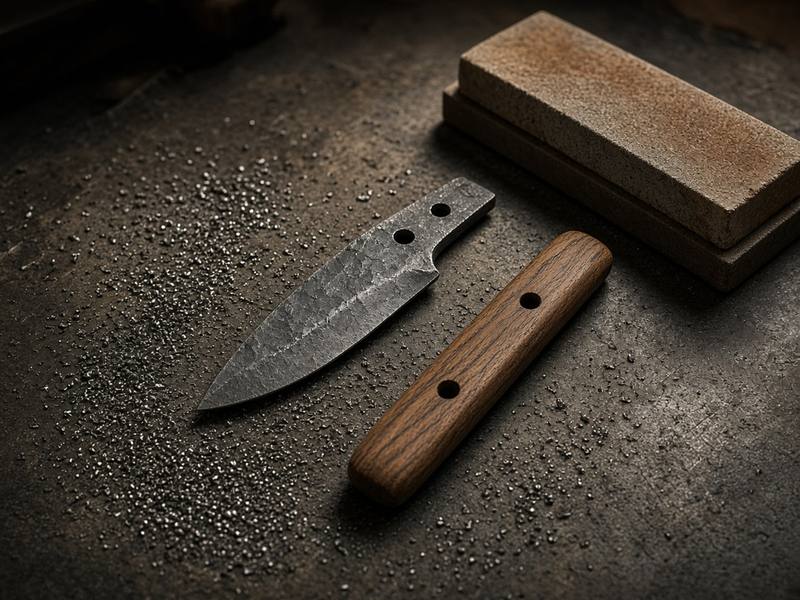
 Visit official site ↗
 Visit official site ↗
 Visit official site ↗
 Visit official site ↗
 Visit official site ↗
 Visit official site ↗
 Visit official site ↗
 Visit official site ↗
 Visit official site ↗
 Visit official site ↗
 Visit official site ↗
 Visit official site ↗
 Visit official site ↗
 Visit official site ↗
 Visit official site ↗
 Visit official site ↗
 Visit official site ↗
 Visit official site ↗
 Visit official site ↗
 Visit official site ↗
 Visit official site ↗
 Visit official site ↗
 Visit official site ↗
 Visit Facebook ↗
 Visit official site ↗
 Visit official site ↗
 Visit official site ↗
 Visit official site ↗
 Visit official site ↗
 Visit official site ↗
 Visit official site ↗
 Visit official site ↗
 Visit official site ↗
 Visit official site ↗
 Visit official site ↗
 Visit official site ↗
 Visit official site ↗
 Visit official site ↗
 Visit official site ↗
 Visit official site ↗
 Visit official site ↗
 Visit official site ↗
 Visit official site ↗
 Visit official site ↗
 Visit official site ↗
 Visit official site ↗
 Visit official site ↗
 Visit official site ↗
 Visit Instagram ↗
 Visit official site ↗
 Visit official site ↗
 Visit official site ↗
 Visit official site ↗
 Visit official site ↗
 Visit official site ↗
 Visit official site ↗
 Visit official site ↗
 Visit official site ↗
 Visit official site ↗
 Visit official site ↗
 Visit official site ↗
 Visit official site ↗
 Visit official site ↗
 Visit official site ↗
 Visit official site ↗
 Visit official site ↗
 Visit official site ↗
 Visit official site ↗
 Visit official site ↗
 Visit official site ↗
 Visit official site ↗
 Visit official site ↗
 Visit official site ↗
 Visit official site ↗
 Visit official site ↗
 Visit official site ↗
 Visit official site ↗
 Visit official site ↗
 Visit official site ↗
 Visit official site ↗
 Visit official site ↗
 Visit official site ↗