A family ceramic studio and showroom making hand-painted tiles, tableware, vessels, murals, and architectural commissions using inherited Jerusalem Armenian techniques. The Balian and Karakashian families established their joint pottery on Nablus Road in 1922; the Balian family continues at the site.
Best for Family ceramic studio and showroom making hand-painted tiles, tableware, vessels, murals
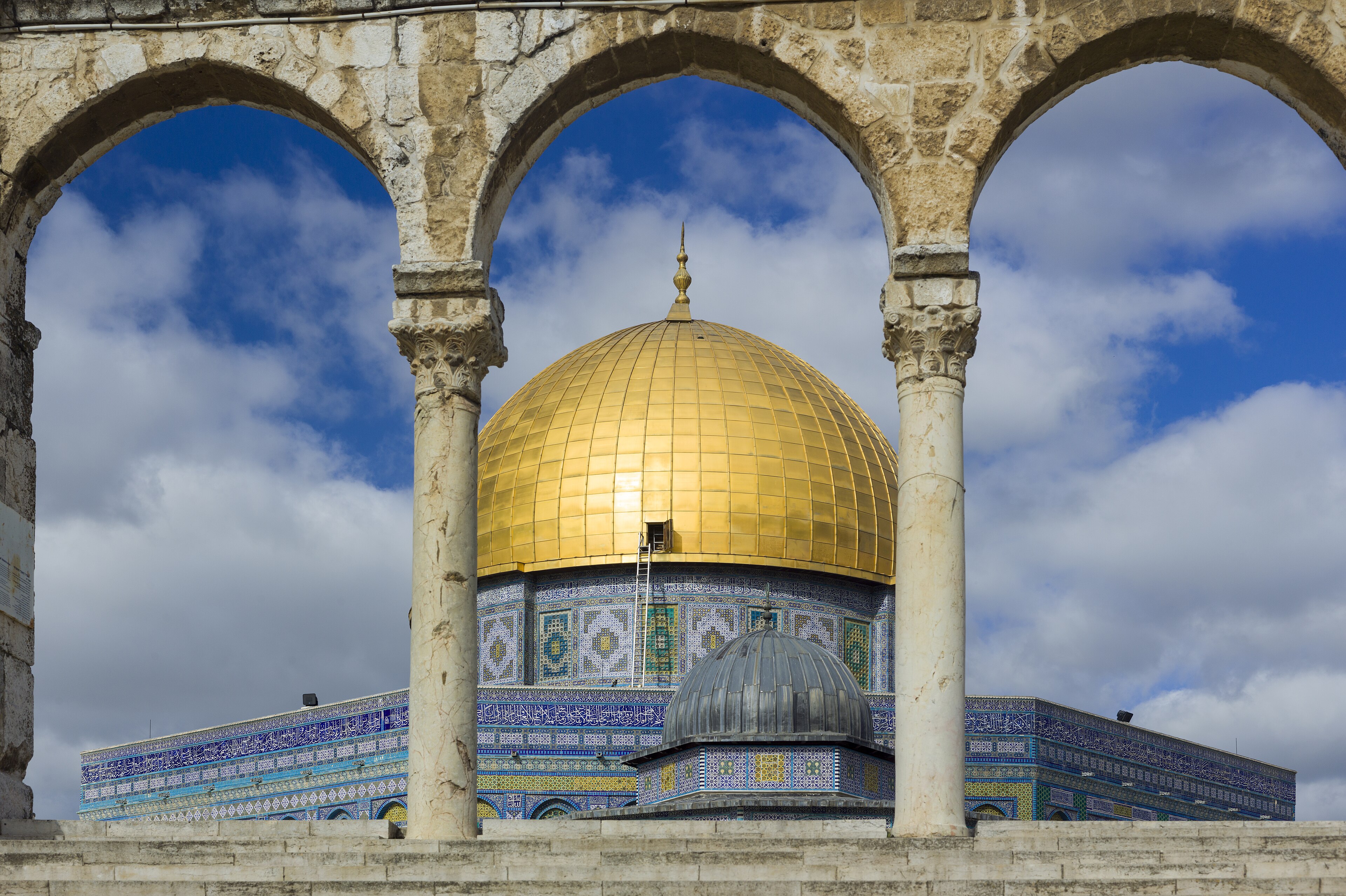
Balian Armenian Ceramics traces to 1919, when master potter Neshan Balian Sr. arrived in Jerusalem from Kütahya, in Ottoman Turkey, recruited by David Ohannessian to help restore the ceramic tiles on the Dome of the Rock under the British Mandate. In 1922, Balian and fellow craftsman Mgerdich Karakashian struck out on their own, opening a joint pottery on Nablus Road in East Jerusalem. The two families worked side by side, the Balians handling clay, glazes and firing, the Karakashians the drawing and painting, until they parted ways in the 1960s; the Karakashians founded a separate workshop on the Via Dolorosa, while the Balians remained on Nablus Road, moving to their present address after 1948.
The workshop's design language shifted decisively with Marie Balian, a French-Armenian painter trained at the Beaux-Arts of Lyon, who joined the family after marrying Setrag Balian Sr. in the 1960s. Where earlier Kütahya-derived patterns were largely static, Marie introduced dynamic figures, animals, birds, trees rendered mid-motion, that became the studio's signature and drew international attention, including a 1992 tribute exhibition at the Smithsonian Institution. Setrag Balian Sr., who trained under English potter Raymond Finch in Gloucestershire, brought Western forms like teapots and handled cups into the workshop's repertoire. Today the studio is run by Neshan Balian Jr., a fourth-generation family member, continuing hand-thrown pottery and tile production using inherited glaze recipes.
Jerusalem Pottery continues the Karakashian family's Armenian ceramic tradition in Jerusalem. Hagop Karakashian's hand-painted work includes tile murals and name plaques alongside plates and other pottery. The family's history also includes the Old City's multilingual street-name tiles, made by the preceding generation.
Best for Hand-painted Armenian ceramics and custom name or mural tiles
Jerusalem Pottery is the Karakashian family's Armenian ceramics workshop. Its history in Jerusalem began in 1919, when Megerditch Karakashian arrived as part of a group invited to work on tiles for the Dome of the Rock. The family subsequently developed a pottery tradition that included both decorative pieces and architectural tile work.
The second generation's work can be seen in the Old City's street-name tiles. Stepan and Berge Karakashian made Arabic and English signs in the 1960s, with Hebrew added later. Hagop Karakashian represents the third generation and continues the family's hand-painted ceramic work.
The current catalogue includes custom tile murals and name plaques. Plates and other household ceramics offer smaller purchases. A mural involves decisions about dimensions and layout that differ from choosing a single plate. For a custom order, discuss the surface and wording as well as the design. The family's historical Via Dolorosa workshop should not be used as an unchecked present-day address, since later reporting describes a relocation within the Old City.
An onsite shop selling jewelry, textiles, Judaica, paper goods, toys, wall hangings, bags, and home objects handmade in adjacent artisan workshops. Yad LaKashish provides paid creative work and social support to older Jerusalem residents. Established 1962.
Best for Handmade jewelry, textiles, Judaica and paper goods from older artisans
Israeli fashion chain founded in 1973 in Tel Aviv by Aaron Castro, growing out of his mother's dressmaking business (a small shop called 'Nina'); now Israel's largest domestically owned fashion retailer, with roughly 180 stores including several Jerusalem locations.
Best for Contemporary Israeli womenswear, menswear, and accessories
Castro was founded in 1973 by Aaron Castro, a Sephardic Jew whose family immigrated to Israel from Thessaloniki, Greece, when he was a child. The company's roots go back to the 1950s, when his mother, Anina, a professional dressmaker who sewed for private clients, and Aaron opened a small corner store in Tel Aviv named 'Nina' after her. As the business grew and added a basement workshop producing ready-to-wear clothing, it was renamed Castro. The company began exporting to Europe in 1975 and went public on the Tel Aviv Stock Exchange in 1992. Castro has designed Israel's Olympic team uniforms since 1996 and, by 2013, was Israel's largest domestically owned fashion company, with around 180 stores in Israel and additional locations in Germany, Russia, Switzerland, Thailand and Ukraine. The company has remained under continued family connection and expanded beyond its original menswear-and-womenswear base into a broader accessories offering. Castro's headquarters is now located in Bat Yam, near Tel Aviv. The chain operates multiple stores in Jerusalem as part of its national Israeli retail network, in malls and shopping streets across the city.
Storefronts in Jerusalem for Fox, Israel's largest clothing chain, tracing to Trico Fox, founded 1942; sells casual-basic fashion for women, men, children and babies across its Israeli and international store network.
Best for Trendy Israeli womenswear, menswear, and children's clothing.
Fox is Israel's largest fashion retail chain, tracing its roots to Trico Fox Ltd., founded in 1942. The company went public on the Tel Aviv Stock Exchange in 2002 and became Fox-Wizel Ltd., now trading as FOX on TASE. Fox positions itself around casual, everyday basics across women's, men's, children's and baby clothing, and has grown from its domestic base into an international chain with several hundred stores across roughly ten countries, including Russia, Singapore, China, Bulgaria, Croatia, Romania, Thailand, Panama and the Philippines, alongside its home Israeli market.
Israel's Apple Premium Reseller network, which owns and runs every APR store nationwide plus an in-house Apple Authorized Service Provider lab; its Jerusalem branch trades from the Malcha (Canyon Malha) shopping mall, styled after an Apple Store.
Best for Apple-authorized iPhones, iPads, MacBooks, and Apple Watch
iDigital operates as the umbrella company behind Israel's Apple Premium Reseller (APR) network, owning and running every APR-branded store in the country itself rather than franchising the format out to separate operators. It also runs its own in-house Apple Authorized Service Provider lab, so repairs and technical support are handled internally instead of being outsourced to a third party. Branches are laid out in the style of an Apple Store and stock the full current Apple range — iPhone, iPad, Mac, Apple Watch, AirPods and Apple TV — alongside services including device trade-in, interest-free installment plans of up to 24 payments, home delivery or in-store pickup, and an extended-warranty program the company brands as 'iDigital Care.' The Jerusalem branch trades from the Malcha shopping mall (Canyon Malha), one of several iDigital locations across Israeli cities, including a separate branch at Tel Aviv's Dizengoff Center.
Israeli branch of the U.S. toy chain founded in 1957 by Charles Lazarus; opened its first Israeli store in 1995 under license to Fishman Retail Group, with this location on the third floor of Malha Mall.
Best for Action figures, dolls, games, educational toys, and outdoor play gear
This Malha Mall location is part of the Israeli Toys R Us franchise, which opened its first store in the country in 1995, run under license by Fishman Retail Group. The global Toys R Us chain traces to 1948, when Charles Lazarus opened Children's Supermart, a baby-furniture store, in Washington, D.C.; he opened the first store dedicated purely to toys, under the Toys R Us name, in 1957. The Israeli operation has continued trading under the Toys R Us name even through the U.S. parent company's 2017-2018 bankruptcy and store liquidation, since the Israeli stores are run independently under license rather than owned directly by the U.S. corporate entity. The Jerusalem store, on the third floor of Malha Mall, carries the standard Toys R Us range across baby gear, action figures, dolls, games, educational toys, and outdoor play equipment.
Shevach Silversmiths works in Yemenite filigree, a technique the family brought to Jerusalem when its founders emigrated from Yemen in 1929, and continues today under Kitov Shevach and his sons Omri, Assaf, and Shai. The Mamilla workshop hand-makes kiddush cups, menorahs, and mezuzot alongside custom silver commissions.
Best for Yemenite-filigree Judaica and custom silver ritual pieces
A Muna family bookshop specializing in Arabic- and English-language literature and nonfiction concerning Palestine, Israel, the Middle East, politics, history, and identity. The bookseller operates multiple Jerusalem locations and hosts readings, launches, discussions, and other literary events. Established 1984.
Best for Arabic and English books on Palestine, Israel
The Educational Bookshop opened in Jerusalem in 1984, through what its owners call a simple twist of fate. It has grown into a bookstore focused on Middle Eastern culture and the Arab-Israeli conflict. Its two shops face each other on Salah Eddin Street in East Jerusalem. Books & Coffee at number 19 is the flagship, three floors that also house the first Segafredo cafe in Jerusalem. The Stationer at number 22 handles paper goods and office supplies. The book stock is largely research-based work from established institutions and publishers worldwide, alongside Arabic literature. Guidebooks and dictionaries sit with Arabic teaching books. Maps and local and foreign magazines sit with the stationery, along with newspapers and a selection of DVDs and music. The shop offers photocopying and laminating as well as binding and a delivery service. Book launches and talks run through the year, as do film screenings and other cultural events, announced by a mailing list. The shop quotes writer Leyla Zuaiter on the resilience and generosity Palestinians carry from one era to the next, with an endless supply of stories that never make it into print. It calls that the real story of the Educational Bookshop. Titles on the front table range from Palestinian food to the history of Jerusalem's holy sites.
Pomeranz Bookseller carries Jewish religious texts, English-language fiction and academic titles in central Jerusalem. Its specialist strength is Judaica and study material, supported by an online catalogue for checking editions before visiting.
Best for English-language Jewish religious texts, fiction, and academic works in Jerusalem
An independent English-language secondhand bookshop carrying used and rare books across fiction, history, religion, politics, and other subjects. Shai and Judy Robkin established the shop in 1981; its former café closed in 2002 while the bookstore continued.
Best for Secondhand and rare English-language books spanning fiction, history, religion
Steimatzky sells Hebrew and English books, bestsellers, children’s titles, Judaica and gifts through multiple Jerusalem branches. A specific store should be chosen because branch stock and opening hours differ.
Best for Bestsellers, Judaica texts, and gifts in Hebrew and English
Sunbula sells tatreez, the cross-stitch embroidery whose patterns once identified a wearer's home village across historic Palestine, sourced through fair-trade cooperatives of women artisans rather than produced in-house. The shop has operated from a restored Ottoman-era building on Nablus Road in Sheikh Jarrah since 2010.
Best for Genuine tatreez embroidery sourced from Palestinian artisan cooperatives
Al-Attarin Street, Muslim Quarter souk, Old City, Jerusalem
Sea of Herbs sells za'atar, spice blends, and herbal remedies from a stall on Al-Attarin Street in the Old City's spice market, a trade the Al Muakkat family has kept for six generations. Brothers Isaac and Jacob now run the shop their father Adel inherited, sourcing and blending the spices themselves rather than reselling wholesale mixes.
Best for Fresh za'atar and spice blends from a six-generation family stall
Bethlehem (traditional source for Jerusalem-area olive wood crafts)
Bethlehem Star carves nativity sets, crosses, and rosaries from local olive wood, continuing a trade that traces to the 14th-century Franciscan-run carving school that formalized the craft for Christian pilgrims. Pieces are rough-shaped by machine and then finished entirely by hand in the workshop.
Best for Olive-wood nativity sets and religious carvings
Hebron / Halhul, West Bank (traditional source for Jerusalem glassware)
The Natsheh family operates two of the three remaining glass factories near Hebron, blowing vessels by techniques traced to Phoenician and Roman-era glassmaking that early-19th-century travelers recorded some 150 local glassworkers practicing. Their cobalt and amber glass, sold through Jerusalem shops and fair-trade networks, is still shaped by mouth over an open flame rather than cast or pressed.
Best for Traditional hand-blown colored glass vases and ornaments
Perfuniq (Mahane Yehuda Perfumes) focuses on custom perfume blending at a shuk stall where visitors create their own personalised fragrances. At Mahane Yehuda, Jerusalem, the range centers on custom perfume blending and personalised fragrances at a Mahane Yehuda shuk stall.
Best for Custom perfume blending and personalised fragrances at a Mahane Yehuda shuk stall
Rabbi Baruch Neeman began selling baked goods from a stroller on Jerusalem's streets in 1944; the business grew into a 64-branch kosher chain nationwide. A modern production facility built in 2008 now supplies its challah, sourdough and Israeli breads.
Best for Kosher challah and sourdough from a 64-branch Jerusalem chain
Ne'eman Bakery's founding story starts small: in 1944, Rabbi Baruch Neeman pushed a baby stroller loaded with baked goods through Jerusalem's streets, selling directly to passersby. What began as door-to-door peddling turned into a single storefront, then a citywide, then a national chain as the format proved successful and was replicated branch by branch.
Today Ne'eman operates 64 branches across Israel, a scale that required moving production off individual bakery premises. In 2008 the company built a dedicated production facility equipped with modern machinery and automation to supply its full branch network with challah, sourdough, cookies, cakes and other Israeli-style breads while keeping kosher certification across the chain.
The brand still markets itself on the promise of "homemade tastes and aromas," and continues to expand: recent openings have added locations in cities including Hadera, Beersheba and Netanya, alongside a franchising program offering existing branches for sale.
Davidka Square Boutiques is a Trendy boutiques, cafés, and shops around the historic Davidka Square in downtown Jerusalem. At City Centre, Jerusalem, the range centers on Boutiques and cafés around the historic Davidka Square in downtown Jerusalem.
Best for Boutiques and cafés around the historic Davidka Square in downtown Jerusalem
Garo Sandrouni's workshop in Jerusalem's Armenian Quarter produces hand-painted ceramics. Garo and Sonia Sandrouni make pottery and tiles, using painted decoration across both household objects and larger ceramic work. Visiting the workshop puts the finished pieces alongside the practice of making and decorating them.
Best for Hand-painted Armenian ceramics in Jerusalem
Garo Sandrouni's workshop continues a craft tradition that predates his own career by more than sixty years. Armenian ceramicists first arrived in Jerusalem in 1919, brought from Kutahya in Ottoman Turkey to restore the tilework on the Dome of the Rock; when that restoration project ended, several of the potters — David Ohanessian foremost among them — chose to stay, founding Jerusalem's first Armenian ceramics workshops and establishing the hand-painted, cobalt-and-turquoise style now closely associated with the city's Old City souks. Garo Sandrouni, working alongside his wife Sonia, an artist by training, opened his own workshop in 1983 on Armenian Patriarchate Road in the Armenian Quarter, building on that inherited technique while developing the couple's own decorative vocabulary. The gallery and workshop produce hand-painted tiles, plates, bowls, vases and decorative ornaments, along with commissioned pieces made to a customer's own design — a service that distinguishes it from souvenir-oriented pottery sellers nearby. Everything is designed and painted on site rather than mass-produced, keeping the Sandrounis' output within the same workshop tradition the Armenian community brought to Jerusalem a century ago, even as the surrounding Old City has changed considerably around it.
Nadav Art makes contemporary Judaica, including menorahs, mezuzah cases and other ritual objects in modern forms. Material, dimensions and religious use provide the meaningful basis for choosing among decorative pieces.
Best for Sleek modern menorahs and mezuzah cases in contemporary Judaica design
Fox Home sells household goods through its Israeli retail network, including a Jerusalem shop listed for local delivery. The range covers kitchen and tableware as well as textiles and smaller decorative objects for the home. It is a multi-brand-style household shopping stop rather than evidence that the goods themselves were manufactured in Jerusalem or elsewhere in Israel.
Best for Tableware and household accessories in Jerusalem
Fox Home was founded in 2010 as part of Tel Aviv-based FOX GROUP and now operates more than 95 stores worldwide. The brand entered the market with a mission to deliver high-quality home products at accessible prices. Their Jerusalem footprint spans multiple locations and an online channel. The product range covers tableware and entertaining (dinnerware, glassware, serving pieces, flatware, linens), kitchen (cookware, baking, utensils, knives, appliances), bedroom (bedding, sheets, blankets, pillows), bath (towels, accessories, organization), home décor (carpets, lighting, decorative pillows, vases, furniture accents), and storage (baskets, containers, organizing solutions). The brand emphasizes accessibility and value: free shipping on orders over 249 shekels. Fox Home's tagline, 'bringing joy to the home,' frames the business philosophy—practical household goods presented as a way to enhance daily life rather than as luxury statements. Strong in the Israeli market, the brand has since expanded internationally, first to Canada in 2023.
Bug sells consumer technology through several Jerusalem locations as part of its wider retail chain. Its range covers computers and mobile devices as well as audio products and gaming equipment. The Mamilla Avenue shop is one Jerusalem branch, so shoppers looking for a particular product should check the relevant location rather than assume every shop carries the same stock.
Best for Consumer electronics and gaming equipment at Jerusalem branches
Bug began in the early 1980s in Tel Aviv, founded by Ira Rosenzweig, a recent immigrant from the United States, and his wife Nawit Resnik. Rosenzweig had bought an Apple computer and wanted to learn programming; finding little Hebrew-language material available, he began importing computer manuals and software into Israel himself. That informal import business grew into Bug Computers Ltd, which opened its first store at Tel Aviv's Dizengoff Center focused on IT books and software, including some of the first computer instruction books published in Hebrew. Franchised branches followed in Jerusalem, Ramat HaSharon, Rehovot and Haifa. In 1986 the founders sold the company to Moshe Raviv, who expanded it into hardware sales — computers and related equipment — rather than books and software alone; by 1988 the chain had grown to 12 stores, including a location serving corporate buyers. Bug has since grown into one of Israel's largest electronics retail chains, selling computers, mobile phones, televisions and home appliances, with branches nationwide including several in Jerusalem. The company and its sister brand Modan Electronics are today owned by the Modan Group, which also owns the Modan and Keter Books publishing houses — a continuation, at large scale, of the original bookselling link in Bug's founding story.
Israeli fashion chain founded 1993 by Eli Berkowitz and Yossi Brosh, with Serge Deri joining as CEO in 1994; roughly 95 stores nationwide, including Jerusalem locations, selling women's and men's fashion and accessories.
Best for Trendy womenswear and menswear at accessible prices from this Israeli chain
Renuar is a national Israeli fashion retail chain founded in 1993 by Eli Berkowitz and Yossi Brosh; Serge Deri joined a year later and has served as group CEO since. The company, headquartered in Rishon LeZion, operates the Renuar and Twentyfourseven store brands, selling clothing, footwear, jewelry, bags and accessories at around 95 points of sale across Israel. By 2016 it ranked as roughly the fifth-largest fashion chain in the country. Jerusalem is one of many cities where Renuar operates branches, including a location in the Mamilla shopping area near the Old City.
Founded 1997 in Haifa by Sorkin, Priluk and Oded Koren, who began importing computer parts from a one-room apartment; now one of Israel's largest electronics chains, with this branch in Har Hotzvim.
Best for Computers, phones, TVs, gaming, and smart home electronics
KSP was founded in 1997 in Haifa by Sorkin, Priluk and Oded Koren, who started out importing computer components and running the business from a one-room apartment. As the parts-import market grew saturated and margins fell, the founders pivoted to importing and selling complete computers, then expanded into computer peripherals as that category also became competitive. From 2010 the company diversified further, adding product categories unrelated to computing to keep growing against increasing competition in Israel's electronics retail sector. KSP has since become one of Israel's largest electronics chains, with more than 60 branches nationwide. The Jerusalem branch sits in the Har Hotzvim industrial park at Kiryat HaMada Street, serving a district built around Jerusalem's technology and biotech companies rather than a typical shopping strip. The company's growth from a single rented room to a nationwide chain of dozens of branches over roughly three decades tracks Israel's own consumer-electronics retail expansion during the same period.
Israel's first fashion house, founded 1954 by Ruth Dayan as a government employment project training new immigrants in weaving and embroidery. It went bankrupt in 1994 after losing state funding, then was revived in 2014 by designer Sharon Tal.
Best for Luxury clothing, accessories, and home textiles from a revived Israeli fashion house.
Maskit was Israel's first fashion house, founded in 1954 by Ruth Dayan as a Ministry of Labor employment project intended to give new immigrants agricultural work, which instead revealed pools of skilled weavers and embroiderers. The label built its identity on traditional craftsmanship, and at its height was carried by Bergdorf Goodman, Neiman Marcus and Saks Fifth Avenue, with ten stores in Israel and one in New York, including a multi-floor flagship in Jerusalem. Government funding ended in 1970, and the company went bankrupt in 1994. Two decades later, designer Sharon Tal spent roughly two and a half years working with Dayan to track down former employees and archived pieces before relaunching the brand.
Home Boutique Jerusalem is a curated home décor boutique with Israeli design objects, textiles, ceramics, and art. At German Colony, Jerusalem, the range centers on israeli design objects, textiles, ceramics, and art.
Best for Israeli design objects, textiles, ceramics, and art
Aldo Stationery Jerusalem is a Stationery chain with notebooks, pens, art supplies, greeting cards, and office materials. At Jerusalem, the range centers on Stationery chain with notebooks, pens, art supplies, greeting cards, and office materials.
Best for Stationery chain with notebooks, pens, art supplies, greeting cards, and office materials
Christian Quarter, near New Gate, Old City, Jerusalem
Sandrouni's studio sits just inside the New Gate, where George and Dorin Sandrouni paint ceramics using the Kütahya-derived technique brought to Jerusalem by the city's founding Armenian tile families. Customers can watch pieces being thrown and painted on-site before buying plates, tiles, and bowls from the adjoining showroom.
Best for Watching artisans paint while shopping for tiles and tableware
4 Yoel Salomon Street, Nahalat Shiv'a, Jerusalem, Israel / Jerusalem / Israel
Founded December 1987 as a ceramicists’ cooperative; iTravelJerusalem and Inbal Hotel report 15 artists who staff the shop themselves after Cadim merged with Altogether 8 on Yoel Solomon Street (iTravelJerusalem; Inbal Hotel).
Best for Founded December 1987 as a ceramicists’ cooperative.
6 Yoel Moshe Solomon Street, Jerusalem 9463306, Israel / Jerusalem / Israel
Founded 1964 by Bezalel-trained Malka Gabrieli, who hand-loomed in an Old Jaffa basement studio; Jerusalem shop now sells hand-woven silk/wool/cotton tallit sets (house Our Story; ACHI vendor listing prints 6 Yoel Moshe Solomon Street).
Best for Hand-woven silk, wool and cotton tallit sets from a Jerusalem shop.
13 Sha'ar Zion Street, Old City, Jerusalem, Israel / Jerusalem / Israel
Self-taught Hagop Antreassian entered the ceramics business in 1980; his workshop-studio across Zion Gate displays hand-painted Armenian pottery and visitors can watch him paint.
Best for Hand-painted Armenian pottery from a workshop where visitors can watch the maker.
Hebron Road 12, Jerusalem 9354206, Israel / Jerusalem / Israel
1982 project turning the former St John eye-hospital building into studios where Judaica artists, ceramicists and jewellers work, exhibit and sell; house site says applied-arts centre since 1970, ~35 workshop artists now (Jerusalem Foundation; house About).
Best for Judaica, ceramics and jewellery made and sold in resident studios.
Levantine Gallery sells original artwork, prints and sculptures by local artists from its shop in the Christian Quarter of Jerusalem's Old City. Its collection focuses on Holy Land scenes and calligraphy.
Best for Original Holy Land art and calligraphy by local artists like Shareef Sarhan
6 Schatz (Shatz) Street, off 26 King George Street, Jerusalem, Israel / Jerusalem / Israel
Largest second-hand bookstore in Israel, operating since 2000, several hundred thousand titles in four public rooms plus a closed antiquarian room (official FAQ; NileGuide).
Best for Second-hand books across four public rooms, operating since 2000.
77 Armenian Patriarchate Road, Armenian Quarter, Old City, Jerusalem, Israel / Jerusalem / Israel
Vic Lepejian, with an M.A. in fine arts from Armenia, opened Vic's Armenian Art Studio in 1975 on Armenian Patriarchate Road; son Bedros and Irene Oerdegian work with him.
Best for Armenian art from a family studio on Armenian Patriarchate Road.
Area names come from each shop’s published address record; ORBIS does not invent neighbourhoods.
ORBIS city intelligence
Jerusalem can sell you a tile before you have asked who painted it. The better object takes longer. It comes from a room that still paints or silvers, and from a person who can say which house did the work.
That is the buying rule. Buy the workshop that still paints or silvers here, not the mall door.
What should I buy in Jerusalem?
Jerusalem is strongest in hand-painted ceramic, worked silver, books bought by the house that stocks them, a measured bag of za'atar from a named stall, and a small object made next door at Yad LaKashish Gift Shop. The first intelligent purchase is usually small enough to turn over. A single tile, a mezuzah case, a kiddush cup, a paperback you can name the shop for, a tin of za'atar whose blend you can ask about.
Do not start at the mall. Castro Jerusalem, Fox Jerusalem, iDigital Jerusalem, Samsung Store Jerusalem and Toys R Us Jerusalem share the Malha / Azrieli building at 1 Derech Agudat Sport Beitar. Home Center Jerusalem is a Talpiot warehouse door at 9 Hauman. They are useful if you already know the brand. They are not the local identity of this page.
For ceramic, start with the house name, then the street. Balian Armenian Ceramics of Jerusalem paints at 75 Nablus Road, 97200, north of Damascus Gate. Balian — Armenian Ceramics is the same studio. Ask for a hand-painted tile, a plate, or a small mural commission, and ask who in the room painted it. Hold a house pattern and a tourist motif in the same size. The difference is line, reverse, and whether the painter will put a name on the work.
Jerusalem Pottery is the Karakashian workshop at 3 Greek Orthodox Patriarchate Street, in the Christian Quarter near Jaffa Gate. The family originated the bilingual street-sign ceramics of the Old City. Karakashian — Jerusalem Pottery is the same house; Via Dolorosa is an old address. That was the 1964 room. The current door is the Patriarchate street. Ask whether the piece uses a family pattern or the street-sign lettering the house is known for. Do not walk Via Dolorosa looking for this shopfront.
Three names, three streets, three official sites. Do not let "Armenian ceramics" finish the sentence. A stall that answers with a neighbourhood instead of a house is selling a mood.
For silver, name the metal and the method. Shevach Silversmiths sits at 16 Mamilla Avenue, a workshop door on a shopping boulevard. The house works Yemenite filigree in sterling, twisting fine silver thread and soldering it onto the piece. The names are Kitov Shevach and his sons Omri, Assaf and Shai. A kiddush cup, a mezuzah, or a pair of candlesticks from this bench is a different object from a stamped souvenir two doors down. Ask whether the filigree on the cup in your hand was worked here, and whether the inner bowl is gold-lined if you are buying for kiddush.
Baltinester Bros. Jewelry and Judaica has stood on Jaffa Road since 1949. The official contact page prints 31 Jaffa Street, 94221. Ask what was made for the house and what was bought in. Write sterling or plate, size, and date. If those three words cannot be said, the piece is a window object.
For books, buy the stock, not the chain table. Educational Bookshop at 19 Salah Eddin Street is a Muna family shop of Arabic and English books on Palestine, Israel, and the region. Name a subject before you name a souvenir. Pomeranz Bookseller at 5 Be'eri Street is an English-language Jewish bookshop: religious texts, fiction, academic work. Name the text. Sefer ve Sefel at 2 Yavetz Street, 94232, off Jaffa Street behind the light rail, is the secondhand English room. Name the author you came to find, then let the shelves argue. Koren Publishers Shop is a Jerusalem publisher at 10 Ein Gedi Street in Talpiot. Buy a Koren siddur or Tanakh there if the house is the point. The shipping page also names offices at 33 Pierre Koenig for website pickup. The shop is on Ein Gedi.
Steimatzky Jerusalem at 33 Jaffa Street is a national chain door. It is useful for a Hebrew bestseller. It is not a substitute for any of the four houses above.
How can I tell a workshop from a mall door?
Do not trust a skyline. A printed tile, a factory menorah, and a "Holy Land" bag can all be sold within sight of Jaffa Gate. Ask who made the object, where, by what method, and whether the shop is the workshop or a reseller.
For ceramic, the useful questions are the house name, whether the piece was painted in this room, whether the design is a house pattern or a tourist motif, and how the glaze was fired. Balian, Karakashian and Sandrouni will tolerate those questions. A stall that answers "Armenian style" is selling a mood. If all three houses give you the same word for three very different prices, you are not yet being sold a method. Leave the second piece. Keep the first only if the house name and the method can be written down.
For silver, ask sterling or plate, filigree or cast, who sat at the bench, and whether the piece can be engraved here. Shevach will talk filigree because that is the house method. Nadav will talk the contemporary line because that is the house line. Baltinester will tell you what it makes and what it stocks. If nobody will say metal and method, you are in a gift arcade.
For embroidery, do not collapse a tatreez panel into a generic craft. Sunbula — House of Palestinian Crafts at 15 Nablus Road, Sheikh Jarrah, sells work from Palestinian artisan cooperatives. The official page is explicit that the embroidery is sourced, not produced in-house. That honesty is the point. Ask which cooperative made the piece, which stitch, and which pattern. A machine copy of a village motif is a different object.
For spices, ask the blend and the grind. Sea of Herbs is a named stall on Al-Attarin Street in the Old City spice market. The official contact page prints that street and no house number. Za'atar is the named line, and a family has kept the stall. Buy a bag you will use. Do not buy a dozen souvenir tins.
Two factories sit on this list and are not Jerusalem walk-ins. Bethlehem Star Olive Wood Factory carves nativity sets and religious objects at Old Caritas Hospital Street, Bethlehem. Hebron Glass (Natsheh Glass & Ceramic Factory) blows coloured glass at Ras al-Jora, at the northern entrance of Hebron. Both are real workshops. Both are in the wrong town for a Jerusalem day. If you want the object, plan the town. Do not buy a copy in the souk and tell yourself it came from those rooms.
What should I carry besides ceramic and silver?
Yad LaKashish Gift Shop at 14 Shivtei Israel Street, Musrara, sells jewelry, textiles, Judaica, paper goods and toys made in the adjacent workshops by older artisans. The object is small and the labour is in the next room. Ask which workshop made the piece in your hands. Do not confuse this house with Jerusalem Toy Workshop. It has no known door under its own name. The last known wooden-toy street in the city is a different shop at 13 HaZfira in the German Colony. Do not walk there as if the named workshop sits on that number. Do not confuse either room with Toys R Us on the third floor at Malha.
Perfuniq (Mahane Yehuda Perfumes) is the named blender attached to the Mahane Yehuda walk. The official English contact page lists 12 Ben Sira Street and marks that Jerusalem door under construction. Ben Sira runs along the south edge of the market. The stall number inside the shuk is not published. If you go, ask whether they are receiving.
Ne'eman Bakery is a 64-branch kosher chain that began in this city. The official branch list names several Jerusalem doors. One is at 34 Jaffa Street in the city centre. Buy challah or sourdough you will eat today. Do not treat the chain as a workshop, and do not call 34 Jaffa the first shop.
Davidka Square Boutiques is a square at 31.78450, 35.21509, not a house. Walk it if you are already on Jaffa Street. Do not file it as a maker.
How a commission should actually go
A workshop that still paints will tolerate a slow first conversation. A souvenir counter will not.
For a tile, you are buying labour you can see. At Balian on Nablus Road, 75, ask to hold a house plate and a tourist motif in the same size. Ask who in the room painted the one you want, and whether a mural or a backsplash can be booked from this studio. Write the room, the tile count, the delivery date, and the packing. At Jerusalem Pottery on Greek Orthodox Patriarchate Street, 3, ask whether the piece uses a family pattern or the street-sign lettering. At Sandrouni on Armenian Patriarchate Road, 87, watch the painting if the room is working. If the house will take a commission, write the same four lines: room, count, date, packing. A tile bought because the alley was pretty is not a commission.
For silver, the first conversation is metal and use. At Shevach, ask whether the filigree on the cup in your hand was worked on this bench, and whether the inner bowl is gold-lined if you are buying a kiddush cup. At Nadav, ask whether the menorah is silver or aluminum, and whether the studio will engrave. At Baltinester, ask what can be made and what is in the case. Write sterling, size, and date. If the house will not write those three, you are shopping a window.
A book is simpler and just as easy to get wrong. At Educational Bookshop, name the subject before you name the souvenir. At Pomeranz, name the text. At Sefer ve Sefel, name the author you came to find, then let the shelves argue. At Koren, name the edition. One bag from one of those rooms is more useful than three bags from Steimatzky.
A tatreez panel is a sourced object. At Sunbula, ask which cooperative embroidered the piece, which stitch, and which village pattern. Write those three. The house will not pretend it stitched the cloth in Sheikh Jarrah. That is the useful fact, not a weakness.
The Old City is a separate chapter. Enter for Garo Sandrouni on Armenian Patriarchate Road, 87, then Jerusalem Pottery on Greek Orthodox Patriarchate Street, 3, then Sea of Herbs on Al-Attarin if spice was the brief. Buy one ceramic object whose house you can name. Do not add a third tile stall because the street continued.
Mahane Yehuda is a market, not a house. Walk it for food you will eat and, if they are receiving, for Perfuniq. Ne'eman Bakery at 34 Jaffa is on the way. Do not turn the shuk into a heritage narrative.
Koren at 10 Ein Gedi is a Talpiot errand, not a detour between Jaffa Gate and the spice market. Malha is a separate afternoon if you need a chain door, and it does not belong on this route. Bethlehem and Hebron are other towns.
Opticana Jerusalem at 23 King George, corner Ben Yehuda, is a real eyewear chain unit if you need lenses. KSP Jerusalem at 17 Hauman in Talpiot is a real electronics door.
None of the following names is a reason to change the walk. Clinique Jerusalem is the official Zahav Mall door at 21 David Saharov, Rishon LeZion. Maskit Jerusalem is the official Jaffa studio at 14 Hatzorfim. Moroccanoil Jerusalem is the official Israel office at 1 Moshe Levi, Rishon LeZion. Home Boutique Jerusalem is the official Ashkelon shop on Topaz Street. Macadamia Jerusalem is the brand HQ at 5850 Granite Parkway, Plano, Texas. Lavido Jerusalem is a published Jerusalem stockist at 33 King George, Or LaTeva, not a Lavido brand shop. Aldo Stationery Jerusalem is the official Aldo shoe shop at Hadar Mall, 26 Pierre Koenig; no stationery Aldo exists. For Jerusalem Toy Workshop, the last known wooden-toy shop is at 13 HaZfira, a different house. Do not look for a Mamilla boutique for any of them.
What does not deserve the journey home
Leave the tile whose workshop name is only the neighbourhood. Leave the "Armenian ceramic" that cannot name Balian, Karakashian or Sandrouni. Leave the silver whose metal and method cannot be stated. Leave the tatreez whose cooperative cannot be named. Leave the olive-wood nativity you bought in the souk and filed under Bethlehem Star. Leave the coloured glass you filed under Hebron without going to Hebron. Leave the book from a chain table when the house you wanted was on Salah Eddin, Be'eri, Yavetz or Ein Gedi. Leave the mall bag from Malha. Leave the cream, the shirt and the toy that could have been bought in any other Israeli city. Leave the Clinique, Maskit, Moroccanoil, Macadamia, Aldo and Home Boutique bags that were never Jerusalem walk-ins.
Jerusalem's best object is the one a living workshop can still explain. Buy that. Leave the mall door on the concourse.
In Jerusalem, two objects that look similar can have quite different makers and uses. An Armenian ceramic workshop offers a different conversation from a contemporary ceramic cooperative. Palestinian embroidery and a handwoven tallit carry their own traditions; neither needs to be reduced to a generic souvenir.
These five shops give you specific starting points. Sandrouni and Cadim approach clay differently, while Sunbula and Gabrieli make the identity of a textile worth asking about. Sea of Herbs offers a smaller purchase for someone who would rather take home ingredients than a fragile object 12345.
Sandrouni: identify the workshop before choosing the pattern
Sandrouni — Armenian Ceramics identifies its workshop and showroom with George and Dorin Sandrouni, inside the New Gate in the Old City's Christian Quarter. The official site describes Armenian ceramics and directs buyers to that workshop or its own website for original Sandrouni work 1.
Keep those names with your directions rather than searching for any shop carrying similar painted ceramics. At the showroom, ask which pieces were made by this workshop and how a particular surface was decorated. A pattern alone does not tell you who produced the object.
Choose between a display piece and something for regular use before comparing shapes. For a vessel, ask about its intended contents and cleaning instructions. For a tile, establish how it can be mounted rather than assuming it is ready to hang.
Check the packing arrangement before paying for a fragile purchase, especially if you will continue travelling. This is a workshop visit, not a promised demonstration: confirm access directly and do not assume a particular process will be underway when you arrive.
Cadim: compare individual ceramicists in one gallery
Cadim Ceramic Art Co-op Gallery describes a cooperative gallery and shop at 4 Yoel Salomon Street in Nahalat Shiv'a. Its ceramic artists share the running of the gallery and take turns serving visitors. The selection represents different approaches to contemporary ceramics rather than a single house style 2.
Start with the maker of a piece you like. Ask whether its form is intended for use or display, then compare it with another artist's work. The useful distinction might be the handling of clay rather than the size of the object.
If you are choosing a cup or bowl, hold it with permission and consider how it would fit into daily use. For a sculptural piece, think about where it would sit and how you would see it there.
Keep the artist's name with your purchase so you can identify the work later. Do not assume the person serving you made every object in the room, or that another example of a handmade piece will be identical.
Sunbula: keep the craft and its maker attached to the gift
Sunbula — House of Palestinian Crafts lists its shop at 15 Nablus Road in Sheikh Jarrah. Its catalogue brings together Palestinian crafts, including embroidered bags and cushions alongside basketry. The organisation describes supporting artisan groups through income-generating work 3.
An embroidered accessory can be a useful entry point if you do not have space for a larger textile. Ask which group made it and what technique was used. Retain the product information rather than letting the maker's identity disappear when the wrapping comes off.
Compare the object as something the recipient will use. A bag needs a suitable opening and strap; a cushion cover needs to fit an existing cushion. Those details matter alongside the embroidery that first attracted you.
The range includes different materials and producers, so ask about the individual item rather than extending one product's description to the entire shop. Choose the piece for its work and purpose, with the background information as part of the purchase rather than a substitute for it.
Gabrieli: choose a textile for the person who will use it
Gabrieli Hand Weaving describes its downtown Jerusalem shop and handwoven tallit sets. Its range distinguishes wool from silk and cotton, and also includes home textiles such as challah covers 4.
If you are buying a tallit as a gift, establish the recipient's preferences before choosing a colour scheme. Ask about the dimensions and how the fabric falls when worn. A photograph cannot settle those questions, particularly when comparing different fibres.
For a ritual purchase, discuss the recipient's requirements directly rather than assuming that visual appeal settles suitability. The shop's own specifications should remain with the item. This guide does not make a religious ruling about an individual product.
A home textile may suit a different purpose, but it still deserves a close look at its material and intended care. Ask which part is handwoven and which maker is responsible. The broader shop also carries art and Judaica, so do not assume everything displayed was produced by the same workshop.
Sea of Herbs: make the purchase about cooking
Sea of Herbs identifies itself as a Palestinian family business on Al-Attarin Street in the Old City's spice market. Its catalogue includes cinnamon and a Jerusalem Mix spice blend, alongside a wider range of body-care and herbal products 5.
For a food purchase, begin with something you already cook and ask which blend suits it. Have the ingredients explained before choosing a mixture, rather than relying on its name alone. A single ingredient may be easier to understand and use than an unfamiliar blend.
Ask for the product name and ingredient information to remain with the package. That helps when cooking later, especially if the purchase is a gift. Choose an amount you expect to use rather than buying for the appearance of a full shopping bag.
The food selection is the focus here; the presence of herbal products is not evidence for medical claims. Keep culinary products separate from cosmetics when asking questions, and confirm the intended use of anything whose label is unfamiliar.
Choose a purpose before planning the stops
If ceramics are your interest, Sandrouni and Cadim offer two different ways to compare named makers. For textiles, distinguish a decorative gift from an item with a specific ritual use. A food purchase needs less display space, but still benefits from clear ingredients and instructions.
Check each business's current access information before setting out. This selection is not a timed walking route or a statement about current travel conditions. Choose the relevant shops for your visit rather than trying to cover every category in one outing.
Sources
1 Sandrouni, workshop identity and location, accessed September 10, 2026: https://www.sandrouni.com/
2 Cadim, cooperative gallery and shop, accessed September 10, 2026: https://www.cadimjerusalem.com/
3 Sunbula, craft range and Jerusalem shop, accessed September 10, 2026: https://www.sunbula.org/
4 Gabrieli, weaving and product range, accessed September 10, 2026: https://www.gabrielitallit.com/pages/our-story
5 Sea of Herbs, food catalogue and Old City location, accessed September 10, 2026: https://seaofherbs.com/
 Visit official site ↗
 Visit official site ↗
 Visit official site ↗
 Visit official site ↗
 Visit official site ↗
 Visit official site ↗
 Visit official site ↗
 Visit official site ↗
 Visit official site ↗
 Visit official site ↗
 Visit official site ↗
 Visit official site ↗
 Visit official site ↗
 Visit official site ↗
 Visit official site ↗
 Visit official site ↗
 Visit official site ↗
 Visit official site ↗
 Visit official site ↗
 Visit official site ↗
 Visit official site ↗
 Visit official site ↗
 Visit official site ↗
 Visit official site ↗
 Visit official site ↗
 Visit official site ↗
 Visit official site ↗
 Visit official site ↗
 Visit official site ↗
 Visit official site ↗
 Visit official site ↗
 Visit official site ↗
 Visit official site ↗
 Visit official site ↗
 Visit official site ↗
 Visit official site ↗
 Visit official site ↗
 Visit official site ↗
 Visit official site ↗
 Visit official site ↗
 Visit official site ↗
 Visit official site ↗
 Visit official site ↗
 Visit official site ↗