Speicherstadt Kaffeerosterei has roasted coffee daily in Hamburg's historic warehouse district for roughly 30 years, with raw beans arriving directly via the city's port. Its projects include an orangutan-habitat initiative in Aceh, Sumatra.
Best for Daily drum-roasted coffee at a 30-year Speicherstadt roastery whose raw beans arrive
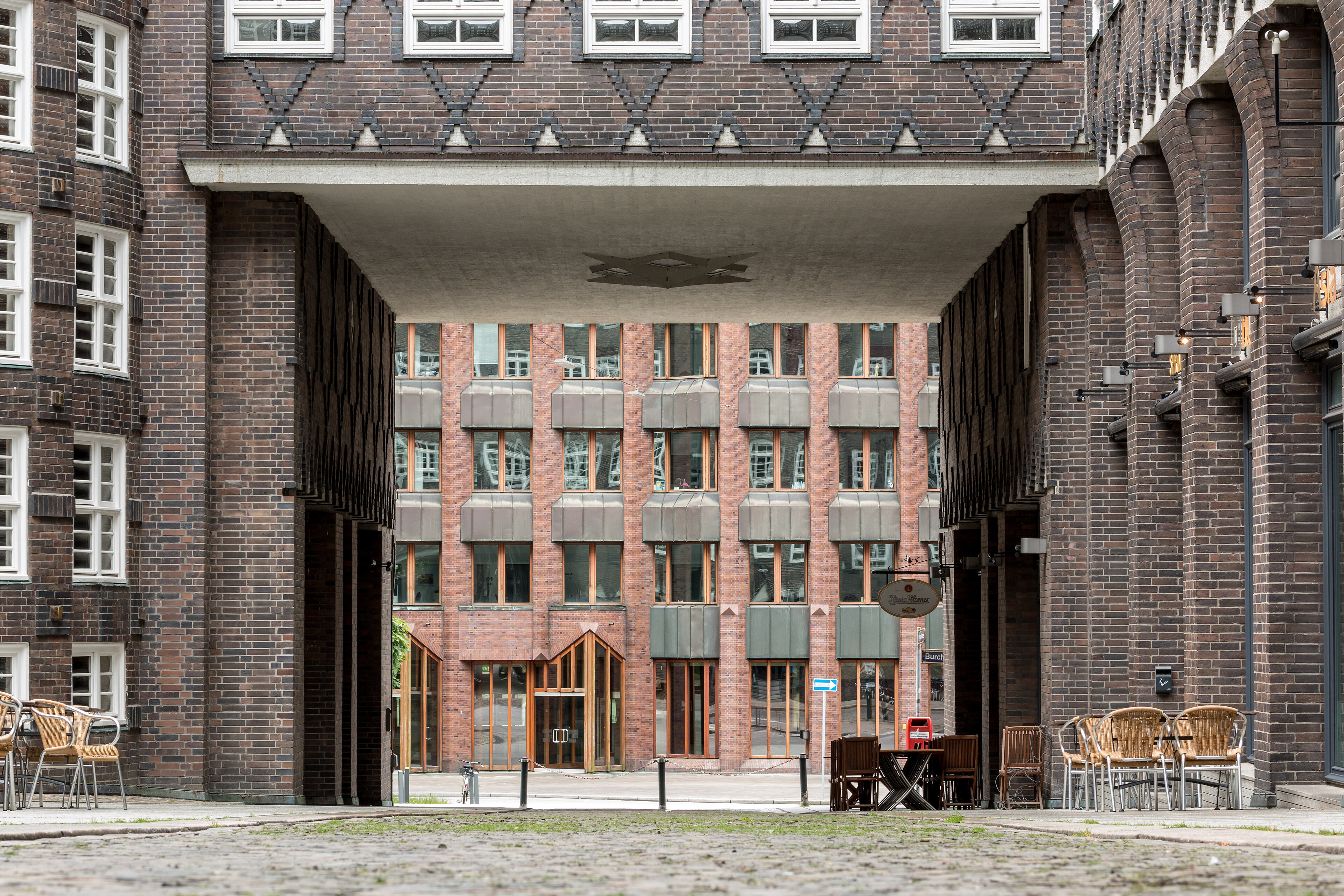
Speicherstadt Kaffeerosterei roasts in Hamburg's Speicherstadt warehouse district, marking around 30 years in business as of its current anniversary messaging, which places its founding near 1996. The roastery describes daily gentle drum roasting, and its raw green coffee arrives directly through Hamburg's port -- a genuine logistical detail given the roastery's own location surrounded by the district's brick warehouses and canals. The flagship cafe sits at Kehrwieder 5, backed by a factory outlet (Fabrikladen), an online shop, and a wholesale side of the business. Sourcing leans on single-origin coffees and blends built around direct producer relationships, paired with named sustainability commitments rather than a generic sustainability claim: an orangutan-habitat conservation project in Aceh, Sumatra; a Demeter-certified project in Honduras called '18 Conejo'; and a 'Rebuild Women's Hope' initiative in Congo. On the product side, a collaboration with Hamburg brewer wildwuchs Brauwerk produced 'Kaffee Ale,' a coffee-and-beer hybrid that ties the roastery to the local brewing scene rather than staying confined to coffee alone. Between the port-direct sourcing, the three named origin-country projects, and the 30-year run in the same historic district, the roastery presents a clearer paper trail than a simple craft-coffee-shop description would suggest -- named partners, named projects, and a specific address anchoring all of it.
A Hamburg delicatessen gathering foods from small and medium German producers. Established 2007.
Best for German regional foods, preserves and pantry gift boxes
Mutterland has operated as a Hamburg delicatessen since 2007, built around a single premise: gathering foods from small, owner-operated German producers rather than mass-market suppliers. The company describes its roster as spanning more than 200 independent manufacturers, each selected for products with what it calls 'rarity value' -- traditional recipes and regional specialties a supermarket shelf would not otherwise carry. Its own framing is explicitly domestic and nostalgic: the business presents itself as 'a homage to caring mothers and home cooking,' curating the sweet and savory staples 'that kept us full and happy in childhood' rather than positioning itself as a gourmet novelty shop. Beyond the retail shelves, Mutterland has grown into a vertically integrated food business, running its own gastronomy operation, a production kitchen, a bakery and a chocolate manufactory alongside its delicatessen shops and online store -- letting it develop and sell products under its own name rather than only reselling third-party goods. The company describes itself as multi-award-winning within the German specialty-food trade. Its Stammhaus anchors the St. Georg district near Hamburg's main station, at the corner of Ernst-Merck-Straße and Kirchenallee, selling preserves, pantry staples and gift boxes drawn from its curated producer network.
Lokaldesign sells limited-edition furniture, lighting and objects by independent designers in Hamburg. The shop is most relevant for buyers seeking small-run contemporary design rather than mass-produced home accessories.
Best for Limited-edition furniture, lighting, and objects by independent designers
Human Empire Shop grew from a Hamburg design studio that used part of its workspace to exhibit and sell its work. Its catalogue now combines prints and illustration with stationery and home accessories. Products from other designers and small labels sit alongside the studio's own graphic work.
Best for Illustrated prints, stationery and design-led home gifts
Human Empire Shop grew out of a Hamburg design studio's search for working space. Jan, Wiebke and Malte found a former shop that could serve as both an office and a place to show the things they designed. Records and printed work for the music label Morr Music were among the early reasons to create a public-facing space.
As goods from other designers and small labels arrived, the retail area grew. The studio eventually moved into nearby offices, giving the shop more room. That history explains why graphic work remains part of a range that now extends into everyday objects for the home.
The current catalogue includes prints and illustrated products as well as stationery and books alongside home accessories. Frames and poster rails provide ways to display the graphic work, while cards offer a smaller purchase. For an artwork, check the dimensions and whether a frame is included before choosing it. The shop's own design background does not mean it manufactures every item in the assortment; work from other makers remains part of the offer.
A textile specialist selling clothing, decoration, couture, organic cotton, silk, and cashmere fabrics. The shop occupies approximately 400 square metres in a former factory.
Best for Textile specialist selling clothing, decoration, couture, organic cotton, silk, and cashmere fabrics
Torrefaktum has roasted coffee in Hamburg since 2009 and was named the city's 'Kaffeerosterei des Jahres' by Der Feinschmecker in 2022. Its espresso blends -- Wake Up, Hey Dude, Black Birdy -- are sold across three Hamburg cafes.
Best for Wake Up and Hey Dude espresso blends from Hamburg
Torrefaktum has roasted coffee in Hamburg since 2009, describing itself as a Manufaktur -- an artisanal producer working from 'Handwerk, Leidenschaft und ehrlichen Bohnen' (craftsmanship, passion, and honest beans). In 2022, the German food magazine Der Feinschmecker named Torrefaktum Hamburg's 'Kaffeerosterei des Jahres' (coffee roastery of the year) and ranked it among Germany's best roasteries -- outside recognition rather than a self-assigned claim. The roaster runs three Hamburg cafes -- in Ottensen, inside the ZEIT Cafe, and at Phoenixhof -- alongside its roastery operation. House espresso blends carry distinct names: Wake Up, Hey Dude, and Black Birdy, sold alongside filter blends, a decaf option, and tasting packages, available as whole bean or ground. As of the current site, the online shop is offline for maintenance, with existing orders still being processed through the end of that week -- a temporary operational note rather than a sign the roastery has closed. Between the 2022 Feinschmecker award and the spread across three distinct cafe formats (a standalone shop, a magazine-branded cafe, and a location inside Phoenixhof), Torrefaktum presents itself as an established, externally recognized Hamburg roaster rather than a newer or unproven operation, even with the 13-year gap between its 2009 founding and the award.
A Hamburg confectioner making handcrafted pralines, truffles, nougat and marzipan, with vegan lines and custom orders. Chocolate is produced by the maker and sold across several city shops.
Best for Handcrafted pralines, truffles, nougat, and marzipan, with vegan lines and custom orders
Hamburg's interactive chocolate house at Meßberg 1 in the Kontorhaus quarter pairs guided tastings with a shop of bars, filled chocolates and cosmetics. The store is open daily and needs no ticket to browse.
Barcelona-founded leather goods brand (est. 2015) by entrepreneur Werner Scharlau - briefcases, backpacks and business bags sold direct online, not a Hamburg house.
Best for Leather briefcases, backpacks and business bags
Hamburg’s oldest family-owned bookshop, serving Ottensen with literature and events.Established 1878.
Best for Literature and events at Hamburg's oldest family-owned bookshop since 1878
Buchhandlung Christiansen was founded in 1878 and is recognized as Hamburg's oldest bookshop still under continuous family ownership, now run by the fourth generation of the same family. The shop sits on Bahrenfelder Straße in Ottensen, a former working-class industrial district in Hamburg-Altona that has, over recent decades, become one of the city's denser independent-retail and cultural neighborhoods, and Christiansen has remained a fixture through that shift. Its stock spans fiction, children's and young-adult literature, travel writing, political and contemporary-history non-fiction, English-language titles, audiobooks and graphic novels, reflecting a general trade bookshop rather than a specialist. Beyond retail, the shop runs a recurring after-hours format called "AusleseZeit" (roughly, 'time to pick'), in which small private groups of two to ten people can browse the closed shop for three uninterrupted hours -- an events model built around the store's own physical space rather than an off-site venue. It also operates an online ordering channel with in-store pickup or home delivery, layering a modern sales channel onto a 19th-century family business without relocating or renaming it.
A family-owned outfitter selling British-influenced menswear, shirts, knitwear, footwear, and accessories. The business has remained family-owned since 1845.
Best for British-influenced menswear, shirts, knitwear, and footwear from a family-owned outfitter since 1845
Independent Hamburg bookshop, antiquarian dealer and art gallery founded in November 1923 by Felix Jud, a Nazi resistance supporter later imprisoned at Neuengamme; still operating in the Neustadt district as one of Hamburg's key literary institutions.
Best for Antiquarian books and an art gallery, trading since 1923.
Felix Jud founded his bookshop, originally called the Hamburger Bucherstube, in November 1923 together with business partner Erna Kracht, opening at Colonnaden 104 in Hamburg's Neustadt district. Jud was an outspoken opponent of National Socialism: he supported the White Rose resistance group and was imprisoned in the Neuengamme concentration camp, continuing to sell banned literature to trusted customers during the Nazi era. The shop survived the war, and Jud ran it until his death in 1985. Now formally Felix Jud GmbH & Co. KG, the business continues to operate in Hamburg-Neustadt.
A Hamburg smokehouse specializing in smoked eel and salmon, with a shop plus stalls at the Altonaer Fischmarkt and weekly neighborhood markets. Platters and fresh fish are prepared to order.
All My Friends - Kreativkaufhaus in Hamburg — Handmade and fair trade items from small businesses including fashion, accessories and unique gifts in Schanzenviertel.
Best for Handmade and fair trade items from small businesses including fashion
A historic department store selling fashion, beauty products, accessories, homeware, and gourmet food across five floors. The building opened in 1912 as the Hermann Tietz department store and was renamed Alsterhaus in the 1930s.
Best for Fashion, beauty, and gourmet food across five floors of the 1912 Hermann
This Hamburg maker builds ship-in-bottle displays in its own workshop and stocks maritime clothing, flags and city souvenirs. It sells from a shop at Meddenwarf in Schnelsen and online, with pickup available.
Burger restaurant at Karolinenstrasse 2 in Hamburg's Sternschanze, with a second Winterhude location; grinds its own beef from cattle raised near Hamburg and makes buns, sauces and fries in-house without additives.
Best for Gourmet burgers, loaded fries, and craft beers in the Schanze
Dulf's Burger is a burger restaurant at Karolinenstrasse 2 in Hamburg's Sternschanze district, with a second location in Winterhude. The kitchen grinds its own beef in-house from cattle breeds raised on straw near Hamburg, and makes its buns, sauces and toppings from scratch without preservatives or flavor enhancers. The menu runs through variations such as goat-cheese and barbecue burgers alongside fresh-cut fries, served in an open-kitchen dining room. It is reviewed positively on Tripadvisor and covered by local Hamburg food guides as a from-scratch, quality-focused burger spot.
Elbgold has roasted specialty coffee in Hamburg since 2004, sourcing Rwandan and Ethiopian lots through direct trade with advance payments. Five cafes across the city, from Schanze to Eppendorf, sell blends like NEUNBAR and MISCHGOLD.
Best for Direct-traded Rwandan and Ethiopian coffee roasted since 2004 across five Hamburg cafes
Elbgold has roasted specialty coffee in Hamburg since 2004, and now runs five cafes across the city -- Schanze (Lagerstrasse 34c), Winterhude (Muhlenkamp 59), Ottensen (Ottenser Hauptstrasse 35), Eppendorf (Eppendorfer Baum 26), and a City location (Schauenburgerstrasse 50) -- each in a distinct neighbourhood rather than clustered downtown. Sourcing runs through direct trade relationships that the roastery describes as built on 'fair prices, advance payments and long-term partnerships,' with current origins including Rwanda and Ethiopia. The house lineup includes named blends -- NEUNBAR, MISCHGOLD, SECHS A -- alongside single-origin releases like BOMBE and DENBI UDDO, and limited special editions processed with anaerobic fermentation for a more pronounced flavor profile than a standard washed or natural process. The company sums up its own position as 'clear coffee. strong convictions,' a phrase it uses to tie the cup itself to a self-described 'Goldstandard' for how it treats producer relationships -- advance payment and long-term buying rather than one-off spot purchases. Two decades in, the combination of five physical Hamburg locations and a direct-trade sourcing model gives Elbgold a scale that distinguishes it from a single-shop roaster, while the named single-origin and fermentation-variant releases keep the catalogue rotating rather than static.
Elbgold's Schanze shop at Lagerstrasse 34c sells freshly roasted beans and brewing gear from the Hamburg roaster's direct-trade lineup, including Rwandan and Ethiopian lots. Elbgold has roasted specialty coffee in the city since 2004.
Best for Freshly roasted beans and brewing gear from the Hamburg roaster's direct-trade lineup
The Elbgold Rosterei Shop occupies the brand's Schanze location at Lagerstrasse 34c, one of five Hamburg cafes run by the roaster since it began roasting specialty coffee in the city in 2004. As the roastery's original neighbourhood shop, it sells freshly roasted beans and brewing equipment alongside the cafe side of the business, functioning as a retail counter attached to a working roasting operation rather than a cafe-only storefront. The beans on offer draw on Elbgold's direct-trade sourcing model -- described by the company as built on 'fair prices, advance payments and long-term partnerships' -- with current origins including Rwanda and Ethiopia, sold as both house blends (NEUNBAR, MISCHGOLD, SECHS A) and single-origin releases (BOMBE, DENBI UDDO). Limited-edition lots processed with anaerobic fermentation also move through the shop when available, giving regulars something beyond the standing lineup to try. Sitting in the Schanze -- one of Hamburg's denser, more mixed commercial districts -- the shop benefits from the same 'Goldstandard' sourcing commitment that anchors the rest of the Elbgold network, but its identity here is retail-forward: a place to walk out with beans and gear rather than only sit down for a cup.
Frisierbar Ottensen is listed in Hamburg as a hairdresser; its official website and supplied OpenStreetMap place record provide the public-door evidence.
Owner-operated menswear store on Eppendorfer Baum in Hamburg's Eppendorf district, trading since 1999 with tailored clothing, casualwear, shirts and shoes from labels including PS Paul Smith, Superdry and Belstaff.
Best for Tailored clothing, casualwear, shirts, and shoes for men
JF Flebbe Mannermode has operated as an independent, owner-run menswear shop at Eppendorfer Baum 7 in Hamburg's Eppendorf/Harvestehude area since 1999, making it one of the longer-standing owner-operated clothing retailers in the neighborhood. The store curates a selection of international menswear labels - including PS Paul Smith, Superdry and Belstaff among others - alongside suiting names such as Boss and Hugo, covering tailored clothing, casualwear, shirts, shoes and accessories. It positions itself around personal fashion consultation and a curated, changing edit of brands rather than operating as a single-label store. The shop keeps standard weekday and Saturday retail hours.
Karoviertel is a Hamburg neighbourhood of vintage shops, independent boutiques, bars and creative businesses. It is an area itinerary, not one merchant with a common inventory or checkout.
Best for Vintage shops and bars between Sternschanze and the Elbe
Linari is a Hamburg-based German fragrance house founded in 1997, known for home diffusers and eau de parfum in low, disc-shaped glass bottles with wooden caps — its name borrowed from a village in Tuscany, Italy.
Best for Polished niche eaux in cut glass.
Linari is a German home-fragrance and perfume house based in Hamburg, founded by Rainer Diersche. The company describes itself as working in fine fragrance since 1997, with its eau de parfum line launched later, in 2010. The Linari name is drawn from a small village in Tuscany, and the brand pairs that Italian reference point with production described on its own site as 'Made in Germany.'
The house's signature is its glassware: bottles and diffusers with a low, wide, disc-like profile finished with a wooden cap. Linari develops its scents with outside perfumers, including Mark Buxton, Egon Oelkers and Maurice Roucel. The product range spans room diffusers, scented candles, eau de parfum and car fragrances, sold through its own site and a network of European fragrance retailers.
German mail-order-turned-retail chain founded 1987-89 by Thomas Hoof to sell durable, traditionally made goods; its Hamburg store, opened 2001, occupies the landmark 1920s Chilehaus in the Kontorviertel district.
Best for Traditional German tools, kitchenware, and household goods.
Manufactum was founded by Thomas Hoof, born 1948 in Munsterland, in the late 1980s as a mail-order business built around selling only goods judged durable, well-made, and built to last. The company grew from a one-person operation to roughly 300 employees before Hoof sold it to the Otto Group at the end of 2007. Its Hamburg location, opened in 2001, occupies part of the Chilehaus at Fischertwiete 2 - an early-1920s expressionist brick landmark - in the Kontorviertel, which sits within the city's official Altstadt quarter.
Marktstraße is a Trendy shopping street in the Schanze with independent fashion, vintage shops, and design stores. At Sternschanze, the range centers on independent fashion, vintage shops, and design stores along the Schanze's Marktstraße.
Best for Independent fashion, vintage shops, and design stores along the Schanze's Marktstraße.
Miniatur Wunderland Shop is listed in Hamburg as a toys; its official website and supplied OpenStreetMap place record provide the public-door evidence.
German skincare brand launched in 1911 by Hamburg's Beiersdorf, built around Dr. Oscar Troplowitz's Eucerit-based cream, the first stable oil-and-water emulsion made for mass production. A 2021 Sagaci Research poll ranked it West Africa's most recognized skincare brand.
Best for Body lotions, creams and sun protection
NIVEA traces its origin to 1890, when Dr. Oscar Troplowitz bought the Hamburg laboratory of Paul C. Beiersdorf. Working with his scientific advisor, dermatologist Professor Paul Gerson Unna, Troplowitz developed Eucerit, a stable emulsifying agent that let oil and water be combined into a cream suitable for mass production for the first time. Launched in 1911 and named after the Latin word for snow, nix/nivis, NIVEA Creme became the company's flagship product.
Growth was fast and international from the start. Within three years of its Hamburg debut, NIVEA was sold on every inhabited continent, and by 1914 the cream was being manufactured not only in Hamburg but in Buenos Aires, Copenhagen, Mexico City, Moscow, New York, Paris and Sydney, an unusually early global manufacturing footprint for a consumer skincare product.
The brand's presence in West Africa is longstanding and dominant: a SagaPoll survey of twelve African countries conducted by Sagaci Research in January 2021 found NIVEA held first place in unprompted brand awareness for skincare in ten of them, including Ghana and Nigeria. NIVEA now sells more than 50 product lines in 173 countries, distributed through pharmacies, supermarkets and beauty retailers across West African markets rather than through any single flagship store.
Hamburg-rooted womenswear since 1995 — Scandinavian-leaning elegance with emphasis on colour, print, and enduring quality.
Best for Scandi-inspired womenswear
Olsen is an international womenswear brand founded in Hamburg in 1995, known for effortlessly stylish, high-quality clothing designed for modern, confident women. The brand emphasizes the beauty of women through considered colour palettes, distinctive prints, and premium fabrics. Every piece is well-cut and flattering, drawing on Hamburg's trading heritage to balance timeless style with a modern edge. Olsen has built decades of expertise in understanding what women actually want to wear and delivering it consistently across tops, shirts, jackets, coats, blazers, trousers, and more. The brand is represented in over 20 countries, known for quality craftsmanship and sustainable practices.
Rahimi Gewürze & Tee's is listed in Hamburg as a spices; its official website and supplied OpenStreetMap place record provide the public-door evidence.
Schanzenhöfe Market is a weekend market in the Schanzenhöfe with artisan food, crafts, and vintage goods. At Sternschanze, the range centers on artisan food, crafts, and vintage goods at this weekend Schanzenhofe market.
Best for Artisan food, crafts, and vintage goods at this weekend Schanzenhofe market
Founded in 2000 by designer Regine Steenbock in Hamburg's Karolinenviertel; garments are handmade in-house, and Steenbock has paired the label with art and photography projects such as 'Chinese Weave.'
Best for Handmade women's clothing by Hamburg designer Regine Steenbock
SIUM is a small women's fashion label founded in 2000 by designer Regine Steenbock, based in Hamburg's Karolinenviertel, a district known for independent studios and small-batch retail rather than chain stores. Steenbock designs and produces her pieces largely in-house rather than through mass manufacturing, positioning the label around handmade construction and unconventional silhouettes rather than seasonal trend-following. Beyond garments, Steenbock has extended the SIUM name into collaborative art and publishing projects, including 'Chinese Weave,' a book credited to her, and 'BEM-TE-VIE,' a joint project with artists Roxane Borujerdi and Jochen Lempert that blends textile work with photography. The label maintains a webshop and a blog, 'Lands Outside,' through which Steenbock documents projects and cultural references that inform the clothing. SIUM has remained a single-designer operation rather than expanding into a larger label or retail chain, which keeps production volumes small and ties the collections closely to Steenbock's own ongoing art and photography work rather than a conventional seasonal fashion calendar.
Speicher & Consorten has made spice blends, chocolate, coffee and tea in Hamburg's Speicherstadt since 2009, drawing on the district's historic trading role. Products such as the Käpt'n Pfeffer blend ship in reusable sacks like the Hamburger Seesack and Kapitänskiste.
Best for Speicherstadt-made spice, tea, coffee and chocolate gift sets
Speicher & Consorten set up shop in Hamburg's Speicherstadt in 2009, drawing on the district's own trading history — a UNESCO World Heritage warehouse quarter built from 1881 to store and refine coffee, tea, cocoa and spices arriving by ship from around the world. The company keeps that same brief today, producing hand-roasted coffee in small batches on traditional drum roasters, selecting and blending teas, hand-scooping chocolate, and mixing spice blends such as Käpt'n Pfeffer, all sourced from what it describes as the world's best growing regions and made in small Hamburg manufactories rather than outsourced at scale. Its gift-set format leans into the Speicherstadt's own maritime past: sacks and wooden crates such as the Hamburger Seesack, Kapitänskiste and Grillsack package a curated run of products — coffee, tea, chocolate, spice, salt — the way a ship's stores might once have been packed for a long voyage. Products are sold through the company's online shop and a handful of physical retail points around Hamburg, with corporate gifting and customizable box options extending the same format to business orders. The company's identity stays tied to one neighborhood's trading heritage rather than a generic gourmet-gift catalogue.
Secondhand department store run by Hamburg's municipal sanitation service, Stadtreinigung Hamburg; rescues furniture, clothing, books and electronics daily from bulky-waste collections and donations for resale, with an in-house repair workshop.
Best for Second-hand retro fashion curated in the Schanze
Stilbruch is Hamburg's secondhand department-store operation, run by the city's own sanitation authority, Stadtreinigung Hamburg, rather than a private vintage retailer. It marked its 25th anniversary in July 2026, putting its founding around 2001. The stores are stocked from what the operation intercepts daily — furniture, clothing, books, bicycles, kitchenware and electronics pulled from bulky-waste collections, recycling drop-off points and direct donations before they reach landfill — and an in-house workshop refurbishes items before they go back on the floor. The two confirmed Stilbruch locations open to shoppers are in Altona (Ruhrstraße 51) and Wandsbek (Helbingstraße 63), both operating six days a week with separate hours for dropping off goods. The model doubles as municipal waste diversion and affordable secondhand retail, funded through the same public sanitation budget that runs Hamburg's household waste collection.
The Box is listed in Hamburg as a cooking / books / gallery / events; its official website and supplied OpenStreetMap place record provide the public-door evidence.
This Schanze coffee shop sources direct-trade parcel coffees from named estates such as Fazendas Dutra in Brazil and El Salvador's Finca La Buena Esperanza. Every batch is then drum-roasted in small runs at the company's own manufaktur-rösterei in Mannheim.
Best for Direct-trade parcel coffees from named single estates
The Coffee Store's shelves in the Schanze carry beans that come with more paperwork than most: farm name, estate, and field parcel. The shop buys direct-trade from a short list of estates — Fazendas Dutra in Brazil, Palthope and Badra Estates in India, and Finca La Buena Esperanza in El Salvador — sourcing by the parcel, meaning cherries picked and processed separately by individual field rather than blended across an entire harvest. The idea is that a single hillside or planting behaves differently from its neighbor, and that difference is worth preserving rather than smoothing out in a big batch. Roasting stays just as deliberate: every bag is drum-roasted in small runs at the company's own manufaktur-rösterei in Mannheim rather than farmed out to a contract roaster. What reaches the counter includes espresso, café crème, and filter coffee, plus sampler packages built for tasting estate differences side by side. Beyond the bags, the shop runs its own barista and espresso seminars, keeps two subscription tiers running for regulars, and stocks a smaller line of tea, spices, and gift accessories. It reads less like a neighborhood café menu and more like a working list of named farms — the kind of shop where asking which parcel is in the bag gets a specific answer, not a shrug.
Wellensteyn is a German outerwear company based in Norderstedt near Hamburg. Thomas Wuttke founded it as an independent firm in 2001 on the roots of his grandfather Adolf Wuttke's 1940s business, which supplied waxed-sailcloth parkas to shipyard workers. Its jackets pair windproof, water-repellent fabrics with breathable membranes and are made to be machine washed at home. Production has been based in China since shortly after 1998.
Best for Technical Jackets, Outerwear
Wellensteyn International GmbH & Co. KG is a German outerwear company based at Mühlenweg 150 in Norderstedt, outside Hamburg. Thomas Wuttke founded it as an independent company in 2001, but its roots run back to a business his grandfather Adolf Wuttke started in the 1940s. The elder Wuttke was a Hamburg welding-rod dealer who also sold instruments for deep-sea research and robust parkas for shipyard workers, cut from waxed sailcloth that stood up to North Sea weather. Thomas Wuttke joined the family firm in 1986. From 1998 he developed the Wellensteyn logo, a white cross on a red ground, and the brand name itself, which joins the German words for wave and stone to suggest movement and permanence. Fashion jackets followed from 1998, first produced in India and soon afterwards in China, where production remains. By 2008 the jackets were stocked by 1,500 German retailers, and the brand sells through its own stores as well. The jackets are built to be washed in a household machine and use windproof and water-repellent fabrics with breathable membranes. The first Canadian store opened in Niagara-on-the-Lake in 2024.
Area names come from each shop’s published address record; ORBIS does not invent neighbourhoods.
ORBIS city intelligence
Shopping in Hamburg — The Port Is a Method, Not an Origin Claim
Hamburg’s port gives imported goods an instant civic romance, but arrival is not origin. The city is most useful when merchant knowledge, roasting, blending, editing, repair or manufacture can be separated from the route by which the material reached the harbour.
A port can make provenance easier to understand or easier to blur. The disciplined Hamburg merchant keeps both ends visible: where a raw material or product began, and what the city contributed through roasting, blending, making, editing, repair or resale. “Hamburg” should name that contribution precisely rather than float above the whole supply chain.
Speicherstadt Kaffeerösterei is a clear starting point because coffee places origin and city process in the same bag. The beans are not grown beside the Elbe; Hamburg’s contribution is selection, roasting, brewing, retail and explanation. That distinction is not a limitation. It is the source of the purchase’s intelligence.
What is Hamburg genuinely good for buying?
Buy categories in which the city’s intervention can be read: freshly roasted coffee with farm or regional information; regional German pantry goods selected by a serious editor; print and graphic work with named authorship; furniture and household design whose maker and service are known; secondhand goods whose condition and repair are visible; fabric chosen with composition, width and end use in mind; and specialist clothing or headwear where fitting matters.
Mutterland is useful because it combines retail selection with some in-house production, including bakery, kitchen and chocolate work. The shelves also contain goods from makers across Germany. The honest description is therefore not “made in Hamburg” as a blanket claim, but a mix of house production and regional curation that should be read item by item.
LokalDesign offers another form of Hamburg authorship by presenting local design talent and interior objects. Human Empire Shop can extend the comparison into illustration and print. Stilbruch makes reuse part of the city’s retail system, while Mahler Stoffe turns material selection into a serious destination rather than a decorative stop.
How should I buy coffee in Hamburg?
Begin with origin and processing. At Speicherstadt Kaffeerösterei or Torrefaktum, ask for producer or cooperative, country and region, variety where available, process, roast date and recommended brew. Choose the coffee that suits the equipment at home, not the bag that best matches the warehouse architecture.
Compare roast styles through one variable. Two coffees from the same country but different processes can teach more than two unrelated “house favourites.” Ask the barista or roaster for a starting recipe in grams, water temperature and time. Use the beans promptly and keep them sealed away from heat, light and moisture.
Torrefaktum’s roastery is in the Phoenixhof and the company describes small-batch drum roasting. Its official information currently says seminars are not being offered, so a page should not promise a workshop. A working roastery, café, retail counter and teaching event are separate experiences.
What does Hamburg contribute to food retail?
Hamburg’s strength lies in editing a wide German pantry without pretending that the port created every ingredient. At Mutterland, identify whether the item is made in a house kitchen, bakery or chocolate workshop, or selected from an external regional producer. Read maker, place, ingredients, shelf life and storage.
Fresh bread, cake and prepared food belong to the day. Preserves, mustard, chocolate or dry goods may travel, but only when temperature and packaging allow it. The handsome regional label is part of the pleasure; it cannot replace the producer line.
Confiserie Paulsen, Bonscheladen and CHOCOVERSUM can support a confectionery comparison, provided the exact role is clear: house maker, workshop, museum experience, retailer or a combination. Ask what is made on site and what is sold through selection.
Where should I look for Hamburg design?
LokalDesign at Große Elbstraße 58 is a strong city-specific door because the shop can connect objects with local designers and makers. Its current opening pattern is Monday 11:00–19:00, Tuesday closed, Wednesday to Friday 11:00–19:00 and Saturday 11:00–18:00. Use the staff to separate one-off, small-batch, commissioned and industrial production.
For furniture or lighting, record designer, manufacturer, material, dimensions, finish, lead time, delivery, assembly, warranty and replacement parts. “Local design” may refer to the author rather than the manufacturing site. That is a legitimate contribution when stated correctly.
Print and illustration require a similar distinction. A Hamburg artist, local printer and Hamburg retailer may all contribute, or only one may. Ask about edition size, printing method, paper, signature and whether the work is open or limited. A poster is not automatically an edition simply because it is numbered by the shop.
Is secondhand shopping part of Hamburg’s identity?
Yes, when reuse is treated as infrastructure rather than treasure-hunt theatre. Stilbruch operates large secondhand department stores in Altona and Wandsbek, currently Monday to Saturday, 10:00–18:00. The scale allows comparison across furniture, household goods, books and clothing, but also demands a plan.
Measure home and access points before shopping for furniture. Inspect joints, underside, drawers, upholstery, odour, pests, electrical safety and disclosed repair. Ask about delivery before payment. An honest repaired object may be a better purchase than an untouched one whose weakness remains hidden.
The city’s contribution is not the origin of the used object. It is the system that collects, sorts, presents and returns it to use.
Why is Mahler Stoffe worth a separate trip?
Mahler Stoffe at Wendenstraße 388–392 is a large wholesale-and-retail fabric destination, currently open Monday to Friday, 09:30–18:00, and Saturday, 11:00–16:00. It belongs outside the central tourist route and should be visited with a project.
Bring pattern requirements, measurements and a sample if matching. Ask fibre composition, width, weight, stretch, shrinkage, colourfastness, care, country of manufacture and whether more yardage can be reordered from the same lot. Buy extra according to the project, not anxiety. Fabric is useful only when the cut plan and maker are realistic.
How Hamburg neighbourhoods divide the day
Speicherstadt and the city centre form the coffee, port history and regional-food block. Große Elbstraße, Fischmarkt and nearby Altona/Ottensen form a westward design and secondhand chapter, with LokalDesign and Stilbruch requiring attention to their different hours. Mahler Stoffe is a separate eastern project trip.
Hamburg’s naval and merchant associations can make peacoats, deck shoes, caps and striped knitwear feel inevitable. Treat them as clothing first. Ask fibre, cloth weight, lining, construction, country of manufacture, alteration and weather performance. A maritime silhouette does not prove local making or suitability for a wet winter.
At a specialist such as Ladage & Oelke or Hut Falkenhagen, fitting and service are the meaningful city contribution. Buy the garment that works beyond the harbour view.
Where judgment usually slips in Hamburg
The largest is converting port history into a false origin claim. Coffee roasted in Hamburg is not Hamburg-grown; a regional product sold in Hamburg may not be made by the retailer; a local designer may manufacture elsewhere. The second mistake is treating the Speicherstadt as one retail experience. Museum, roastery, café, warehouse history and shop each have separate roles.
Another error is forcing the westward design district and the central port into one short walk. Hamburg’s geography is linear, windy and weather-sensitive. A route that admits transit and return time is more elegant than one that merely fits names onto a map.
The Hamburg buying rule
Ask two origin questions: where did the material or object begin, and what did Hamburg do to it? The answer might be roast, blend, recipe, edit, print, repair, fit or redistribution. Buy when both ends of the chain remain visible.
Hamburg’s port intelligence is not the romance of arrival. It is the discipline of handling. For the longer argument, read Hamburg: The Port Is Not the Origin. Compare other northern retail systems in Copenhagen and Amsterdam.
The port is part of the biography, not the whole of it. Hamburg’s strongest purchase names both the distant source and the local work that made the object worth buying here.
There are several ways to bring Hamburg home without choosing the same souvenir in different sizes. Human Empire makes the city visible through illustration, while Felix Jud offers a search through books and art. Food can provide another connection, but the place where something is roasted or sold is not necessarily where its ingredients began.
Choose a picture if you want a particular Hamburg scene on your wall, or a book if you would rather follow an idea. For food, distinguish Mutterland's selection from German producers from Bonscheladen's own confectionery. Speicherstadt Kaffeerösterei offers a further choice between coffee origins and flavour profiles 1234567. These are different reasons to visit, not five purchases you need to make.
Human Empire: choose the picture and then its format
Human Empire Shop has a Hamburg collection spanning posters and postcards, with illustrated ships and neighbourhood scenes among the motifs. Its account identifies Jan Kruse's illustrations and connects some designs with the books Das große Hamburg-Erklärbuch and Hamburgs Schiffe. The collection also lists work by other named illustrators 1.
That relationship between page and poster gives you something useful to compare. A book allows an illustration to sit among other scenes, while a poster asks one image to hold your attention repeatedly. Decide which way you want to encounter it before choosing a larger format simply because it looks impressive online.
The shop describes its Hamburg posters as German-produced offset prints on uncoated paper 1. Do not turn that description into an assumption that every image is a signed original. Ask about the particular work if edition information matters, and check the paper dimensions against the frame you intend to use.
For a small gift, choose a postcard for an image the recipient might enjoy rather than trying to represent every landmark. Keep the illustrator's name with the purchase. That makes it possible to find more of their work later, even when the picture no longer needs to function as a travel souvenir.
Felix Jud: separate the reading copy from the collecting enquiry
Felix Jud identifies its Hamburg premises at Neuer Wall 13 as a bookshop, antiquarian business and art dealer. Its account of the book business emphasises literature and publications on art and philosophy. Those overlapping interests make it worth deciding what kind of enquiry you want to bring 23.
If you want something to read, begin with the subject and language rather than the age of the binding. For an illustrated book, look at the relationship between reproductions and text. A publication can be attractive as an object while still asking more reading time than you want to give it.
A collecting enquiry needs different information. Identify the edition and ask about the condition of the particular copy, including anything missing or repaired. If you are comparing it with a listing elsewhere, make sure the details describe the same edition rather than another printing with a similar cover.
The art side of the business need not become a separate purchase. It can help you discover an artist whose work you would rather explore through a book first. If a specific title or object is essential, enquire before travelling; the existence of a bookshop and antiquarian department does not establish today's stock.
Mutterland: follow the producer behind the gift
Mutterland describes assembling food from small and medium-sized producers across Germany. Its Hamburg locations include the Stammhaus in St. Georg and a City shop in Streit's Hof. The business also distinguishes its own food production from the wider range it brings together from other makers 4.
This is a useful choice if you want to compare several producers without deciding in advance on a single speciality. Start with a meal or a recipient: something for breakfast asks different questions from a present for someone who enjoys cooking. Look at the maker's name and origin on the actual product rather than treating everything as Hamburg-made.
For a mixed gift, choose the contents before deciding on the presentation. A large box is less useful if half its contents do not suit the recipient. Check ingredients and storage information individually, especially when combining products that may need different treatment during the journey.
Keep the distinction between buying provisions and stopping for food. The official site describes different arrangements across the locations, so choose the intended branch before making plans 4. A short shopping visit does not have to become a restaurant booking, and a meal need not produce a bag of gifts afterwards.
Bonscheladen: hard sweets are not the same choice as fudge
Bonscheladen explains that Bonsche is the Hamburg term it uses for hard sweets. Its range distinguishes these from soft fudge and caramelised nuts, and it lists the shop at Friedensallee 12. The business also describes making sweets and offering demonstrations, with a warning that conditions can affect whether a demonstration takes place 5.
Begin with texture if you are buying for someone else. A person who enjoys a hard sweet may not be looking for soft caramel, even when the flavours sound similar. Ask about the actual product rather than choosing a mixed bag because its colours are appealing.
If you want to see the making, confirm that separately with the shop before arranging your day around it. Treat the demonstration as a possible addition to a visit, not something guaranteed by the shop being open. There is still a useful purchase decision to make between the different confectionery styles.
Read the ingredients for each selection and ask about any dietary requirement directly. For a gift, keep the identifying labels instead of decanting everything into an anonymous container. The distinction between a flavour and a texture is part of what makes the choice worth sharing.
Speicherstadt Kaffeerösterei: use the label to narrow the flavour search
Speicherstadt Kaffeerösterei describes drum-roasting coffee in Hamburg and lists its main house at Kehrwieder 5. Its range includes coffees from individual origins alongside blends. The roasting location is a local connection, not a claim that coffee grows in Hamburg 6.
The roaster's colour system gives a specific way to compare the range. It assigns coffees to five categories according to their dominant sensory character. A berry-led impression receives a red label, while nut and caramel notes are associated with the light-brown category. More subtle notes are described separately on the label 7.
Use that system to explain what you enjoy, then bring your brewing method into the conversation. Tell the shop how you prepare coffee and ask which grind or bean option makes sense for that equipment. A flavour description is a guide to comparison, not a promise that every brewing method will produce the same cup.
If you choose more than one coffee, keep the bags identifiable and change one thing at a time when comparing them at home. Record the coffee name rather than relying on label colour alone. That preserves the useful detail if you later want to ask about a new harvest or a similar blend.
Choose around the purchase, not the checklist
An illustration and a book both travel on paper, but they ask different things of your attention once you return home. Food purchases need their own decisions about quantity and storage. Pick the shops that answer those needs, confirm current access with them, and leave the rest for a visit with another purpose.
Sources
1 Human Empire, Hamburg illustrations, formats and print description, accessed September 10, 2026: https://www.humanempireshop.com/collections/hamburg
2 Felix Jud, bookshop, antiquarian and art-dealing identity and Neuer Wall address, accessed September 10, 2026: https://felixjud.com/contact/
3 Felix Jud, literature, art and philosophy account, accessed September 10, 2026: https://felixjud.com/buch/
4 Mutterland, producer selection, own production and Hamburg locations, accessed September 10, 2026: https://mutterland.de/
5 Bonscheladen, confectionery distinctions, address and conditional demonstration notice, accessed September 10, 2026: https://www.bonscheladen.de/
6 Speicherstadt Kaffeerösterei, roasting, range and Kehrwieder location, accessed September 10, 2026: https://speicherstadt-kaffee.de/
 Visit official site ↗
 Visit official site ↗
 Visit official site ↗
 Visit official site ↗
 Visit official site ↗
 Visit official site ↗
 Visit official site ↗
 Visit official site ↗
 Visit official site ↗
 Visit official site ↗
 Visit official site ↗
 Visit official site ↗
 Visit official site ↗
 Visit official site ↗
 Visit official site ↗
 Visit official site ↗
 Visit official site ↗
 Visit official site ↗
 Visit official site ↗
 Visit official site ↗
 Visit official site ↗
 Visit official site ↗
 Visit official site ↗
 Visit official site ↗
 Visit official site ↗
 Visit official site ↗
 Visit official site ↗
 Visit official site ↗
 Visit official site ↗
 Visit official site ↗
 Visit official site ↗
 Visit official site ↗
 Visit official site ↗
 Visit official site ↗
 Visit official site ↗
 Visit official site ↗
 Visit official site ↗
 Visit official site ↗
 Visit official site ↗
 Visit official site ↗
 Visit official site ↗
 Visit official site ↗
 Visit official site ↗
 Visit official site ↗
 Visit official site ↗
 Visit official site ↗
 Visit official site ↗
 Visit official site ↗
 Visit official site ↗
 Visit official site ↗
 Visit official site ↗
 Visit official site ↗
 Visit official site ↗
 Visit official site ↗
 Visit official site ↗
 Visit official site ↗