Delhi attar house founded 1816 by Lala Gulab Singh and his son Lala Johrimal, originally 'Gulab Gundhi ki Dukaan.' Still family-run in its seventh generation, producing natural fragrance oils via traditional deg-bhapka distillation.
Best for Historic family attar and perfume merchant since 1816.
Gulab Singh Johrimal is a Delhi perfumery founded in 1816 by Lala Gulab Singh, originally from Jhajjar, and his son Lala Johrimal. It began as an attar-manufacturing business known as 'Gulab Gundhi ki Dukaan' and, according to local accounts, counted the poet Ghalib among its early customers. The company's head office has long been on Dariba Kalan, considered Old Delhi's oldest retail market. Still run by the family - now in its seventh generation - the house produces natural fragrance oils using traditional deg-bhapka distillation, a copper-still method for extracting scent from flowers, wood and other botanicals.
Founded in 1790 by Lala Sukh Lal Jain, this Chandni Chowk sweet shop served Mughal royalty and colonial-era Delhi for over two centuries before closing in 2015; eighth-generation descendant Aryan Jain has since reopened it nearby at Maliwara Tiraha Bazar.
Best for Sohan halwa and Old Delhi mithai
Ghantewala was founded in 1790 by Lala Sukh Lal Jain, a sweet-maker who migrated to Delhi from Rajasthan and first sold mishri mawa, a Rajasthani specialty, before building a reputation across the Mughal court. According to the shop's own oft-repeated history, its name comes from a bell-ringer (ghantawala) at the Red Fort who became a devoted regular customer. The 1857 edition of the newspaper Dihli Urdu Akhbar recorded rebel soldiers from other regions being won over by Delhi's comforts, singling out Ghantewala's sweets by name — one of the earliest documented press references to an Indian sweet shop. Ghantewala continued operating through Mughal rule, British colonial administration and into independent India, drawing visitors including national political figures, before closing in 2015 after 225 years, a closure widely attributed to disputes among family shareholders and the pressures of modern food-safety regulation on a legacy business. Aryan Jain, described as the family's eighth-generation custodian, and Sushant Jain revived the brand, reopening a shop nearby in Chandni Chowk at Maliwara Tiraha Bazar, Katra Shah N Shah, combining the original recipes with updated operations.
A seven-generation Delhi jewellery house tracing its lineage to the walled city of Shahjahanabad, Shri Ram Hari Ram is known for polki, gold and diamond bridal jewellery. Its flagship showroom in Saket offers personalised appointments, custom design and upgrading services.
Swiss founders Jeanne Sterchi Wenger and H.C. Wenger opened Wengers in 1926, moving to Connaught Place in the early 1930s, where it remains the oldest surviving establishment. It introduced Delhi to its first cold coffee and mutton patty, alongside its rum ball and chocolate eclairs.
Best for Mutton patties, cold coffee, rum balls, and chocolate eclairs
Wengers traces to 1924, when Swiss entrepreneurs Jeanne Sterchi Wenger and H.C. Wenger launched a catering venture serving British troops in Delhi. Two years later they formalized it as a bakery and confectionery, opening at Exchange Stores in Kashmere Gate before relocating to the newly built Connaught Place in the early 1930s. A century later, it is still there, described locally as the oldest surviving establishment in the circle.
The bakery's reputation rests on a run of Delhi firsts: Wengers is credited with introducing the city to its first cold coffee and its first mutton patty, items that moved from novelty to local icon over decades of Connaught Place foot traffic. The rum ball, still on the counter today, became its own kind of institution alongside those savory firsts.
The shop's chocolate eclairs and Swiss rolls have kept pace with that reputation, drawing customers who return specifically for them. In 2011 the family added Wengers Deli as a separate, more casual outlet nearby, serving burgers, paninis, and desserts. But the original bakery and confectionery, still turning out pastries, cakes, breads, and chocolates from its Connaught Place shop, remains the anchor of a business that has now outlasted nearly every original tenant of the circle around it.
Snack and sweets chain founded in 1937 in Bikaner, Rajasthan, by Ganga Bhishen Agarwal, who began selling bhujia and traditional sweets from a small shop before the family opened a Nagpur manufacturing plant in 1970.
Best for Sweets & snacks.
Haldiram's traces back to 1937, when Ganga Bhishen Agarwal — known as Haldiram Ji — opened his own small shop in Bikaner, Rajasthan, after learning the trade in his father's bhujia business. Bhujia is a crunchy, deep-fried chickpea-flour snack seasoned with spices, and it became the foundation of what Agarwal built: a shop selling bhujia alongside other traditional Indian sweets and namkeen. As demand grew beyond Bikaner, the family expanded operations to Kolkata and, in 1970, opened a manufacturing plant in Nagpur, Maharashtra, a move aimed at reaching markets across western and southern India. Nagpur later became the company's operational base. The broader Agarwal family runs several related but separately structured businesses under different names — including Haldiram's, Bikanervala, Bhikharam Chandamal and Bikaji — a pattern common among Rajasthani trading families that split operations among siblings and branches over generations. Today Haldiram's product range spans namkeen, packaged sweets, chaat and ready meals, sold through its own outlets and wide retail distribution across India and abroad.
Running from the same Dariba Kalan counter in Old Delhi since 1816, Gulab Singh Johrimal distills attars by the traditional deg-bhapka method under seventh-generation perfumer Mukul Gundhi, producing ruh, bakhoor, dhoop and rose water.
Best for Running from the same Dariba Kalan counter in Old Delhi since 1816
Gulab Singh Johrimal has traded from the same Dariba Kalan address in Old Delhi since 1816, when Lala Gulab Singh — an entrepreneur from Jhajjar in what is now Haryana — and his son Lala Johrimal opened a traditional perfumery on what is still the oldest retail market street in the old city. The house works by the deg-bhapka method, a hydro-distillation technique the family traces to the Indus Valley Civilisation: flowers, grasses and earth are packed into a copper still (deg) and condensed through a receiving vessel (bhapka) into a sandalwood or jojoba base, with no synthetic solvents involved. Mukul Gundhi, described as the seventh-generation torchbearer and master perfumer, now runs the counter, continuing a line the family surname itself reflects — "Gundhi" is Sanskrit for perfumer. The range includes single-note attars, ruh (pure distillates), bakhoor, dhoop and rose water, but its best-known productions resist synthetic replication entirely: Ruh Gulab, extracted from Indian Rosa Damascena and marketed as one of India's most expensive scents; Attar Mitti, distilled to capture the smell of parched earth after the first monsoon rain; and Attar Hina, a spiced-sandalwood blend said to have been favored by the poet Mirza Ghalib. Two centuries in, the shop still runs as a working still rather than a bottling counter for outsourced oils.
A clothing and home-textile flagship selling hand-spun khadi, naturally dyed garments, accessories, quilts, and rugs. The label describes its production approach as seed-to-stitch.
Best for Hand-spun khadi, naturally dyed garments, quilts, and rugs made seed-to-stitch
11.11/eleven eleven is the Delhi-based label of Mia Morikawa, a graphic-design graduate of Central Saint Martins, and Shani Himanshu, who trained in fashion design at Milan's Domus Academy. Operating under parent company CellDSGN, the two built the brand around what they call a 'seed to stitch' philosophy: garments made from indigenous cotton, hand-spun and hand-loom woven, then finished using miniature tie-dye, hand painting, and quilting techniques learned from artisan communities across India. Every piece is dyed with 100% natural colorants rather than synthetic ones, and the label frames the process as regenerative rather than merely sustainable -- nitrogen-rich runoff from its natural dyeing is redirected to fertilize the fields of the same rural communities that supply the cotton and the labor. That closed loop, alongside the deliberate rejection of industrial mass production, has made 11.11 a reference point in India's slow-fashion movement, sold through the label's own flagship on Lodhi Road in New Delhi as well as internationally. The name itself nods to symmetry and intention -- 11:11 as a moment of alignment -- carried through into a catalogue of khadi clothing, naturally dyed textiles, quilts and rugs built to outlast trend cycles rather than follow them.
Devan's has sourced and roasted coffee from Delhi's Khanna Market since 1962, now run by a third generation. The catalog spans single-origin beans and custom blends to cold brew bags, chicory, and Nespresso-compatible capsules.
Best for Catalog spans single-origin beans and custom blends to cold brew bags, chicory
Devan's has been sourcing and roasting coffee from the same Khanna Market address in Delhi's Lodhi Colony since 1962, which makes the current operation a three-generation family business rather than a single founder's shop still running on its original owner. The company's own description is specific about the work involved — sourcing and expertly roasting the best single origin coffees and skilfully crafting blends — for what it counts as nearly six decades, a claim that lines up with the 1962 founding date rather than rounding up. The catalog reflects a business that has kept adding formats rather than sticking to one: single-origin beans, custom blends, cold brew and hot brew bags, chicory blends aimed at a more traditional filter-coffee drinker, imported coffee, and Nespresso-compatible capsules for customers who've moved to pod machines, plus a complementary tea line. Customer testimonials cited on the company's own site reference relationships going back fifty years and beyond — a detail that, paired with the three-generation framing, suggests a business built more on repeat, long-term customers than one-time tourist traffic. For a shopper today, Devan's reads as a rare case of a mid-century Delhi roaster that adapted its product line, capsule compatibility included, without relocating from its original market address.
Gautam Sinha started Nappa Dori in 2010 from a single Hauz Khas Village store, cutting vegetable-tanned leather into trunks, satchels and camera bags. The Dhan Mill flagship pairs the leather goods with Cafe Dori and stationery, backed by an in-house workshop.
Best for Vegetable-tanned leather trunks and camera bags by Gautam Sinha
Clove is a multi-brand Delhi boutique for contemporary Indian fashion and artisanal accessories. Its edit lets shoppers compare independent designers in one place, from everyday separates to jewellery and occasion pieces.
Best for Curated indie Indian designers and artisanal accessories
Artisan Luxe is described as a Delhi boutique for Indian lighting, glass, rugs and table linens. Its Facebook profile is the available first-party source for current objects, projects and Mehar Chand Market details.
Best for Indian lighting, glass, rugs, and table linen
Nivasa presents furniture and interiors that update Indian craft through contemporary forms and finishes. The Delhi store is relevant for substantial home projects, where dimensions, materials and delivery require direct discussion.
Best for Updated takes on Indian handicraft for the home
Cottons and Satins focuses on patterned fabrics and made-up soft furnishings for the home. Shoppers can approach the Mehar Chand Market studio for textiles, cushions and coordinated interior projects rather than ready-made furniture.
Best for Fabric and soft-furnishings specialist in New Delhi
Lovebirds is a Delhi fashion studio known for contemporary clothing and selected accessories, not principally an antiques shop. The Instagram profile is the available first-party source for current collections and store information.
Best for Vintage antiques and local-designer fashion in New Delhi
Almirah makes children’s clothing in printed cotton, with dresses, shirts, nightwear and small accessories. The Mehar Chand Market boutique offers a focused alternative to mass-market toy and childrenswear chains.
Best for Kids toys and printed-cotton childrenswear in Delhi
Pia Pauro combines Indian tailoring and print with European-cut resortwear for women. Its Facebook page is the available first-party source for current collections and Mehar Chand Market visiting details.
Best for Indian tailoring paired with European-cut resortwear, in New Delhi
CMYK Bookstore was opened by Kapil and Priya Kapoor of the publisher Roli Books as a shop given over to illustrated titles. The shelves cover art and design, with architecture, photography, fashion titles alongside them. Architectural Digest India called it India's largest retailer of art and design books in 2023. Addresses are listed at Greater Kailash 2 Market and Meharchand Market in New Delhi.
Best for Art, architecture, design, photography, fashion, craft, and illustrated books from international publishers
CMYK Bookstore came out of a publishing house rather than a retail chain. Kapil and Priya Kapoor, who run Roli Books, opened it to give art and design titles a room of their own. The stated ambition was a shop that understood illustrated books well enough to dedicate an entire space to the genre. More than a decade on, the shelves hold illustrated books sourced from publishers abroad, weighted toward art and design. Architectural Digest India described the Greater Kailash 2 shop as India's largest retailer of art and design books, and named the Kapoors as its founders. Kapil is managing director at Roli Books and Priya is editorial director, so the buying comes from inside the trade. The head office address remains M-75, Greater Kailash 2 Market, while the shop also lists 142 Meharchand Market on Fifth Avenue. Stock runs from Assouline travel volumes to Sanskrit compendiums and single-subject design surveys. Prices sit at collector level, which the shop does not disguise. The shop ships within India and abroad, and it takes book requests by phone for titles not on the floor.
Established at Chandni Chowk in Delhi in 1954, Chhabra 555 is a bridal and ethnic-wear house offering sarees, suits, lehengas and gowns in fabrics like silk, georgette and Banarasi brocade. It runs retail stores in Chandni Chowk and Karol Bagh and ships its collections through an online store.
Best for Textiles, ethnic wear, sarees, bridal fashion
Founded in the early 1900s by Ram Chandra and son Krishan Chandra as a saree and shawl business; Krishan Chandra petitioned to rename the lane Gali Paranthewali. RCKC sells sarees, lehengas and suits, not food.
Best for Stuffed parathas from a century-old family shop, running since 1910
RCKC is not a food business, despite trading from Gali Paranthewali (Paratha Lane) in Chandni Chowk, the Old Delhi street famous for paratha shops. Company records place its founding around the early 1900s, when Ram Chandra moved his family from Badaun to Delhi to trade sarees and shawls; his son Krishan Chandra later built the business further, and the initials RCKC stand for Ram Chandra Krishan Chandra. According to the company's own account, it was Krishan Chandra who petitioned the British colonial government to rename the street — then called Dariba Khurd, known for its silverware trade — to Gali Paranthewali, after the paratha vendors who had by then set up in the same lane, and he advertised his shop's address under that new name in newspapers. The paratha trade itself in that lane dates to 1872, when Pandit Gaya Prasad opened the first paratha shop after arriving from Agra; several more paratha-family shops followed between 1875 and 1886, and by 1960 there were around twenty of them, all from that same extended family — a separate lineage from RCKC. RCKC today sells sarees, lehengas, suits, and dupattas, positioned on heritage craftsmanship and traditional Indian weaves rather than food.
Chor Bazaar is a Sunday flea market near Delhi’s Red Fort, with independent sellers of antiques, posters, coins and curiosities. It is a multi-vendor event, not one merchant door.
Best for Antiques, vintage Bollywood posters, old coins
Founded in 1948 by India's Ministry of Industry and Commerce, this state emporium on Janpath (formerly Queensway) is now run by the Central Cottage Industries Corporation under the Ministry of Textiles, selling handicrafts, textiles, carpets and jewellery from artisans nationwide.
Best for Indian handicrafts, carpets and regional textiles
The Central Cottage Industries Emporium was established in Delhi in 1948 by the Indian government's Ministry of Industry and Commerce, in the years immediately following independence, as a state initiative to give India's handicraft traditions a formal outlet and a livelihood for artisans displaced by industrialization. The venture initially operated at a loss. Prime Minister Jawaharlal Nehru then asked Kamaladevi Chattopadhyay, a leading figure of the Indian Cooperative Union and a champion of craft revival, to take over its management, a turning point that shaped its identity as a craft-preservation institution rather than a conventional retailer. Administration later passed to the Central Cottage Industries Corporation of India Ltd, which today runs the emporium under the Ministry of Textiles. The flagship store sits at a corner of Janpath — a road that was called Queensway under British rule and was renamed after independence, its new name translating to 'way of the people.' Inside, the multi-floor store organizes handicrafts by region and craft form: hand-woven and hand-block-printed textiles, carpets and rugs, wood and metal handicrafts, and jewellery, most of it sourced directly from cooperative societies and individual artisans across India rather than through commercial wholesalers.
A designer boutique selling occasion wear made with appliqué, aari, zardozi, macramé, and upcycled textiles. The Ambawatta One location is the label's third store.
Best for Occasion wear with appliqué, aari, zardozi, macramé, and upcycled textiles
Aisha Rao trained first as a lawyer, earning her degree from the National University of Juridical Sciences before redirecting toward fashion -- studying design at Barcelona's IED and then garment construction specifically at Parsons School of Design in New York. She launched her eponymous label in Hyderabad in 2018, building it around a specific, unusual raw material: fabric waste. Offcuts and remnants are upcycled and reworked into appliqué motifs rather than discarded, then layered with traditional Indian embellishment techniques -- aari and zardozi embroidery, macramé work -- to produce occasion wear that reads as deliberately maximalist rather than restrained, built around bold color and dense surface detail. That combination of sustainability-minded sourcing and traditional Indian handcraft, applied to bridal and festive wear rather than everyday ready-to-wear, has become the label's signature. Every piece is designed and produced in Hyderabad, keeping the supply chain close to the ateliers and embroiderers Rao works with directly. The Mehrauli boutique inside Delhi's Ambawatta One complex -- a courtyard address that has become a hub for independent Indian designers -- is the label's third physical store, extending a brand built initially online into a retail footprint across the country's fashion capitals.
Amit Aggarwal's flagship boutique, KILA, sits at Seven Style Mile in Mehrauli, New Delhi, where couture and ready-to-wear are sold alongside personal appointments with the designer's creative director. The label also runs a second New Delhi store, EMPORIO, and a Colaba location in Mumbai, backed by a full e-commerce site shipping worldwide.
Namrata Joshipura designs embellished pret and couture pieces, from crystal-corset sarees to jumpsuits, sold out of two New Delhi stores, one at the Kila Seven Style Mile in Mehrauli and another inside DLF Emporio in Vasant Kunj. Known for its embellishment work, the label also ships nationally through its own online shop.
Suneet Varma creates made-to-order couture, including embroidered lehengas, sari gowns and sculptural blouses. Consultation and fittings are central because the pieces combine substantial handwork with event-specific customisation.
Best for Made-to-order embroidered lehengas, sari gowns, and sculptural occasion blouses
Designer Gazal Gupta works fine fabrics into bridal couture, pret and menswear from ateliers in Delhi's Shahpur Jat and Dhan Mill compounds. Store rooms carry demi-couture and occasion pieces, with further outposts in Mumbai and Hyderabad.
Artist Aman Khanna hand-forms Claymen's small clay figures and stoneware in New Delhi, sun-drying and open-firing pieces that dwell on the common man and his dilemmas. The studio's vases, sculptures and tableware carry the pinched, introspective faces that have become its signature.
Nature Morte is a contemporary art gallery representing emerging and established Indian artists, with public gallery space at the Dhan Mill in Chhatarpur Hills open Tuesday through Sunday, plus a second Delhi location in Vasant Vihar and a Mumbai gallery in Colaba. It runs regular exhibitions, art fairs, and a viewing room, selling artists' work directly through its galleries.
Best for It runs regular exhibitions, art fairs, and a viewing room
David Abraham and Rakesh Thakore build their New Delhi design house on Indian handloom textiles cut into spare, modern silhouettes of kurtas, saris, shirts and dresses. The label extends into a home collection of dinnerware, candles and cloth, and has shown at the V&A and Liberty London.
Best for Handloom textiles and minimalist Indian fashion
Ogaan’s Hauz Khas flagship gathers Indian designer fashion across bridal, occasion and contemporary ready-to-wear. The multi-brand edit lets clients compare embroidery, silhouette and price without booking several separate ateliers.
Best for Sabyasachi, Anamika Khanna, and Manish Malhotra couture at the flagship Ogaan boutique
Founded in 2013, Aikeyah makes handcrafted womenswear to order in its New Delhi workshop, favouring locally sourced fabrics and a recurring rose motif. The line runs to jackets, saris, lehengas, kurtas and coordinated sets built around classic silhouettes.
Independent Delhi record shop selling vinyl, cassettes, turntables, posters and books; multiple current directories place it in Hauz Khas Village rather than Shahpur Jat; it takes part in Record Store Day and has appeared at the India Art Fair.
Best for Indian vinyl, independent releases and record-label finds
Pagal Records is an independent New Delhi record shop carrying vinyl across genres - punk, techno, reggae, Indian classical, Bollywood, funk, jazz, and blues - alongside audio cassettes, turntables, posters, vintage gadgets, and books, with a browsing stock cited at over 5,000 records. It's an active participant in Record Store Day and has appeared at cultural events including the India Art Fair. Multiple independent listings - Record Store Day's own store directory, Vinyl World, and the store's Facebook page - give its address as Hauz Khas Village, Deer Park, New Delhi.
Bahrisons Booksellers is a family-run bookshop in New Delhi's Khan Market, with a history beginning in 1953. Balraj Bahri started the business in post-partition India, and its catalogue now ranges from fiction to specialist non-fiction. Readers can browse children's books as well as titles on subjects such as politics and history through its online shop.
Best for Fiction and wide-ranging non-fiction at a Khan Market bookshop
Manan Design offers minimalist Indian womenswear through loose dresses, separates and naturally toned textiles. The Mehar Chand Market boutique is useful for seeing drape, weight and subtle construction in person.
Best for Minimalist Indian silhouettes at an independent New Delhi womenswear boutique.
Midland Book Shop in Delhi's Aurobindo Market carries general reading alongside academic and reference books. Its range spans fiction and children's titles as well as subjects such as art and the city's history. The family bookselling history is part of its character, but visitors can use it simply as a place to search across genres or ask about a particular title.
Best for General books and Delhi history in Aurobindo Market
Midland Book Shop is an independent bookstore at Shop No. 20, Aurobindo Palace Market in Hauz Khas, New Delhi, that has operated in the area since the mid-1980s (sources place its opening between 1978 and 1985), making it one of the neighbourhood's longest-running booksellers. The shop is spread across two floors and stocks a broad general and academic range: fiction and nonfiction, reference and academic texts, children's books, classics, art and design books, cookbooks, graphic novels, independent-press titles and magazines. A section devoted specifically to 'Delhi and its History' has become a particular draw for both local researchers and visitors interested in the city's past. Midland is frequently cited in Delhi shopping and culture guides as one of the city's notable independent bookshops, alongside contemporaries such as Bahrisons; it has built its reputation on breadth of stock and discounted pricing on academic and general titles rather than a curated boutique selection. The shop remains independently run from its original Aurobindo Market premises near Hauz Khas.
Left-wing bookstore and cafe in Shadipur, west Delhi, opened in 2012 by LeftWord Books (founded 1999); shares its space with Studio Safdar, the Jana Natya Manch performance venue named for playwright Safdar Hashmi, killed in 1989. Sells progressive titles near cost.
Best for Left-leaning books and a cultural space at an independent bookstore.
May Day Bookstore and Cafe was founded in 2012 by LeftWord Books, the publishing arm of Naya Rasta Publishers, which was itself established in 1999 by a group of leftist intellectuals including Prabhat Patnaik, Aijaz Ahmad, Prakash Karat and N. Ram. The store, located in the working-class Shadipur area of west Delhi, takes its name from International Workers' Day. It shares its premises with Studio Safdar, a performance space run by Jana Natya Manch, the street-theatre troupe co-founded by Safdar Hashmi - a communist playwright and director who was fatally attacked while performing a play in Ghaziabad in January 1989.
India’s first specialist independent children’s bookstore, set up in April 2003 in Greater Kailash II to select and promote children’s books and bring children and books together.
Best for A specialist independent children's bookshop.
A Delhi independent bookseller and publisher long associated with its Cafe Turtle, Full Circle stocks literature, philosophy and spirituality across its shop and online store. Its landmark Khan Market branch closed in 2020, with the Greater Kailash-1 outlet carrying on.
Best for Literature, philosophy and spiritual titles
At its Windsor Place gallery in New Delhi, DAG operates as a commercial art gallery where collectors can acquire modern and historical Indian art, alongside its museum-style exhibitions and public programming. The gallery is part of a larger network with spaces inside Mumbai's Taj Mahal Palace and in New York.
Best for Art-gallery, fine-art, paintings, modern-art
Vadehra Art Gallery represents major Indian and South Asian artists such as Nalini Malani, Atul Dodiya, and Gulammohammed Sheikh from its two Defence Colony spaces in New Delhi, open Monday to Saturday. Its dedicated shop site sells editioned artworks, prints, and photography books tied to the gallery's exhibition program.
Best for Contemporary-art, gallery, prints, books, editions
Founded in 1989 in New Delhi with an autobiographical work by M.F. Husain, Gallery Espace works from a space in New Friends Colony representing a roster of contemporary Indian artists. The gallery lists available works for sale alongside its exhibition and viewing-room programs, open Monday to Saturday.
Hazoorilal Narang opened his first counter in Chandni Chowk's Dariba in 1952, and the third generation now designs diamond, polki and gold pieces under the Legacy name. GIA-trained family members run the Greater Kailash and South Extension showrooms and take commissions.
Best for Diamond, polki, and gold pieces designed by the third generation
Established in 1930, Manoharlal Jewellers is a New Delhi house offering hallmarked gold, GIA-certified diamond, polki and silver jewellery along with coins and savings schemes. Its flagship is in South Extension, and pieces are sold across Delhi stores and an online shop.
Vaish at Rivoli is a bespoke tailoring house at Regal Building, next to PVR Rivoli Cinema, Connaught Place, New Delhi. Founded in 1940 by O.P. Vaish, it is now run by his son Ashok and grandson Sachin, making custom suits and formal menswear only.
Best for Third-generation bespoke suits, shirts, tuxedos, overcoats, and Indian formalwear
Vaish at Rivoli is a bespoke tailoring house in Connaught Place, New Delhi, founded in 1940 by O.P. Vaish. Business listings describe Mr. Vaish beginning his tailoring career serving Connaught Place's clientele during the 1940s, a period when the area also hosted Allied military officers stationed in Delhi during the Second World War. The business has stayed in family hands for three generations and is now run by his son, Ashok Vaish, and grandson, Sachin.
The shop is located at 25, Regal Building, next to the former PVR Rivoli Cinema in Connaught Place, and specializes exclusively in made-to-measure tailoring — sources are consistent that it does not stock ready-made suits.
Indian handicrafts retailer founded in Bombay (Mumbai) in 1906 out of the Swadeshi movement; its flagship on Sir P.M. Road reportedly hosted prime ministers Nehru and Indira Gandhi. Sells crafts sourced nationwide - blue pottery, Ajrakh textiles, Kalamkari, pashmina, brass and marble work.
Best for Curated textiles, home decor, and souvenirs from across India
The Bombay Store dates to 1906 and grew out of India's Swadeshi movement, the campaign for economic self-reliance during the freedom struggle; the brand's own materials credit figures including Bal Gangadhar Tilak and Jamsetji Tata with backing its founding. Its original flagship on Sir P.M. Road in Mumbai reportedly hosted former prime ministers Jawaharlal Nehru and Indira Gandhi. The store's proposition has stayed consistent for over a century: handicrafts sourced from across India, including Jaipur blue pottery, Kutch Ajrakh textiles, Andhra Kalamkari painting, Agra marble inlay work, Kashmiri pashmina and traditional brass and metal pieces.
New Delhi label launched in 2008 by designer Aneeth Arora; combines hand embroidery and traditional Indian textile craft with a playful, Western-inflected silhouette.
Best for Handwoven Indian clothing and fine embroidery
Pero, whose name means 'to wear' in Marwari, was launched in 2008 by Aneeth Arora, a graduate of the Indian Institute of Fashion Technology who went on to study at India's National Institute of Design. Arora spent extensive time with craftspeople learning dyeing, weaving and embroidery techniques, and every Pero garment reportedly passes through the hands of at least half a dozen artisans before completion. The label combines these traditional Indian textile crafts with a Western-leaning design sensibility across women's, men's and children's lines, and has since expanded into home decor. Pero is stocked in roughly 20 countries and has shown at Pitti Uomo and Pitti Bimbo in Florence.
Founded in Bangalore in 2002 by Nikhil Ranjan, William Penn grew from one Koramangala store into India's largest fine-writing-instrument chain, with 26-plus stores nationwide. It carries Montblanc, Lamy, Cross, Parker and Sheaffer, a brand it later acquired outright.
Best for Premium multi-brand fountain pens across India
William Penn was founded in 2002 by Nikhil Ranjan, a Mysuru engineering graduate and former IBM employee, who opened the company's first store in a walk-through stationery format in Koramangala, Bangalore. It was, by its own account, the first multi-brand retailer in India dedicated to fine writing instruments, at a time when premium pen brands had little organized retail presence in the country.
From that single Bangalore location, the chain expanded into cities including Delhi, Mumbai, Hyderabad, Pune, Chennai and Kochi, growing to more than 26 stores and, according to retail press coverage, becoming India's largest fine-writing-instrument chain. Its current storefront lists roughly two dozen brands on offer, among them Montblanc, Lamy, Sheaffer, Cross, Parker, Waterman, Caran d'Ache, Sailor and Pilot, alongside notebooks, leather accessories and gifting items.
William Penn's role in the category shifted from retailer to owner in later years: press coverage reports that the company purchased the American pen brand Sheaffer outright, moving it from a stocked brand to one it now controls. Trade press has also reported the company crossing roughly Rs 95 crore in annual revenue as it diversified beyond classic fountain pens into smart pens, smart wallets and other accessories. Named after the founder of Pennsylvania, the company has built its identity around being India's dedicated destination for fine writing and gifting rather than a general stationery outlet.
India's heritage brand since 1960 — hand-block printed textiles, organic skincare, furniture and contemporary Indian wear made by rural artisans across 22 states.
Forest Essentials sells skincare and haircare developed around Ayurvedic ingredients, with a boutique in Connaught Place. Mira Kulkarni founded the brand in 2000, building a business that combines retail stores with Indian manufacturing. Its range concerns personal care and fragrance rather than medical treatment, so product benefits require individual assessment.
Best for Ayurvedic skincare and haircare in Connaught Place
Forest Essentials is an Indian personal-care brand founded by Mira Kulkarni in 2000, with a boutique in Connaught Place. Its products draw on Ayurvedic ingredients and practices, applying that approach to skincare and haircare sold through its stores. The range should be understood as cosmetic and personal care rather than as a substitute for medical treatment.
The business combines retail with research and manufacturing in India, giving it a production operation behind the shop network. Its company history also includes investment from the Estée Lauder Companies, beginning before a further acquisition agreement announced in 2026. That announcement describes a transaction subject to approvals, so it should not be treated as proof that the acquisition has closed.
For a shopper in central Delhi, the Connaught Place address offers a physical stop to consider the brand's products. Skin and hair products serve different purposes, making the individual formulation more important than a general claim about Ayurveda. Choose according to the intended use and the product information, without assuming every ingredient suits every person.
Nicobar offers contemporary clothing and homeware through a collection that describes its design perspective as rooted in India. Its home range includes tableware and serving pieces alongside decorative objects, with clothing available for women and men. Gifts can therefore range from something for the dining table to a wearable item, rather than one narrow product category.
Best for Contemporary clothing, tableware and gifts for the home
Nicobar is a lifestyle brand whose identity is modern, with mindful design rooted in India. The range moves between clothing and the home. One design language connects women's and men's wear with dining and textiles, then extends further to furniture and gifts. Nico Core provides a recurring foundation, while NicoSera is presented as an evening edit. A named collaboration with Rajesh Pratap Singh adds another authored collection within the clothing programme. Home categories are equally specific: dinner sets, serveware and drinkware, with table linen beside barware. Storage and lighting occupy related categories with decorative objects. The Singleton Social collaboration appears among Nicobar's home collections. Gifting is treated as its own service through a concierge, e-gift cards and occasion-led selections. This structure makes Nicobar different from a fashion label that merely adds a few accessories. Clothing, table rituals and interiors are developed as parallel expressions of the same India-rooted point of view. Named collections prevent that breadth from becoming anonymous. Nico Core supplies continuity while NicoSera defines a particular time of day, and designer collaborations introduce a distinct author. Together they give the merchant a legible framework across apparel and objects alongside gifts.
The Decor Kart brings brass objects, ceramics, rugs, planters and candles into a broad home-accessories catalogue. It suits shoppers assembling layered interiors, though material and dimensions should be checked carefully online.
Chennai silk-saree house founded 1928 in T. Nagar by weaver Nalli Chinnasami Chetty; the Connaught Place, New Delhi branch (P-7/90) is one of its many Indian stores selling Kanjeevaram and other South Indian silks.
Indian Ayurvedic beauty brand founded in 1992 by Vinita Jain, combining plant-based formulations with biotechnology research. Manufactured by Jain's Ishaan Research Labs, with production in Himachal Pradesh and headquarters in New Delhi.
Best for Ayurvedic-inspired skincare and haircare
Biotique was founded in 1992 by Vinita Jain, who grew up on her family's tea plantation in the Himalayan foothills and became drawn to Ayurvedic plant medicine after graduating from the University of Delhi. She built the brand around combining that roughly 5,000-year-old discipline with modern biotechnology, manufacturing products at Ishaan Research Labs, the company she leads as CEO. Biotique first tested its formulations in the Swiss market via an export unit before returning to sell domestically in India from 1994, with a factory base in Himachal Pradesh and an R&D facility in Switzerland.
Retail outlet of Himalaya Wellness Company, the Ayurvedic health and personal-care maker founded 1930 in Dehradun by Muhammad Manal, now headquartered in Bengaluru; Himalaya runs many standalone stores across New Delhi neighborhoods such as Malviya Nagar and Karol Bagh.
Best for Herbal skincare and personal care
The Himalaya Drug Company was founded in 1930 in Dehradun by Muhammad Manal, who set out to bring Ayurvedic medicine into a modern, scientifically-tested form. Its first major product, Serpina - developed from the plant Rauwolfia serpentina - launched in 1934 as an early anti-hypertensive drug. The company grew into a multinational headquartered in Bengaluru, selling several hundred herbal health and personal-care products in over 100 countries. In India it operates a large network of branded retail stores; New Delhi alone has multiple Himalaya Wellness outlets, including locations in Malviya Nagar, Karol Bagh, Laxmi Nagar, and Paharganj/Connaught Place.
Retail chain of the Organic India wellness brand, with multiple standalone shops across New Delhi neighborhoods including Vasant Kunj, Green Park and Rajouri Garden, stocking the company's tulsi teas, herbal supplements and body-care lines.
Best for Organic tulsi teas and ayurvedic herbal infusions
Organic India Store is the retail arm of the Organic India wellness brand, operating standalone shops across New Delhi rather than a single flagship - locations found include Vasant Kunj, Green Park Market, Taimoor Nagar in New Friends Colony, Shahdara's Unity One Mall, Rajouri Garden (inside a FabIndia Experience Centre) and Rohini Sector 10's City Centre Mall. The stores stock the brand's core lines: tulsi (holy basil) herbal teas, Ayurvedic supplement capsules and powders, and body-care and wellness products. Because the brand operates through numerous small-format shops embedded in local markets and malls rather than one headquarters address, the specific retail experience varies by location, though the product range is consistent across stores.
Milkshake chain tracing to 1925, when Swedish dairy technologist Edward Keventer opened a dairy farm in New Delhi's Chanakyapuri; the brand's glass-bottle shakes became a Raj-era status symbol and were revived as a retail chain from 2015.
Best for Thick milkshakes in glass bottles, a brand since 1925
Keventers traces to Edward Keventer, a Swedish dairy technologist who arrived in India in 1889. In 1925, he opened a dairy farm in Chanakyapuri, New Delhi - the year and place the brand still dates itself to on its bottles. Within roughly a decade, the operation had expanded into processing plants in Delhi, Aligarh, Calcutta and Darjeeling, building a dairy network well beyond a single shop.
The brand's defining product became its milkshakes, sold in reusable glass bottles sealed with a distinctive red cap - a format that, during the colonial and early post-independence period, functioned as something of a luxury item among Delhi's elite. That glass-bottle format became the brand's visual signature, still stamped today with "Since 1925" and "The Original Milkshake."
The modern retail chain is a comparatively recent revival rather than a continuously operating century-old shop: what began as an experiment around 2015 rebuilt Keventers as an Instagram-era, nostalgia-driven milkshake brand aimed at a younger customer base, and has since grown into a chain of roughly 150 outlets. The current business trades heavily on the 1925 dairy-farm origin story and the heritage bottle design, even as the retail format and footprint reflect the post-2015 relaunch rather than an unbroken century of operation.
Chandni Chowk naan restaurant founded in 1942 by Sardar Bhagwan Singh, credited with pioneering stuffed tandoori naan; the Old Delhi original ('King of Naan') has since grown into a 100+ outlet Indian chain.
Best for Enormous table-sized naans with dal and paneer
Kake Di Hatti began in 1942 as a small food cart in Chandni Chowk, Old Delhi, set up by Sardar Bhagwan Singh Ji and named after his young son, 'Kaka.' The stall originally served chole bhature before the family developed what several Indian food publications credit as an early or pioneering version of the tandoori stuffed naan. That reputation earned it the self-applied but widely repeated nickname 'King of Naan.' Now led by Gurdeep Singh, the business has grown from its single Chandni Chowk cart into a nationwide Indian restaurant chain of over 100 outlets across cities including Delhi, Kolkata, Ahmedabad, Bengaluru and Hyderabad.
Whisky and cigar lounge at The Leela Palace New Delhi in Chanakyapuri, with Chesterfield chairs, a fireplace and rare first-edition books alongside an extensive single-malt and cigar list; ranked among India's 30 Best Bars for five consecutive years.
Best for Rare malts, floor-to-ceiling books
The Library is a whisky and cigar lounge known for its book-lined, fireplace-and-Chesterfield-chair setting, an extensive collection of rare single malts, and a curated cigar and cocktail list. It has been recognised among India's '30 Best Bars' for five consecutive years. Based on independently sourced hotel dining directories, this venue is located at The Leela Palace New Delhi in Chanakyapuri, not at Le Meridien New Delhi. The lounge enforces a minimum age policy of 25 for patrons.
In-house patisserie of The Imperial, the heritage hotel on Janpath conceived by architect Blomfield in 1934 and opened by Lord Willingdon in 1936; makes pastries, chocolates and wedding cakes for the hotel's dining rooms and banquets.
Best for Fine chocolates, pastries, and wedding cakes in Delhi
The Imperial Patisserie operates inside The Imperial hotel on Janpath (formerly Queensway) in New Delhi's Connaught Place district. The hotel itself was conceived in 1934 by the architect Blomfield and inaugurated in 1936 by Lord Willingdon, making it one of the first hotels built in the new capital. Its eight-acre grounds are lined by twenty-four royal palms said to have witnessed the construction of New Delhi, and its public rooms hold a collection of more than 5,000 works of art from the 17th and 18th centuries. During the years leading up to Partition, the hotel served as a meeting ground for Jawaharlal Nehru, Mahatma Gandhi, Muhammad Ali Jinnah and Lord Mountbatten, who held some of their discussions on its verandahs. The patisserie is part of the hotel's dining operation, producing pastries, chocolates and wedding cakes alongside The Imperial's other restaurants and bars. Current hotel materials refer to this operation as 'Haute Pâtisserie' rather than 'The Imperial Patisserie,' though both describe the same in-house bakery and confectionery counter serving hotel guests and Delhi residents ordering cakes and sweets for private occasions.
Family paan shop in GK-I's M Block Market since 1965, over 50 years running; known for meetha paan with fennel and cardamom, chocolate-cherry paan, and modern paan-shot drinks.
Best for Meetha paan, silver leaf paan, and innovative paan shots
Delhi tea company established in 1981 under master tea taster Sanjay Kapur, blending Darjeeling first, second and autumn flush teas alongside masala chai and green, white and oolong teas. Rainforest Alliance certified, with 15 retail stores in India and exports to more than 26 countries.
New Delhi label founded in 2013 by Dhruv Kapoor, a NIFT and Istituto Marangoni graduate and Etro alum. First Indian designer to stage a solo menswear show at Milan Fashion Week, reworking kurtas and bandhgalas into techwear-tailored silhouettes.
Best for Statement outerwear
Dhruv Kapoor founded his eponymous label in New Delhi in 2013, the same year he finished a stint at Etro in Milan under Veronica Etro's womenswear team, following a NIFT New Delhi education and a master's from Istituto Marangoni. His collections rework archetypal Indian wardrobe pieces — the kurta, the bandhgala jacket, petticoats — into techwear-adjacent silhouettes, often exploring gender fluidity in cut and styling. He staged his first Milan Fashion Week presentation in 2024 and returned for a solo menswear show for Spring/Summer 2026, titled 'Foundations & Futures,' making him the first Indian designer to hold a dedicated menswear show on the Milan calendar. His Fall/Winter 2023 collection, 'The Embracer,' used sustainably processed fabric for roughly 40% of its material. Recognition includes the Vogue India Fashion Fund (2015), a place on GQ India's list of 50 most influential young Indians (2017), the GQ India Young Designer Award (2018), and Vogue India's Designer of the Year for womenswear (2019).
D-7, Block D, Defence Colony, New Delhi 110024, India / New Delhi / India
Inside Retail Asia (2024) records CEO Palak Shah as fourth-generation Banarasi textile manufacturers; official stores page lists a Defence Colony walk-in.
Best for Banarasi textiles from a fourth-generation manufacturing family.
Khasra No- 253, ETC, Mehrauli-Gurgaon Rd, Sultanpur, New Delhi, Delhi 110030, India / Delhi / India
AD India: founded 1920 in Mirzapur by Oakley, Bowden and Taylor; India's largest handmade-luxury carpet house. YourChennai (18 Oct 2019): first India retail studio opened in Sultanpur, Delhi.
Best for Handmade carpets from a Mirzapur house founded in 1920.
Fair-trade accessories brand founded in 2005 by Siem Haffmans after meeting Delhi designer Anita Ahuja, who pioneered pressing waste plastic bags into sheets; Ragbag pays India-based ragpickers and fabricators to turn saris, tea sacks and plastic waste into totes.
Best for Fair-trade totes upcycled from recycled saris and cement sacks
Ragbag was founded in 2005 by industrial designer Siem Haffmans, after a trip to Delhi for a conference on sustainable design where he met Anita Ahuja, who had developed a process for pressing collected plastic waste bags into usable sheet material. Ragbag's products are made across different regions of India from upcycled materials: a Delhi Collection from plastic and canvas waste, a Tamil Nadu Collection from used tea sacks, and a Calcutta Collection from recycled cotton and saris. Raw materials are gathered by ragpickers, who along with fabricators are paid a fair price for their work, following the ten principles of the World Fair Trade Organization, with production partners belonging to Fair Trade Forum India.
129-130, Meharchand Market, New Delhi 110003, India / New Delhi / India
Founded 1992 by David Housego and Mandeep N. Housego, working with artisans and master weavers; FashionNetwork: first standalone store opened in Meharchand Market in 2012.
Best for Textiles made with artisans and master weavers since 1992.
Main Market, 26, Block 13, Lodi Colony, New Delhi 110003, India / Delhi / India
Time Out Delhi (8 Oct 2025): reincarnation of K.D. Singh's 1971 Jor Bagh shop, moved to Lodhi Colony after the 2023 close; curated independent-press and South Asian stock. Vogue India: Sonal Narain and Mahika Chaturvedi still running the Lodhi Colony Market crimson-door walk-in.
348 D, Mehrauli-Gurgaon Road, near Sultanpur Metro Station, New Delhi 110030, India / New Delhi / India
Sheel Chandra founded The Carpet Cellar in New Delhi in 1975 (collection catalog); Architectural Digest India treats the house as a specialist in hand-knotted antiques and recreations.
Best for Hand-knotted antique carpets and recreations from a Delhi house founded in 1975.
10, Regal Building, Sansad Marg, Connaught Place, New Delhi 110001, India / New Delhi / India
Business Standard (2019) calls it probably Delhi's first lifestyle boutique, founded 1969 in the Regal Building; The Delhi Walla (2026-06-26) confirms the shop still survives there.
Best for A Delhi lifestyle boutique founded in 1969 in the Regal Building.
Area names come from each shop’s published address record; ORBIS does not invent neighbourhoods.
ORBIS city intelligence
Delhi will try to sell you a mall brand floor before you have named a loom, an attar, or a workshop door. Connaught Place can be useful. Select Citywalk can be convenient. Neither is why a serious shopping day belongs to this city. Buy the workshop that still cuts, dyes, embroiders, or fires an object in Delhi, and the bazaar house that still keeps a named counter in Old Delhi or on Janpath. Leave the lifestyle tin that only needs an atrium and a logo.
An honest day here is longer than a European walking map and shorter than the tourist circuit suggests. You can spend a morning in Lodhi Colony and Mehar Chand Market among khadi, handloom, and indie doors, cross to Khan Market for books, and still have an afternoon for Dariba attar and one Chandni Chowk textile counter. What you should not do is treat Emporio, Select Citywalk, and every Connaught Place brand floor as proof that you understood Delhi craft. Those doors exist. Some of them stock excellent Indian labels. They are stockists and climate tools first. The workshop and the bazaar house remain the method.
The city is fragmented in its useful categories. Handloom and contemporary Indian fashion cluster in Lodhi Colony, Mehar Chand Market, Shahpur Jat, and Mehrauli along Kalka Das Marg. Independent books sit in Khan Market, Greater Kailash, Hauz Khas, and a left bookshop west toward Patel Nagar. Attar and old textile continuity still argue for Chandni Chowk and Dariba Kalan. Galleries pull toward Defence Colony, Windsor Place, New Friends Colony, and Dhan Mill in Chhatarpur. Admit the fragmentation. The route improves when you stop pretending Delhi is one continuous gift street.
What Delhi is genuinely good for buying
Come for handloom and khadi with a named maker, contemporary Indian womenswear from atelier doors, Banarasi and regional silk when the house can speak to weave and zari, attar from a continuous Old Delhi counter, state-emporium craft when you want breadth with a public mandate, independent books and art books, ceramic sculpture from a working studio language, leather and travel goods from a Delhi-origin house, and jewellery when hallmark, metal, and after-sales are clear. Delhi is less useful as a generic luxury capital than as a comparison room for Indian craft and couture. Several serious versions of one category can be read against each other if you accept taxi time between corridors.
The smallest purchases often carry the city best. A khadi stole with fibre and dye named, a small attar vial with a material story, a book recommended by a Khan Market counter, a ceramic figure you can pack, or one carefully chosen textile sample can reveal more than a mall bag of logo-print cushion covers. Serious purchases need maker, materials, condition, service, storage, and an invoice useful at home.
Indian craft, Delhi shop, regional material, domestic manufacture, and brand story are five different claims. Keep them separate. A Connaught Place address and immaculate packaging are not provenance. A district reputation is not evidence for every seller within it.
Lodhi Colony, Khanna Market, and Mehar Chand Market
11.11 / eleven eleven keeps a checkable Delhi door at Shop 25, Main Market, Lodhi Road. The craft claim is seed-to-stitch hand-spun khadi, natural dye, garments, quilts, and rugs. Ask fibre, dye bath, and finish before colour. Buy one textile argument.
Devan's keeps a checkable Delhi door at 131 Khanna Market, Lodhi Colony. The craft claim is single-origin roast and filter blends since 1962. A named bag travels better than a third sweet tin.
Nappa Dori keeps a checkable Delhi door at Shop 25 GF Mehar Chand Market, Lodhi Road (confirm unit); also 360 Sultanpur Village showroom. The craft claim is leather travel goods and bags. Test stitching, zippers, and strap attachment. Prefer Mehar Chand over Select Citywalk.
Clove keeps a checkable Delhi door at Mehar Chand Market, Lodhi Road. The craft claim is curated indie Indian designers. Ask which piece is whose before you buy a lookbook mood.
Artisan Luxe keeps a checkable Delhi door at Mehar Chand Market, Lodhi Road. The craft claim is Indian lighting, glass, rugs, and table linen. The exact shop number has not been confirmed.
Nivasa keeps a checkable Delhi door at Mehar Chand Market, Lodhi Road. The craft claim is home and interiors. Ask maker and material for each object.
Cottons and Satins keeps a checkable Delhi door at Mehar Chand Market, Lodhi Road. The craft claim is fabric and soft furnishings. Buy metreage when you want cloth, not a finished caption.
Lovebirds keeps a checkable Delhi door at Mehar Chand Market, Lodhi Road. The craft claim is vintage antiques and local-designer fashion. Date and attribute before cash leaves your hand.
Almirah keeps a checkable Delhi door at Mehar Chand Market (confirm; some directories say Shahpur Jat for Little Almirah). The craft claim is printed-cotton childrenswear and toys. Confirm the door if kidswear is why you came.
Pia Pauro keeps a checkable Delhi door at Mehar Chand Market, Lodhi Road. The craft claim is designer womenswear. Silhouette and fabric first.
CMYK Bookstore keeps a checkable Delhi door at 142 Meharchand Market, Fifth Avenue. The craft claim is art, architecture, and design books.
Lodhi Colony Market on Third Avenue / Main Market Lodhi Road is the workshop morning that still answers textile questions. Mehar Chand Market along Lodhi Road is the densest indie strip: treat it as one comparison street. Ask designer name, fibre, and making. Leave when the answer becomes a shrug.
Dariba Kalan, Chandni Chowk, Gali Paranthewali, and Janpath
Gulab Singh Johrimal keeps a checkable Delhi door at 320 Dariba Kalan, Chandni Chowk. The craft claim is deg-bhapka attar and natural fragrance oils since 1816. Small vial, material named, seal upright.
Chhabra 555 keeps a checkable Delhi door at Shop No. 555, Katra Ashrafi, Chandni Chowk. The craft claim is bridal and ethnic textiles since 1954. Ask weave, zari, and return policy.
RCKC - Gali Paranthe Wali keeps a checkable Delhi door at 1976-78 Gali Paranthewali, Chandni Chowk. The craft claim is parantha food craft on an official street. Walk-in food craft, not a textile substitute for Chhabra.
Ghantewala keeps a checkable Delhi door at 1862 / 1862-A Chandni Chowk. The craft claim is sohan and Karachi halwa; house lore to 1790, reopened 2024. Confirm hours. Closed years do not cancel the craft story if the counter trades again.
Chor Bazaar (Sunday Market) keeps a checkable Delhi door at Red Fort / Jama Masjid Sunday flea corridor. The craft claim is antiques, vintage Bollywood posters, old coins. Sunday only. Negotiate condition, not a museum label.
Central Cottage Industries Emporium keeps a checkable Delhi door at Jawahar Vyapar Bhawan, Janpath. The craft claim is state handicrafts, carpets, regional textiles since 1948. Buy only what still names craft and place.
Old Delhi is a short list of counters, not a souvenir loop. Dariba Kalan for attar, Katra Ashrafi for one textile house, Gali Paranthewali for food craft if you want it, Janpath for the state emporium comparison hall. Heat and crowd punish ambition. One attar vial and one textile counter already complete the bazaar argument.
Ambawatta Mehrauli, Shahpur Jat, and Dhan Mill
Aisha Rao keeps a checkable Delhi door at G4, Ambawatta One, Kalka Das Marg, Mehrauli. The craft claim is applique, aari, zardozi, macrame, upcycled textiles. Occasion hours of handwork. Appointment available.
Shanti Banaras keeps a checkable Delhi door at 1st Floor Ambawatta-3, Ambawatta One, Kalka Das Marg, Mehrauli. The craft claim is Banarasi weave and occasion silk. Ask zari content, weight, and care. Bespoke appointments.
Amit Aggarwal keeps a checkable Delhi door at THE KILA SEVEN STYLE MILE, 4A Kalka Das Marg, Mehrauli. The craft claim is avant-garde couture and polymer structure craft. Open hours exist; book appointment for couture.
Namrata Joshipura keeps a checkable Delhi door at THE KILA, 4A Kalka Das Marg, Mehrauli. The craft claim is designer ready-to-wear and occasion. Confirm hours at the shared Kila door.
Suneet Varma keeps a checkable Delhi door at Kalka Das Marg / Kutub Boulevard, Mehrauli. The craft claim is couture. Appointment language.
Gazal Gupta keeps a checkable Delhi door at 5-K Jungi House, Shahpur Jat. The craft claim is bridal couture; also Mehrauli GG Fort and Dhan Mill doors. Walk-in listed. Bridal lead times still apply.
Claymen keeps a checkable Delhi door at Shed 2A, The Dhan Mill Compound, Chattarpur. The craft claim is hand-sculpted stoneware and terracotta figures fired 1100 to 1200 C. Walk-in studio. Pack for luggage.
Nature Morte keeps a checkable Delhi door at The Dhan Mill 287-288, 100 Feet Road, Chhatarpur Hills. The craft claim is contemporary art gallery Tue to Sun 11 to 7. Attribution and invoice before the bag.
Papa Don't Preach keeps a checkable Delhi door at The Dhan Mill, Chhatarpur. The craft claim is maximalist fashion and accessories. Store appointment language. Separate half-day.
Abraham & Thakore keeps a checkable Delhi door at GF D-25 Defence Colony; also Dhan Mill Shed 52. The craft claim is handloom textiles and minimalist Indian fashion. Quiet cut and named weave. Book the mill if listed.
Dastkar Nature Bazaar keeps a checkable Delhi door at rotating; often Andheria Mor / Chhattarpur corridor. The craft claim is artisan crafts bazaar. Confirm dates. Not a permanent shopfront.
Ikkis keeps a checkable Delhi door at K 522/4 Jaunapur Mandi Road, Mehrauli. The craft claim is 21 emerging designers and home objects. By appointment. Prefer official Mehrauli studio.
Mehrauli along Kalka Das Marg is the Ambawatta and Kila corridor. Shahpur Jat along Jungi House / Dada Jungi Lane is bridal and atelier density. Dhan Mill on 100 Feet Road in Chhatarpur holds gallery, ceramic studio, and bridal doors that need their own half-day. Do not append Ambawatta to an exhausted Connaught Place afternoon.
Books, galleries, Hauz Khas edits, and jewellery doors
Ogaan Hauz Khas keeps a checkable Delhi door at H-2 Hauz Khas Village. The craft claim is multi-designer edit of Indian labels. Walk-in 10 to 8. Edit after you know a single maker.
Ogaan keeps a checkable Delhi door at also No. 3 and 4 Malcha Marg; 6/4 Kalka Das Marg Mehrauli; Dhan Mill. The craft claim is multi-designer doors. Prefer HKV / Malcha / Mehrauli over Emporio 431.
Aikeyah keeps a checkable Delhi door at Hauz Khas Village. The craft claim is made-to-order handcrafted womenswear. Ask lead time and fabric.
Pagal Record Store may be in Hauz Khas Village or Shahpur Jat. The craft claim is vinyl and cassettes. Confirm the door before you travel.
Bahrisons Booksellers keeps a checkable Delhi door at Opp. Main Gate, Khan Market. The craft claim is independent books since 1953. Buy a title you will read.
Faqir Chand & Sons keeps a checkable Delhi door at Khan Market. The craft claim is independent books since 1951. Staff recommendation is the method.
Manan Design keeps a checkable Delhi door at 37B Khan Market Ground Floor. The craft claim is minimalist Indian womenswear. Prefer the Khan Market door over Mehar Chand. Walk-in 11 to 8.
Midland Book Shop keeps a checkable Delhi door at Shop 20, Aurobindo Palace Market, Hauz Khas. The craft claim is independent books and imports since 1978. Staff-recommended shelves.
May Day Bookstore keeps a checkable Delhi door at 2254/2A Shadi Khampur, New Ranjit Nagar. The craft claim is LeftWord books and cultural space. Politics as category, not decor.
Eureka Bookstore keeps a checkable Delhi door at M-75 first floor, M-Block Market, Greater Kailash II. The craft claim is specialist children's books.
Full Circle Bookstore keeps a checkable Delhi door at Greater Kailash-1 M Block Market. The craft claim is literature, philosophy, spiritual titles.
DAG New Delhi keeps a checkable Delhi door at 22A Windsor Place, Janpath. The craft claim is modern and fine art gallery. Confirm hours. Attribution first.
Vadehra Art Gallery keeps a checkable Delhi door at D-40 Defence Colony (also D-53). The craft claim is contemporary South Asian art since 1987. Gallery hours. Invoice and provenance.
Gallery Espace keeps a checkable Delhi door at 16 Community Center, Sujan Mahindra Road, New Friends Colony. The craft claim is contemporary Indian art. Mon to Sat 10 to 7.
Hazoorilal Legacy keeps a checkable Delhi door at Flagship M-44 M-Block Market, Greater Kailash I. The craft claim is diamond, polki, gold; third generation. Prefer GK flagship over Emporio 305 mall floor.
Manoharlal Jewellers keeps a checkable Delhi door at E-22 South Extension II. The craft claim is gold, diamond, polki; house story to 1930. Hallmark and repair path.
En Inde keeps a checkable Delhi door at B-45A Lajpat Nagar 2, 2nd Floor. The craft claim is contemporary jewellery in steel and jute. Studio language over sparkle.
Shri Ram Hari Ram Jewellers keeps a checkable Delhi door at Saket corridor. The craft claim is multi-generation jewellery. Appointment language. Mall adjacency is not the thesis.
Vaish at Rivoli keeps a checkable Delhi door at Regal Building / Rivoli edge, Connaught Place. The craft claim is bespoke shirts. Rare CP workshop conversation.
For Good Earth CP, the stronger retail door is often Shop 9 ABC Khan Market. The craft claim is house tableware and lifestyle design. Confirm door. Brand house, not bazaar counter.
The Bombay Store keeps a checkable Delhi door at Sunder Nagar Market. The craft claim is handicrafts retailer from a Mumbai 1906 house. Gifts when the label still names craft.
Couture appointments and what Emporio is for
Gaurav Gupta has few street boutiques and may keep its door in the Emporio corridor. The craft claim is avant-garde couture. Appointment. Emporio is stockist, not method.
Rohit Bal may keep its door in the Emporio corridor. The craft claim is couture. Confirm boutique. Book fittings.
Tarun Tahiliani may keep its door in the Emporio corridor. The craft claim is couture pioneer. Appointment. Not a grazing stop.
JJ Valaya keeps a checkable Delhi door at JW Marriott Aerocity, Asset-4 B1. The craft claim is royal Indian couture. Book appointment only.
Pero is stocked at Ogaan; confirm its own door. The craft claim is hand embroidery craft. Do not confuse CP stockist with atelier.
Pero by Aneeth Arora needs its current atelier door confirmed. The craft claim is hand embroidery craft. It may be in Shahpur Jat or at a stockist. Confirm.
Couture is not a grazing category. Emporio on Nelson Mandela Marg in Vasant Kunj may hold a stockist door. It is a climate and stockist tool, not the city's defining purchase method. Book fittings. Measure lead time in weeks.
How should I move through Delhi?
Build category days, not a heritage sweep. Morning: Lodhi Colony Market and Mehar Chand Market for workshop textiles and indie doors. Late morning: Khan Market for Bahrisons Booksellers, Faqir Chand & Sons, and Manan Design. Midday: Janpath for Central Cottage Industries Emporium or a short sceptical Connaught Place stop that ends at Vaish at Rivoli if shirts need a workshop conversation. Afternoon: Dariba Kalan for attar and one Chandni Chowk textile counter. Separate half-day: Ambawatta / Kila Mehrauli or Dhan Mill. Mall only if a confirmed stockist remains after the workshops have spoken.
Metro between Khan Market, Janpath, and Hauz Khas saves time. Autos finish the last mile into Mehar Chand, Shahpur Jat, and Dariba. Heat decides more than ambition. Old Delhi is kinder after late lunch, never as a noon march. Keep one bag free for textiles so books and ceramics are not crushed. Confirm Chor Bazaar for Sunday and Dastkar dates before Andheria Mor. Carry a card and some cash for older bazaar counters. Ask for GST invoices on serious buys. Photograph labels and care tags before packing. Protect textiles from humidity and perfume. Keep attar upright and sealed.
What does not deserve the journey home
Leave the object whose brand floor story has replaced its maker. Leave the handmade claim supported only by visible irregularity. Leave the textile without fibre, dye, or care. Leave the jewellery without hallmark and invoice. Leave the route that promises five neighbourhoods before lunch.
Refuse to start at Select Citywalk or Emporio as method. Secondary stops only:
Brand floors can still be useful stockists after the method is clear. They are not proof you found Delhi. Food craft at Kake Di Hatti (654 Church Mission Road, Fatehpuri, since 1942) and Ghantewala can be excellent. Eat well. Do not file the meal as a shopping thesis unless food craft is the category you named in advance.
Where do people shop in Delhi?
This ORBIS guide brings together eighty-two stores recorded in Delhi across luxury craft and couture, craft and ateliers, booksellers, home and design, bridal houses, galleries, concept stores, jewellers, ready-to-wear, vintage, gourmet, and perfumers. It spans Lodhi Colony, Mehar Chand Market, Khan Market, Connaught Place, Chandni Chowk, Dariba Kalan, Shahpur Jat, Hauz Khas Village, Mehrauli Ambawatta, Dhan Mill Chhatarpur, Greater Kailash, Defence Colony, South Extension, Saket, and Janpath. Every card links to a dedicated store page. The guide does not sell placement and does not convert a city-level location into a store address.
Useful district shorthand: Lodhi Colony Market and Mehar Chand Market for workshop textiles and indie doors; Khan Market for independent books; Janpath for the state emporium; Dariba Kalan for attar; Chandni Chowk and Gali Paranthewali for one textile counter and food craft; Shahpur Jat for bridal and atelier fashion; Hauz Khas Village for multi-designer edits; Ambawatta / Kalka Das Marg Mehrauli for Banarasi and occasion embroidery; Dhan Mill for gallery, Claymen ceramics, and bridal appointments; Defence Colony and Windsor Place for galleries; Greater Kailash and South Extension for jewellery flagships; Emporio and Select Citywalk only as confirmed stockist tools after the workshops have spoken.
What is Delhi recorded for buying?
Use the category counts to compare crafts and shops represented in this city, then open individual entries for exact context. This list is strongest where a named maker, continuous counter, or public emporium still answers questions about fibre, metal, weave, ink, clay, or leather. It is weakest where a brand floor or hotel lounge tries to stand in for that answer.
What are the Delhi shopping districts and routes?
Recorded areas appear on each store card. Where an ORBIS walking route exists, the route collection links the same named stores in a practical sequence of Lodhi workshops, Khan books, Dariba attar, and a separate Mehrauli or Dhan Mill half-day. The route refuses to begin at the mall.
How to test a Delhi craft claim
Do not authenticate by distress, smell, or heritage signage. Ask who made the object, where it was made, what the fibre or metal is, which technique was used, and what the shop relationship to the maker is. For a serious textile, request those facts in writing with care instructions. For jewellery, ask hallmark, invoice detail, and repair path. For antiques at Chor Bazaar, assume you are negotiating condition and attribution. Handloom and print are different claims. Banarasi silk without zari content and weight named is a mood board. Traditional Indian is not a material specification.
Closing method
Ask fibre, dye, weave, hallmark, maker, and care before you pay. Photograph labels. Keep invoices. Pack textiles away from perfume and heat. Confirm Sunday for Chor Bazaar and dates for Dastkar. Book couture. Prefer Lodhi Colony Market over a Connaught Place fantasy for Raw Mango. Prefer Dariba 320 over any mall fragrance wall for attar. Prefer GK M-44 over Emporio 305 for Hazoorilal. Prefer H-2 Hauz Khas Village over Emporio 431 for Ogaan.
Buy fewer objects with better sentences attached. Delhi has enough houses that can still speak. The mall will still be there after you have listened. Keep the thesis in your pocket: buy the workshop and the bazaar house, not the mall brand floor. When two objects compete, choose the one whose maker or continuous counter you can still name at home.
Corridor discipline revisited
Return to the thesis whenever a mall atrium offers a shortcut. Lodhi Colony Market and Mehar Chand Market still teach fibre and designer name. Dariba Kalan still teaches attar continuity at 320. Ambawatta One still teaches embroidery hours. Shahpur Jat Jungi House still teaches bridal lead time. Dhan Mill Shed 2A still teaches clay and firing. Gali Paranthewali still teaches food craft as a named category, not a shopping substitute. Janpath still teaches regional breadth without inventing authenticity. Khan Market still teaches the book you will actually read. If a door cannot answer maker, material, technique, and care, it is not carrying Delhi for this atlas.
The strongest original doors remain the ones with house numbers you can still check: 320 Dariba, 31 Lodhi Colony Market, Shop 25 Lodhi Road, G4 Ambawatta One, Shop 555 Katra Ashrafi, Shed 2A Dhan Mill, D-25 Defence Colony, 1976-78 Gali Paranthewali, 131 Khanna Market, Jawahar Vyapar Bhawan Janpath, 5-K Jungi House, 4A Kalka Das Marg Kila, B-45A Lajpat Nagar 2, M-44 Greater Kailash I, E-22 South Extension II, Dhan Mill 287-288, H-2 Hauz Khas Village, Ambawatta-3, 37B Khan Market. Buy there first.
<!-- ADDITIONS BEGIN: every section below this line is new prose by KIMI. Floor text above is untouched. -->
Delhi in one minute
Delhi's commercial spine is older than the nation that now contains it. Shah Jahan founded Shahjahanabad in 1639, and the Chandni Chowk bazaar street that runs through its heart was laid out as a processional market for the new walled city 14. Three centuries later, that same street still holds the two oldest named counters in the register, dated 1790 and 1816. Ghantewala traces its lineage to 1790, when Lala Sukh Lal Jain opened a sweet shop in Chandni Chowk 2. The house claims continuity across regime changes; specific closing and reopening dates are unverified in the source register. Twenty-six years after Ghantewala's founding, Gulab Singh Johrimal began distilling attar by the deg-bhapka method at 320 Dariba Kalan in 1816 1.
The nineteenth century brought one lasting import. The Bombay Store was founded in 1906 in Bombay, and its Sunder Nagar Delhi branch still sells crafts sourced nationwide 3. The interwar years added two institutions that outlived the Raj. Wengers opened in 1926 when Swiss founders Jeanne Sterchi Wenger and H.C. Wenger moved to Connaught Place 4. Manoharlal Jewellers began in 1930 and still hallmarks gold and polki from its South Extension flagship 5.
Independence reshaped the city's craft economy. The Central Cottage Industries Emporium opened on Janpath in 1948 under the Ministry of Industry and Commerce, giving rural artisans a state-backed showroom in the new capital 7. Two bookshops followed within five years on the same Khan Market strip: Faqir Chand & Sons in 1951 and Bahrisons in 1953 98. Chhabra 555 established its Chandni Chowk textile counter in 1954 6, and Devan's began roasting coffee in Khanna Market in 1962 10.
The late twentieth century added galleries that turned Delhi into a contemporary art market. Vadehra Art Gallery opened in Defence Colony in 1987 11, and Gallery Espace followed in New Friends Colony in 1989 12. Dastkar began its artisan markets in 1981 15, giving the craft ecosystem an advocacy layer that the state emporium alone could not provide.
One minute, fourteen dates from 1639 to 1989. The thread is continuity: a counter that stays open across regime changes, a family that keeps a formula, a publisher that keeps a shelf, a state that keeps a mandate. Delhi's shopping intelligence is the ability to distinguish the continuous counter from the brand floor that only needs a logo.
Reading the register honestly
The Delhi register holds 92 records, of which 84 appear on the live hub. The discrepancy is not an error; it reflects researched records that have not yet been added to this page. Of the 92, 47 carry made-in data, and the values are candid about the city's role as a retail centre rather than a manufacturing one: "India" (15), "New Delhi" (10), "Delhi" (6), "Handmade in India" (5), with single records naming Himachal Pradesh, Bengaluru, Dehradun, and Bombay.
The category spread is where the register reveals its real shape. The largest block is "India — Luxury Craft & Couture" with 29 records, but this is a catch-all that includes everything from heritage sweet shops to hotel patisseries. The next largest blocks are "Home, Design & Craft" (10), "Art, Galleries & Ateliers" (7), "Jewelry, Watches & Accessories" (6), "Books, Stationery & Art Supplies" (5), and "Ready-to-Wear — Worldwide" (5). The register is a workshop-and-bazaar economy with a gallery layer on top and a brand-floor tail that distorts the count.
The made-in column exposes the distinction. Houses that can name a maker and a method (11.11, Claymen, Gulab Singh Johrimal, Chhabra 555, Devan's) carry specific locations or techniques. Houses that are stockists or brand floors carry "India" or nothing at all. The buyer should treat the two groups differently: the former reward the full Delhi method of asking fibre, dye, and maker; the latter reward the opposite discipline of knowing what a brand floor can and cannot prove.
Houses to know by role
The register supports a role map that the floor prose already implies; this section names it explicitly.
Workshops and indie doors. Lodhi Colony Market and Mehar Chand Market hold the densest cluster: 11.11 / eleven eleven (khadi), Devan's (coffee), Nappa Dori (leather), Clove (independent designers), Artisan Luxe (lighting and linen), Cottons and Satins (fabric), Lovebirds (vintage and fashion), Almirah (childrenswear), Pia Pauro (womenswear), and CMYK Bookstore (art and design books).
Old Delhi counters. Gulab Singh Johrimal at 320 Dariba Kalan (attar since 1816), Chhabra 555 at Katra Ashrafi (textiles since 1954), Ghantewala at 1862 Chandni Chowk (halwa since 1790), RCKC at Gali Paranthewali (food craft), and Chor Bazaar for Sunday antiques.
State emporium. Central Cottage Industries Emporium at Jawahar Vyapar Bhawan, Janpath, founded 1948.
Bridal and couture ateliers. Shahpur Jat: Gazal Gupta at 5-K Jungi House. Mehrauli: Aisha Rao at G4 Ambawatta One, Shanti Banaras at Ambawatta-3, Amit Aggarwal at Kila Seven Style Mile, Namrata Joshipura at the Kila, Suneet Varma at Kutub Boulevard (the house's store locator gives 6/4 Ground Floor and daily hours; its Noida address is the company office).
Ceramic studio and gallery. Claymen at Shed 2A Dhan Mill, Nature Morte at Dhan Mill 287-288, Papa Don't Preach at Dhan Mill, Abraham & Thakore at Shed 52 Dhan Mill.
Booksellers. Bahrisons and Faqir Chand & Sons in Khan Market, Midland in Hauz Khas, May Day in Shadipur, Full Circle and Eureka in Greater Kailash, The Bookshop Inc in Lodhi Colony.
Galleries. DAG at Windsor Place, Vadehra at D-40 Defence Colony, Gallery Espace at New Friends Colony.
Jewellery. Hazoorilal Legacy at M-44 GK I, Manoharlal at E-22 South Extension II, En Inde at Lajpat Nagar, Shri Ram Hari Ram at Saket.
Journeys beyond the centre. Dastkar Nature Bazaar at rotating Andheria Mor venues.
What we could not verify
Here are the gaps, named rather than smoothed over.
Not stops on this Delhi route. Ragbag is listed at Printemps Paris; it is not a Delhi walk-in. Verve Label Store sits at C-Scheme Jaipur; it is not a Delhi door. Neither is a Delhi walk-in.
Duplicate records. Gulab Singh Johrimal (orb_1dee4c28ea) and Gulabsingh Johrimal (orb_fbc5427d15) are the same Dariba Kalan counter recorded twice under variant spellings. The live page correctly notes this and tells the reader to ignore the duplicate slug.
Unit-number ambiguity. Several Mehar Chand Market doors carry no verified unit number in the registry: Artisan Luxe, Nivasa, Cottons and Satins, Lovebirds, and Clove all list "Mehar Chand Market" without a shop number. The live page handles this by stating "The exact shop number has not been confirmed."
Location ambiguity. Pagal Record Store appears in the registry as "Shahpur Jat" but current directories place it in Hauz Khas Village. The live page flags this as a risk and asks the reader to confirm the door before travelling.
Not a permanent shopfront. Dastkar Nature Bazaar is an event-based artisan market at rotating venues, primarily Andheria Mor / Chhattarpur. It is not a permanent storefront and should not be treated as one.
Couture stockist confusion. Pero, Pero by Aneeth Arora, and several couture houses list Emporio or Ogaan stockist locations alongside their atelier doors. The live page correctly warns against confusing a CP stockist with an atelier.
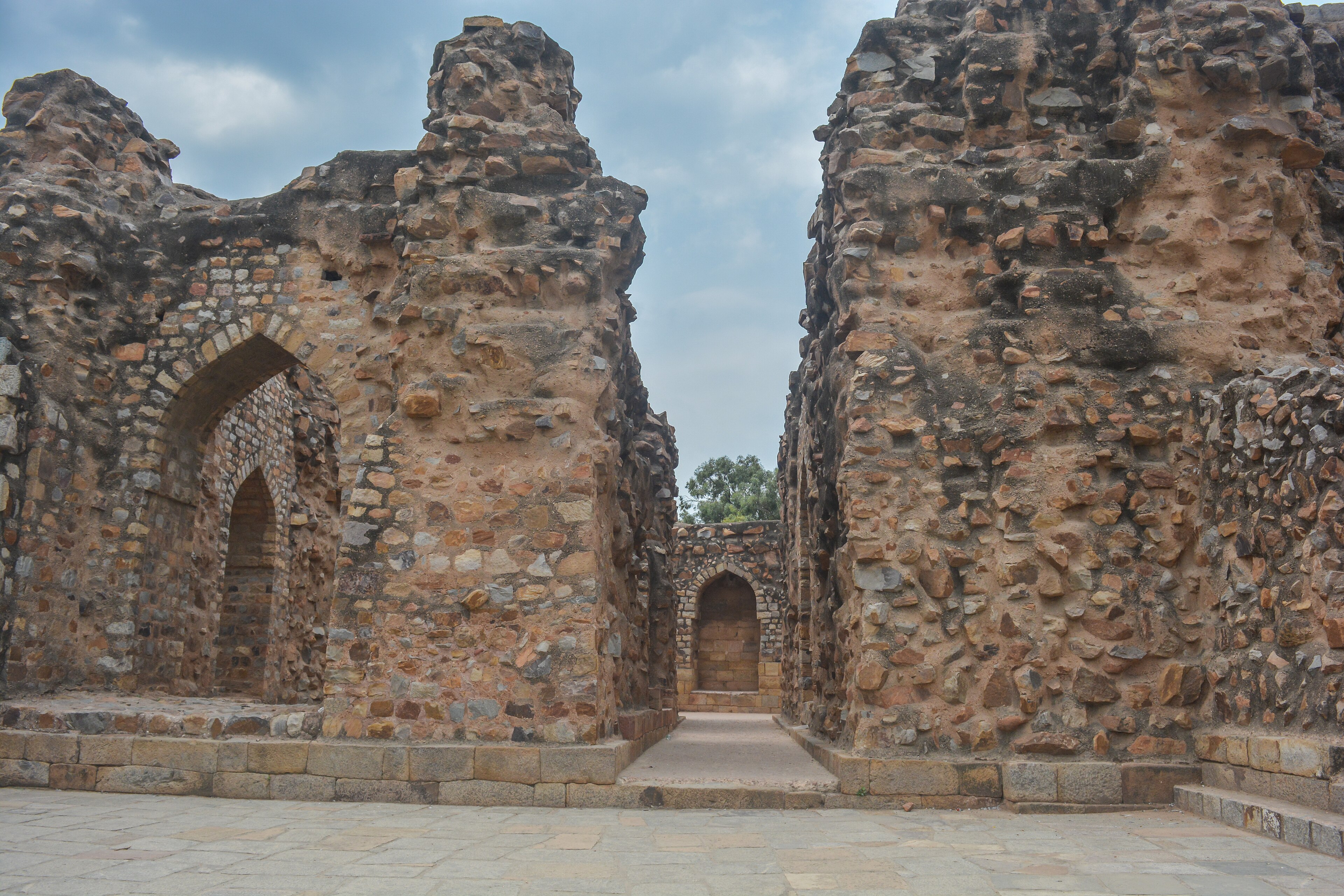
 Visit official site ↗
 Visit official site ↗
 Visit official site ↗
 Visit official site ↗
 Visit official site ↗
 Visit official site ↗
 Visit official site ↗
 Visit official site ↗
 Visit official site ↗
 Visit official site ↗
 Visit Facebook ↗
 Visit official site ↗
 Visit Instagram ↗
 Visit official site ↗
 Visit official site ↗
 Visit official site ↗
 Visit official site ↗
 Open city/visitor reference ↗
 Visit official site ↗
 Visit official site ↗
 Visit official site ↗
 Visit official site ↗
 Visit official site ↗
 Visit official site ↗
 Visit official site ↗
 Visit official site ↗
 Visit official site ↗
 Visit official site ↗
 Visit official site ↗
 Visit official site ↗
 Visit official site ↗
 Visit official site ↗
 Visit official site ↗
 Visit official site ↗
 Visit official site ↗
 Visit official site ↗
 Visit official site ↗
 Visit official site ↗
 Visit official site ↗
 Visit official site ↗
 Visit official site ↗
 Visit official site ↗
 Visit official site ↗
 Visit official site ↗
 Visit official site ↗
 Visit official site ↗
 Visit official site ↗
 Visit official site ↗
 Visit official site ↗
 Visit official site ↗
 Visit official site ↗
 Visit official site ↗
 Visit official site ↗
 Visit official site ↗
 Visit official site ↗
 Visit official site ↗
 Visit official site ↗
 Visit official site ↗
 Visit official site ↗
 Visit official site ↗
 Visit official site ↗
 Visit official site ↗
 Visit official site ↗
 Visit official site ↗
 Visit official site ↗
 Visit official site ↗
 Visit official site ↗
 Visit official site ↗
 Visit official site ↗
 Visit official site ↗
 Visit official site ↗
 Visit official site ↗
 Visit official site ↗
 Visit official site ↗
 Visit official site ↗
 Visit official site ↗
 Visit official site ↗
 Visit official site ↗
 Visit official site ↗
 Visit official site ↗